
The Sharp Yamaha Sports Bike That Imagines An Electrifying Future
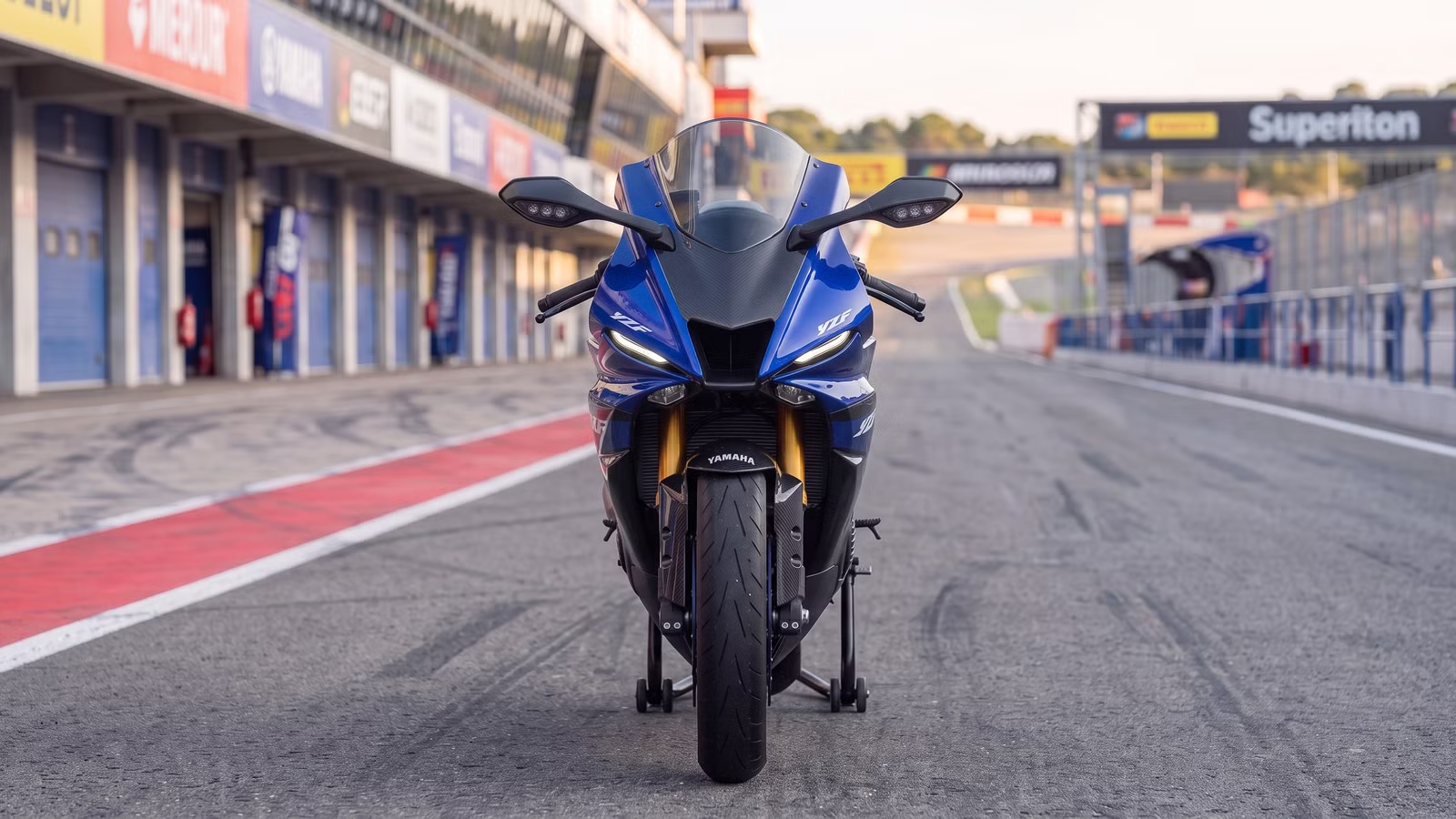
Since the inception of the YZF lineup, Yamaha has treated us to some brilliant sports bikes over the years. The YZF-R1 helped stack the gearbox and engine together for a more compact form factor, while the YZF-R6 shocked the world with its insanely high rev ceiling in production form. Now, as we enter the new age of motorcycling, the brand looks to be exploring the idea of electric sports bikes.
The first hint of the same came at last year’s Japan Mobility Show, while the latest updates can be seen via patent filings. With those things in mind, we thought it was time to imagine the brand’s electric sports bike future, and the result is going to make you pull out your credit card.
The YZF EV Sports Bike Concept Looks As Sharp As The Iconic YZF-R6
The YZF lineup has had some razor-sharp designs in the past, but the last-gen YZF-R6 arguably comes out on top in terms of sheer edginess. So that’s where Yamaha took its design inspiration for its track EV concept. We followed the same approach, taking straight inspiration from the R6 for our concept of the production-spec electric YZF. Let’s hope Yamaha calls it the ‘YZF-R EV’; see what we did there?

Anyway, thanks to the R6 inspiration, our render shows edgy bodywork all over. The front-end boasts wolf-fang-like DRLs with dual projector lamps tucked under the top cowl. This is in line with the serious YZF bikes like the R1 and R9, but different from the new-age R7 and R9 that have single LED headlights.
This is followed by muscular fairings that hide the innards. Look closely, and you’ll see there are no cutouts in the fairings. That’s because of the absence of a radiator, meaning there’s no need to channel hot air. Rounding off the design is a muscular tank area and an upswept tail. The former is inspired by track-spec YZF bikes to let the rider grip the ‘tank’ well for hanging off, while the latter takes inspiration from the YZF-R1.
In a similar fashion, we’ve kept the ergonomics and silhouette properly track-oriented unlike the new-age YZFs. So low clip-ons, high footpegs, and a slim seat are all present. Rounding things off is the iconic Yamaha Racing Blue livery, although we hope the production version brings the brand’s anniversary colors, too.
Yamaha’s EV Sports Bike Is Expected To Boast Aggressive Components

While the production version might differ from our concept, the core idea is in line with what Yamaha hinted at last year’s Japan Mobility Show. We know a few details from there, and here’s a lowdown.
To maximize that fun, lightweight and compactness were prioritized, resulting in an easy-to-use EV supersport bike with a new riding character and feel. – Yamaha
YZF-R1-Sourced Chassis And Swingarm With Premium Equipment

The Yamaha EV sports bike shown to the public at the motor show takes heavy mechanical inspiration from the flagship YZF-R1. Accordingly, you get high-end equipment all over. The chassis follows a twin-spar approach but tuned to meet EV requirements. It has cutouts and hollow sections in areas to lower the weight.
This pairs up with a race bike-like beefy swingarm and a special subframe. As for suspension, R1-like KYB USD forks and monoshock do the duty. Both are adjustable and join up with 17-inch alloy wheels. These hoops house Brembo Stylema calipers up top–again from the recently updated R1.
A Large Battery And Mid-Mounted Motor Are Planned

What about the performance, you ask? Well, Yamaha says this is a large battery model, aimed at ensuring a long riding range. But since big batteries bring big weight, the bikemaker has used a special L-shaped battery setup. It’s also positioned from the center of the vehicle toward the seat for mass centralization.
As for the motor, it’s a mid-mounted setup said to ensure better acceleration of the flagship YZF-R1 up to a certain speed. That’s a bold claim, but considering EVs have instant torque, it isn’t impossible. It could be similar to the Kawasaki Ninja 7 Hybrid’s Boost mode that promises better acceleration than superbikes. The exact numbers are under wraps and will probably come closer to launch.
The Yamaha Electric Sports Bike Is Still Not Confirmed For Production
Speaking of launch, this is where you might get disappointed. Although the motorcycle shown in Japan looked almost ready, Yamaha hasn’t confirmed its launch yet. The brand’s top management is still exploring the overall market scenario around electric motorcycles, waiting to see if these bikes make sense both from tech and financial standpoints.
Let’s also keep in mind that all the premium equipment you see here isn’t really suitable for mass production. The fancy suspension, carbon bodywork, and race-inspired bits all bump up the manufacturing costs. So the final form would be very different and closer to how our render imagines the machine. If not, the first Yamaha electric sports bike wouldn’t make financial sense.

Related posts



Latest Post



No Comments