
Why The V8 Isn’t Always The Best Engine For A Muscle Car
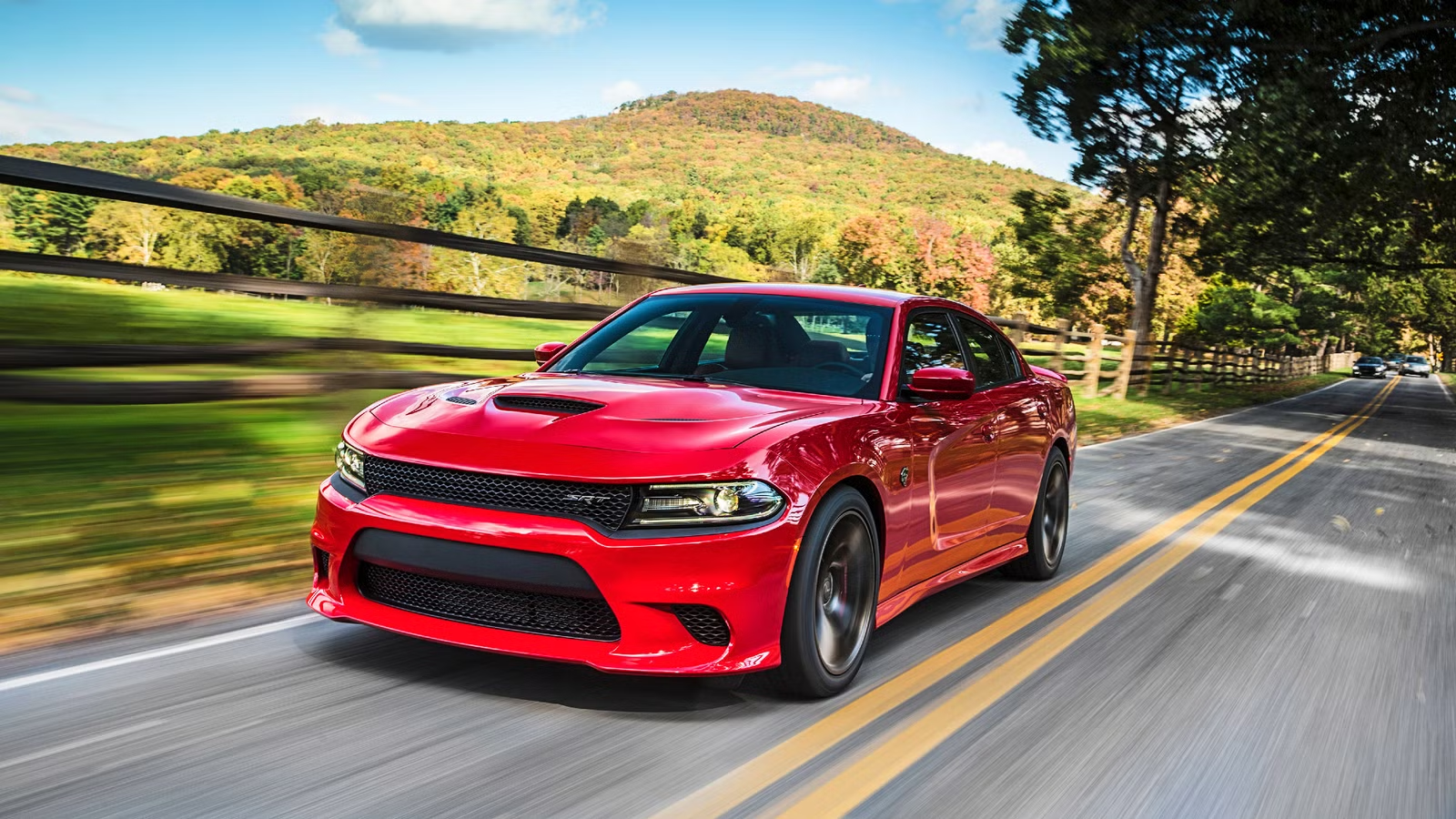
Reject a muscle car because it has six cylinders, and you might be defending tradition at the expense of performance. That V8 badge can promise the right soundtrack without guaranteeing the quickest launch, the strongest acceleration, or the best engine for your priorities. Counting cylinders is easy; deciding what actually makes a car satisfying takes a little more effort. A great turbocharged six-cylinder deserves more than a reluctant audition. The argument gets interesting when you stop asking whether it sounds like the muscle car you remember and start asking whether it delivers the muscle you want.
Cylinder Count Became A Shortcut For Muscle-Car Credibility
The V8 Soundtrack Is Part Of The Attraction

The V8’s place in muscle-car culture makes sense. Its uneven exhaust pulses, familiar rumble, and association with tire-smoking excess give it an identity that a specification sheet cannot reproduce. Before you even leave the driveway, the engine establishes the mood.
That cultural connection also creates an unusually strict entrance requirement. A muscle car can change its transmission, suspension, and electronics without losing its credentials, yet removing two cylinders can trigger an identity crisis. Suddenly, the engine configuration becomes more important than what happens when you press the accelerator.
Displacement Does Not Tell You How Fast The Car Is

Engine displacement measures swept volume, not the complete ability to accelerate a car. Turbocharging increases the air available for combustion, allowing a smaller engine to produce output that would otherwise require greater displacement. Cylinder count tells you something about the machinery, but it does not settle the performance argument.

The rest of the car gets a vote, too. Weight, gearing, tire grip, transmission calibration, and driven wheels determine how effectively engine output becomes speed. But accepting that in theory is different from seeing it proven on a spec sheet — which is exactly what the new Charger forces you to confront.
The Six-Cylinder Charger Makes The Argument Hard To Ignore
The Hurricane Gives The Debate A Factory-Built Test Case

The 2026 Dodge Charger SIXPACK puts this argument directly in front of muscle-car buyers. Its Hurricane-based 3.0-liter twin-turbocharged inline-six produces 420 horsepower and 468 pound-feet of torque in the R/T. The Scat Pack raises those figures to 550 horsepower and 531 pound-feet of torque, giving the six-cylinder lineup considerably more ambition than merely filling an entry-level slot.
For context, the outgoing 2023 Charger R/T’s 5.7-liter Hemi V8 produced 370 horsepower and 395 pound-feet of torque. The new R/T therefore adds 50 horsepower and 73 pound-feet of torque while losing two cylinders and 2.7 liters of displacement. Those gains establish the engine’s credentials, although the heavier new car complicates the result.
More Power Still Has To Become Better Performance
Dodge claims the 2026 R/T reaches 60 mph in 4.6 seconds and completes the quarter-mile in 12.9 seconds. For the Scat Pack, the manufacturer quotes a targeted 3.9-second sprint and a 12.2-second quarter-mile. Those are manufacturer figures, rather than interchangeable results from independent tests.
Both gasoline versions pair an eight-speed automatic with standard AWD and selectable RWD operation. That traction matters: an engine can produce impressive numbers and still spend the opening moments of a launch overwhelming the rear tires. The new Charger’s acceleration reflects an entire powertrain working together, rather than proof that six cylinders alone beat eight.
A Great Turbo Six Can Deliver The Muscle You Actually Use
Passing Power Matters Beyond The Launch

Here is the inconvenient wrinkle. Car and Driver measured the new R/T at 4.7 seconds to 60 mph against 5.1 for its earlier Hemi R/T test car. However, its 30–50 mph and 50–70 mph runs took three and 3.8 seconds, respectively, both 0.4 seconds slower than the V8 car.
That result prevents an easy victory speech about turbocharged mid-range muscle. The six has a higher peak torque figure, but that number does not describe every moment between pressing the pedal and completing a pass. Boost response, downshifts, gearing, and vehicle mass all influence the outcome.
The Whole Powertrain Determines How The Car Feels

A useful test drive should include more than one enthusiastic departure from a stoplight. At a safe speed, assess how promptly the transmission selects a lower gear and whether acceleration arrives progressively or after a noticeable pause. Repeat the exercise with different throttle inputs, because full-throttle behavior does not explain everything.
Apply the same scrutiny to a V8. A responsive engine can feel less convincing behind an indecisive automatic, while a well-matched turbo six can make everyday acceleration feel effortless. The best combination is the one that answers your right foot consistently, without requiring a special launch procedure to demonstrate its appeal.
The V8 Still Wins Arguments A Stopwatch Cannot Settle
Sound And Response Can Be Worth More Than A Faster Run

The cultural appeal of a V8 gets you interested; its behavior on the road can justify the purchase. With a naturally aspirated example, the connection between pedal movement, engine speed, and rising sound can become the main attraction. You might enjoy a modest acceleration run more than a quicker but less expressive one.
That preference deserves respect. You spend far more time experiencing an engine than verifying its quickest published acceleration time, and the sound accompanying an ordinary downshift can matter. Buying the V8 because you enjoy it is a stronger argument than insisting it must be faster.
Turbocharging Brings Trade-Offs That Deserve Scrutiny
Turbocharging introduces additional hardware and heat-management demands, but those facts alone do not establish poor reliability. Likewise, a naturally aspirated V8 does not earn an automatic durability award because its basic layout feels familiar. Maintenance requirements, service history, and documented problems matter more than either shortcut.
Fuel economy deserves the same discipline. Fewer cylinders do not guarantee lower consumption in every vehicle or driving situation, particularly when weight and frequent boost use enter the picture. Compare the exact configurations and credible real-world results before treating the six as the economical choice.
The Best Muscle-Car Engine Depends On What You Want From It
Buy The Six For Demonstrated Performance And Value


Choose the turbo six when the complete car delivers the performance and equipment you want at a price you can justify. Keep the comparison stock against stock, and separate launch performance from passing response. The Charger demonstrates why: a better standing-start result can coexist with slower rolling acceleration.
Value also requires an actual comparison, rather than an assumption that the smaller engine must be the bargain. Consider the purchase price, including hardware, tires, and running costs of the specific cars available to you. A six-cylinder engine should earn your money through what it delivers, without needing an apology for its configuration.
Buy The V8 Because Its Character Matters To You

Choose the V8 if its response and soundtrack make every drive more enjoyable. Take both cars along a similar route, use comparable driving modes, and pay attention to ordinary acceleration as well as the exciting moments. An engine that only impresses during a carefully staged launch may not be your favorite companion afterward.
The V8 does not need to win every stopwatch contest to deserve your driveway. Equally, a great turbo six does not need two more cylinders to qualify as serious muscle. Buy the engine that makes the car better for you, and let the badge handle its own feelings.
Sources: Dodge, Car and Driver, Edmunds, Kelley Blue Book

Related posts


Latest Post



No Comments