
Toyota Snowhunter Concepts: Snow Tracks Hit 5 Models At SEMA 2026
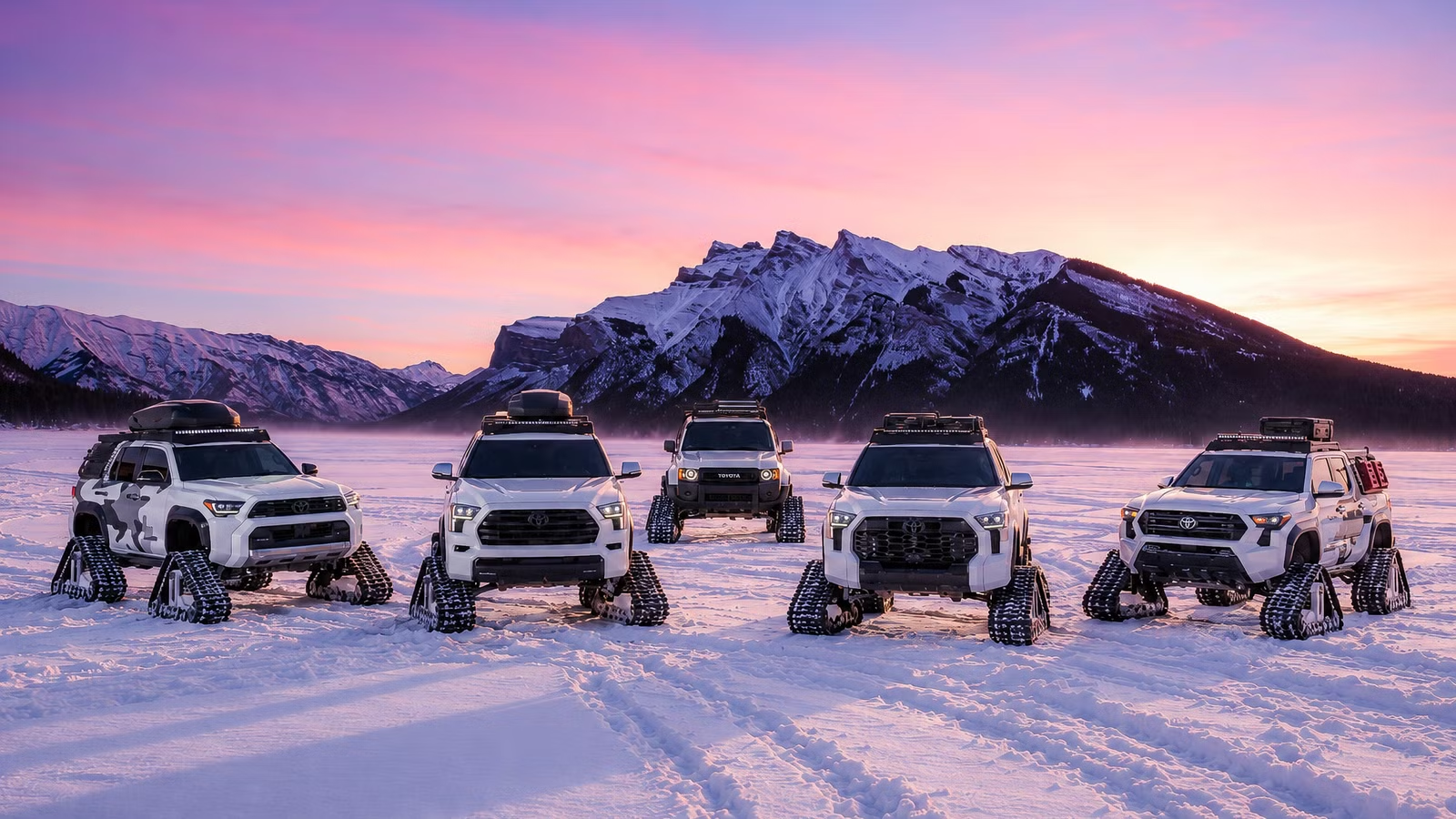
Toyota is rolling into the 2026 SEMA Show with five concept vehicles that ditch wheels entirely in favor of snow tracks, turning the Tundra, Tacoma, 4Runner, Land Cruiser, and Sequoia into a coordinated fleet of winter-ready machines. Toyota calls the lineup Snowhunter, and the name is a deliberate nod to Trailhunter, the overlanding trim that started as a 2022 SEMA concept before becoming a real production option across Toyota’s truck and SUV range.

That lineage matters here. This isn’t one show truck built to turn heads for a weekend in Las Vegas; it’s five vehicles sharing a design language, developed by Toyota’s CALTY Design Research studio in Ann Arbor, Michigan, a place that actually sees snow. The message is hard to miss: Toyota’s entire body-on-frame portfolio, from the compact-ish Tacoma up to the full-size Sequoia, can theoretically be pushed into extreme winter territory.
The Shared Formula Across All Five Builds
Every Snowhunter concept wears the same base recipe. White powder-coated snow tracks replace the factory wheels, riding under a geometric gray-and-white Snowhunter camouflage livery with gloss-black trim. Auxiliary lighting from Rigid handles visibility, and a suspension lift sourced from Toyota Genuine Parts and TRD creates clearance for the tracked hardware. Toyota hasn’t named who actually builds the tracks, and a company spokesperson confirmed none of the parts on display are new consumer-ready accessories, so nothing here is a parts-counter order just yet.

Where the builds split is in the gear bolted on top of that shared base. The Tundra Snowhunter is pitched as a mobile base camp, built around a TrailLift Pro Rack System Concept, a bed-mounted frame with an articulating upper section that lowers for loading bikes, kayaks, or recovery gear. It also picks up TRD rear billet control arms and a Predator step. The Tacoma Snowhunter leans into trail access instead, with a full-length bed rack, MOLLE panels, an awning, recovery boards, and a WeBoost antenna mounted high for staying in contact on remote routes.
How The SUVs Get Their Own Winter Playbook
The 4Runner, Land Cruiser, and Sequoia all skip the open bed and lean on roof-mounted storage instead. The 4Runner Snowhunter adds rock rails and skid plates for underbody protection, plus a Prinsu roof rack and a Thule Pulse 2 cargo box. The Land Cruiser Snowhunter keeps the rock sliders and skid plates but swaps that cargo box for a Thule SnowPack ski rack, leaning into the nameplate’s expedition reputation. The Sequoia Snowhunter, the biggest rig in the group, mixes a TRD front skid plate and cast aluminum running boards with its own Prinsu roof rack and Thule cargo box, giving the family-hauler a legitimate snow-expedition look.
Each concept makes a point of doing something distinct within the same visual family, which is exactly why five vehicles at once hits harder than a single halo build would.
Why Five Trucks At Once Is The Real Story
Toyota didn’t need to track out the entire lineup to make a point at SEMA. One tricked-out 4Runner would have gotten attention on its own. Doing it to all five signals something closer to a capability flex for the whole portfolio, not a single stunt build destined for the trash heap after the show closes.
The Trailhunter parallel is the detail worth watching. That trim didn’t exist until a 2022 SEMA concept convinced Toyota there was demand for a factory overlanding package, and it’s since landed on production Tacomas and other models. Nobody’s claiming snow tracks are headed to a dealership lot; that’s an aftermarket conversion that can run $10,000 or more and isn’t road-legal in most places. But the racks, skid plates, and storage systems riding alongside those tracks look a lot more like real accessory candidates than the tracks themselves do.

Related posts
Latest Post



No Comments