
Harley Owners, Look Away; These Japanese Cruisers Mean Business
Harley-Davidson has defined the American cruiser for more than 120 years, and its owners are some of the most loyal riders around. For them, the badge, the V-twin rumble, and the brotherhood matter as much as the bike itself. But that loyalty comes at a price. A Fat Boy starts at $22,599, a Heritage Classic at $19,999, and even the entry-level Nightster asks $9,999.

That’s where Japan comes in. It has built cruisers that answer with lower prices, low-maintenance shaft drives, an automatic gearbox, and in some cases, more power. For Harley owners wondering whether there is life beyond Milwaukee, these 10 Japanese cruisers make a convincing case for switching. While most of these are available new, we have a few interesting used examples at the end.
Honda Shadow Phantom
Price: $8,699
The Shadow line was designed to take on Harley-Davidson at its own game, and the Phantom is the version that speaks most directly to Street Bob owners. It is a blacked-out bobber with short fenders, a solo seat, black spoked wheels, and concealed wiring. And at $8,699, it saves you over $6,000 compared to a Street Bob.
On paper, the numbers won’t impress a Street Bob owner. The 745cc liquid-cooled V-twin makes around 45 horsepower and 48 pound-feet, less than half of what Harley’s Milwaukee-Eight 117 puts out. But the Phantom’s real strength is longevity. Its V-twin has a reputation for covering huge mileages, the shaft drive needs almost no attention, and the simple chassis is easy to work on. For riders who would rather ride than wrench, that is a fair trade.
Yamaha Bolt R-Spec
Price: $8,999

Yamaha launched the Bolt in 2013 as a direct challenger to the Harley-Davidson Iron 883, and it remains the obvious switch for Sportster owners. It shares the Sportster’s proportions and wheel sizes, and its air-cooled 942cc, 60-degree V-twin nails the old-school rumbling look of a Harley. Underneath, though, it’s a refined, fuel-injected unit tuned for efficiency and torque, making 65 horsepower and 59.3 pound-feet.
The R-Spec adds piggyback-reservoir rear shocks, while a belt drive, steel fenders, and minimal chrome keep the stripped-down look honest. Yamaha’s reputation for reliability and durable mechanical parts also makes it easier to live with than a Harley. It undercuts the H-D Nightster by $1,000.
Honda Rebel 1100 DCT
Price: $10,399

The Rebel 1100 DCT makes almost too much sense as a Harley alternative. The main draw is Honda’s dual-clutch automatic gearbox, and no Harley, or any other cruiser for that matter, offers a true automatic like it. The Rebel is a modern cruiser, but the CBR maker has given it a traditional look and feel.
The engine is a 1,084cc parallel-twin adapted from Honda’s Africa Twin adventure bike, and it comes with riding modes, cruise control, a five-inch TFT display, and Bluetooth connectivity. Its closest Harley rival, the Nightster Special, costs $12,499, has a smaller four-inch display, and still uses a manual clutch.
Kawasaki Vulcan 900 Classic LT
Price: $10,699

The Vulcan 900 is arguably the closest thing to a Harley-Davidson that Japan still builds, and the Classic LT is the model Heritage Classic owners should look at first. It arrives touring-ready from the factory with leather saddlebags, a height-adjustable windscreen, a passenger backrest, and floorboards.
It also costs far less than a Heritage Classic. Its liquid-cooled 903cc V-twin can’t match the Heritage’s big-twin muscle, but its 58.3 pound-feet arrive low in the rev range, making it a relaxed highway companion, and its engine is more refined than a Harley’s. A 5.3-gallon tank stretches the distance between fuel stops, and a seven-way adjustable rear preload lets riders firm up the suspension for a passenger and loaded bags.
Honda Fury
Price: $11,499

For H-D Breakout owners who love the chopper look, the Fury is the most natural switch on this list. It is the only production motorcycle on sale that fully commits to custom-chopper styling, with a raked-out front end, a skinny 21-inch front wheel, a fat rear tire, and a hardtail-style rear end with a single shock.
Its 1,312cc V-twin makes 57 horsepower and 76 pound-feet of torque, and it delivers a proper big-twin pulse through a low-maintenance shaft drive. The trade-off is performance, since the Fury isn’t especially quick and the 103-horsepower Breakout will leave it behind. But at $11,499, it costs half as much as the Breakout.
Suzuki Boulevard M109R
Price: $15,799

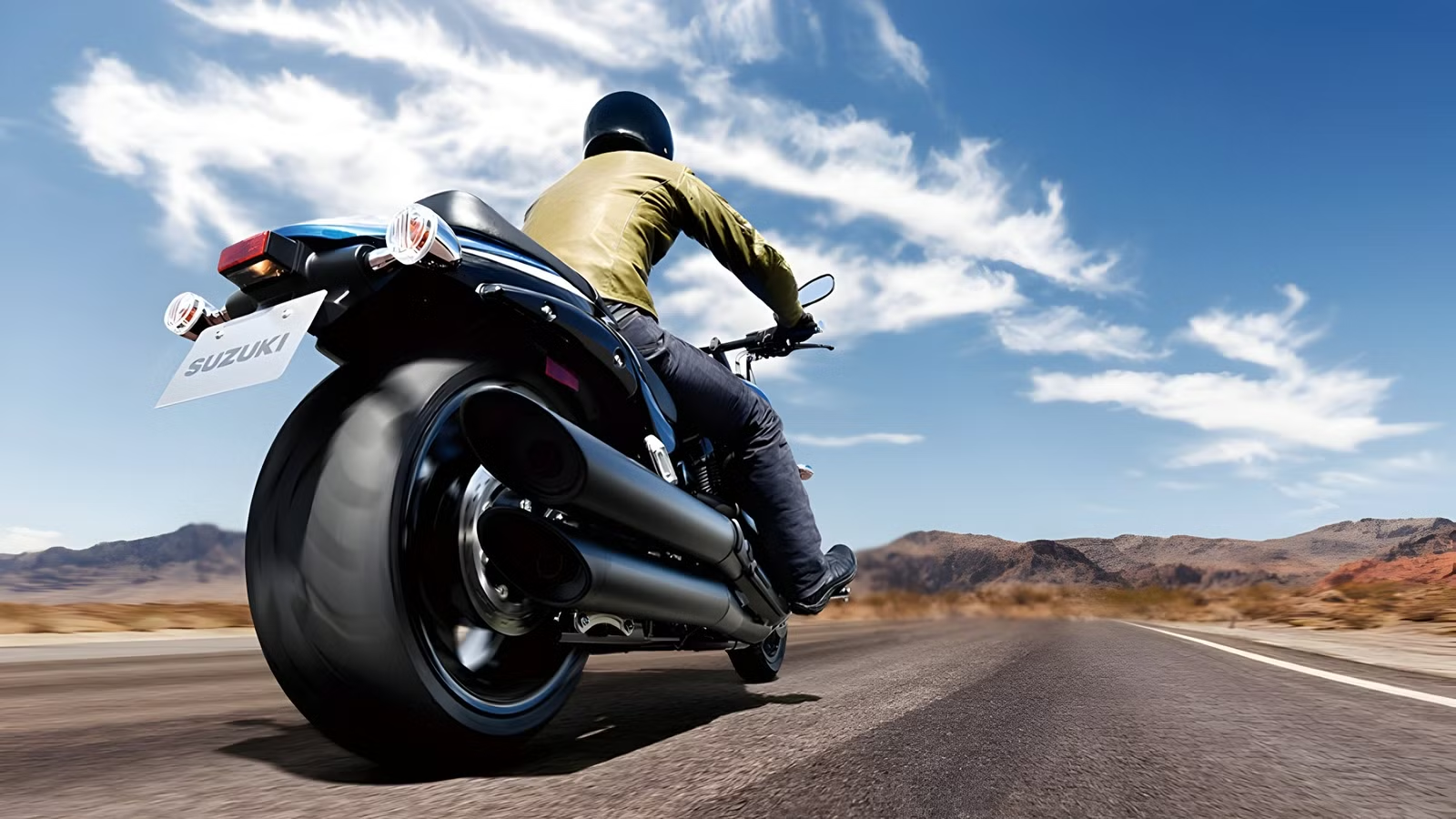
The M109R combines Harley-style presence with Japanese dependability, and it is one of the last Japanese muscle cruisers still on sale. Its 1,783cc V-twin uses some of the largest pistons in any production motorcycle and makes around 128 horsepower. No Softail in Harley’s 2026 lineup comes close, including the Low Rider S at 114 horsepower and the Breakout at 103 horsepower.
The drag bars, long and low body, and massive 240mm rear tire give it an unmistakable stance. It is heavier than most Harley cruisers, but for a Breakout owner, switching brings more power for about $7,200 less. With all that, the Suzuki Boulevard M109R makes Harley riders look twice.
2004 Honda Valkyrie Rune
Price Range: $16,000 – $22,000

The Rune is proof that a used Japanese cruiser can upstage a new Harley. Honda built it as a passion project, borrowing the 1,832cc six-cylinder engine from the Gold Wing and wrapping it in custom bodywork with a trailing bottom-link front suspension and shaft drive. Its 118 horsepower is still more than the most powerful Softail Harley sells today, even though the Rune is more than two decades old.
Honda never built another cruiser like it, and that rarity keeps its value remarkably high even after two decades. It launched at around $25,000, and Kelley Blue Book still puts its trade-in value at $16,600, with typical listing prices around $21,000. For a Harley owner who wants something rarer and more exotic than anything in Milwaukee’s showroom, no bike on this list turns more heads.
2006 Honda VTX1800
Price Range: $3,000 – $4,500

Of all the cruisers Honda built to take on Harley-Davidson, the VTX1800 was the most direct attack. Honda rated its liquid-cooled 1,795cc V-twin at 106 horsepower and 120 pound-feet, more horsepower than today’s Street Bob, Heritage Classic, Fat Boy, or Breakout. It’s also more refined than its brawny looks suggest, because Honda engineered the big twin to stay smooth even as it pulls hard.
A 45mm inverted fork, linked brakes, and a low-maintenance shaft drive back up that muscle, while plenty of chrome and a low, muscular stance give it the presence Harley owners expect. Kelley Blue Book puts a 2006 VTX1800’s trade-in value at $2,940, with typical listing prices around $4,500. For riders who want big-inch presence without big-inch Harley pricing, this is the easiest switch on the list.
2006 Kawasaki Vulcan 2000
Price: $3,000 – $5,000

If displacement is the measure of a cruiser, few can touch the Vulcan 2000. Kawasaki’s flagship carries a 2,053cc V-twin, the largest engine any Japanese manufacturer has fitted to a cruiser. Rather than chase peak power, Kawasaki tuned it for a thick wave of low-end torque, so it lopes along in a relaxed way.
The Vulcan 2000 was clearly inspired by Milwaukee, and it has the chrome, the long, low stance, and the comfortable riding position Harley owners are used to. Where it pulls ahead is size and cost, since its V-twin outsizes the Milwaukee-Eight 117 in the Fat Boy while costing far less. Kelley Blue Book values a 2006 Vulcan 2000 at $3,305 on trade-in, with typical listing prices around $4,805.
2009 Yamaha VMax
Price Range: $6,000 – $12,500

For Harley owners who want more than a relaxed cruise, the second-generation VMAX is the extreme option. Its 1,679cc V4 makes 197 horsepower at 9,000 rpm and 123 pound-feet. Yamaha also mounted that engine in a rigid aluminum frame, so the VMAX can take a corner far better than its muscle-bike looks suggest.
The catch is that Yamaha discontinued the VMAX when its V4 couldn’t meet Euro 5 emissions rules without an expensive redesign, so it is only available. A good-condition 2009 model carries a trade-in estimate of around $6,630, while asking prices for second-generation start at $12,500. And because it is a Yamaha, it is built to last.
Source: Honda, Suzuki, Yamaha, Kawasaki

Related posts

Latest Post


No Comments