The Naturally Aspirated Sedan Outrunning A New GR Corolla
8 minutes reading
Monday, 31 Aug 2026 14:00 0 59 autotech
Toyota built the GR Corolla to embarrass cars that cost twice as much, and for the most part, it does exactly that. But the used market has an answer that predates turbo-four, AWD, and hot hatches entirely. A naturally aspirated V8 sedan that already beat the Corolla’s time years before Gazoo Racing existed. It’s quicker, louder, and in some cases, cheaper to buy outright. The catch is that speed was never really the hard part; living with it is.
The 2026 GR Corolla is a genuinely strange car to reckon with. A 1.6-liter turbocharged three-cylinder making 300 horsepower and 295 pound-feet of torque, sent to all four wheels through a six-speed manual or an eight-speed automatic. It weighs 3,316 pounds and starts at $41,115. Car and Driver’s own instrumented testing has clocked the automatic-equipped version at 0-60 mph in 4.9 seconds, with the quarter-mile arriving in 13.3 seconds at 105 mph — numbers that put it solidly ahead of most hot hatches and uncomfortably close to genuine sports cars.
2026 Toyota GR Corolla front 3/4 shot parked in studioToyota
That’s a remarkable outcome from a three-cylinder engine, and it’s earned the GR Corolla comparisons to everything from the Civic Type R to the Golf R. But the formula is also fragile in a specific way: nearly all of that performance comes from boost pressure and all-wheel-drive traction rather than outright displacement or horsepower. Take away the turbo lag-masking launch control and the AWD traction advantage, and 300 horsepower isn’t actually that much by modern performance-sedan standards.
That is exactly the opening a much older, much larger engine walks through. Long before turbo triples and all-wheel drive became the default hot-hatch recipe, a generation of naturally aspirated V8 sedans was already doing this job, with more displacement, more cylinders, and, in at least one case, a quicker stopwatch time. That’s not nostalgia talking. It’s simply what the numbers say.
The E90 M3 Brings 414 HP And A 4.0-Liter V8 To The Fight
2007-2010 BMW M3 Sedan E90 Silver Front Angled View DrivingBMW
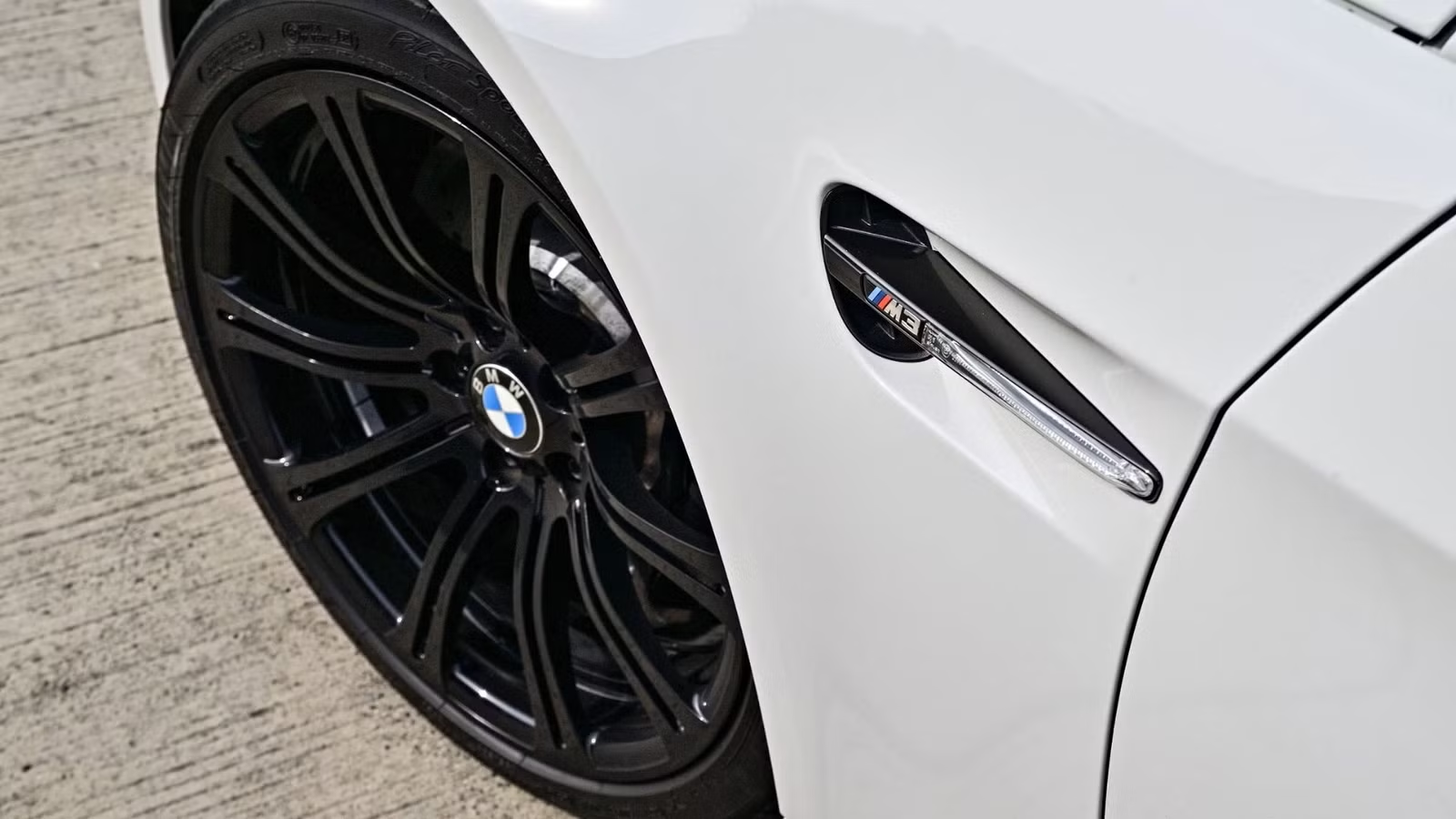
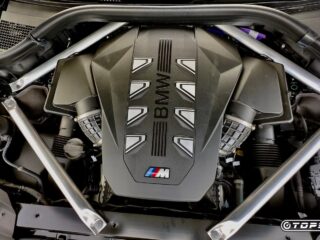
That sedan is the BMW E90 M3, built from 2008 to 2011 with a 4.0-liter naturally aspirated S65 V8 producing 414 horsepower and 295 pound-feet of torque, revving to a screaming 8,300 rpm redline. No turbochargers, no forced induction of any kind, just displacement, high compression, and a throttle response that turbo engines still struggle to replicate almost two decades later.
How The Performance Numbers Back Up The Spectacle
The engine bay of an E90 BMW M3 featuring the S65 V-8 engine.BMW
Car and Driver’s own testing put the sedan at 4.1 seconds to 60 mph, and that figure isn’t an outlier. Aggregated data across 18 independently verified tests of the E90/E92/E93 generation shows an average of 4.17 seconds to 60 mph, with the quickest examples dipping into the high threes. That’s a full 0.8 seconds ahead of the GR Corolla’s Car and Driver-tested time, from a heavier, rear-wheel-drive sedan built during the George W. Bush administration, with none of the AWD launch advantage the Toyota enjoys.
It’s worth pausing on that for a moment. A car that’s now old enough to have an oil change history measured in decades, not miles, still puts a bright, modern turbo-AWD hatch in its mirrors off the line. But a 0.8-second gap only tells you what the stopwatch sees — it says nothing about what the driver feels.
Why The S65’s 8,300-RPM Screamer Feels Faster Than Its Numbers Show
2010 BMW M3 in silverBMW
Stopwatch numbers only tell part of the story, and this is where the two cars diverge most sharply. The GR Corolla’s turbocharged triple needs boost to build before its peak torque arrives, and even with modern turbo technology minimizing lag, there’s an unmistakable ramp-up to the power delivery. It’s fast, but it’s fast in stages.
The S65 V8 in the E90 M3 doesn’t work that way. Throttle inputs translate to thrust almost instantaneously, because there’s no turbo spooling up to gate the process — just a naturally aspirated engine responding directly to how far the pedal is pressed. That immediacy is why so many owners and reviewers describe the E90 as feeling faster than its numbers suggest in real-world driving, even when a modern turbocharged rival is objectively quicker in a straight line.
The engine bay of a 2009 BMW M3 Coupe.Bring A Trailer
There’s also the sound and the rev range to consider. The S65 spins to 8,300 rpm with an intake and exhaust note that turbocharged engines, muffled by their own turbos, simply can’t produce. Toyota’s three-cylinder has character of its own, a burbly, off-beat rasp that’s grown on plenty of reviewers, but it’s not chasing the same kind of high-rpm drama, and the turbo hardware physically dampens some of what would otherwise reach the driver’s ears.
Why None Of This Means The GR Corolla Is A Lesser Car To Drive
2026 Toyota GR Corolla front shot driving on winding roadToyota
Its all-wheel-drive traction and rally-bred chassis tuning make it genuinely thrilling on a back road, arguably more so in low-grip conditions than a rear-drive V8 sedan will ever be. But the character on offer is fundamentally different, and for buyers who value throttle response and engine drama as much as outright grip, the older naturally aspirated formula still wins on feel, not just on paper. Of course, none of this matters if the E90’s asking price puts it out of reach — which is where the comparison gets genuinely strange.
Used V8 Pricing Can Make The Numbers Surprisingly Compelling
2007-2010 BMW M3 Sedan E90 Silver Front Angled View DrivingBMW
Here’s where the E90 M3 stops being just a stopwatch curiosity and starts becoming an actual buying decision. Classic.com’s market data puts the average sale price of an E90 M3 at $38,813, with recent listings ranging from a $28,000 high bid on a 67,000-mile sedan up to $46,998 asking prices on lower-mileage, better-condition examples. That’s a wide spread, but it means a clean example with 80,000 to 120,000 miles is realistically obtainable for less than the $41,115 a GR Corolla costs brand new, and in some cases, for meaningfully less.
The E90 Isn’t The Only Naturally Aspirated V8 Sedan Worth Cross-Shopping In This Space, Either
Lexus IS-F side shotLexus
The Lexus IS-F, built from 2008 through 2014 with a 5.0-liter V8 making 416 horsepower, ran 0-60 mph in 4.2 seconds in Car and Driver’s own testing, even quicker than the M3. Used examples with 100,000-plus miles are trading for as little as $23,000 to $29,000 today, undercutting the M3’s asking prices while offering Lexus reliability in place of BMW’s reputation for expensive repairs. Buyers who want something newer and don’t mind spending more should also look at the Lexus GS-F, a 467-hp naturally aspirated V8 sedan built through 2020 with a considerably more modern interior and infotainment setup, though its used prices sit well above either the M3 or IS-F.
The math isn’t universally in the used sedans’ favor; financing on a new car often comes with lower interest rates and a full warranty that a 15-year-old BMW simply won’t offer. But for buyers willing to shop carefully and vet service records, the upfront price gap alone makes a strong case for looking beyond the new-car showroom.
Speed Comes With Trade-Offs In Fuel, Maintenance, And Ownership Costs
None of this is free performance, and pretending otherwise would do a disservice to anyone actually cross-shopping these cars. RepairPal estimates the average annual maintenance cost of a BMW M3 at $1,161, and that figure tends to climb once a car crosses the 100,000-mile mark and starts needing rod bearings, VANOS seals, or subframe reinforcements, all known E90-specific repair items that can run into four figures each when they come due. The GR Corolla, by contrast, is backed by Toyota’s reputation for low running costs and a factory warranty that a used M3 simply can’t match.
Fuel economy tells a similarly lopsided story. The GR Corolla is EPA-rated at 21 mpg city, 28 mpg highway, and 24 mpg combined, running on regular fuel in most trims. The E90 M3’s naturally aspirated V8, by comparison, requires premium fuel and returns closer to 14-15 mpg city and around 20 mpg highway in real-world driving, a gap that adds up quickly over a year of ownership, especially with premium gas typically running $0.50 to $0.70 more per gallon than regular.
2007-2010 BMW M3 Sedan E90 Silver Side ViewBMW
Insurance follows the same pattern. Performance sedans with V8s and an “M3” badge typically carry higher premiums than a mainstream Toyota hatchback, even a fast one, simply because insurers price in both repair costs and theft/claim history. None of this erases the value case built on purchase price. A used M3 can still come out ahead over a comparable ownership period even with higher running costs, but it does mean the upfront savings shrink once fuel, insurance, and inevitable maintenance bills are added to the ledger.
The honest takeaway is that the naturally aspirated sedan doesn’t beat the GR Corolla by being the smarter overall choice for every buyer. It wins by being quicker, more characterful behind the wheel, and, for those willing to budget for its upkeep, genuinely cheaper to acquire than a car that hasn’t even been on sale for a full model cycle yet.
Base Trim Engine
4.0L V8 Gas
Base Trim Transmission
6-Speed Manual
Base Trim Drivetrain
Rear-Wheel Drive
Base Trim Horsepower
414 hp
Base Trim Torque
295 lb-ft @ 3900 rpm
Fuel Economy
14/20 MPG
Base Trim Battery Type
Lead acid battery
Make
BMW
Model
M3 Sedan
Sources: BMW, Car and Driver, RepairPal, KBB, Classic.com










No Comments