
1,000 Horsepower Used To Mean Everything. Not Anymore
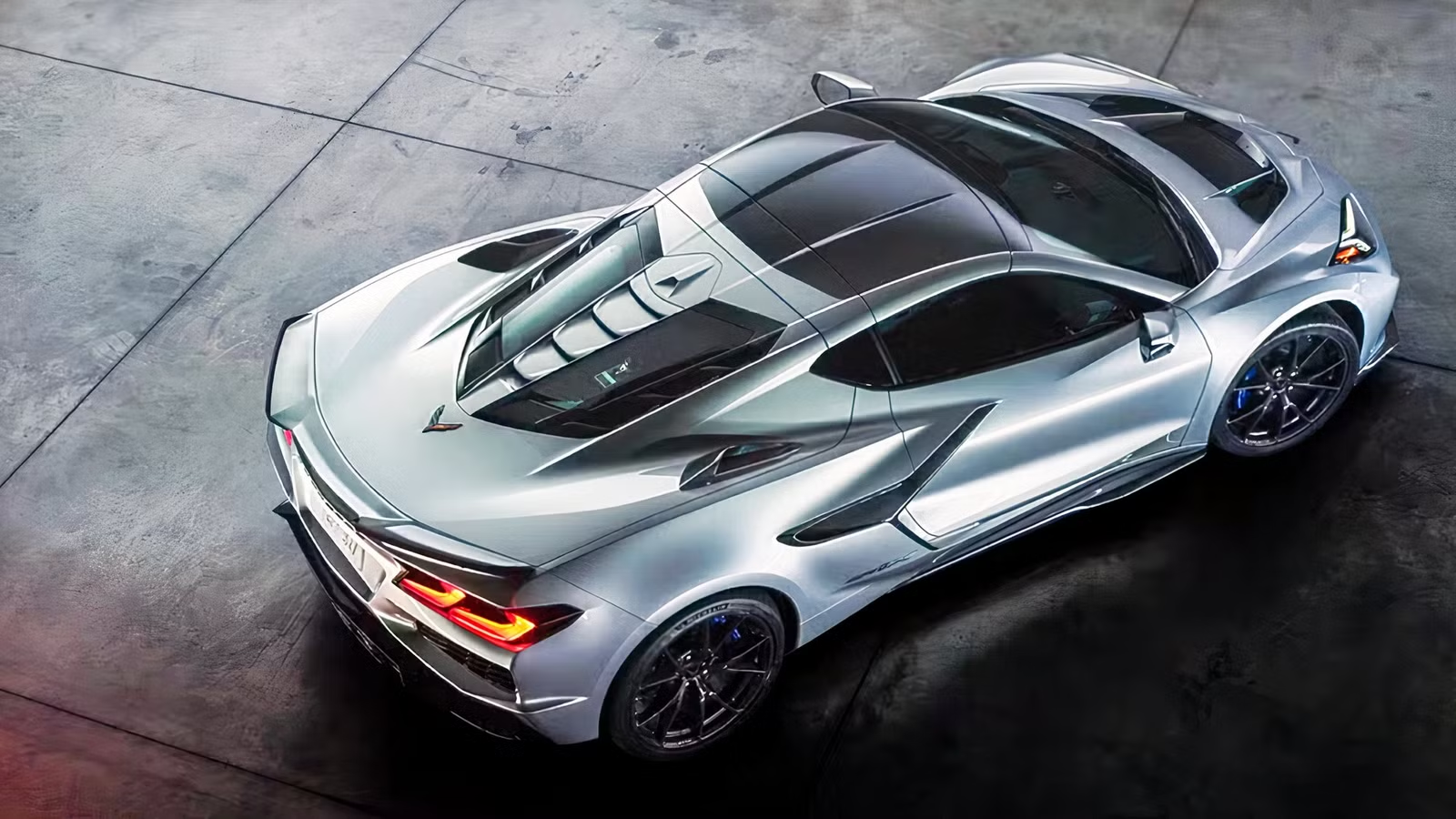
A four-door family sedan can hit 60 mph in about two seconds, and the most famous one is already out of production. Five years after leaving the showroom, it is typically worth well under half of what its first owner paid. Meanwhile, a two-seat roadster with less power than plenty of family crossovers keeps landing on enthusiast wish lists, generation after generation.

That gap says something a spec sheet can’t. Speed has become a commodity. You can buy it with a credit check and a charging cable. What you can’t buy so easily is a car that feels alive at 40 mph, rewards a clean downshift, and still makes you take the long way home once the launch-control party trick wears off. The stopwatch has stopped telling buyers which performance cars are actually great.
How 1,000 Horsepower Became The Least Interesting Number In Performance Cars
For most of the last century, a quicker 0-60 time was the cleanest proof of progress. Then electric motors arrived with instant torque and no gearshifts to fumble, and the scoreboard broke.
EVs Made Sub-Two-Second 0-60 Times Ordinary


The Model S Plaid is the case study. Its three electric motors make a combined 1,020 horsepower, and Tesla quotes a 1.99-second run to 60 mph, a figure that subtracts a one-foot rollout. Car and Driver’s own test of the Model S Plaid returned 2.1 seconds, which is still quicker than nearly anything wearing a supercar badge.
And yet, the Plaid never became an enthusiast icon. Tesla announced the end of Model S production on its January 2026 earnings call, and the last cars rolled off the Fremont line in early May 2026, with the floor space handed over to Optimus robot production. When a five-seat family hatchback can match hypercars off the line, acceleration stops separating great cars from good ones. It becomes a feature, like heated seats.
Why A 717-Horsepower BMW M5 Weighs 5,390 Pounds

The 2025 BMW M5 shows what chasing the number costs. Its plug-in hybrid powertrain pairs a twin-turbo 4.4-liter V8 with an electric motor for 717 horsepower and 738 pound-feet of torque. BMW quotes a curb weight of 5,390 pounds. The Drive worked that out as a 1,045-pound gain over the outgoing M5, and pointed out that the old 600-horsepower car still had the better power-to-weight ratio.
That mass hides well on a launch, where the electric motor fills every gap. It shows up everywhere else: in every braking zone, every quick change of direction, every set of tires. The horsepower war is being paid for in pounds, and pounds are what a driver feels.
The Mazda MX-5 Miata Proves 181 Horsepower Is Enough

Mazda has spent more than three decades building the opposite argument, and it has never needed to win a drag race to make it. The current MX-5 Miata uses a 2.0-liter four-cylinder that makes 181 horsepower at 7,000 rpm and 151 pound-feet, sent to the rear wheels through a six-speed manual. A soft-top Sport weighs 2,366 pounds, according to KBB’s spec data. That is less than half the weight of the M5.
Lightweight compounds. Less mass lets modest brakes do more work, keeps the springs from fighting inertia, and leaves the steering free to tell you what the front tires are doing. It also means tires and pads aren’t managing two and a half tons, so they last longer and cost less to replace.
Usable Performance: Why Slow Cars Driven Fast Feel Better On Real Roads


The bigger advantage is access. In a Miata, wringing out second and third gear on an on-ramp is something you can actually do. Every gear and every corner is within reach without a racetrack or a lawyer. A 700-horsepower car keeps most of its ability locked away on public roads, and you feel that restraint every mile.
Mazda told Motor1 that roughly 70 percent of Miata buyers chose the manual in 2025. The same logic keeps the GR86, its Subaru BRZ twin, and the manual-only Honda Civic Type R on enthusiast shortlists. None of them leads its class on a dyno. All of them lead on smiles per mile.
Why Porsche’s 502-Horsepower 911 GT3 Outshines The 701-Horsepower Turbo S

Porsche runs the cleanest experiment of all, because it sells both answers in the same showroom. The 2026 911 Turbo S is the most powerful 911 Porsche has built. Its T-Hybrid 3.6-liter flat-six makes 701 horsepower and 590 pound-feet, Porsche claims 2.4 seconds to 60 mph, and the coupe weighs 3,829 pounds.
The 911 GT3 takes the other road: a naturally aspirated 4.0-liter flat-six with 502 horsepower and a 9,000-rpm redline, rear-wheel drive, and a six-speed manual if you want one. Road & Track puts the Turbo S at roughly 600 pounds heavier.
On the Nürburgring, the lighter car wins. A manual 992.2 GT3 with the Weissach package lapped it in 6:56.294 in April 2025, while the new Turbo S ran 7:03.92. It isn’t a perfectly clean fight, since the GT3 wore stickier Michelin Pilot Sport Cup 2 R tires, but that’s rather the point. Which car is fastest depends entirely on which stopwatch you’re holding.
Why 70 Percent Of American GT3 Buyers Chose The Slower Manual

Picking the manual makes the GT3 slower in a straight line. Porsche quotes 3.7 seconds to 60 mph with the six-speed and 3.2 seconds with the PDK. Americans took the stick anyway. Porsche told Bloomberg in 2021 that 70 percent of U.S. buyers of the previous-generation GT3 chose the manual, against 30 percent worldwide.
That is half a second traded away on purpose, by buyers who can afford any number they want. Porsche’s GT boss, Andreas Preuninger, said in 2025 that a growing share of GT3 customers are still choosing three pedals. They aren’t buying the quickest time. They’re buying the part they get to do themselves.
What Resale Values Say About Speed Versus Driver Engagement


Enthusiast opinion is easy to dismiss. Money and expert juries are harder to argue with. iSeeCars’ 2026 study of more than 950,000 five-year-old cars, sold between March 2025 and February 2026, put average depreciation at 41.8 percent. The Porsche 911 lost 11.1 percent and the Porsche 718 Cayman topped the table at 9.6 percent. The Tesla Model S, quicker than either, lost 62.0 percent, or $58,907.
That isn’t purely a verdict on steering feel. EVs carry their own baggage, from new-car price cuts to batteries and software that age quickly, and EVs as a group averaged 57.2 percent. Still, the used market is a blunt way of asking which cars people want to keep owning, and the answer isn’t the one with the quickest launch.
Speed is what sells a car on day one, and feel is what keeps it in the garage in year five. The best performance car is the one you can use completely, on the roads you actually drive, and still want to take out when there’s no stopwatch running. By that measure, a 181-horsepower roadster and a manual GT3 have far more in common with each other than either has with a 1,000-horsepower sedan.
Sources: iSeeCars, Mazda USA, BMW USA, Porsche USA, Cadallic, Car and Driver, KBB

Related posts


Latest Post


No Comments