
BMW’s New X5 Is The SUV That Refuses To Pick A Powertrain
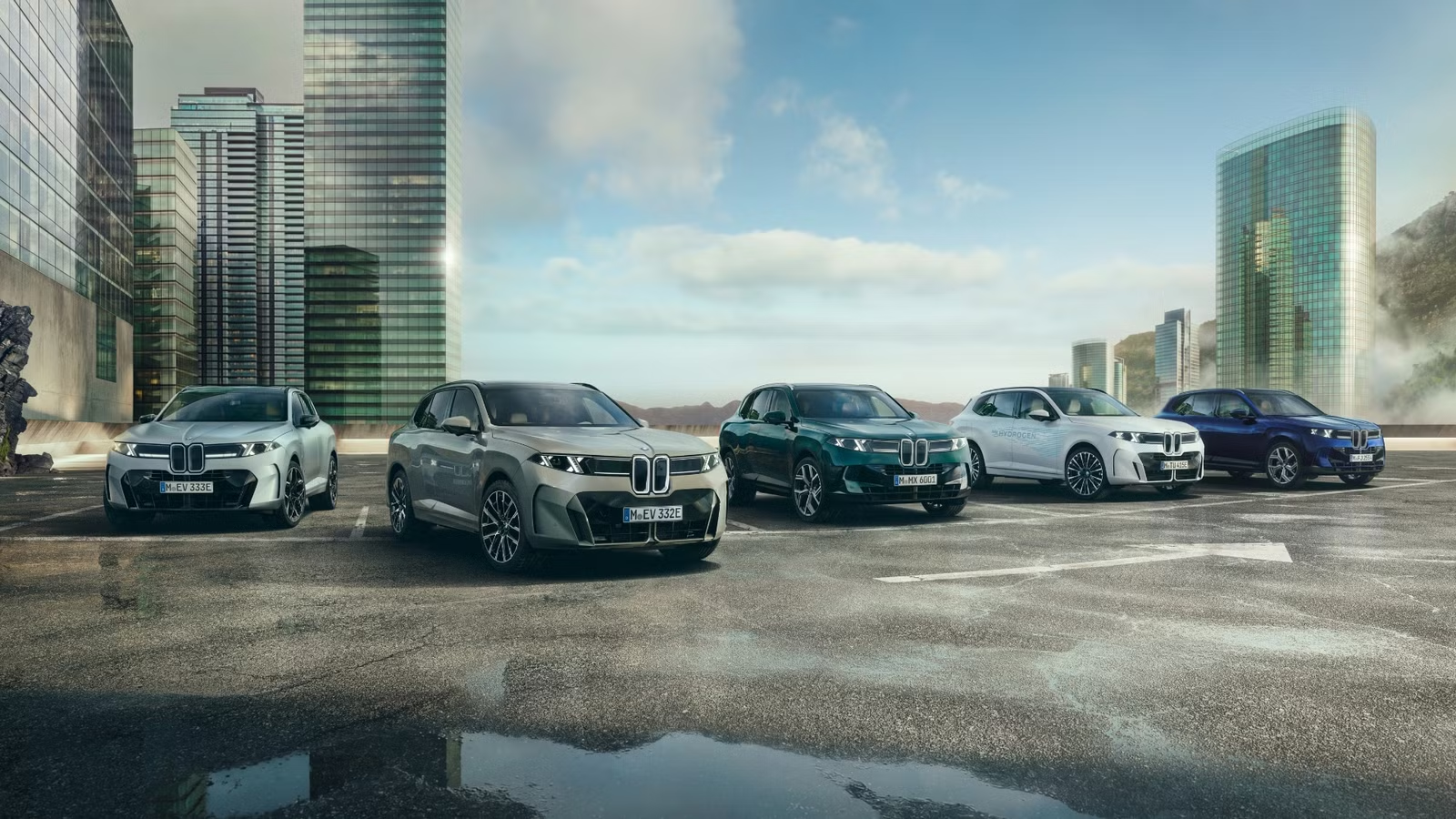
BMW’s first foray into the SUV segment arrived before crossovers and entry-level SUVs dominated dealer lots. When the first-generation BMW X5 debuted at the Detroit Auto Show in January 1999, it arrived at the dawn of the global SUV invasion with a triad of gasoline drive options.

Almost three decades later, the fifth-generation X5 (G65) takes a significantly different approach compared to its predecessor, offering a quintet of drivetrain options. Globally revealed at Plant Spartanburg in South Carolina, the latest iteration of the X5 adopts BMW’s “Power of Choice” philosophy, forming a stark contrast to rival brands that are locking themselves into single-powertrain bets. BMW isn’t forcing drivers into one electric future; instead, it’s offering five distinct drive options under one iconic nameplate for the first time in the history of the X5.
Traditional Combustion Gets A Modern Polish
Gasoline & Mild-Hybrid Efficiency
Headlining the quintet of drivetrains, the fifth-generation BMW X5 updates its core internal combustion lineup with refined engineering and electrical efficiency. At the center of the traditional gasoline offering is the X5 40 xDrive, motivated by a 3.0-liter inline-six TwinPower Turbo engine.

Featuring 48V mild-hybrid technology for immediate throttle response and reduced emissions, the revised powerplant incorporates a new turbocharger that increases the internal combustion engine output by 20 horsepower over its predecessor, bringing the combined figure to 394 horsepower and 428 pound-feet. The engine features the Miller combustion cycle, dual injection (combining high-pressure direct and low-pressure port injection), and switchable rocker arms on the exhaust side to minimize drag torque during overrun.

The 48V mild-hybrid system comprises a crankshaft-mounted starter-generator electric motor integrated directly inside the housing of the eight-speed Steptronic Sport transmission alongside its power electronics. The integrated starter-generator (ISG) assists acceleration response during initial pull-away and quick bursts of speed. A conventional V8-powered M Performance variant will also be introduced into the range at a later date.
The Diesel Loyalty Play
The refined diesel variants remain an essential pillar in the X5 lineup for high-mileage drivers, long-range continental cruisers, and heavy towing duties. The X5 40d xDrive pairs a 3.0-liter straight-six turbocharged diesel with the same 48V mild-hybrid system as its gas-powered equivalent.
Featuring multi-stage turbocharging with variable turbine geometry and common-rail direct injection operating up to 2,500 bar, the unit develops up to 337 horsepower and 494 pound-feet. The mild-hybrid diesel is coupled with an eight-speed automatic transmission and xDrive all-wheel drive system.
Bridging The Gap With High-Range PHEVs
Extended Electric-Only Range
BMW’s updated plug-in hybrid variants, consisting of the X5 50e xDrive and M-badged X5 M60e xDrive, serve as the transitional bridge for drivers wanting zero-emission daily driving alongside long-distance flexibility. Both models pair an updated 3.0-liter straight-six gasoline engine with a 197-horsepower electric motor housed inside the eight-speed Steptronic transmission.
Underneath the cabin floor sits a fifth-generation lithium-ion high-voltage battery with a net usable capacity of 26.5 kWh. This capacity expansion enables an all-electric driving range of up to 44 miles for the 483 horsepower X5 50e xDrive and up to 61 miles for the 612 horsepower X5 M60e xDrive (WLTP cycle). In pure electric mode, both PHEV models can reach speeds of up to 87 mph.
DC Fast Charging & Seamless Power Handoff

To make daily electric operation practical, the PHEV variants support three-phase AC charging up to 11 kW, allowing a 0-to-100 percent recharge in three hours. Intelligent powertrain management automatically orchestrates the interaction between the combustion engine and the transmission-mounted electric motor, ensuring smooth torque handoffs during heavy acceleration or dynamic highway merging.
Chassis integration is matched to the powertrain’s dual nature: Adaptive Chassis Control Professional with 48V active roll stabilization is available across all PHEV models, decoupling anti-roll bars on straightaways for ride comfort while counteracting body movement during hard cornering.
Harnessing Neue Klasse Tech In The iX5 BEV
Neue Klasse Innovations On A Flexible Foundation

The first-ever battery-electric X5, the iX5 60 xDrive, adopts core technological advancements developed for BMW’s Neue Klasse initiative, while remaining built on the flexible CLAR multi-energy platform. The iX5 introduces sixth-generation (Gen6) BMW eDrive technology featuring an 800V electrical architecture.
A major breakthrough is the introduction of new 4.7-inch cylindrical lithium-ion battery cells arranged in a direct cell-to-pack structure beneath the floorboard. This arrangement eliminates intermediate module structures, increasing cell-level energy density by 20 percent compared to previous prismatic cells and yielding a total net battery capacity of 141 kWh.
Next-Gen eDrive Dynamics & Packaging

The iX5 60 xDrive utilizes a dual-motor all-wheel-drive setup delivering a combined 570 horsepower and 593 pound-feet of torque, sprinting from zero to 62 mph in 4.4 seconds. The rear primary axle features an electrically excited synchronous motor (EESM) rated at 329 horsepower, while the front axle employs a lightweight asynchronous motor (ASM) producing 249 horsepower. The front motor disengages completely under low loads to eliminate drag losses and boost efficiency, contributing to a total WLTP operating range of up to 525 miles.
With its 800V architecture, the iX5 supports DC fast-charging rates up to 460 kW, enabling a 10-to-80 percent charge in 23 minutes or adding up to 217 miles (350 km) of range in 10 minutes. Dynamic control is managed by the “Heart of Joy,” a centralized control unit operating ten times faster than legacy systems to manage drive torque, brake recuperation, and chassis response in milliseconds.
Hydrogen Fuel Cells: The Long-Term Wildcard
The Path To 2028 Series Production

BMW continues to develop hydrogen fuel cell electric vehicles (FCEVs) as an alternative zero-emission solution. Following pilot fleet testing around the world, BMW has confirmed that series production of the iX5 Hydrogen will launch in 2028.
Developed in technical partnership with Toyota Motor Corporation, the vehicle utilizes a third-generation fuel cell stack that is 25 percent more compact than previous iterations while delivering higher power density. Hydrogen is stored in a proprietary “Flat Storage” system consisting of seven carbon-fiber-reinforced composite tanks arranged in parallel within a metal frame. Designed to fit into the identical underbody installation space used by the Gen6 BEV battery pack, the flat storage system holds over 15.4 pounds of hydrogen at 10,152 psi without intruding into passenger or cargo volume.
Cold-Weather Superiority & Infrastructure Realities

The iX5 Hydrogen delivers a projected WLTP driving range of up to 466 miles with refueling taking less than five minutes. Because fuel cell systems operate via a chemical reaction between hydrogen and ambient oxygen to generate electricity, performance and cabin climate conditioning remain unaffected by freezing ambient temperatures—a key advantage over battery-electric systems in severe winter conditions. However, widespread market adoption remains tied to the growth of global 10,152 psi refueling infrastructure.
With the fifth-generation X5, BMW has executed one of the most comprehensive multi-powertrain strategies in modern automotive history by housing high-efficiency 48V mild-hybrid gasoline and diesel engines, extended-range plug-in hybrids, the 800V all-electric iX5, and a forward-looking hydrogen powertrain. Built on a shared, flexible CLAR architecture at Plant Spartanburg, this broad lineup allows BMW to navigate varying global emissions regulations and infrastructure realities while offering drivers uncompromised choices for daily efficiency, towing capability, or zero-emission performance.
Sources: BMW Group, BitAuto, Edmunds, CarBuzz, BMWblog, Car and Driver

Related posts

Latest Post


No Comments