
The Car Feature You Thought Was Standard Is Quietly Disappearing
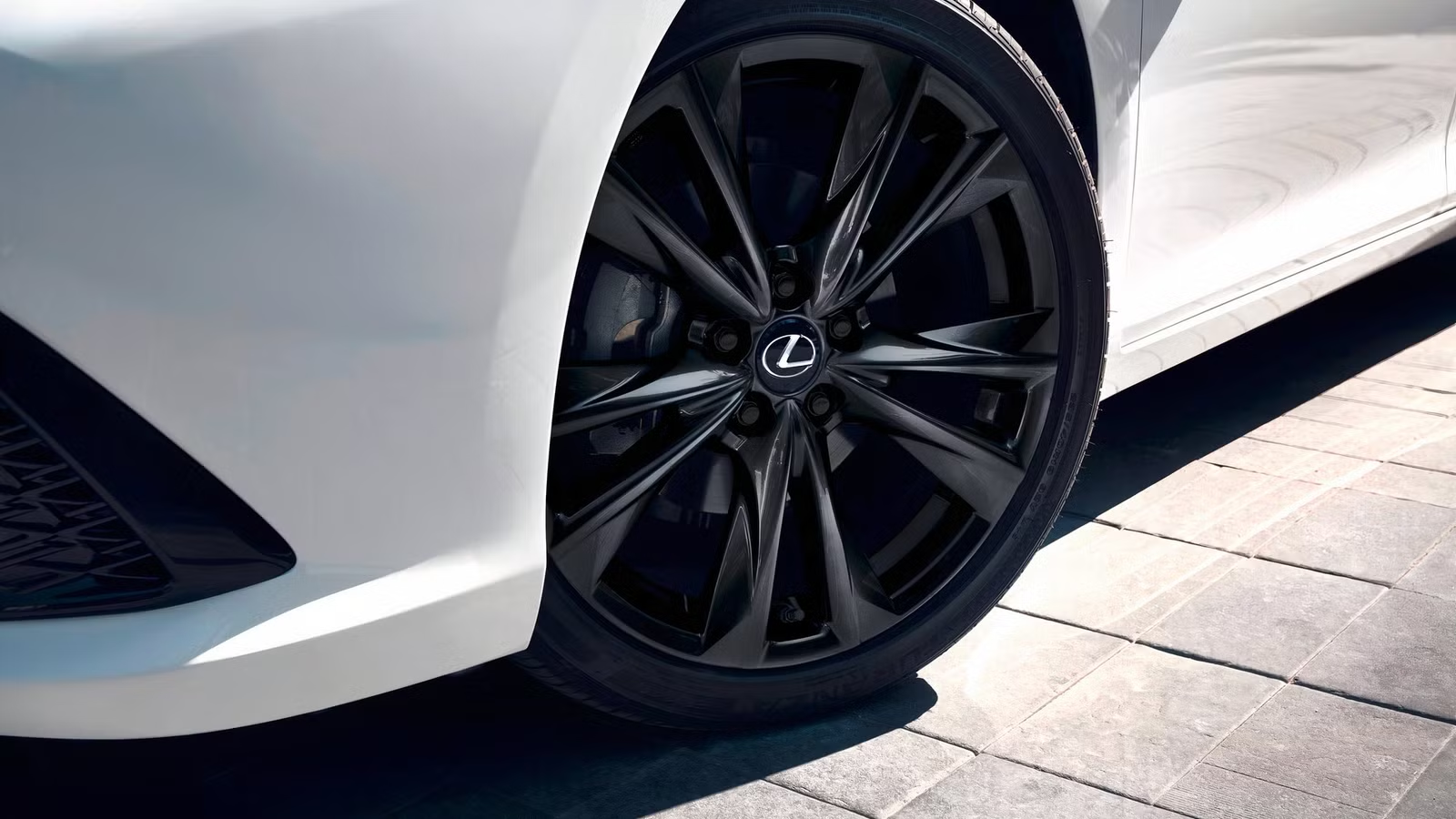
Imagine you’re on the freeway and your vehicle suddenly behaves irregularly. The steering on one side feels heavier, and your car is ever-so-slightly veering in a different direction. This is also accompanied by a dragging sensation on one side. If your vehicle has a tire pressure monitoring system (TPMS), you’re immediately alerted to lost tire pressure before it gets worse. To fix this problem, you simply pull over to the side of the road, grab the spare tire, do a bit of a workout by loosening the bolts, jack up the car, and then completely remove the affected wheel. Problem solved, and you carry on with your trip.

Unfortunately, that’s not the case with a lot of new cars these days. The spare tire (or spare wheel) was always a standard feature that we never really thought about until automakers began removing it. Why have we reached this point in life, and why have automakers waged war on the spare tire? That’s exactly what we’re here to find out.
But First, The Spare Tire’s History
People tend to call these things a spare tire, but that’s a bit of a misnomer. You don’t just change a tire, since that requires specialized equipment. What you carry, in reality, is an entire spare wheel, which is easier to mount on a vehicle. The question is: were spare tires always standard?
Roads Were Worse In The 1900s


The idea of the spare tire came about two decades after the first car was born in 1885 with the Benz Patent-Motorwagen. If you thought the roads were bad today, they were even worse in the early days of the automobile. As the world slowly transitioned from horses to cars, roads in the early 1900s were riddled with debris, and the idea of a smooth road wasn’t even widespread at the time. Thus, Walter and Tom Davies invented the spare tire in 1904. American automaker Rambler was the first to adopt the spare tire into its designs in 1909.
According to a 2017 report from the American Automobile Association (AAA), 28 percent of 2017 model-year cars do not have a spare tire—and that’s notable considering that the AAA rescued more than 450,000 members who had to deal with a flat tire in cars without a spare. In 2006, it was only five percent, and today, Consumer Reports says that 46 percent of its test fleet doesn’t have a spare tire.
The War On Spare Tires Rages On

Considering how widespread this has been, it’s clearly about more than just cost-cutting. So why are automakers ditching the spare tire faster than ever?
Packaging Constraints

With ever-more complex vehicles that have to be electrified or be fitted with technologies that reduce emissions, spare tires now have to compete for space with batteries, catalytic converters, or both. For instance, both the Honda Civic Hybrid and CR-V Hybrid don’t have spare tires, but take away the hybrid system, and the spare tire is back under the trunk floor.
Electric vehicles (EVs) also tend to have no spare tires. Most EVs have their vehicle structures designed around the battery for maximum range, with almost everything else coming in second. Cars.com asked Subaru for comment on why it is removing spare tires, and indeed, packaging was one of the main reasons, though for vehicles that will likely face tougher terrain, the spare tire still lives.
We listen to our owners, who’ve said that in cars like the Forester and Outback Wilderness, a full-size spare and wheel are critical to their mission, which is why we include one on those cars. On other cars, a tire rescue kit helps save weight, maximize cargo capacity, or make room for batteries.
The reasons may vary, but we listen to our owners and prioritize their expectations and specific needs for each model line, which is based on buyer surveys.
Better Efficiency

With EV manufacturers trying to eke out the most range, removing spare tires is an easy way to not just add more range due to lower weight, but also allocate more space for the batteries. For internal combustion engine (ICE) and hybrids, removing the spare tire is also an easy way for automakers to meet emissions and fuel efficiency targets by lowering a vehicle’s weight. Then again, cars have been getting heavier, too, but that is a discussion for another time.
Automakers also point to the fact that many new cars come with TPMS, so drivers know when a tire has suboptimal pressure before things get worse. There’s also the argument that the spare tire is often unused for 99 percent of a vehicle’s life, simply sitting there doing nothing, while a larger EV battery or space allocated for the vehicle’s components—both of which are necessary at all times—is perceived as a more useful utilization of that space. Of course, automakers do save a few pennies from removing the spare tire, too.
No Spare? Don’t Stare

So you have just bought a brand-new 2027 model-year vehicle and have only now realized that it doesn’t come with a spare—what are your options?
Buy Your Own Spare Tire

Thankfully, while automakers themselves have been removing the spare tire, the easiest and most obvious solution you can do is to buy a spare tire yourself. You’ll unfortunately have to deal with reduced cargo space and a less appealing trunk, but that’s probably the second-best solution. If a full-size spare is too cumbersome to carry at all times, you may consider bringing it only when you anticipate poor road conditions or are heading to a destination where tire repair shops are few and far between. Your nearest dealer may offer full-size spares that match your vehicle.
The other alternative is for you to purchase a temporary spare. These will take up less space, but you’ll have to keep in mind that they can’t be driven too far or too fast. Temporary spares (also called donut spares) are a lot thinner and lighter than full-size alloy wheels, which severely limits your vehicle’s performance. They are simply meant to get you far enough to find a repair shop. Temporary spares are easier to purchase, as even your nearest Walmart or Tire Rack sells these.
Inevitably, Check Your Tire’s Condition And Your Tools

But if you’re willing to forgo a spare tire altogether, nothing beats staying vigilant about your tires’ condition before you set out on a drive. Don’t just visually inspect them—check their actual air pressure. Once you find a tire with a lower-than-expected air pressure, it is highly likely that it has a slow leak.
Check the condition of your tire repair kit. Without a spare tire, it’s the only tool that can help you limp to a tire repair shop. Specifically, you’ll need to check the tire sealant’s condition, because it has a shelf life. The last thing you want on the road is for the tire sealant to be ineffective at repairing a puncture. Unfortunately, a tire sealant from the repair kit can only address the most common puncture sizes, and anything larger than what the sealant can cover will render the tire unusable.
Sources: Consumer Reports, AAA, Cars.com

Related posts





Latest Post


No Comments