
Yamaha’s Used V-Twin Cruisers Often Reach 100,000 Miles For A Fraction Of Sportster Money
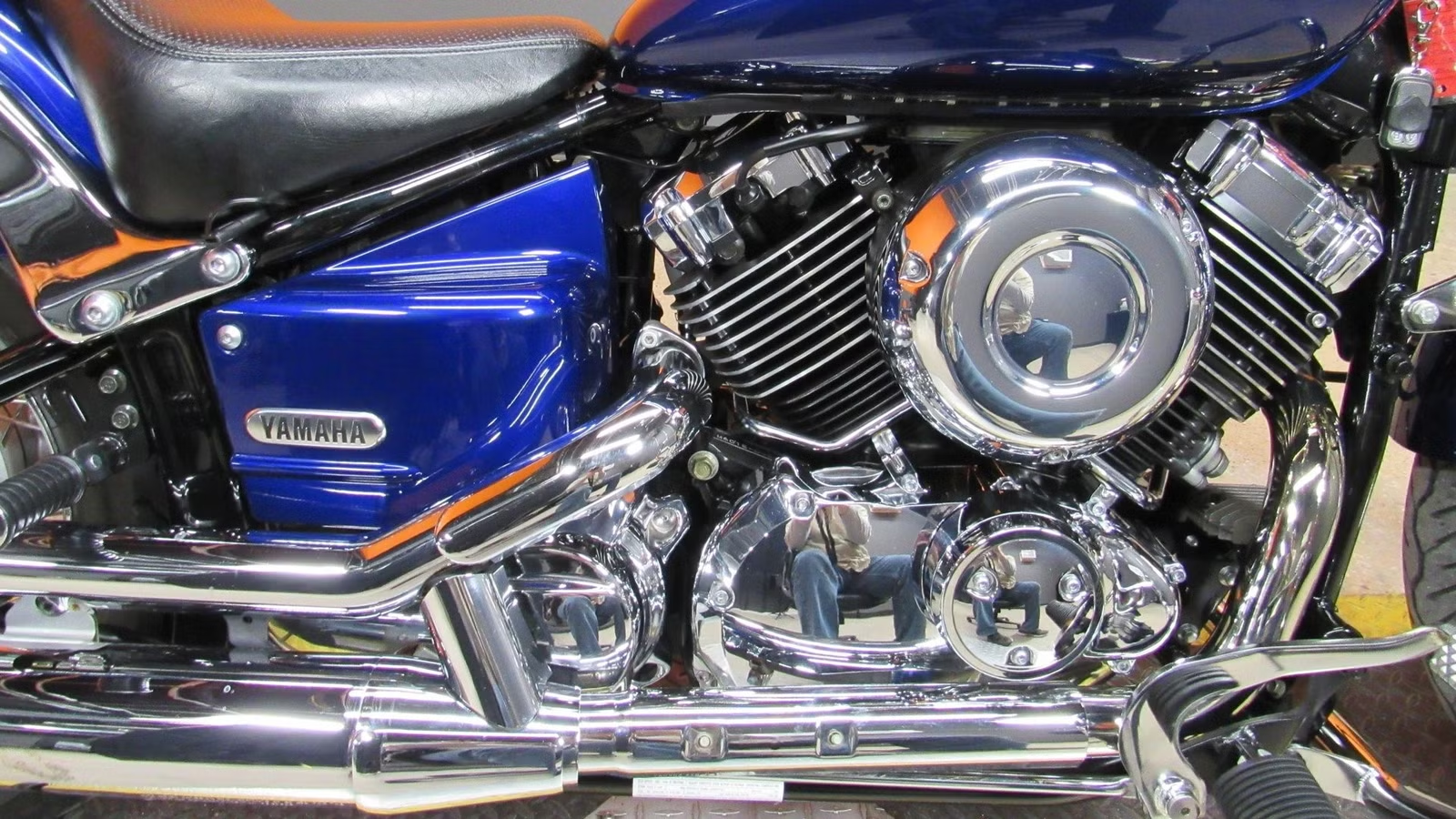
For decades, bikers have paid a significant premium for American cruisers, convinced only Harley-Davidsons can deliver the true cruiser experience and lifestyle. Yet, look at the numbers, and you will notice a stark reliability metric. A 2015 Consumer Reports survey of more than 12,000 motorcycles showed Japanese cruisers having impressive four-year failure rates between 11% and 15%. While motorcyclists drop serious money on a used Sportster, overlooked Japanese cruisers with their low-stress V-twins routinely cross 100,000 miles with simple routine maintenance. It’s a harsh reality check for American cruiser lovers: the most dependable budget-friendly cruisers available today are the most overlooked.
The Japanese Six-Figure Milestone And The Engineering Backing It Up

When analyzing long-term durability, numbers don’t lie. Major industry reliability studies show Yamaha with a four-year failure rate of just 11%, with Honda and Suzuki trailing at 12%. Compare these numbers against high-priced American rivals, and you simply can’t deny the Japanese engineering advantage. The Japanese secret lies in simple, meticulously over-engineered engine architecture. Most of these motorcycles feature a single overhead cam design and low compression ratios. Their air-cooled and liquid-cooled engines run with minimal stress, leading to long lives.
Don’t be fooled by their simple engine construction, though. Tech like low-maintenance shaft final drives doesn’t have the frequent tensioning adjustments and snapping risks associated with traditional chain and belt drives.
These bulletproof powerplants are proof of how modest compression ratios, low thermal stress, and enclosed shaft drives help deliver incredible real-world reliability and longevity. These engines were designed to run forever, needing only routine oil changes and replacement of normal wear parts to reach six-figure odometer status.

Yamaha Virago And V Star Series: The Underrated Kings Of The Used Cruiser Market

These high-mileage Japanese motorcycles are the legendary Yamaha Virago 750 and 1100, and the V Star series that encompasses the 650, 1100, and 1300 models. First launched as air-cooled and shaft-driven cruisers, it can be said that the Virago family laid the foundation for the V Star lineup, delivering authentic long-stroke V-twin engine characteristics without any of the associated reliability issues.
Typical asking prices for Virago 750s in the U.S. used market are a surprisingly low $1,500 to $4,500, while used V Star 650s can be bought between $2,800 and $5,000. These prices are a fraction of what a comparable used Harley Sportster commands, despite their stronger historical reliability and low long-term ownership costs.
You have models like the V Star 650 that offer easy rideability and effortless cruising ability coupled with high fuel economy of around 50 miles per gallon. The larger fuel-injected V Star 1300 brings in more muscle, along with serious interstate touring ability. These motorcycles focus on reliable engineering over brand prestige, offering an authentic middleweight cruiser experience for riders that overlook marketing hype for sheer value.
V Star And Virago Weak Points: Minor Niggles That Barely Affect The Bottom Line

Nothing is immortal, not even motorcycles. However, the usual long-term wear components on these Yamaha cruisers aren’t catastrophic failure points but rather simple, straightforward fixes. A common issue found on older carbureted Viragos and early-gen V Star 650s is the fuel system gumming up due to modern ethanol-blended gas sitting idle in the carburetor float bowls over long-term storage. Other documented niggles are starter clutch wear on older high-mileage models, which can be identified by a loud spinning sound during startup. Also, the regulator and rectifier units face a gradual thermal breakdown after decades of hot engine operating cycles.
With shaft-driven models, you simply have to change the gear oil periodically and lubricate the final drive splines. Crucially, none of these minor niggles have to do with the engine’s bottom end, crankshaft, or valvetrain. As long as you do periodic maintenance and oil changes, the engine can happily tick past the 100,000 miles milestone on factory internals.
Why Smart Buyers Skip The Harley Tax And Go For This Instead

The choice between a used Yamaha V Star or a Virago over a high-priced Harley Sportster boils down to simple math and calculated savings. By opting for a cheaper Japanese motorcycle over its Harley rival, you are saving up enough cash for cross-country road trips, high-quality riding gear, and years of routine maintenance budget. While Harley riders probably end up spending their time solving oil leaks or troubleshooting electrical issues, smart Yamaha owners discretely end up covering thousands of trouble-free miles with drivetrains engineered for the long haul.
These motorcycles also deliver the classic low-slung stance, traditional cruiser ergonomics, and throaty exhaust note without excessive engine vibrations or regular visits to the service center. These Japanese V-twins are the used motorcycle market’s best-kept secret, especially for budget-conscious cruiser buyers who prefer trouble-free saddle time over brand prestige. They are a masterclass in understated engineering, and proof of the fact that you don’t have to pay significant badge tax to enjoy the spirit of freedom.

Related posts


Latest Post


No Comments