
Why New Cars Are Suddenly About To Start Feeling Old Again
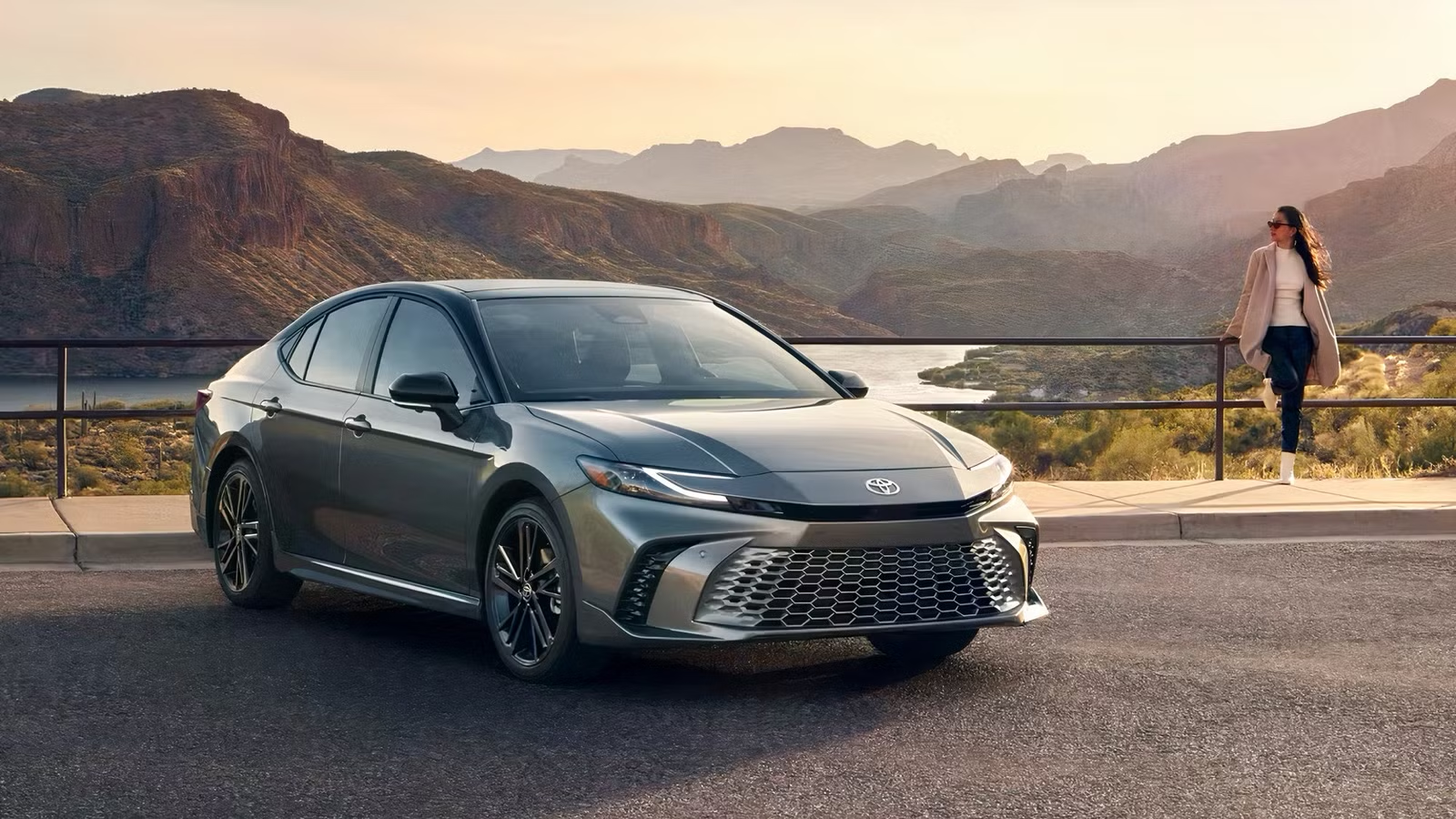
The global automotive market faces a significant slowdown in ground-up vehicle redesigns over the coming model years. Historical data shows that traditional product cycles result in approximately 14 percent of a given brand’s lineup receiving a full redesign in any typical window.

Forecasts covering the 2026 to 2028 model years indicate that this replacement rate drops to roughly nine percent. This shift marks a distinct departure from decades of established automotive strategy, where predictable product replacement intervals drive showroom traffic, sustain consumer interest, and preserve brand equity.
Companies Are Holding On To Older Platforms
Next-generation vehicles are proving to be a rare occurrence on dealership floors. These dealers are preparing to add a host of models based on older architectures, mid-cycle updates, carryover platforms, and nostalgia-driven special editions for 2027. This strategic contraction is caused by economic pressures, shifted electric vehicle roadmaps, and capital allocation dilemmas that are altering the global automotive industry.

The standard life cycle of a consumer vehicle followed a predictable six-to-seven-year timeline. When a manufacturer launches an entirely new architecture, this includes a minor cosmetic refresh or facelift around year three or four. The underlying platform is then replaced by a ground-up redesign after the generation ends.
Why The Seven-Year Timeline Works

This regular timeline provides distinct advantages to carmakers and retail networks. It ensures that vehicles regularly adopt evolving technologies surrounding active safety features, internal combustion engines, suspensions, and digital interface technologies. This also generates marketing momentum that draws buyers back into showrooms for lease renewals or trade-ins.
The projected decline to a nine percent replacement rate disrupts this structural cycle, stretching current platform lifespans well past their intended operational lifespans and forcing consumer-facing operations to adjust to prolonged product stagnation.
What’s Causing The Development Bottleneck

The decline in design innovation and advanced platform development is being caused by the ongoing capital realignment surrounding electrification. Automakers have spent the past decade committing hundreds of billions of dollars toward developing dedicated battery electric vehicle platforms. These expenditures required massive capital commitments for battery gigafactories, electric drive units, software architectures, and supply chain retooling.
Executives planned for these next-generation electric architectures to systematically replace older internal combustion engine platforms throughout the mid-2020s. However, consumer demand for fully electric vehicles grew more slowly than corporate forecasts anticipated. Slower adoption rates, coupled with persistent charging infrastructure deficits and political policy shifts, created a situation where high-cost electric vehicle programs generate insufficient near-term revenue to offset their development expenses.
EV Investments Are Largely To Blame

These market trend changes have led to unexpected losses on pure electric lineups and persistent demand for internal combustion and hybrid powertrains, vehicle manufacturers confront an expensive strategic dilemma. Developing an entirely new vehicle architecture, whether internal combustion or electric, costs several billion dollars per platform.
Automakers can no longer justify spending heavily on fresh internal combustion engine platforms that face future regulatory phase-outs in major global markets. Simultaneously, executives hesitate to accelerate capital spending on new electric platforms until battery costs decline further and market demand stabilizes. This financial friction paralyzes long-term product planning, causing automakers to pause, delay, or outright cancel ground-up redesign programs originally scheduled to debut between 2026 and 2028.
Full-sized gas-powered haulers lead this trend. The current generation of the Dodge Durango continues production after debuting for the 2011 model year, while the 2027 Nissan Murano continues production on a 19-year-old platform. Electric platforms display similar structural longevity, with the pioneering Tesla Model S reaching 14 years of assembly before ending production in May 2026.
This Trend Makes Selling Cars Challenging For Dealers

Instead of introducing ground-up redesigns, manufacturers are now extending the lifespan of existing vehicle platforms through more affordable engineering measures. Over the next few years, dealerships will primarily showcase models with minor cosmetic facelifts and little to no structural changes.
Expect to see modified front fascias, redesigned lighting elements, fresh wheel designs, and minor trim alterations. While these visual adjustments update a vehicle’s appearance in promotional materials, the core mechanical structure, crash performance, hard points, and suspension engineering remain identical to models introduced years prior. These cosmetic changes allow automakers to claim a vehicle is updated without incurring the massive capital expenditures required for structural platform overhauls.

Additionally, these carryover vehicles are becoming the standard product strategy across mid-tier and high-volume vehicle segments. A carryover model enters a new model year with virtually no substantive modifications, retaining the identical chassis, powertrain choices, interior paneling, and electronic control units from previous production years.
In previous market cycles, automakers limited carryover strategies to niche vehicles or models nearing immediate retirement. Over the 2026 to 2028 period, this status expands to high-volume SUVs, midsize pickups, and core passenger sedans. Brands accept the risk of showroom repetition because keeping an existing production line active requires minimal incremental capital expense. This generates essential cash flow while management reassesses long-term electrification timelines.
Special Editions Use Nostalgia To Keep Consumers Interested

Designers and engineers disguise aging platform fundamentals and maintain consumer interest through some intelligent marketing endeavors. One recent trend that has been picking up traction are retro editions, trim extensions, and heritage branding packages. These typically include historical paint colors, vintage badges, unique interior upholstery choices, and robust appearance packages. Manufacturers use this to create artificial novelty by targeting emotional buyer appeal rather than engineering advancement.
A special appearance package allows an automaker to command a premium retail price on an older platform whose development costs have already been fully amortized. Consequently, while showroom floors may look diverse due to varied trim packages and special editions, the underlying mechanical diversity of the vehicle market continues to shrink.

This prolonged reliance on older vehicle architectures creates significant operational challenges for retail dealerships. Dealers depend on genuine product innovation to motivate existing vehicle owners to trade in late-model cars. When a new generation of a popular model delivers only minor cosmetic adjustments and recycled powertrain components, consumers find fewer compelling reasons to upgrade.
Lease returns present a particular challenge. Drivers finishing three-year lease contracts will enter showroom floors only to find that the newest equivalent model offers almost no functional or technological improvements over the car they currently drive. This dynamic encourages consumers to buyout their current leases, buy used vehicles, or defer new purchases entirely, placing downward pressure on retail sales volumes and dealer profit margins.
Long-Term Issues With Keeping Old Platforms Alive

The technological consequences of extended vehicle life cycles extend beyond mechanical components to include software and electronic architectures. Modern vehicles rely on centralized computing clusters, advanced driver-assistance system sensors, and high-speed internal data networks to support active safety features and cloud connectivity. Vehicles built on older architectures struggle to support modern over-the-air software updates, advanced hands-free driving software, and sophisticated infotainment environments.
As consumer electronics, such as smartphones and displays, advance rapidly, the contrast between modern personal devices and aged vehicle infotainment systems becomes glaringly obvious to prospective buyers. Automakers attempt to bridge this technological gap by retrofitting digital displays into older dashboard structures, but these surface updates rarely match the seamless functionality of native, next-generation digital platforms.

This new-model drought also shifts competitive dynamics between traditional manufacturers and adaptable industry newcomers. Legacy OEMs are burdened by older manufacturing facilities, existing dealer contracts, and dual investments in combustion and electric technologies and face high financial friction when attempting to pivot.
In contrast, newer manufacturers that operate with fewer platforms or focused product lines can sometimes iterate digital features and vehicle software more rapidly. However, even young electric vehicle startups experience financial constraints due to broader capital market contractions, meaning the slowdown in brand-new vehicle platforms cuts across nearly the entire automotive landscape.
Consumers Are Left With Expensive Old Product

For consumers, this multi-year product drought permanently alters the vehicle buying process. High transaction prices, elevated financing rates, and minimal engineering differences between model years change the value proposition of buying new. Consumers are increasingly motivated to hold onto their current vehicles longer, resulting in an aging total vehicle fleet across major markets.
When consumers do decide to purchase, the incentive to pay a premium for the current model year diminishes if the vehicle relies on a decade-old chassis architecture. Used late-model vehicles are becoming increasingly attractive alternatives, as they offer essentially identical performance, interior space, and mechanical reliability compared to brand-new showroom inventory at a lower capital cost.
It’s All About Keeping Operations Feasible

Ultimately, the anticipated drop in vehicle redesigns to nine percent between 2026 and 2028 reflects an automotive industry in the middle of a costly structural transition. The massive capital demands of electrification, combined with volatile consumer adoption rates and unpredictable regulatory mandates, forced corporate leadership teams to prioritize cash preservation over aggressive product development.
Automakers choose to stretch existing assets, refine proven technologies, and rely on surface-level visual updates rather than risk billions on full-scale redesigns during a period of intense industry uncertainty. As a result, the automotive marketplace over the coming years will be characterized by continuity rather than innovation, presenting buyers and dealers with a landscape defined by carryovers, retro styling, and long-serving platforms.
Sources: The Wall Street Journal, The Business Model Analyst, S&P Global Mobility, and Atradius.

Related posts




Latest Post


No Comments