
The Middleweight Touring Bike With Honda Reliability And BMW-Level Road Manners
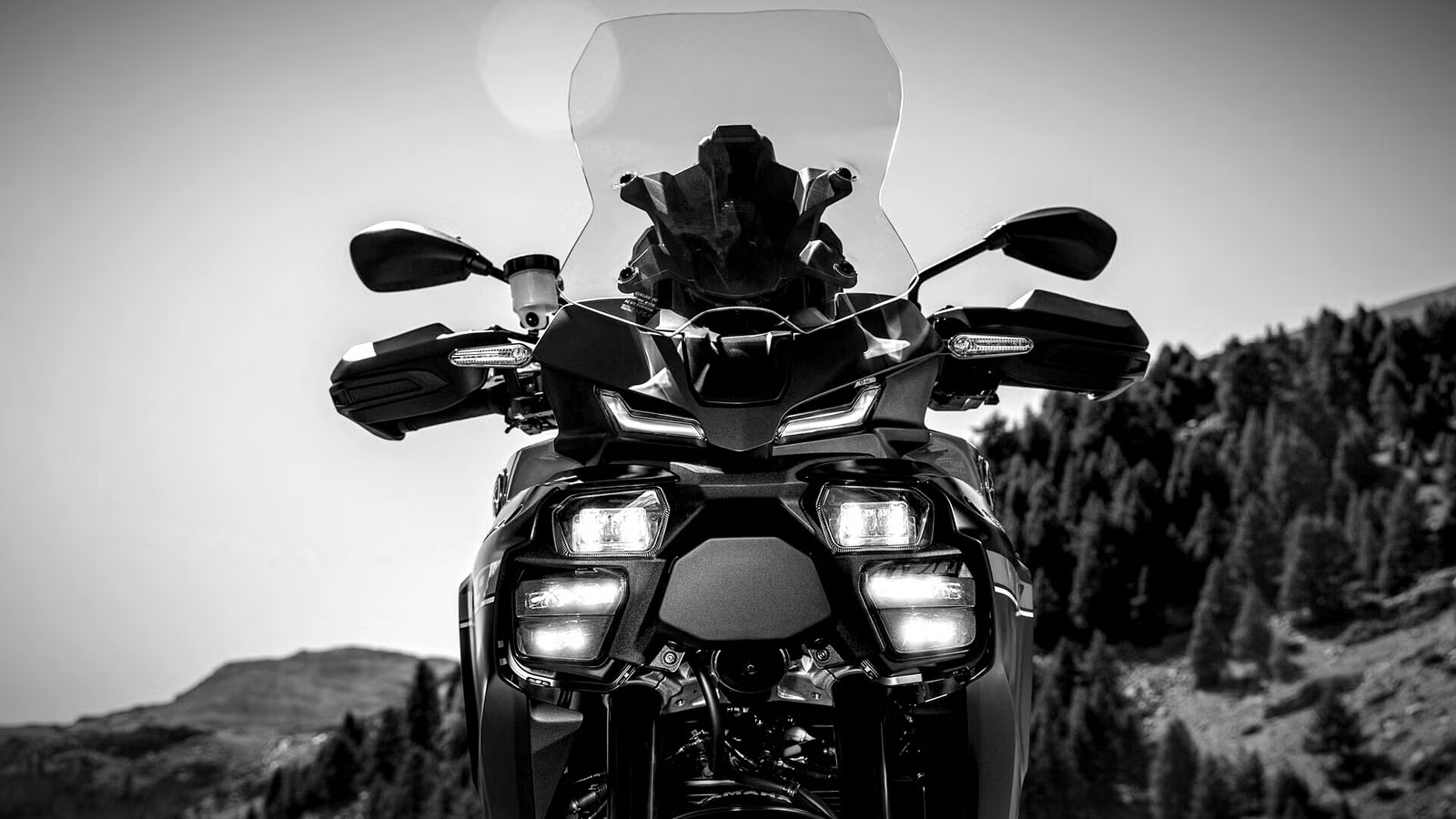
Touring motorcycles have never been more compelling — or more competitive. Yet two names keep surfacing whenever riders start their research: Honda and BMW. They occupy very different corners of the segment, but both stand for something consistent: Honda for bulletproof reliability, BMW for chassis refinement and road manners that feel almost surgical. The challenge has always been finding a bike that captures both qualities without demanding a full-dresser budget or a full-dresser’s mass. One middleweight does exactly that — and then adds a character all its own.
The Case For A Middleweight Over A Full-Size Tourer

Full-size tourers, no matter what kind they might be, are absolutely enormous. They have to be, to be comfortable for two-up touring. You also need to factor in luggage capacity for two people, so the chassis needs to be stronger — meaning heavier — and the engine needs to be larger, meaning a bigger fuel tank. This vicious cycle continues until you’re left with something the size of a hippo.

While a full-dresser might suit some riders perfectly, a middleweight is a far better choice if you don’t carry a pillion all the time or simply want more fun on the road. Its smaller size makes it less intimidating, so you’ll feel more confident riding it in traffic, on dirt roads, and more frequently in general — purely because of the reduced size and weight. The best motorcycle is always the one you ride the most.
The Yamaha Tracer 9 Has Honda Reliability And BMW-Level Road Manners


The Tracer 9 arrived around the same time that the V-Max was discontinued, during a period when Yamaha gave its entire motorcycle lineup a thorough shake-up. The Tracer 9 was one of the standout new concepts to emerge from that era. The formula was relatively fresh at the time: take a sporty naked or sports bike platform, adapt the ergonomics to a touring rider triangle, ensure the engine delivers enough torque for long-haul duty, and layer on the features that make extended riding genuinely enjoyable. Yamaha executed this well, borrowing the chassis and drivetrain from the MT-09 and adding meaningful wind protection along with a larger TFT display.
It Is Reasonably Priced For What You Get

The Tracer 9 is priced at $12,599, landing it squarely between value-driven and premium middleweight tourers. Yamaha offers several variants globally, but the US market receives the base version with standard luggage. That means it misses out on high-tech additions like radar-based adaptive cruise control, but even so, it delivers strong value for the money.
CP3 Engine Remains Fun And Reliable Even Now

The MT-09 debuted in 2013, introducing the world to Yamaha’s brilliant CP3 crossplane inline-three engine. More than a decade on, it still has everything needed to put a wide grin on your face. In the Tracer 9, it produces 117 horsepower at 10,000 RPM and 68.6 pound-feet of torque at 7,000 RPM. Its three cylinders displace 890cc with a compression ratio of 11.5:1. A six-speed manual transmission and chain drive complete the drivetrain. The five-gallon tank, paired with a claimed efficiency of around 48 MPG, should comfortably deliver over 200 miles per fill-up.
A Proven Powerplant Over The Years

The CP3 engine’s performance is only half the story — its dependability is the other half. Thanks to its relatively modest compression ratio and years of continuous production refinement, the engine has built a well-earned reputation for durability. It just works. Routine services and fresh fluids are typically all it demands. There are no notorious failure modes or risk of catastrophic failure mid-trip to worry about.

High-mileage Tracer 9 examples are not hard to find, either. Many owners report crossing the 50,000-mile mark without drama, and some have pushed close to 100,000 miles. There is even a documented case of an owner reaching 250,000 miles — a remarkable achievement for any motorcycle. If you spot unsold Tracers sitting at a dealership, it likely has more to do with the model’s niche positioning in Yamaha’s lineup than any question of reliability.
Fun Chassis Complements The Engine Perfectly

Yamaha retained the twin-spar chassis from the MT-09 but fitted it with longer-travel suspension to suit the Tracer 9’s touring brief. It isn’t an overly complex setup, but it works well for the purpose. The engine serves as a stressed member, and the subframe has been reinforced to handle the additional loads of a pillion and luggage. The MT-09 DNA also ensures there’s a sporty edge on tap when the road gets interesting — you can still enjoy a set of twisties on your way to the next state.
Conventional Suspension And Brakes Work Incredibly Well

As a middleweight, the Tracer 9 keeps its suspension hardware straightforward. KYB-sourced 41mm inverted forks up front and a rear monoshock handle the work, and both ends are adjustable for preload and rebound damping. Travel measures 5.1 inches at the front and 5.2 inches at the rear. Braking hardware consists of 298mm twin discs with four-piston fixed radial calipers at the front, and a 267mm single disc with a single-piston caliper at the rear. Seventeen-inch alloy wheels wrapped in radial tires reinforce the bike’s sporty intent.
Compact Dimensions For Its Purpose Make It Fun

The Tracer 9 is quite compact given its capabilities: 85.6 inches long, 35.4 inches wide, with a wheelbase of just over 59 inches. It does run tall, with a seat height of 33.3 inches and 5.3 inches of ground clearance. The 483-pound wet curb weight is slightly on the higher side, though understandable given the twin-spar chassis and inline-three engine. Together, the frame geometry and compact footprint make this a genuinely versatile touring bike — and a strong candidate for a one-bike garage.
Feature-Loaded Single Variant For The U.S. Market

The Tracer 9 is offered in several variants globally, but the US market receives a single well-equipped version. Standard kit includes a large seven-inch TFT display with Bluetooth and navigation built in. The distinctive matrix headlamp features cornering functionality, the windshield is manually height-adjustable, there’s a phone storage cubby with a USB charging port, and the turn signals are self-canceling with a lane-change function included.
Complete Electronics Package Adds Safety And Fun In Equal Measure

A six-axis IMU and ride-by-wire throttle underpin the Tracer 9’s electronics suite, giving it the kind of technology you’d expect from a premium sport tourer: ride modes, cornering traction control, cornering ABS, and cornering back-slip regulation. Yamaha has also carried over anti-wheelie and slide control from the naked and sport bike variants — a welcome bonus.

Two rider-adjustable ride modes are included, and each individual parameter within those modes can be tailored to personal preference. Worth noting: the two-way quickshifter is an optional extra for riders who want a sportier feel. It’s the current-generation unit, capable of shifting both up and down depending on whether the throttle is open or closed.
Tracer 9’s Competition Is Fierce

The Tracer’s segment offers some genuinely strong alternatives. We’ve already mentioned the Triumph Tiger 900 GT, which runs a similar three-cylinder engine and has since adopted its own distinctive firing order. The more direct competition, however, comes from the brands named in this article’s premise. Honda’s NT1100 DCT sport tourer is priced at $11,999 and bundles a six-speed dual-clutch automatic gearbox with a TFT touchscreen featuring wireless Apple CarPlay and Android Auto. Saddlebags are absent, though.

The BMW F 900 XR is another compelling option. Smaller and lighter than the Honda yet packing more power, it also has a weight advantage over the Yamaha. BMW includes heated grips and adjustable brake and clutch levers as standard, and the options list is impressively deep — covering electronic suspension, keyless ignition, cruise control, a center stand, and a titanium exhaust muffler.
Source: Yamaha Motorsports

Related posts

Latest Post


No Comments