
This Motorcycle Is About To Make Track-Day Heroes Question Everything
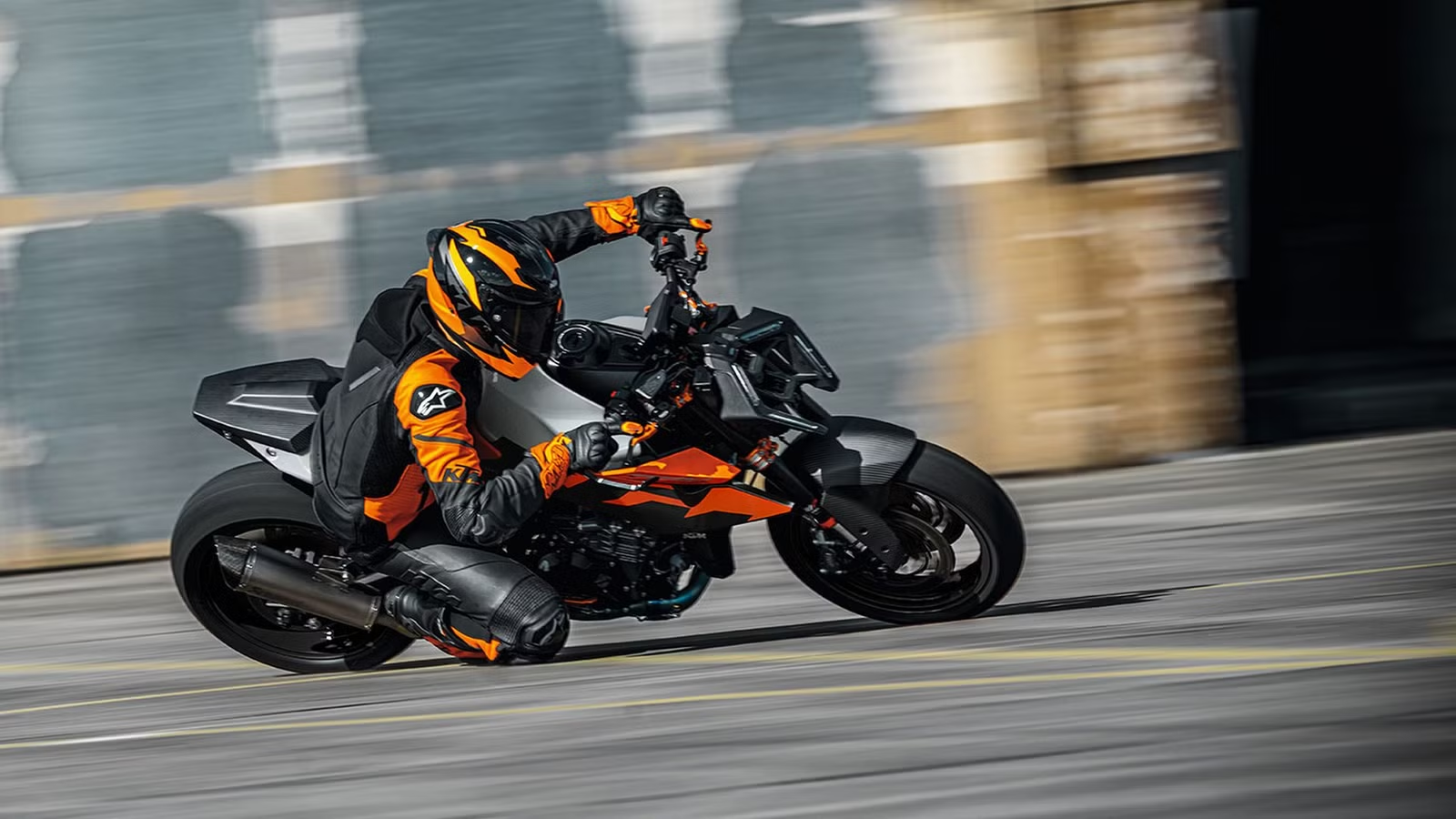
Some performance motorcycles are all about big numbers. They’re built around horsepower, acceleration, and top speed, and honestly, there’s nothing wrong with that. If you want outright performance, those numbers obviously matter. But some bikes do things a little differently. They might not have the bigger numbers on the spec sheet, and they’re not necessarily built to chase lap times. Instead, they can make the roads you actually ride a lot more exciting. And that’s where things get interesting.
Why Fun-Per-Mph Matters More Than Horsepower On Real Roads

Numbers are probably the easiest way to compare motorcycles. Power, torque, weight, and acceleration all tell you something, but they don’t really tell you what a bike is going to feel like once the road starts getting twisty. A performance motorcycle has to deal with whatever the road throws at you. You’re dealing with rough patches, tighter corners, changing grip levels, and plenty of roads where you simply don’t have enough room to use all that power. That’s why the way a bike delivers its performance matters so much. If it feels responsive and predictable at normal road speeds, you can actually enjoy more of what the motorcycle has to offer instead of constantly chasing its limits.
Where Stiff, Track-Tuned Chassis Fail: The Rough Road Problem

Real roads are obviously nothing like a racetrack. You get rough surfaces, blind corners, and plenty of things you simply can’t predict. There are bumps, broken patches, traffic, and corners that suddenly tighten when you’re already committed to the turn. That’s where a bike’s chassis really starts to matter. You want something that changes direction easily but still stays settled when the road isn’t perfect. If the bike can do that, you can enjoy a twisty road without feeling like you have to ride at ridiculous speeds.
Lightweight Handling Makes Every Road More Enjoyable

Weight can actually make a bigger difference to how a bike feels than you might think. Get a lighter motorcycle, and you’ll notice pretty quickly that it takes less effort to change direction. Flicking it through one corner to the next feels easier. It also makes the bike feel more manageable when you’re braking or getting back on the throttle.

There’s simply less mass to slow down or move forward, so you can make small adjustments without feeling like you’re working against the motorcycle. And that’s where a light bike can be so much fun on a real road. You don’t need to be riding at crazy speeds to enjoy it. If the bike feels quick to respond and easy to place, even an ordinary set of corners can become something you want to keep riding.
Why The 990 Duke’s Riding Position Is As Important As Its Engine

The KTM 990 Duke is basically about getting the balance right. It has enough performance to keep things exciting, but it’s still compact and responsive enough that you can actually use it. It’s small, easy to move around, and the upright riding position gives you a good view of what’s coming.
When the corners open up, there’s plenty of engine to play with too. And that’s what’s really fun about the 990 Duke. You don’t need a racetrack or crazy speeds to enjoy it. Find a good stretch of twisty road, get the bike moving from one corner to the next, and there’s always something going on. Then, when you get a clear stretch, you can open the throttle and let that engine do its thing.
The 947cc Twin’s Midrange Punch Meets A Chassis Built To Match It

At the heart of the 990 Duke is KTM’s 947cc LC8c parallel twin engine. It produces 121 horsepower of power and 76 pound-feet of torque, sent through a six-speed gearbox. On paper, that’s plenty of performance. But what makes the 990 Duke interesting is what happens when you put that engine together with the chassis.
KTM uses a chromium-molybdenum-steel frame, and it works really well with the character of that engine. The engine gives you plenty of punch, while the chassis keeps everything feeling controlled and predictable. You can get on the throttle without feeling like the bike is going to run away from you, and when the road starts getting twisty, it’s easy to work with.
Corner Exit Power That Works At Road Speeds, Not Just At The Redline

That 76 pound-feet of torque gives the 990 Duke plenty of punch without making you work the engine all the time. You don’t have to keep revving it out to get a strong response. And that’s useful when you’re actually out riding. Come out of a corner, get back on the throttle and the bike picks up speed without you having to work with the gears. Then, when the road opens up, you’ve still got 121 horsepower to play with. So the 990 Duke doesn’t need to be ridden flat-out to be fun, but when you do get a chance to open it up, there’s plenty there to keep things interesting.
How WP Suspension Lets The 990 Duke Stay Composed When The Road Turns Rough

The engine’s performance works even better because the bike isn’t carrying a ton of weight. At 395 pounds without fuel, the 990 Duke is pretty light for something with this much performance, and you notice that as soon as you start leaning it into corners. The rear subframe is aluminum, while the suspension uses a 43mm WP APEX inverted fork up front and a monoshock at the rear.
There’s 5.5 inches of travel at the front and 5.9 inches at the rear, so the setup has enough room to deal with bumps and rough patches without upsetting the bike. And that’s where everything comes together. You get the punch from the engine, but the bike still feels light and easy to move around. Turn into a corner, make a small adjustment to your line, get back on the throttle and the Duke just gets on with it. It doesn’t feel like you’re fighting the bike, which is a big part of why it’s so much fun on a real road.
The Electronics Make Its Performance Easier To Enjoy

The electronics on the 990 Duke aren’t just there in case something goes wrong. They actually change how the bike feels, depending on how and where you’re riding. You get five riding modes: Street, Sport, Offroad, Rain, and Custom. There’s also cornering ABS, lean-angle-sensitive traction control, and Supermoto ABS.
In front of you is a five-inch color TFT display with smartphone connectivity, and the bike gets full LED lighting. If you want to go a step further, the optional Tech Pack adds things like adjustable slip control, anti-wheelie settings, launch control, a bidirectional quickshifter, and cruise control.
The Track Mode That Turns A Road Bike Into A Trackday Tool

If you do take the 990 Duke to a track, the optional Track Mode lets you have a lot more fun with the electronics. You get the sharpest throttle response, 10 levels of rear-wheel slip control, five levels of anti-wheelie control, and launch control too. The TFT display also switches to a track-focused layout, showing lap times and telemetry data. The 990 Duke can be pretty easy to live with when you’re riding around town, but take it to a track, and you start to see just how much more the bike has to offer.
Why The 990 Duke Works So Well On Real Roads Compared To Rivals

The KTM 990 Duke occupies a pretty interesting spot. It’s got plenty of performance, but you don’t need to be on track to enjoy it. The Kawasaki Z900, Yamaha MT-09, and Triumph Street Triple RS are all great road bikes too, but they each go about things a little differently. You really start to notice the difference when the road gets twisty. The Z900 has that smooth, refined feel, while the MT-09 is more playful and easygoing. The Street Triple RS feels more focused when you start pushing harder through corners.
The 990 Duke takes a slightly different route. It feels quick to respond when you turn in, easy to move around, and eager to change direction when the road starts throwing corners at you. The suspension also gives it enough room to deal with rougher patches, so you’re not limited to perfectly smooth roads to enjoy it. And that’s really where KTM makes its case. The other bikes are more than capable, but the 990 Duke has a way of making an ordinary road feel a bit more interesting. You can have fun with it without constantly feeling like you need to push harder or ride faster.
Sources: KTM

Related posts

Latest Post


No Comments