
The Middleweight Superbike Europe Buried That Suzuki Still Quietly Sells In America
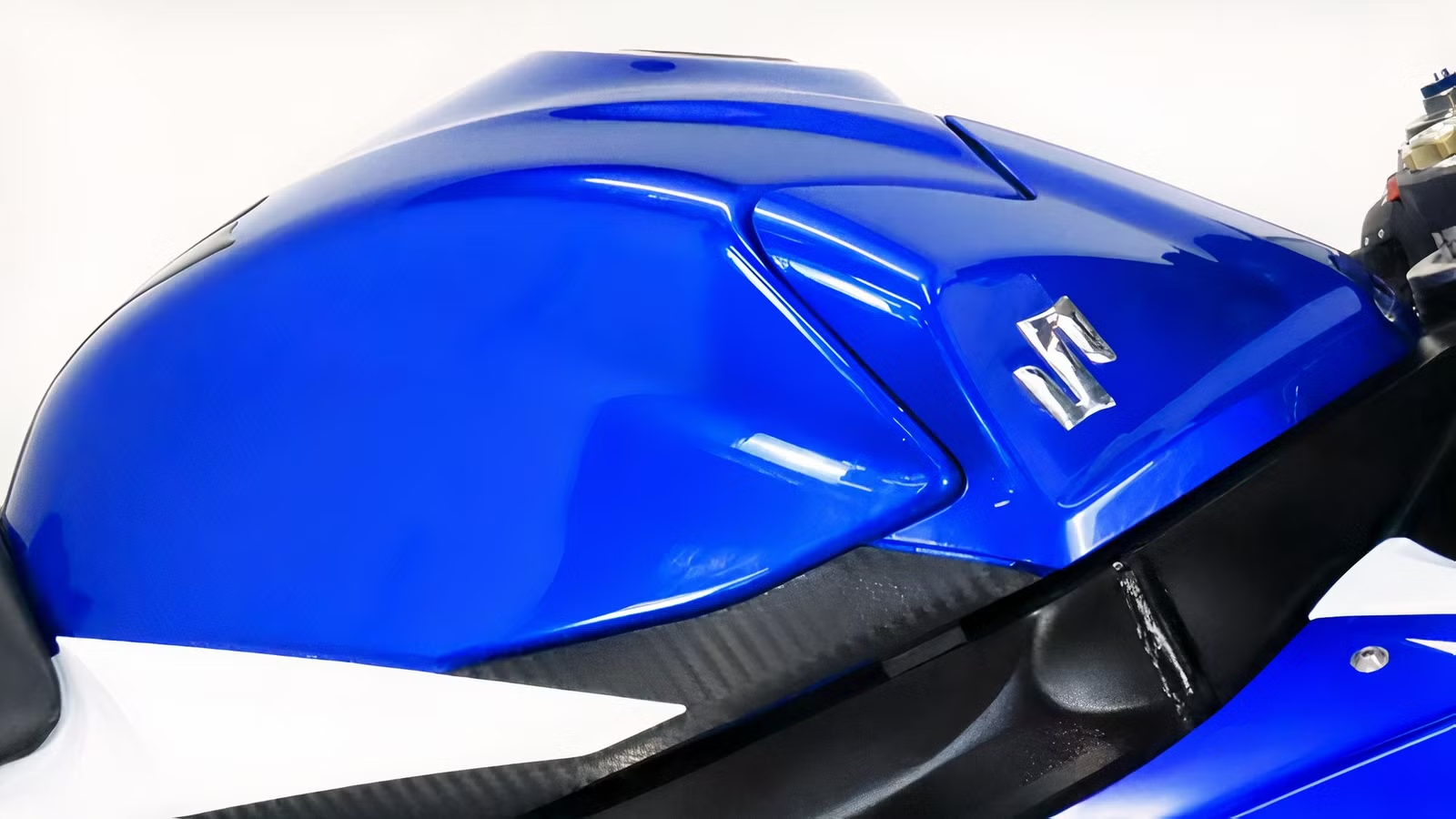
Skim through global motorcycle enthusiast forums, and you will probably come across a bizarre irony. Motorcycle riders the world over mourn the death of an iconic middleweight sportsbike, yet that very motorcycle is sold, brand new, in North America. Around 2018-2019, strict Euro 4 and Euro 5 emission norms forced the Japanese bikemaker — Suzuki — to discontinue this motorcycle across Europe and Asia, leading many to believe it to be the end of an era. However, if you step into a North American showroom, you will find the very same motorcycle is priced at $13,549, and sold alongside its 40th Anniversary variant, proving that it is alive and kicking. It’s a living fossil, a middleweight built around a 15-year-old platform that has managed to outlive its entire class.
The Class Of One: How The Middleweight Sweet-Spot Helped Suzuki

This Suzuki motorcycle is built on the ultimate real-world cheat code: a near liter-class motorcycle performance shoehorned inside an agile 600 cc-class chassis. This unusual formula made it a devastating corner carver and track-slayer. It’s current spec sheet lays out some impressive numbers for the middleweight class — a high-revving inline-four engine delivering 148 horsepower and 64 pound feet of torque. That’s enough muscle to push it to a heady top speed of 168 mph. Crucial to the motorcycle, all that performance came without the intrusive safety net of rider aids. It does not have digital intervention like multi-stage traction control, or even ABS, you get a raw, unadulterated, analog riding experience. The reason that made it iconic was its ability to give riders pure mechanical feedback without digital intrusion. It offered sportsbike traditionalists a lightweight chassis paired with a linear and accessible performance-delivering inline-four motor.
More importantly, with historic rivals like the Honda CBR600RR and Triumph Daytona 675 R either pivoting to other segments or completely vanishing from major markets, this Japanese supersport has the benefit of playing in an uncontested segment.
The Suzuki GSX-R750: The Time-Capsule Sportsbike


This unkillable middleweight icon is the Suzuki GSX-R750. In a world where the middleweight supersport category is all but extinct, the GSX-R750 soldiers on with its L1-generation chassis and an engine that’s remained virtually unchanged for over a decade. The GSX-R nameplate is a legendary one, a collector-spec lineage that evolved from the iconic 1985 “Slabby” that weighed a portly 452 pounds, into the 428-pound 1996 SRAD and 2000 “Y2K” models, and finally onto the current 419-pound North-America spec GSX-R750.
Suzuki made a bold choice of not spending millions developing a Euro-5 compliant engine for a dying segment, but rather keeping it alive for deregulated markets like the United States. Despite a decade-old chassis and engine, the L1-platform continues to sell in the USA because it delivers bullet-proof, race-proven reliability — a raw and direct sensory riding experience that overtly-complicated modern motorcycles can’t match.
Market Anomaly: How The Suzuki GSX-R 750’s Lone Rider Status Keeps Resale Values High

The Suzuki GSX-R750’s refusal to follow market trends led to the creation of a fascinating anomaly. Look at the used supersport market, and you will find well-maintained GSX-R750s commanding used prices of around $10,000, and that’s when a brand-new model costs $13,549. This high price point is thanks to a global scarcity phenomenon. The emission bans across Europe and Asia have led to a demand for pre-owned Gixxers worldwide. Besides that, the GSX-R750 delivers an incredible performance-per-dollar value proposition. It significantly undercuts modern liter-class superbikes while offering more usable street performance, and, compared to today’s budget-friendly twin-cylinder sportsbikes, delivers more high-revving excitement.
Buyers know that since this Suzuki platform has remained virtually unchanged for years, pre-owned GSX-R750s do not suffer from sudden irrelevance, unlike modern superbikes that go through when a new model debuts thanks to today’s planned obsolescence culture. So it does not matter if you buy a five-year-old GSX-R750 or ride a brand new 2026 model off the dealership floor, you are basically getting the same performance package. This consistency seems to have created surprisingly incredible market stability. Used motorcycle buyers are willing to spend top dollar as they know they are buying a bulletproof platform that retains its value significantly better than most middleweight motorcycles out there.
The Last 750 Supersport Standing: How The Suzuki GSX-R750 Stacks Up Today

Stringent global emission norms and a rapidly evolving rider demographic has pushed bikemakers away from expensive, high-revving four-cylinder motorcycles, towards simpler, cheaper parallel twin motorcycle platforms. Suzuki, though, has taken a radically different path. The Japanese bikemaker continues to sell its GSX platform in North America, along with its modern twin-cylinder GSX-8R sportsbike.
While most of the motorcycle industry has pivoted from inline-four platforms to middleweight twins that focus on urban commuting and accessible riding, the GSX-R750 stands as a defiant monument to the golden era of Japanese supersport. It reminds us of a time when engineering ability was measured in an engine’s ability to rev past 14,000 rpm, unlike today’s focus on fuel economy. Suzuki’s call to keep the GSX-R750 alive allows younger American riders to experience an iconic analog 750cc inline-four.
By keeping its legendary engine architecture alive in deregulated regions, Suzuki has managed to create an exclusive niche for inline-four purists. How long will it be able to do that, given the changing emission laws, is the million-dollar question. While no one knows when, that time is certainly coming. Until then, we can only celebrate a motorcycle that defied global market shifts and outlived its own class extinction.

Related posts


Latest Post


No Comments