
Honda Pilot XXL: Bigger Hybrid SUV To Rival Sequoia, Expedition
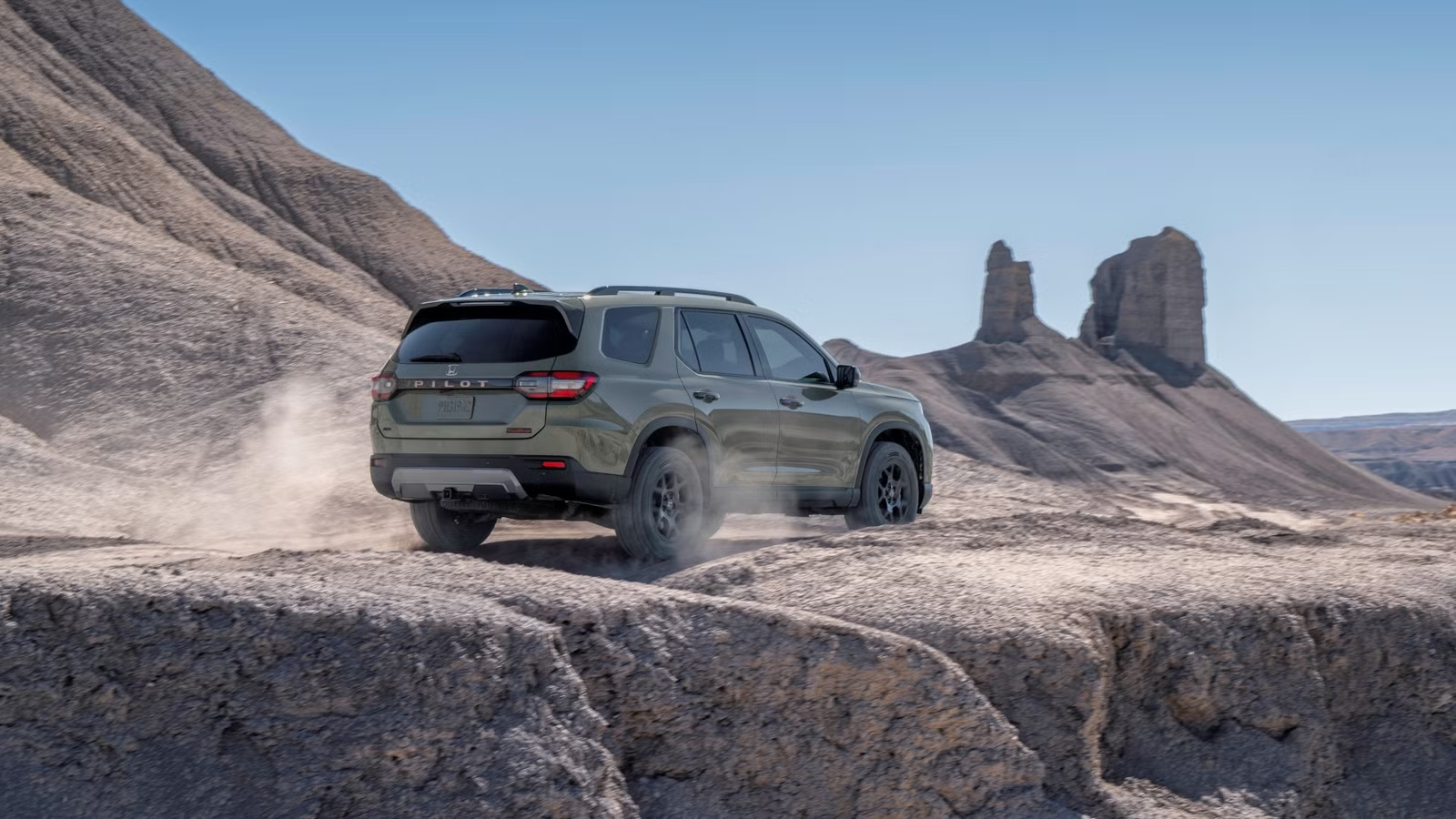
Honda has spent decades letting Toyota, Chevrolet, Ford, and Nissan fight over the biggest, toughest three-row SUVs while the Pilot stayed a mid-size player. That’s reportedly about to change. Automotive News says Honda is developing a flagship SUV internally called the Pilot XXL, an extra-large three-row crossover that would slot above the current Pilot and edge into territory long owned by body-on-frame trucks like the Expedition and Sequoia.
At roughly 208 inches long, the Pilot XXL would match the Toyota Sequoia’s footprint almost exactly, and it would come within a few inches of the Nissan Armada, Ford Expedition, and Chevy Tahoe. That’s a serious statement from a brand that has never fielded anything bigger than the Pilot. It also raises the real question underneath this report: can a unibody hybrid actually go toe-to-toe with trucks built for towing and off-roading, or is this just Honda playing catch-up on paper?
Honda Has Never Played In This Sandbox Before
The Pilot has been Honda’s biggest vehicle since it launched in 2002, and it’s grown steadily since, but it has always competed with unibody rivals like the Highlander, Palisade, and Telluride. Honda has simply never built anything sized to compete with body-on-frame SUVs, a segment where Toyota, Ford, Chevrolet, and Nissan have operated with little pressure from Japanese or Korean rivals outside of Toyota’s own Sequoia.

That absence is notable given how much money sits in that segment. The Pilot moved 83,486 units through August, down 2.3% year over year, while Chevrolet needed just six months to sell 81,417 Traverses. Honda reportedly expects the Pilot XXL to move around 40,000 units annually in the U.S., a modest number next to the Pilot’s current pace, but likely a profitable one given the higher price points these larger SUVs command.
How The Numbers Stack Up Against Sequoia, Expedition, And Tahoe

The current Pilot runs 200.1 inches long, already longer than the Ford Explorer, Toyota Highlander, and Mazda CX-90, and just 1.3 inches shy of the Toyota Grand Highlander. Add the reported eight inches for the XXL and Honda lands at 208.1 inches, exactly matching the Sequoia, 1.5 inches shorter than the Armada, 1.8 inches shorter than the Expedition, and 3.2 inches shorter than the Tahoe.
That’s a genuine leapfrog over the entire unibody three-row class and puts Honda within inches of the body-on-frame giants it has avoided for two decades. On paper, the Pilot XXL wouldn’t just be bigger than the Pilot, it would be sized like the trucks Honda has never tried to challenge.
The Hybrid Pitch, And Where It Won’t Be Enough

The Pilot XXL is expected to run Honda’s next-generation V6 hybrid powertrain, the same system debuting in the next Acura RDX by the end of the decade. It pairs a V6 with larger electric motors and a separate rear motor for electronic all-wheel drive, similar in concept to the setup in the hybrid CR-V. Honda says its next-gen hybrid system boosts fuel efficiency by at least 10% while cutting costs by 30%, and the unibody, car-like chassis should also deliver more composed handling than a body-on-frame rival.
But body-on-frame buyers aren’t shopping for ride comfort or MPG first. They’re shopping for towing capacity, payload, and off-road hardware, and that’s exactly where the Pilot XXL’s unibody roots become a liability rather than a selling point. Matching the Sequoia’s length on a spec sheet is one thing; matching its towing numbers on a body-on-frame platform is another problem entirely, and nothing in the Automotive News report suggests Honda has solved it.
A 2032 Timeline Ties It To Acura’s Own Flagship Push

The Pilot XXL isn’t arriving anytime soon. Automotive News pegs production at Q1 2032, trailing the related Acura flagship SUV, which is expected to enter production around 2029 on a shared platform. That gap suggests Acura gets first crack at the new architecture and hybrid powertrain, with Honda’s version following once the technology has already proven itself in a pricier package.
It’s a long runway for a vehicle that doesn’t exist yet in any confirmed form, and Honda hasn’t commented on the reporting. Still, the strategic signal is clear: Honda wants a genuine answer to the biggest three-row SUVs on sale, even if it takes until the next decade to build one.

Related posts

Latest Post


No Comments