
The Eleanor Name Is Legally Protected, So What Exactly Is An ‘Eleanor Tribute’ Mustang?
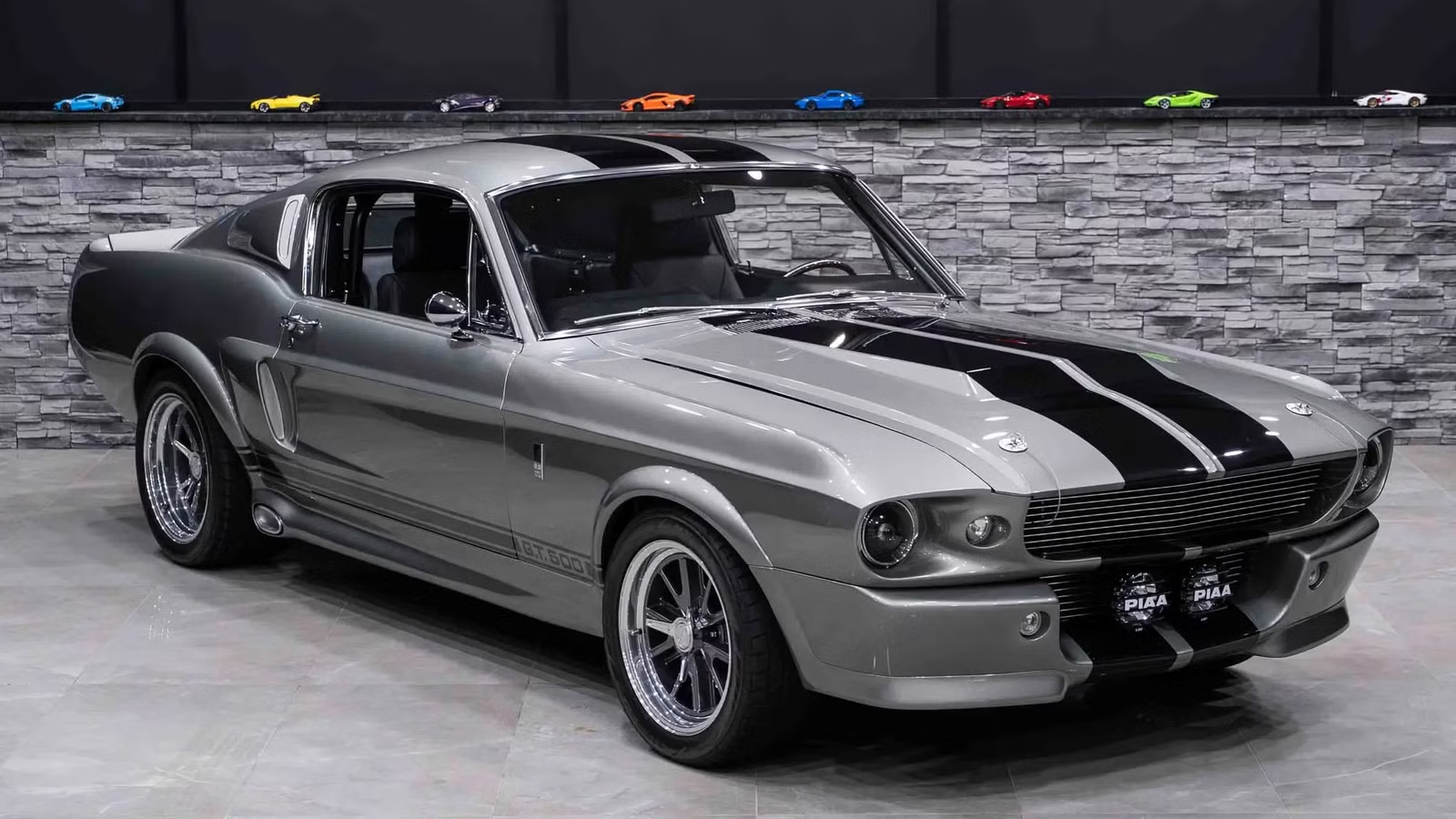
A freshly listed 1967 Ford Mustang Eleanor tribute — with just 105 miles on the build — hit the market this week, asking the kind of money that makes serious collectors pay attention. The car is stunning by all accounts: the widebody fastback shape, the silver paint, the louvers, the whole package that made Eleanor one of the most recognizable movie cars ever built. But before a buyer writes that check, there’s a question worth understanding: what, exactly, is an “Eleanor tribute,” and what are you legally allowed to do with it?

The answer matters more than most buyers realize. The Eleanor name — and the specific design elements that define the car from the 2000 film Gone in 60 Seconds — are protected intellectual property. That protection shapes what builders can claim, what sellers can advertise, and what happens to resale value when the car changes hands. The word “tribute” isn’t just a stylistic choice. For many builders, it’s a legal workaround, and understanding why tells you a lot about what you’re actually purchasing.
The Eleanor Trademark Belongs To The Gone in 60 Seconds Franchise
The Eleanor trademark is held by Eleanor Licensing LLC, the entity that controls the intellectual property associated with the 2000 Nicolas Cage film. That protection covers the Eleanor name itself, the distinctive widebody design applied to the 1967 Mustang fastback, and the combination of visual elements — the specific body kit, the color, the striping — that constitute the car’s recognizable look. It’s not just the name on a piece of paper. Courts have upheld Eleanor’s status as protected IP in multiple infringement cases, and the trademark holder has actively enforced those rights against builders and sellers who used the Eleanor name without authorization.

What this means practically: a builder who replicates the Eleanor look without a license can construct the car, but they cannot legally market or sell it as an Eleanor. The moment that name appears in an advertisement, a title document, or a sales listing, the seller is potentially infringing on a registered trademark. Some builders have learned that lesson the hard way, with cease-and-desist letters and, in more serious cases, court orders requiring cars to be destroyed or surrendered.
Why Builders Use ‘Tribute’ — And What That Word Actually Protects

The term “tribute” exists in a deliberate legal gray zone. A builder who calls their car an “Eleanor tribute” is signaling that the car is inspired by the film’s Eleanor, not licensed by the franchise. It’s an acknowledgment, implicit or explicit, that the name and design belong to someone else. Whether that framing fully insulates a builder from liability depends on how the car is marketed and sold — using “Eleanor tribute” prominently in advertising can still draw scrutiny if the trademark holder believes it creates consumer confusion about the car’s origin or authorization.
For buyers, the distinction is real but imperfect. A tribute build can be an extraordinarily high-quality car — the 105-mile example listed this week is almost certainly a serious, expensive build. The craftsmanship isn’t in question. What’s in question is the legal status of the name attached to it, and what that means when the buyer eventually tries to sell.
The Resale Value Gap Between Licensed And Unlicensed Builds Is Enormous

Market data makes the financial stakes clear. The highest recorded sale for a licensed 1967 Ford Mustang Eleanor Widebody — a 25th Anniversary Limited Edition with official certification — reached $726,000. The lowest recorded sale for an unlicensed Eleanor tribute, a 1968 Mustang Convertible, came in at $49,000. The average price across Eleanor tribute editions broadly sits around $231,928, according to Classic.com market data, but that average masks a wide spread driven almost entirely by licensing status, provenance, and build quality.
Licensed Eleanors — cars built with authorization from Eleanor Licensing LLC, carrying official documentation of that status — command a significant premium because their legal standing is clear. A buyer purchasing one knows they can resell it as an Eleanor without legal exposure. An unlicensed tribute buyer has no such certainty. If the trademark holder decides to enforce rights aggressively, an unlicensed car marketed under the Eleanor name could face legal action, and the resale market for a car with that kind of cloud over it narrows considerably.
What Buyers Should Ask Before Purchasing Any Eleanor-Adjacent Mustang

The practical checklist for a prospective buyer is straightforward, even if the legal landscape isn’t. First: does the car carry official licensing documentation from Eleanor Licensing LLC? If yes, the buyer has a clear legal basis for calling the car an Eleanor and marketing it as such on resale. If no, the buyer is purchasing a tribute — potentially a beautiful, high-dollar tribute — but one that carries restrictions on how it can be described in future sales.
Second: how is the car currently being advertised? A listing that leans heavily on the Eleanor name without licensing documentation is a yellow flag. It may not disqualify the car, but it signals that the seller may not fully understand — or may be glossing over — the trademark implications. Third: what’s the builder’s reputation and documentation? A well-documented tribute from a known builder, with clear records of the build and an honest description of its unlicensed status, is a far safer purchase than a car where the provenance is murky and the Eleanor branding is front and center.

For the 105-mile 1967 fastback currently on the market, those questions apply as much as they do to any other tribute build. The low mileage and fresh build are genuine selling points. The legal framework around the name it’s trading on is the part worth understanding before the wire transfer goes out.
Eleanor is one of the great movie cars, and the builders who replicate her do serious work. But the name carries legal weight that the car itself doesn’t — and gearheads shopping in this space deserve to know exactly what they’re buying before they fall in love with the livery.

Related posts



Latest Post


No Comments