
The Viper Is Dead For Good, So Quit Asking For A Comeback
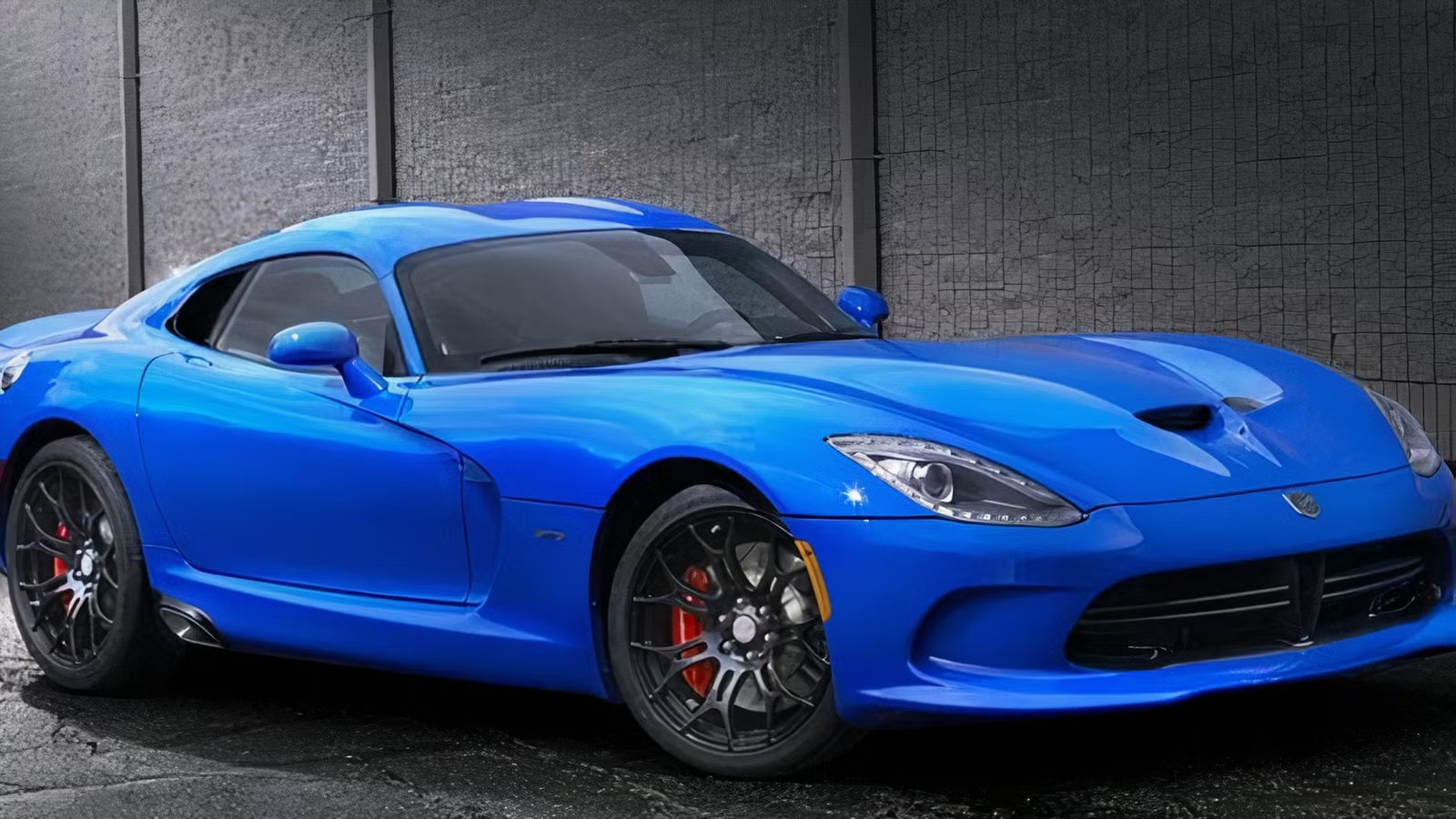
Tim Kuniskis just did what Dodge executives have done every few years since 2017: he told enthusiasts to let it go. Speaking with The Drive, the Stellantis performance chief said the Viper has “reached the end of its life cycle,” shutting the door on revival hopes yet again. Coming from Kuniskis, a guy who’s been tied to Dodge’s performance playbook for years, that’s about as final a word as the Viper faithful are going to get.

But here’s the thing about Viper denials: they never actually stick. Every time Dodge says no, the questions come right back a year or two later, because no other discontinued nameplate generates this specific hope-and-denial loop. The reason isn’t nostalgia alone. It’s that the Viper’s entire formula, an 8.4-liter naturally aspirated V-10, rear-wheel drive, a manual gearbox, and zero interest in coddling the driver, has become nearly impossible to build in 2026, and everyone who wants one back knows it.
Kuniskis Confirms What Dodge Has Been Signaling For Years
The final-generation Viper produced 645 horsepower out of that monstrous V-10 before production wound down at Dodge’s Conner Avenue plant in Detroit in August 2017, closing out a 25-year run. Dodge’s own website still lists the car as discontinued with 2017 as its last model year, so there’s no ambiguity about where things officially stand.

What makes Kuniskis’ comment land differently than the usual internet speculation is who’s saying it. He’s not a spokesperson reading a script; he’s the guy running SRT, the performance division Stellantis revived in 2025 specifically to build the next generation of American halo cars. If anyone inside Dodge had a Viper revival on the books, it would be him. Instead, he’s telling The Drive the car’s era is over.
Why A Modern Viper Is Nearly Impossible To Build

The Viper wasn’t hard to replicate because Dodge lost the blueprints. It’s hard to replicate because the market and the rulebook that let it exist in the first place don’t exist anymore. A huge naturally aspirated engine is a tough sell when most performance cars lean on turbocharging or electrification to hit their numbers. A stick-shift, three-pedal layout was central to the Viper’s identity, but manuals have all but vanished from the segment. Low-volume, two-seat sports cars are brutally expensive to develop for the kind of sales figures a modern Viper would realistically pull, nothing like the stronger years the car saw in the 1990s and early 2000s. And today’s safety and emissions requirements make it far harder to build a car around the stripped-down, mechanical philosophy that made the original special in the first place.
Stack those four problems together and you get why every Viper rumor eventually dies the same way. It’s not that Dodge doesn’t want the nostalgia dividend. It’s that building the car enthusiasts actually want would require ignoring most of what the modern performance market rewards.
The Copperhead Is Coming, But It’s Not A Viper In Disguise

Dodge isn’t walking away from ambitious performance projects, though. The company is developing something called the Copperhead, reported as a high-performance “hyper muscle car” built to go after the most extreme Mustang and Camaro derivatives on the market. The snake-themed name is clearly a nod to Viper lore, but Dodge isn’t billing it as a sixth-generation Viper, and that distinction matters.
The Viper was a purpose-built, no-compromise sports car. The Copperhead is shaping up as something else entirely, a flagship built with modern technology that simply wasn’t on the table when the fifth-generation Viper was engineered. Dodge fans are already split on what that means. Some Reddit threads discussing the Copperhead treat it as the closest thing to a spiritual successor; others think its positioning and pricing could put it closer to something like a Toyota GR86 or Mazda MX-5 rival, an accessible, driver-focused sports car rather than a V-10 monster. Either way, the debate itself is proof the Viper conversation never really ends.
The Name Might Be Done, But The Idea Isn’t

Kuniskis closing the door on a literal Viper revival doesn’t mean Dodge has stopped chasing the kind of car that makes enthusiasts argue on forums. A modern halo car can have the low-slung aggression, serious power, and track chops that defined the Viper without carrying the name or the exact recipe. That’s essentially the bet Dodge is making with the Copperhead.
So will Dodge build a new Viper? Based on everything Kuniskis just said, no. But if the Copperhead manages to channel even some of that unfiltered, rebellious spirit, Dodge might not need the Viper badge to bring the magic back. Given what the original snake pulled off over 25 years, that’s still worth paying attention to.

Related posts





Latest Post


No Comments