
10 Used Sedans That Make Buying An SUV Hard To Justify
SUVs continue to dominate the American automotive market in 2026, as consumers tend to prefer the elevated seating positions and perceived capability. They also value the high driving position, all-weather traction, and spacious cabin layout that traditional crossovers provide. Pre-owned sedans and station wagons present a compelling alternative.

Midsize sedans offer generous trunk space alongside superior fuel efficiency. Station wagons supply identical cargo volume to equivalent crossovers while maintaining a lower center of gravity. Used wagons and sedans cost significantly less than comparable pre-owned SUVs. Buying a second-hand wagon or sedan delivers maximum interior utility while reducing acquisition costs, insurance premiums, and ongoing fuel expenses.
2021 Hyundai Elantra
J.D. Power Quality And Reliability Rating: 75/100
The 2021 Hyundai Elantra marks the launch of the model’s seventh generation, introducing a dramatic exterior redesign and updated cabin technology to the compact sedan market. When new, the vehicle carried an MSRP starting at $19,650 for the entry-level SE trim and stretching to $25,450 for top-tier trims like the Limited Hybrid. Current pre-owned market analytics indicate that used 2021 Elantra models average between $12,988 and $21,794.


Front-wheel drive serves as the standard layout across the entire lineup, powered by a choice of three distinct engines. This includes a base 2.0-liter four-cylinder generating 147 horsepower paired with a CVT and a performance-oriented 1.6-liter turbocharged four-cylinder producing 201 hp in the N Line variant. There’s also a gas-electric hybrid setup producing 139 hp, mated to a six-speed dual-clutch transmission.
J.D. Power gives the 2021 Elantra an overall score of 77/100, which includes a quality and reliability score of 75/100 and a resale value score of 79 out of 100. Long-term reliability metrics from iSeeCars report an average predicted lifespan of 134,411 miles or 10.3 years, with a 9.9 percent probability of reaching or exceeding 200,000 miles.
2021 Subaru Outback
J.D. Power Quality And Reliability Rating: 76/100

The 2021 Subaru Outback is technically a midsize crossover, but its body proportions are more in line with a conventional station wagon, which is why it earns a place on this list. When new, the model’s pricing started at $26,795 for the base trim and reached $39,945 for the flagship Touring XT variant. Current pre-owned market analytics from Edmunds, J.D. Power, and iSeeCars indicate that used 2021 models average between $22,000 and $28,000 depending on mileage, trim level, and overall vehicle condition.

Colin Venable via Wikimedia Commons
Buyers choose between two primary Subaru flat-four powertrain configurations, including a standard 2.5-liter naturally aspirated four-cylinder engine generating 182 hp or an optional turbocharged 2.4-liter four-cylinder engine producing 260 hp, with both mated to a CVT. J.D. Power gives the 2021 Outback an overall score of 79/100, which includes a quality and reliability score of 76/100 and an above-average resale value score of 82/100. Long-term reliability metrics from iSeeCars show that the Subaru Outback platform boasts an average lifespan of 178,219 miles or 15.5 years, with roughly 2.2 percent of active vehicles reaching or exceeding the 200,000-mile threshold.
2021 Volvo V60
J.D. Power Quality And Reliability Rating: 80/100

The 2021 Volvo V60 enters the luxury wagon segment, balancing versatile utility with dynamic road handling. When new, the model sold for an MSRP of $40,950 for the base T5 Momentum trim and extended to $67,300 for the high-performance T8 Polestar Engineered plug-in hybrid variant. Current pre-owned market analytics indicate that used 2021 V60 models average between $18,000 and $28,000 for standard gasoline trims, while specialized T8 Recharge models command up to $38,000.

Buyers choose between distinct drivetrain configurations, including the standard T5 front-wheel-drive setup, available with all-wheel drive on the lifted Cross Country. This includes a 2.0-liter turbocharged four-cylinder engine making 250 hp. The line also includes the T8 Polestar Engineered plug-in hybrid with an all-wheel-drive powertrain that combines a supercharged and turbocharged 2.0-liter engine with an electric motor to generate 415 hp, with all configurations utilizing an eight-speed automatic transmission.
Based on the mechanically identical 2021 S60 sedan platform, J.D. Power gives the model a 79/100 overall score, including 80/100 for quality and reliability and 80/100 for resale value. Long-term reliability metrics from iSeeCars show that the Volvo V60 platform boasts an average predicted lifespan of 128,221 miles, or 10.6 years, with data indicating a 4.2 percent chance of reaching or exceeding the 200,000-mile mark.
2021 Honda Accord
J.D. Power Quality And Reliability Rating: 80/100

The 2021 Honda Accord continues as a benchmark entry in the midsize sedan market, featuring refreshed front-end styling, upgraded infotainment tech, and refined driving dynamics. When new, the model sold for an original MSRP starting at $24,970 for the base LX trim and increasing to $36,900 for the top-tier Touring 2.0T variant. Current pre-owned market analytics indicate the model currently sells for between $16,490 and $30,998.

Front-wheel drive serves as the standard layout across the entire range, offered with three distinct powertrain configurations. These include a standard 1.5-liter turbocharged four-cylinder engine generating 192 hp paired with a CVT, a performance-focused 2.0-liter turbocharged four-cylinder making 252 hp mated to a ten-speed automatic transmission, or an efficient 2.0-liter gas-electric hybrid setup producing a combined 212 hp.
J.D. Power gives the 2021 Accord an overall score of 82/100, which includes a quality and reliability score of 80/100 and an above-average resale value score of 82/100. Long-term reliability metrics from iSeeCars show that the Honda Accord platform boasts an average predicted lifespan of 167,453 miles, with the Accord Hybrid variant averaging 196,159 miles and data indicating a 30.3 percent probability of reaching or exceeding 200,000 miles.
2021 Mazda6
J.D. Power Quality And Reliability Rating: 83/100

The 2021 Mazda6 serves as the final model year for the midsize sedan in the North American market, delivering an upscale interior and athletic driving dynamics. In 2021, the line carried an MSRP starting at $24,475 for the base Sport trim, extending up to $35,900 for the top-tier Signature variant. Current pre-owned market analytics indicate that used models average between $12,963 and $26,998.

Buyers select between two front-wheel-drive powertrain options mated to a six-speed automatic transmission. Included in this is a base naturally aspirated 2.5-liter four-cylinder engine producing 187 hp or an available turbocharged 2.5-liter four-cylinder engine generating up to 250 hp on premium fuel.
J.D. Power gives the 2021 Mazda6 an overall consumer score of 83/100 and a resale value score of 84/100. Long-term reliability metrics from iSeeCars show that the Mazda6 platform boasts an average predicted lifespan of 162,134 miles or 13.1 years, with data indicating a 23.5 percent probability of reaching or exceeding 200,000 miles.
2021 Toyota Camry
J.D. Power Quality And Reliability Rating: 85/100

The 2021 Toyota Camry continues its long-standing presence in the midsize sedan segment, providing a combination of practical daily utility, refreshed styling, and diverse trim options. When new, the Japanese brand started pricing at $24,970 for the base LE trim and extended it up to $35,545 for the top-tier XSE V-6. Current pre-owned market analytics indicate that used 2021 Camry models average between $13,901 and $33,647.

Buyers choose between three main powertrain configurations, including a standard 2.5-liter four-cylinder engine generating up to 206 hp paired with an eight-speed automatic transmission, offered in front-wheel drive or optional all-wheel drive. There’s also a 3.5-liter V-6 engine producing 301 hp in front-wheel drive, or an efficient 2.5-liter gas-electric hybrid setup producing 208 hp.
J.D. Power gives the 2021 Camry an overall score of 82/100, which includes a quality and reliability score of 85/100 and a resale value score of 82/100. Long-term reliability metrics from iSeeCars show that the Toyota Camry platform boasts an average predicted lifespan of 172,479 miles, or 181,736 miles for hybrid variants. Data indicates a 31.8 percent probability of reaching or exceeding 200,000 miles.
2021 Honda Civic
J.D. Power Quality And Reliability Rating: 86/100

The 2021 Honda Civic debuted with an original MSRP starting around $21,250 for the entry-level LX sedan, stretching up to $37,890 for the high-performance Type R hatchback. Currently, used sales data indicates that standard trims typically sell between $16,500 and $24,500 depending on mileage, condition, and body style, while rare Type R variants retain higher premiums due to their exclusive nature.

Drivetrain options include front-wheel drive across all models, powered either by a naturally aspirated 2.0-liter four-cylinder engine or a turbocharged 1.5-liter four-cylinder engine, paired with a CVT or a six-speed manual transmission. J.D. Power awards the 2021 Civic an overall consumer score of 85/100, which incorporates a quality and reliability score of 86/100 and a resale value score of 82/100. Furthermore, analysis from iSeeCars highlights the model’s exceptional long-term durability, projecting an average lifespan of 183,603 miles or 16.1 years.
2021 Toyota Corolla
J.D. Power Quality And Reliability Rating: 88/100

The 2021 Toyota Corolla competes in the compact car segment and provides buyers with sedan and hatchback body styles. When new, the model’s pricing started at $20,025 for the base L trim, reaching $28,310 for the top-tier XSE Apex Edition. Current pre-owned market analytics indicate that used 2021 Corolla models average between $10,018 and $26,885.

The standard setup features a 1.8-liter four-cylinder engine generating 139 hp paired with a continuously variable transmission. Higher trims utilize a 2.0-liter four-cylinder engine producing 169 hp, available with either a CVT or a six-speed manual transmission. The lineup also includes a hybrid variant combining a 1.8-liter gasoline engine and an electric motor to produce a combined 121 hp.
J.D. Power assigns the 2021 Toyota Corolla an overall score of 83/100, which includes a quality and reliability score of 88/100 and an average resale value score of 80/100. Long-term reliability metrics from iSeeCars show that the Toyota Corolla platform boasts an average lifespan of 162,139 miles, with data indicating a 24.7 percent probability of reaching or exceeding 200,000 miles.
2021 Lexus ES
J.D. Power Quality And Reliability Rating: 87/100

The 2021 Lexus ES entered the market with an original MSRP starting around $40,000 for the base ES 350 and ES 250 models, increasing to roughly $49,000 for top-tier Ultra Luxury trims. Used market data indicates that standard pre-owned models currently sell between $21,000 and $36,000.

Buyers choose from three main powertrain configurations, including a 203-hp 2.5-liter four-cylinder engine paired with all-wheel drive on the ES 250, a 302-hp 3.5-liter V-6 with front-wheel drive and an eight-speed automatic transmission on the ES 350, or a fuel-efficient 215-hp 2.5-liter hybrid setup with front-wheel drive and an eCVT on the ES 300h.
According to J.D. Power, the 2021 Lexus ES achieves an overall consumer rating of 83/100, which includes a quality and reliability score of 87/100 alongside a resale value score of 78/100. Additionally, data compiled by iSeeCars shows an average expected lifespan of 141,912 miles or 12.4 years for the platform.
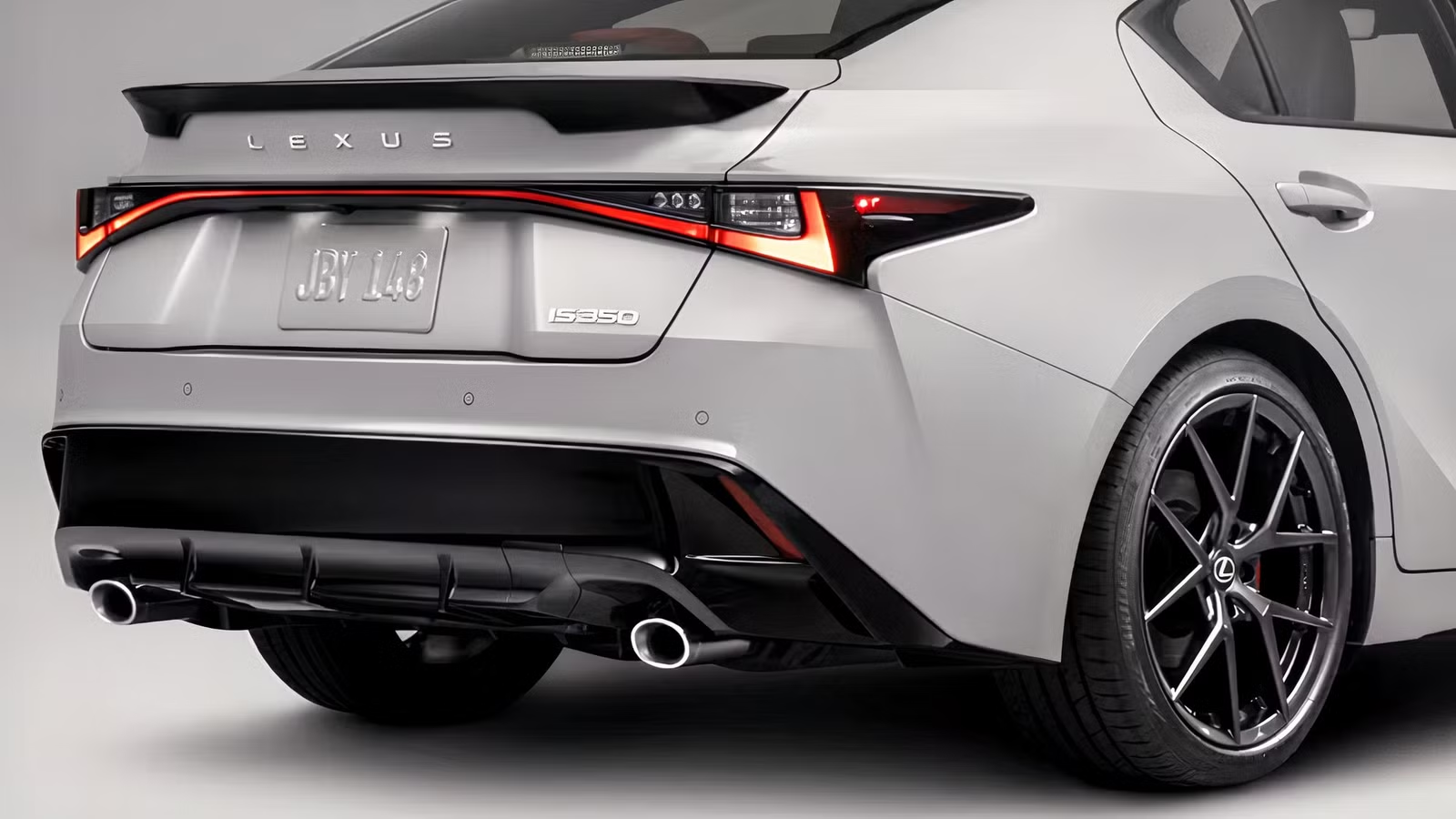
2021 Lexus IS
J.D. Power Quality And Reliability Rating: 88/100

The 2021 Lexus IS entered the market with an original MSRP starting around $39,000 for the base rear-wheel-drive IS 300, climbing to roughly $44,900 for the range-topping all-wheel-drive IS 350 F Sport. Current sales data indicates that pre-owned models typically sell between $25,500 and $38,000 depending on vehicle trim, mileage, and optional equipment.

Powertrain configurations begin with a 241-hp 2.0-liter turbocharged four-cylinder paired with an eight-speed automatic transmission in the rear-wheel-drive IS 300. Selecting all-wheel drive on the IS 300 upgrades the engine to a 260-hp 3.5-liter V-6 matched to a six-speed automatic, while the IS 350 utilizes a 311-horsepower 3.5-liter V-6 coupled with an eight-speed automatic in rear-wheel drive or a six-speed automatic in all-wheel drive.
According to J.D. Power, it achieves an overall consumer score of 86/100, incorporating a quality and reliability score of 88/100 and a resale value score of 82/100. Data from iSeeCars reflects strong overall durability, projecting an average lifespan of 184,283 miles or roughly 17.8 years.
Sources: OEMs, J.D. Power, iSeeCars, and Edmunds.

Related posts



Latest Post


No Comments