
The 2027 Chevrolet Bolt’s Pros-and-Cons List Is a Preview of Whether GM Finally Fixed Its Cheapest EV
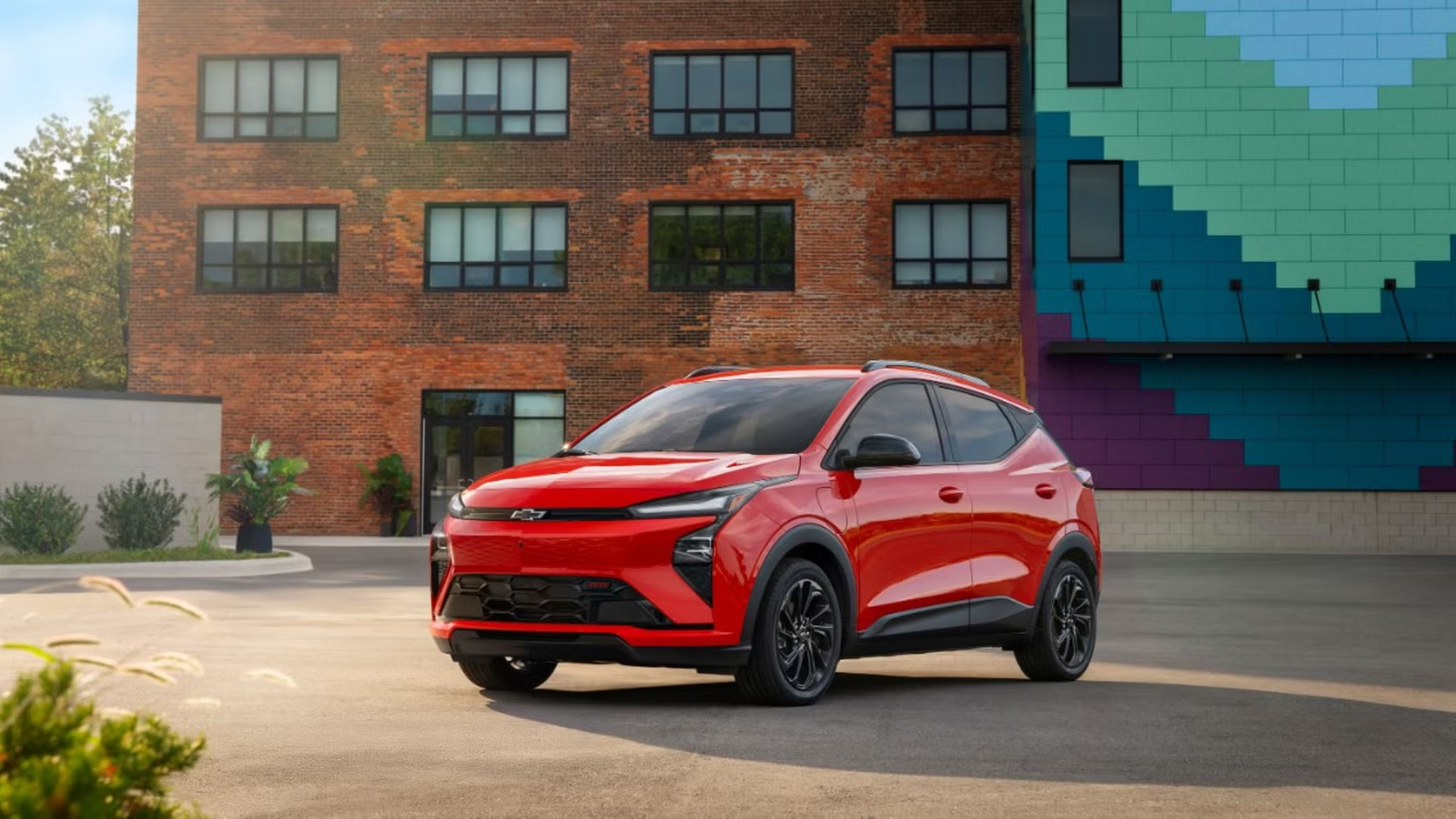
Cars.com just published its first detailed pros-and-cons breakdown of the revived 2027 Chevrolet Bolt EV, and it answers the question every budget-EV shopper has been asking since GM brought the nameplate back: did the company actually fix what was wrong with it? The short answer, based on the details now confirmed, is mostly yes on charging and price, with some real caveats still attached.

The original Bolt earned a reputation as a cheap way into EV ownership that came with real compromises: slow charging, a battery recall scare, and an interior that felt like an afterthought. The 2027 model keeps the low price but swaps in new hardware underneath, and the early verdict suggests GM addressed its biggest headache while leaving some smaller ones in place.
Charging Speed Was the Original Bolt’s Biggest Problem, and GM Says It’s Fixed
The first-generation Bolt topped out at a painfully slow 55 kW on a DC fast charger, turning any road trip into an exercise in patience. The 2027 Bolt swaps the old lithium-ion pack for a lithium-iron-phosphate (LFP) battery that supports peak charging around 150 kW, according to Chevrolet’s own figures cited in early reporting on the car. That’s nearly triple the old rate, and it’s paired with a native NACS port, meaning the new Bolt can plug straight into a Tesla Supercharger without an adapter.

That matters because charging speed, more than range, was the practical dealbreaker for a lot of shoppers cross-referencing the original Bolt against rivals like the Hyundai Kona Electric. A car that charges nearly three times faster changes the road-trip math even if the battery capacity stays the same.
Range and Price Stay Competitive, But the Numbers Aren’t Bigger

The 2027 Bolt carries the same 65-kWh battery capacity and 262 miles of EPA-rated range as before, so GM isn’t chasing a bigger number here, just a faster-charging one. The real headline is the price: the base Bolt LT is positioned as the least expensive new EV sold in the U.S., undercutting every other option on the market, including the Kona Electric and the newly upsized Nissan Leaf, both of which now start north of $30,000.
A step-up RS trim adds a $4,000 premium for cosmetic touches like gloss-black exterior details, heated and ventilated front seats, and multicolor interior lighting, but it’s mechanically identical to the base car. For shoppers who cared more about the sticker price than a longer range figure, that combination of the lowest price in the segment plus dramatically better charging is the strongest case GM has made for the Bolt in years.
The Interior and Feature Gaps Show GM Didn’t Solve Everything

Not every original complaint got addressed. The Bolt’s cabin remains tight by class standards, with a rear seat that limits the car’s usefulness as a family vehicle. Like other new Chevrolets, it also drops Apple CarPlay and Android Auto support in favor of GM’s Google-based software, a decision that stands out given GM has already reversed that same call for the 2027 Silverado and Sierra after buyer backlash. Whether that reversal eventually reaches the Bolt is unconfirmed.
Super Cruise, GM’s hands-free driving system, is available as an option, but it requires a $1,195 technology package plus an additional $3,255 on top of that. It’s still the cheapest way to get behind the wheel of a Super Cruise-equipped car, but the combined cost is a real ask on a vehicle sold specifically on affordability.
What This Means for Budget EV Shoppers

The 2027 Bolt solves the problem that actually killed the original in the court of public opinion: charging speed. Tripling the peak rate and adding native Tesla Supercharger access removes the single biggest annoyance owners had with the first car. The price positioning backs that up, undercutting every rival in the sub-$30,000 EV conversation.
What it hasn’t solved is cabin space and some feature parity, and there’s a bigger asterisk hanging over the whole relaunch: GM has reportedly planned this generation for a limited production run before the factory shifts to build a gas-powered Buick. For shoppers comparing the Bolt against the Kona Electric or Leaf, that combination, fixed charging, same range, tight interior, and an uncertain long-term future, makes the Bolt a genuine value play right now rather than a settled long-term contender in the segment.
Source: Cars.com

Related posts





Latest Post



No Comments