
The Inline-Six Engine That Became A Global Legend
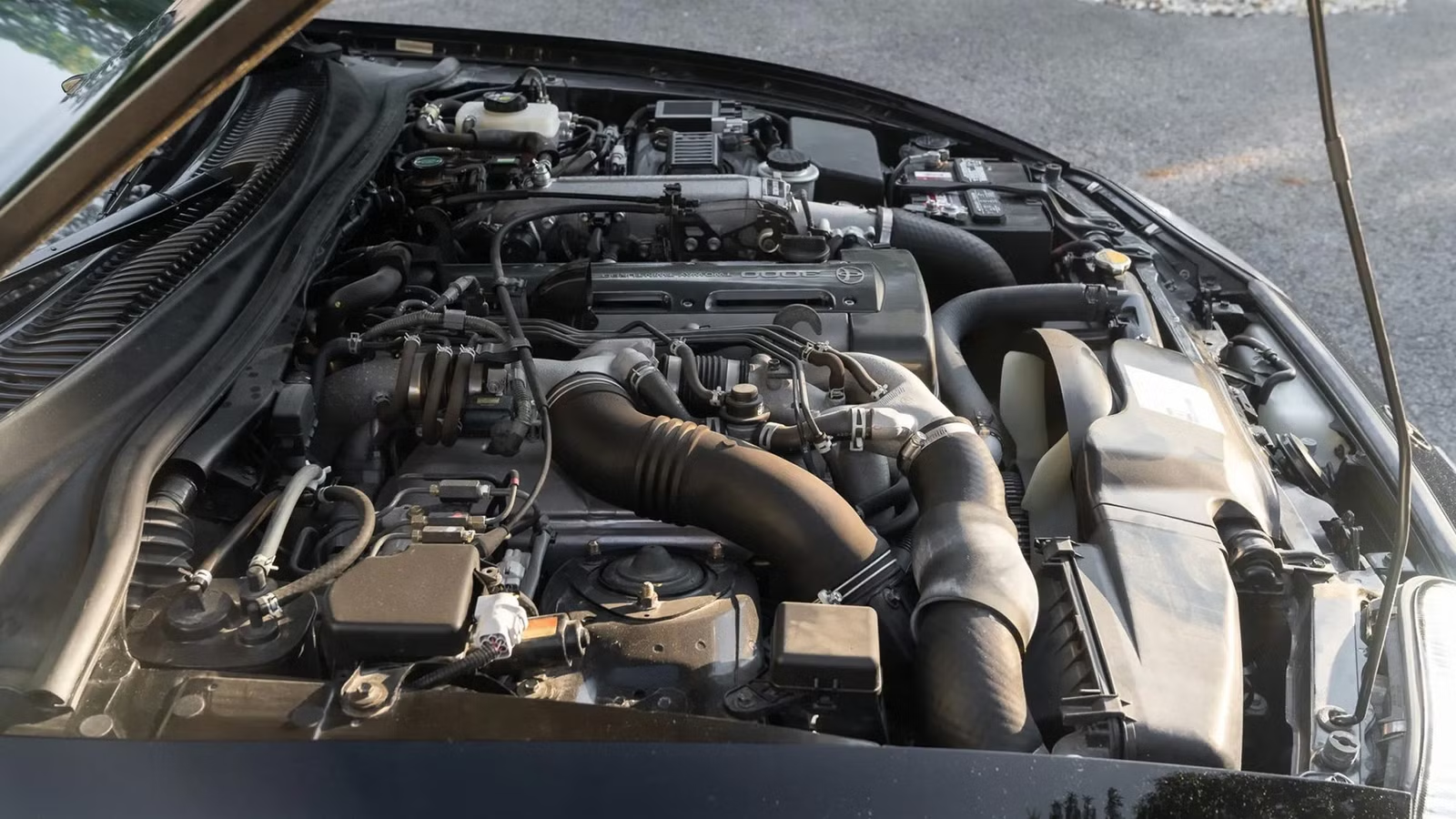
Few engine configurations have captured the imagination of driving enthusiasts quite like the inline-six — and in an era when turbocharged four-cylinders and compact V6s dominate showroom floors, the straight-six’s appeal has only grown stronger. The straight-six remains the gold standard for driving enthusiasts, with one Toyota standing above the rest. Its secret lies in its natural balance: because the pistons move in symmetrical pairs, the engine cancels out its own vibrations, delivering power with a silky smoothness that a V6 simply cannot match.

This layout eventually became a symbol of prestige, defining the identity of the world’s most famous performance car brands. Though its long shape creates a packaging challenge for designers, the reward is a pure, unfiltered connection between the driver and the machine.
Why The World Fell In Love With The Straight-Six
The history of the automotive world is paved with incredible six-cylinder engines that earned their stripes on the track and the open road. In Germany, BMW perfected the high-revving naturally aspirated experience with the S54 engine. Found in the beloved E46 M3, this engine is a masterpiece of precision, screaming all the way to an 8,000 RPM redline and representing the peak of German engineering. Across the channel, the British showcased their own flair with the Jaguar XK6. This elegant engine didn’t just look good — it powered Le Mans winners and the legendary E-Type, proving that a straight-six could combine endurance with unmatched grace.


The layout proved its worth in the heavy-duty world as well. The Cummins 5.9-liter diesel became an American industrial workhorse, redefining what a pickup truck could do. Known for its massive torque and ability to last for hundreds of thousands of miles, it turned the Dodge Ram into a legend of reliability. Meanwhile, in Japan, a fierce rivalry was brewing. Nissan created the RB26DETT, a high-tech marvel that powered the Skyline GT-R. Nicknamed Godzilla, this engine dominated Group A racing and became a symbol of JDM performance.

While all these engines are undisputed masterpieces, one particular power plant managed to climb even higher. It achieved a level of global fame that transcends brand loyalty. This engine became celebrated not just for what it did in a factory car, but for its bulletproof construction and its ability to handle astronomical amounts of power. It has since migrated into engine bays on every continent, from professional drift cars in Europe to drag racers in East Asia. It is the ultimate straight-six survivor, and its story is one of mechanical over-engineering meeting a perfect storm of pop culture.
The Myth Of The 2JZ-GTE: The Story Of The Supra’s Turbocharged Engine

The story of the world’s most famous inline-six engine begins with the Toyota JZ series. Toyota initially developed the JZ family to power its premium sedans and sports cars, starting with the 2.5-liter 1JZ. This smaller sibling was impressive in its own right, available in both naturally aspirated and turbocharged forms. However, the real magic happened when Toyota increased the displacement to 3.0 liters, creating the 2JZ. While the naturally aspirated 2JZ-GE was a common sight in many luxury cars, the twin-turbocharged 2JZ-GTE was the version destined for greatness — built to be the crown jewel of Toyota’s performance lineup.

The 2JZ-GTE didn’t stay a secret for long, thanks to a massive explosion in pop culture. Hollywood played a pivotal role when the Fast and Furious franchise put a bright orange Supra on the big screen. Suddenly, a whole generation of fans wanted a ten-second car, and the 2JZ was the heart of that dream. This fame was amplified by the digital era, where the engine dominated video games like Gran Turismo and Forza. On early internet forums and social media, the Supra vs. The World narrative took hold, showing this Japanese engine embarrassing Ferraris and Lamborghinis in highway pulls and drag races.

This cultural momentum turned the 2JZ into the face of the global engine tuning movement. It bridged the gap between underground street racing and professional motorsport. Tuners realized they had a platform that could be pushed to the absolute limit without breaking, making it the perfect canvas for creative builds. It wasn’t just an engine anymore; it was a cultural icon. Whether you were in a movie theater or playing a game in your living room, the unmistakable sound of a 2JZ turbo spooling up became the universal language of speed and power.
Bulletproof By Design: This Engine Can Easily Handle 1,000 Horsepower

|
Engine |
Transmission |
Power |
Torque |
|
3.0L Twin-Turbo I6 |
6-Speed Manual / 4-Speed Automatic |
276–321 hp |
318–333 lb-ft |
The primary home for the 2JZ-GTE was the fourth-generation Toyota Supra Turbo, a car that has since become one of the most collectible vehicles on earth. However, Toyota also tucked this engine into the Aristo, a Japanese-market luxury sedan. This made the Aristo the ultimate Japanese sleeper, offering supercar-level internals in a car that looked like it belonged at a golf course. The reason this engine became so famous comes down to its incredible iron block. Unlike many modern engines that use aluminum to save weight, Toyota used cast iron — significantly heavier, but far stronger.
This over-engineering made V8 engines look timid by comparison. The engine features a forged steel crankshaft and massive main bearing caps that can withstand immense cylinder pressure. When it left the factory, the engine was officially rated at 276 horsepower to comply with a Japanese gentlemen’s agreement, but the hardware was designed for so much more.

Tuners quickly discovered they could reach 600, 700, or even 800 hp on the stock internal parts. With a few upgrades, these engines frequently push past 1,000 hp, and dedicated drag racing builds have even doubled that figure.
This extreme durability made the 2JZ the universal choice for engine swaps. Many competitive drift cars — like E36 BMWs running 2JZs under the hood — have ditched their original inline-sixes in favor of the Toyota unit. In the world of professional drifting, drivers love it because it produces a predictable, wide torque curve that makes it easy to keep the tires spinning.

In drag racing, its ability to hold massive boost pressure makes it a giant-killer on the strip. It has even found a home in circuit racing and time-attack cars because it can handle the heat and stress of constant high-speed laps. Whether it’s sliding sideways in a Formula Drift event or flying down a drag strip, the 2JZ’s footprint is found everywhere in the racing world.
The Modern Supra Carries The Inline-Six Torch

When Toyota dropped the fifth-generation GR Supra (A90), the automotive internet collectively lost its mind — and not entirely in a good way. Instead of a pure, homegrown Toyota weapon like the legendary MK4, the fifth-gen Supra was the product of a joint venture with BMW, which is why many purists quickly labeled it a “Z4 in a Japanese Halloween costume.” For enthusiasts who worshipped the MK4 Supra, seeing German stamps on a Japanese icon felt like a betrayal. To make matters worse, it launched strictly with a ZF 8-speed automatic transmission, leaving anyone who wanted to row their own gears out in the cold.
However, a few years on the market and a massive wave of aftermarket dominance have completely flipped the script. Gearheads have realized that Toyota’s BMW-sourced B58 isn’t just a superb engine — it is the closest modern equivalent to the 2JZ philosophy of combining smooth inline-six power with immense tuning potential.
How The B58 Compares To The 2JZ

|
Toyota 2JZ-GTE (MkIV Supra Turbo) |
BMW B58B30 (GR Supra 3.0) |
|
|
Configuration |
3.0-liter Twin-Turbocharged Inline-6 |
3.0-liter Single Twin-Scroll Turbocharged Inline-6 |
|
Bore × Stroke |
3.39 × 3.39 in |
3.23 × 3.72 in |
|
Block Material |
Cast Iron |
Closed-Deck Aluminum |
|
Compression Ratio |
8.5:1 |
11.0:1 |
|
Turbo Layout |
Sequential Twin Turbos |
Single Twin-Scroll Turbo |
|
Factory Horsepower |
320 hp @ 5,600 rpm (U.S. Spec) |
382 hp @ 5,800–6,500 rpm |
|
Factory Torque |
315 lb-ft @ 4,000 rpm (U.S. Spec) |
368 lb-ft @ 1,800–5,000 rpm |
For many enthusiasts, comparing the BMW-sourced B58 to Toyota’s legendary 2JZ-GTE borders on sacrilege. After all, the 2JZ earned its reputation through decades of abuse, drag racing records, and seemingly limitless tuning potential. Yet the modern B58 deserves far more credit than it often receives. The fundamental difference is one of philosophy. The 2JZ was famously overbuilt for the 1990s, while the B58 was engineered to meet modern emissions, efficiency, and performance targets simultaneously.
From a tuning perspective, the biggest advantage the 2JZ holds over the B58 is its cast-iron block, which ensures it can handle immense cylinder pressure without warping. Tuners have safely pushed the completely stock bottom end past 800 horsepower for decades. The B58 counters with a closed-deck design and a forged steel crankshaft. Despite having an aluminum block, this construction makes it incredibly rigid, allowing stock internals to reliably hold around 700 horsepower before needing upgraded rods and pistons. Wrenching on the 2JZ is also a breeze thanks to its traditional, front-timed layout — a stark contrast to the B58, which features a rear-mounted timing chain facing the firewall that can force you to pull the entire engine just for standard timing service.

The turbo technology is where the modern B58 truly shines. The MK4 Supra’s sequential twin-turbos delivered an old-school, explosive boost kick — but you had to endure noticeable lag until the second turbo came alive at around 4,000 RPM. The B58 eliminates the wait entirely. Thanks to a single twin-scroll turbocharger paired with Valvetronic variable valve lift, exhaust gases are routed seamlessly to dramatically reduce lag.
While the B58 may never replace the 2JZ in enthusiast folklore, it has proven itself a worthy successor and one of the most capable inline-six engines ever built.
Is This Engine Worth The Sky-High Price?

The legendary status of the 2JZ has created a significant financial barrier for enthusiasts today. Prices for the cars that originally carried this engine have moved well beyond used-car territory into the realm of collectible investments. A well-kept, stock MK4 Supra Turbo with a manual transmission regularly fetches between $120,000 and $180,000 at auction. If the car has exceptionally low mileage or a rare factory color, it is not uncommon to see prices soar past $250,000, as collectors increasingly treat them as appreciating blue-chip assets.

Because of these astronomical figures, buyers are hunting for the most affordable ways to join the JZ family. The lowest entry points in today’s market are the Lexus GS300 and the Toyota Aristo. You can still find a high-mileage GS300 for a relatively modest sum, though these typically come with the naturally aspirated 2JZ-GE rather than the twin-turbo unit. A clean, imported Toyota Aristo with the twin-turbo 2JZ-GTE factory-installed commands a significant premium over a standard Lexus, but remains a fraction of the cost of a Supra for the exact same mechanical heart.

Other popular options include the first-generation Lexus IS300 and the SC300 coupe. These cars allow builders to get the 2JZ experience, but they are subject to the so-called JZ Tax — a market reality where even a bare, used 2JZ-GTE engine block can cost over $10,000 on its own. Whether you are buying a donor car or a pristine collector piece, owning this piece of history now requires a serious budget.
Because the engine is so famous, everything associated with it has become more expensive. From OEM replacement gaskets to used engine blocks found in scrapyards, the cost of entry is higher than ever. The rising cost of parts means that keeping a 2JZ running at a high performance level requires a significant financial commitment. Despite the costs, demand never seems to slow down. People are willing to pay a premium to own a piece of automotive history that represents the absolute peak of the inline-six era.
Other Legendary Inline-Six Engines That Rival The 2JZ

While the 2JZ-GTE often dominates the conversation, it’s far from the only inline-six to achieve legendary status. Across different eras and regions, several engines have built reputations that rival the 2JZ in their own unique ways — whether through motorsport dominance, engineering brilliance, or cultural impact.
BMW’s S54 is the highest-revving inline-six of all time. Found in the E46 M3, it represents the peak of naturally aspirated precision. Instead of chasing massive boost, it delivered razor-sharp throttle response, an 8,000 RPM redline, and one of the most engaging driving experiences ever put into a road car. Where the 2JZ thrives on forced induction, the S54 proves that a high-revving naturally aspirated inline-six can be just as intoxicating.
Nissan’s RB26DETT stands as the 2JZ’s closest rival in both performance and reputation. Powering the Skyline GT-R, this twin-turbo engine became a motorsport icon thanks to its dominance in Group A racing. Like the 2JZ, it responds exceptionally well to tuning, with built examples regularly producing four-digit horsepower. The rivalry between RB and JZ engines has defined JDM tuning culture for decades.
Toyota’s own 1JZ-GTE also deserves recognition. Often overshadowed by its larger sibling, the 1JZ offers a slightly lighter, more rev-happy character while still delivering serious turbocharged performance. It has become a favorite among drift enthusiasts, where its balance of power and responsiveness makes it ideal for controlled slides.
Outside of performance cars, the Cummins 6BT diesel inline-six carved out a completely different kind of legacy. Known for its near-indestructible construction and immense torque, it transformed heavy-duty trucks into long-lasting workhorses. It may not chase lap times or dyno numbers in the same way, but its reputation for durability is just as legendary.
What ties all these engines together is the inherent advantage of the inline-six layout. Whether naturally aspirated, turbocharged, or diesel-powered, each of these engines showcases why the configuration has remained so beloved. The 2JZ may be the most famous, but it exists in a hall of fame filled with equally important and influential straight-six icons.
Source: Toyota, Classic, Mecum

Related posts



Latest Post


No Comments