
The Mileage Sweet Spot Smart Used-Car Buyers Should Target
A question that every used-car shopper has to ask themselves is, “What is the right mileage range to get the best possible deal?” While buying a nearly new used car with 20,000 miles or less sounds like a given if you have the funds, you are often paying a premium while still incurring one of the steepest parts of the vehicle’s depreciation curve.

If there were a rule of thumb for the best value, the sweet spot for most mainstream used cars would be roughly 50,000 to 75,000 miles on a vehicle that is around three to five years old. However, mileage does not tell the full story. Age, maintenance history, what type of car it is, and your willingness to work on the vehicle will be significant contributing factors.
The Car Behind The Odometer Matters More Than The Number
A 70,000-mile Lexus ES 300h and a 70,000-mile BMW M340i can represent completely different ownership propositions. The right mileage target depends on what you are buying, how it was driven, how it was maintained, and how much you know about the platform.
70,000 Miles Can Be A Bargain On One Car And A Warning On Another


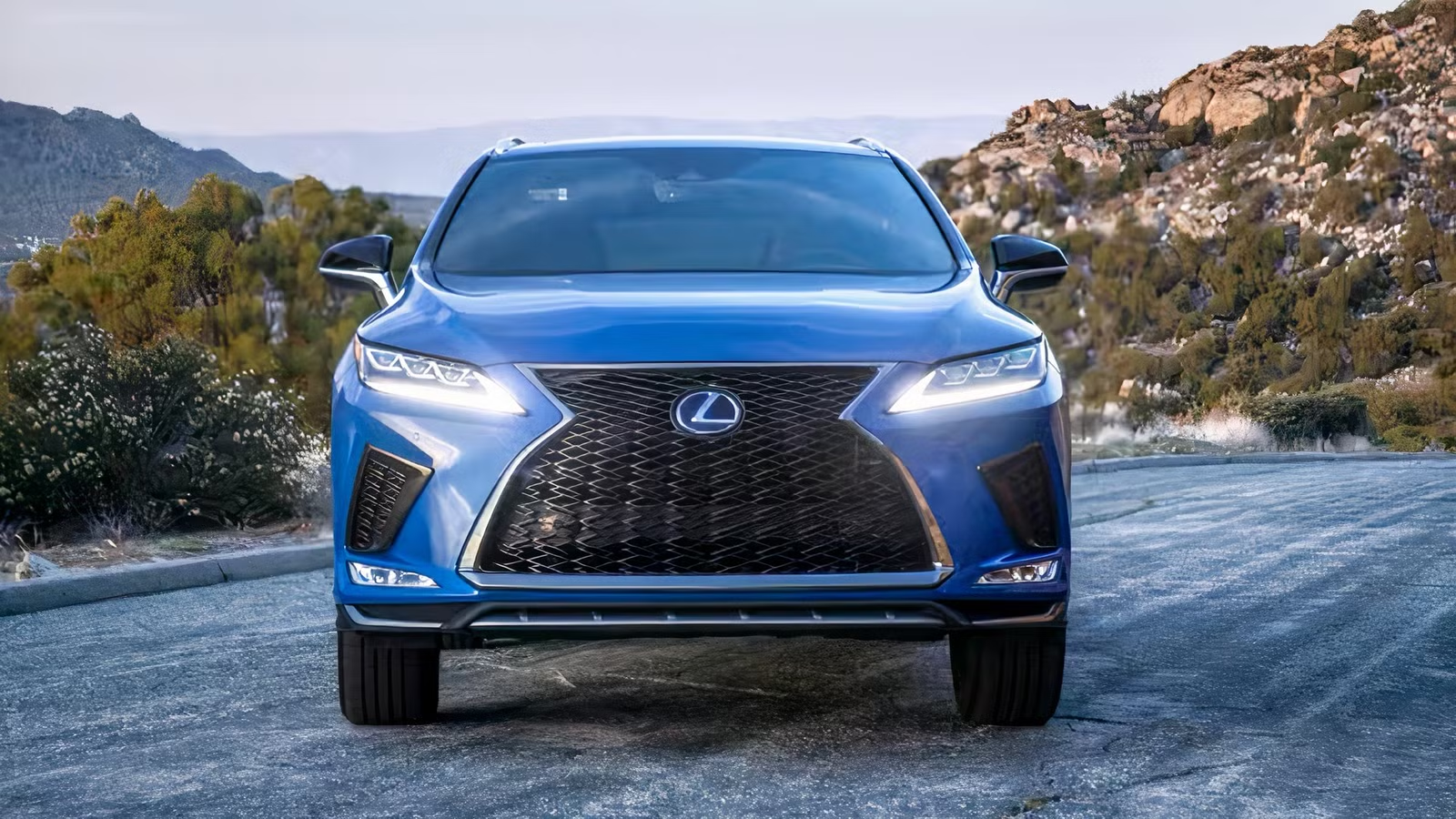
A mileage figure without additional context cannot serve as an independent measure of value. A Lexus RX Hybrid with 120,000 miles may have lost 70 percent or more of its original value and still have a good chance of reaching 250,000 miles, while a turbocharged inline-six-powered BMW X5 with the same mileage may reach a similar figure, but the cost to do so will be significantly greater than with the Lexus equivalent.
A 2014 Toyota 4Runner with 150,000 miles can have one of the highest residual values of any SUV in its segment because this platform is known for its long-term durability. In contrast, a modern Mercedes S-Class loses the majority of its value within a few years because maintaining a flagship luxury sedan out of warranty is an expensive proposition. Despite this, the maintenance history of the vehicle will always matter more than the badge or platform alone.
Your Mechanical Ability Changes What “High Mileage” Means

One detail that shoppers often don’t consider enough is who will be doing the work when the vehicle eventually requires maintenance. How comfortable are you with tackling certain routine service requirements and fluid changes, or will a shop be performing 100 percent of the work? Your mechanical aptitude and available workspace have a major effect on your ability to extract value from an older or higher-mileage vehicle.
If you are going to pay a shop for every repair and maintenance item, you need to be more conservative with your purchases, unless you are prepared to maintain an annual contingency fund for your vehicle. Viewing a repair only from the perspective of the parts cost will never be a true representation of the actual cost. Labor will often exceed parts costs, even on simpler upkeep items. If you truly want to be diligent about your purchase, researching the difficulty of basic service items for the specific model in question is critical.
The Best Used-Car Value Usually Isn’t The Lowest-Mileage One

The first few years of a vehicle’s life are when depreciation does the most damage to its value, which creates an opportunity for used-car shoppers willing to accept some miles. The trick is finding a vehicle that has accumulated enough mileage to become meaningfully cheaper without crossing into the stage where major maintenance and age-related repairs begin to pile up.
Why 50,000 To 75,000 Miles Is The Starting Sweet Spot

So why exactly is the 50,000- to 75,000-mile mark a general target range? In terms of depreciation, the vehicle will have already absorbed much of the steepest part of the depreciation curve while still being relatively new. A properly maintained car that is less than five years old still has the majority of its useful life remaining.
For example, there is a big difference between a 60,000-mile, five-year-old car and a 60,000-mile, ten-year-old vehicle. To maximize your savings, your focus needs to be on maximizing the intersection of remaining lifespan and purchase price. With proper maintenance, many modern vehicles can reach 200,000 miles or more, so the 60,000-mile mark could represent only the first third of its lifespan. At this point, 100,000 miles is no longer an achievement; it is an expectation.
The 12,000 Miles A Year Odometer Benchmark

The average vehicle in the U.S. is driven around 10,000 to 15,000 miles a year, so the 12,000-mile-per-year mark is a good middle ground. With some basic math, three years should equal about 36,000 miles, five years should be about 60,000, and 10 years should be about 120,000. However, just because a vehicle doesn’t fall within this range doesn’t automatically make it a good or bad thing.
A five-year-old car with 100,000 miles may have accumulated that figure by being driven almost exclusively on the highway. A 10-year-old car with only 60,000 miles may mean the vehicle was a second- or third-option vehicle in the garage or was only used for short trips. The age and mileage will tell you part of the story, but they won’t give you the full picture.
The Biggest Mistake Is Buying At The Wrong Point In The Maintenance Schedule

A used car can look like a bargain at 70,000 miles and immediately become expensive if its next major service is due at 75,000 and it hasn’t been performed. What you need to ask yourself is not just how many miles are on the odometer, but how that mileage relates to upcoming scheduled service intervals.
A Timing Belt Due At 80,000 Miles Can Cost More Than You Saved On The Purchase Price

If you are considering buying a used car, and you have never purchased that specific platform or model before, you should make researching the maintenance schedule a mandatory part of your process. Certain vehicles may require specific scheduled maintenance items in the 50,000- to 75,000-mile range. These items vary from model to model, but timing belts may need to be replaced before 80,000 miles, and transmission and/or differential fluid services may also be necessary.
Other maintenance items worth considering in this mileage range include battery replacements, spark plugs and ignition coils, and coolant flushes. If you know that a car you are considering will require a major maintenance item within the next 5,000 miles, you may be able to use this fact as a negotiation point. However, a car with a perfect service history and recently completed maintenance items may be a better purchase than a car with less mileage that will require all of these service items in the near future. Remember, a car with years of documented maintenance will generally be a better bet than one with a spotty record or multiple owners in short succession.
Research The Specific Platform’s Weak Points — Not Just The Badge

If you are committed to a specific model or platform, do yourself a favor by researching the most common problems with that specific vehicle. With this information, you should know what tends to break, when it is likely to break, and how much it will cost you. Then, you should be able to create a pre-purchase checklist so you are not caught off guard when you finally see the vehicle in person.
Of course, powertrain-related issues should be a primary focus, as these repairs will likely be among the most labor-intensive and expensive. However, even the most reliable vehicles have their quirks, and there is no such thing as a “perfect” vehicle.

For example, CVT transmissions have a bad reputation because of common issues associated with certain Nissan CVT units, while Toyota’s eCVT systems have developed a strong reputation for long-term durability. The important distinction is that you should research the specific transmission in the vehicle you are considering rather than judging an entire transmission type based on the problems of a particular application.
The Sweet Spot Moves When You Factor In Price, Financing, And Warranty

Mileage becomes especially valuable when it intersects with depreciation, financing, and warranty coverage. Depending on your needs, moving slightly below the sweet spot can make sense for peace of mind, while some buyers can save significantly by moving above it and accepting more responsibility.
Don’t Pay A New-Car Premium For 20,000 Miles

If your goal is to obtain the best possible deal on a used car, your best bet is generally to avoid options with less than 30,000 miles. Yes, these vehicles will have minimal wear, but you will often have to pay a premium closer to new-car pricing. That is why 50,000 miles can be an excellent middle ground for many newer cars; you can still get a relatively modern vehicle while benefiting from substantial depreciation.
Once you get into the 75,000- to 100,000-mile range, you are certainly taking on more risk, but there is an opportunity for excellent value for budget-conscious shoppers as long as the vehicle’s maintenance history inspires confidence. Above 100,000 miles, you will likely want to be more selective and focus on vehicles with well-documented reliability and maintenance histories. Depreciation can either be a gift or a curse, and the factor that makes the difference is your preparation.
How CPO Lets You Buy Below 30,000 Miles Without Paying The Full New-Car Penalty

If you want a significant share of the benefits of a new car without absorbing the entire original MSRP, Certified Pre-Owned (CPO) vehicles can offer a safer alternative for shoppers who want lower mileage and additional warranty protection. Most manufacturers and dealers have specific age, mileage, inspection, and eligibility requirements for CPO vehicles, and coverage varies depending on the manufacturer and vehicle.
You can further give yourself peace of mind by purchasing additional warranty coverage, which may pay for itself depending on how your ownership plays out. With CPO, you know the vehicle has passed the manufacturer’s or dealer’s certification process and may receive additional warranty and dealership support, which can sometimes include benefits such as loaner vehicles. CPO works best when you do not want to leave as much to chance and want to prioritize predictable ownership costs. No matter what route you choose, you should always have a detailed ownership plan and make calculated decisions accordingly.
Sources: Lexus, BMW, Toyota, Nissan, KBB, RepairPal

Related posts






Latest Post


No Comments