
Why Honda’s Flat-Six Gold Wing Still Beats Harley’s Most Expensive Street Glide
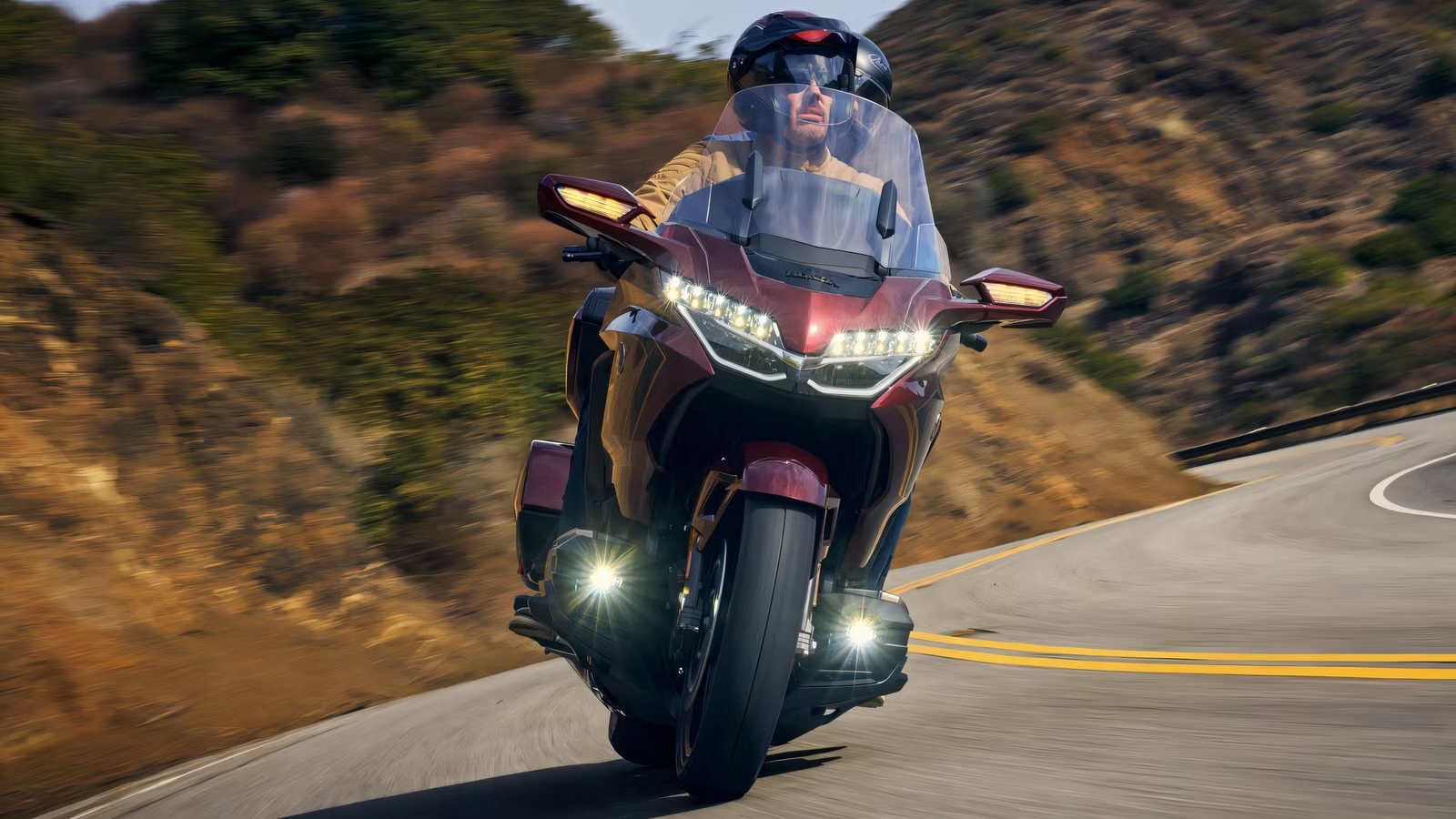
Walk into a Harley-Davidson dealership for a touring motorcycle, and the sales rep will promptly steer you toward the glass case at the back, where the CVO Street Glide Limited sits. Under its own spotlight, donning over fifty thousand dollars worth of tri-tone paint, chrome, and a 600-watt banging stereo system. It is undoubtedly gorgeous. It is also, by the numbers that matter once the road turns into a long riding day with a passenger on the back, the second-best touring bike in the figurative room.

The best of the best actually costs a staggering twenty-one thousand dollars less. And it should come as no surprise that it also has a Honda badge on its tank. The Japanese marque has spent decades building the Gold Wing around ideologies that Harley still won’t touch, or match, yet every one of them lowers the effort it takes to ride a heavy bike a long way.
The Underrated Necessities That Make A Touring Bike Special
Ask anyone who has crossed a state two-up on a motorcycle about what wears them out, and there’s a common theme that follows. They say that the engine buzzes through the floorboards until their feet go numb, or that the front-end dive is a bit unnerving with a loaded bike, or the moment at the gas station when a loaded tourer has to be backed up, passenger still aboard, and dignity on the line. These might sound like minor issues, but repeated over a day’s riding, they become increasingly annoying. The bike that feels ready for 500-mile days should ask the least of you, and that has almost nothing to do with its price tag.


Four things decide it. Balance, so where the weight of the motorcycle sits. Effort to gauge how hard your wrists, back, and hands work over hours. Isolation, to know how much of the road and the engine reaches your body. And the practical stuff, the kind of touring tech you can actually use. A bagger can nail the look and still fail three of the four requirements. The real question is which machine wins them on engineering that comes across as though through rather than banking on the brand image alone.
The Motorcycle That Feels Better The More Miles You Put On It
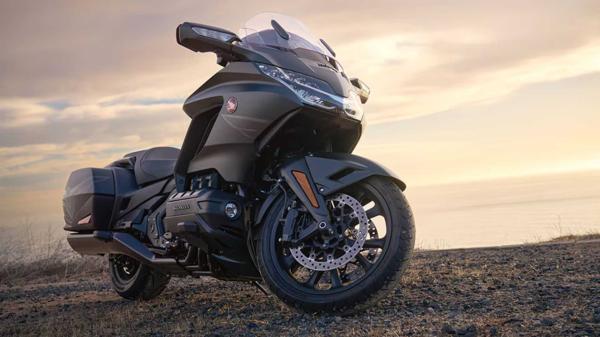
The Gold Wing’s charm doesn’t wear off with age; in fact, the more miles you cover on it, the better it feels.
The Honda Gold Wing Is The Benchmark That Flagship Harleys Are Afraid Of

Honda pioneered this segment in 1975 and has spent a solid fifty years refining the idea. The trim that lines up with Harley’s loaded flagship is the full-dress Gold Wing Tour, and it starts at $29,500, or $30,500 with the DCT automatic. Even the airbag-equipped version tops out at $33,800, still a good eighteen thousand under the CVO Street Glide Limited. Touted many times by various publications as the best touring bike, the bike that justifies its premium price does so by handing you a complete flagship for the money, and much less money than the Harley equivalent.
The Flat-Six Engine And The Weight It Hides

A 1,833cc horizontally opposed six is the rarest engine layout in touring, and the reason is its geometry. Six cylinders lying flat sit lower than any V-twin can, which drops the center of gravity to a point where an 856-pound DCT Gold Wing Tour stops feeling like what its weight suggests once it rolls off the sidestand.
The Milwaukee-Eight 121 in the CVO makes a thunderous 139 lb-ft, and there is real character in that big twin. But character has a cost, and you pay for it in the vibration that travels up through the bars and boards. The flat-six, on the other hand, trades the drama for smoothness, and after four hours, that trade-off difference can be felt (or not felt) in your hands and your spine.
Seven-Speed Automatic, Walking Mode, And The Parking-Lot Problem

The scariest moment on any heavyweight tourer is not a sweeping bend at speed; rather, it’s the slow-speed stuff like tackling the bike on the unsurfaced bits at a rest stop with your partner still at the back. Honda solved this with a seven-speed dual-clutch automatic (the only one of its kind), which includes a Walking Mode, creeping the bike forward or backward under power at a literal walking pace. The most dependable tourer of 2026 will reverse itself out of trouble, and that’s the kind of dependability that the CVO Street Glide Limited, like every big Harley, doesn’t offer. For a machine this size, that one feature alone is the line between confidence and a smashed ego, along with the dropped bike.
The Engineering Genius Of The Gold Wing’s Front Suspension

Every telescopic fork in motorcycling does the same thing under hard braking, where it compresses, the nose drops, and the bike’s weight pitches onto the front tire’s contact patch, right when you least want it loaded. The CVO Street Glide Limited, for all its 47mm inverted Showa hardware, still works that way. Honda walked away from the fork entirely despite the most sophisticated suspensions featuring electronics, and decided to reinvent the wheel, erm… suspension in this case.
The double-wishbone front end, which uses a control-arm layout hanging the front wheel off two wishbones instead of a sliding fork, splits braking forces from steering input, so the Gold Wing stays level when you grab a fistful of brake with a passenger and a full trunk aboard. Less dives means fewer corrections, and fewer corrections over a day means a rider who is not fighting the bike into every corner or stop sign.
The Time Japan Made A Better Touring Motorcycle Than The Rest Of The World
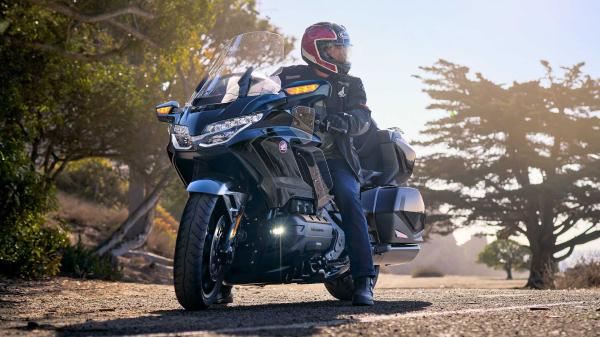
Here’s the touring bike that has always set the pace for other tourers to follow.
The Gold Wing Against Harley’s Costliest Street Glide

Put the two flagships side by side, and the price gap is glaring. The H-D CVO Street Glide Limited might have the American rider’s heart, but it starts at $51,999. Its Milwaukee-Eight VVT 121 is a genuine torque monster with quality Showa suspension and stopped by Brembo radials. It is loaded the way a fifty-thousand-dollar motorcycle should be, with heated seats front and rear, the Grand Tour-Pak, Skyline OS on a 12.3-inch screen, six speakers, and two amps of Rockford Fosgate. So it’s not under-equipped by any means. It also tips the scales at 919 pounds in running order, a full 63 pounds heavier than the Honda, and all of it carried higher.

The Gold Wing Tour DCT, at $30,500, checks every one of those boxes for a whole twenty-one thousand dollars less, and that holds a lot of meaning. For the difference in price, the Honda still manages to add three vital things that the CVO simply cannot match. The flat-six that it cannot match for smoothness. The double-wishbone front-end cannot match for composure, especially under heavy braking. And the Walking Mode forward and reverse creeping feature that it does not offer at any price. The Harley will out-torque the Gold Wing and outshine it in a parking lot full of admirers, and for some riders, that settles it, which is fair. But measured by what actually wears you down on a long riding day, the cheaper Honda asks less of you for the privilege.
Source: Honda Powersports, Harley-Davidson

Related posts


Latest Post


No Comments