
NHTSA Just Opened An Audit Into How Tesla Self-Certified The Steering-Wheel-Free Cybercab
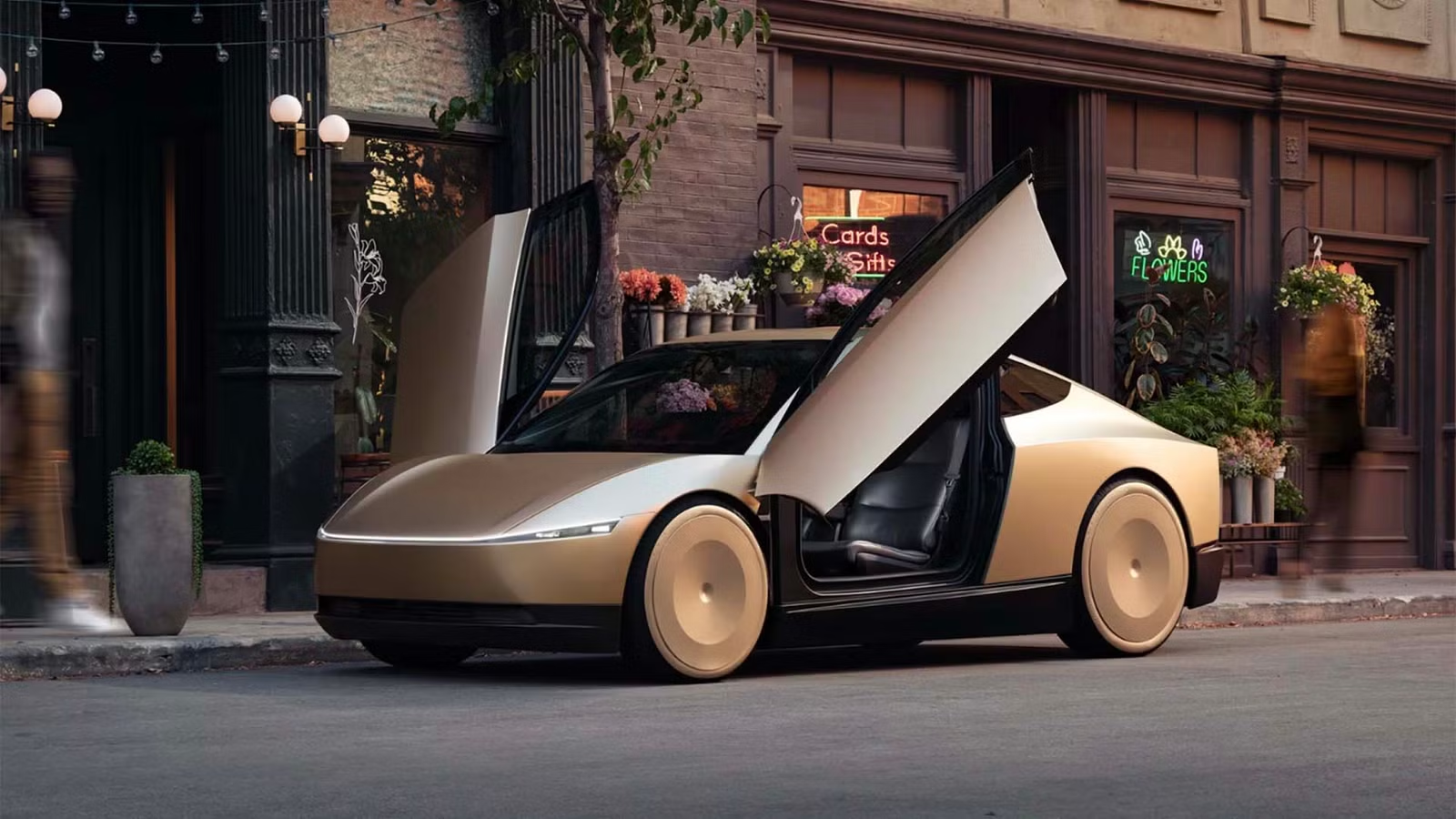
On September 3, 2026, Tesla began charging fares for Cybercab rides in Austin, Texas. Federal regulators responded the same day. The National Highway Traffic Safety Administration opened Audit Query AQ26002 covering roughly 1,000 Cybercabs — a formal examination of how Tesla declared a vehicle with no steering wheel, no pedals, and no mirrors compliant with U.S. safety standards written for traditional cars.

The audit is not a recall, and NHTSA has not concluded the Cybercab is unsafe or illegally deployed. What regulators want to see is the paperwork and engineering data behind Tesla’s compliance claim — specifically, which safety standards the company decided simply don’t apply to a car built without the controls those standards assume every vehicle has.
What Self-Certification Means, and Why It Matters Here
Under U.S. law — 49 CFR Part 571 — automakers certify their own compliance with Federal Motor Vehicle Safety Standards. They build the vehicle, determine it meets every applicable FMVSS requirement, and bring it to market without advance NHTSA approval. The agency then audits that certification after the fact and can open defect investigations if the paperwork doesn’t hold up.

That system is what allowed Tesla to start commercial Cybercab service in Austin without waiting for a green light from Washington. The Cybercab carries no steering column, no brake pedal, no accelerator pedal, and no conventional mirrors. FMVSS rules cover all of those items — steering columns, brake pedals, mirrors, and more. Tesla’s position is that the Cybercab complies with every standard that actually applies to a vehicle lacking those components. NHTSA’s audit will determine whether that reasoning is legally and technically sound.
In a statement, NHTSA Administrator Jonathan Morrison put it plainly: “NHTSA fully supports the safe development and deployment of automated vehicles. But as the federal regulator, we need to ensure that all of our laws are followed.”
The Zoox Comparison Shows What Tesla Chose to Skip

Federal law offers a second path for vehicles that don’t comply with specific FMVSS requirements: a Part 555 exemption. NHTSA can grant those petitions on a temporary basis, capped at 2,500 vehicles per manufacturer per year. Amazon’s Zoox used that route for its own steering-wheel-free shuttle — first self-certifying, then filing for a formal exemption. NHTSA approved Zoox’s petition on July 31, 2026, listing every standard from which the vehicle was excused, and Zoox began charging for rides in Las Vegas shortly after. The exemption runs through July 2028.
Tesla chose not to file for an exemption. Self-certifying instead of seeking a formal waiver means Tesla avoids the 2,500-vehicle annual cap that comes attached to the exemption process — a meaningful distinction for a company that lists installed Cybercab production capacity above 125,000 units per year and has publicly targeted consumer sales priced under $30,000. The audit is, in part, a test of whether that strategy holds up under federal scrutiny. Zoox’s own experience is instructive: the company first attempted self-certification for a purpose-built robotaxi in 2022 and spent years under federal examination before reaching commercial service.
What the Audit Covers — and What It Doesn’t

AQ26002 is a compliance audit, not a performance evaluation of Tesla’s autonomous driving software. Regulators are not assessing whether the Cybercab navigates Austin streets safely. They are examining the technical data and processes Tesla used to self-certify compliance for a vehicle that deletes equipment referenced throughout the FMVSS rulebook.
That distinction is worth keeping clear, because NHTSA is separately running a broader probe into Tesla’s Full Self-Driving software covering approximately 3.2 million Tesla vehicles, including unsupervised robotaxi services in Texas and Florida. That investigation is a different action with a different scope. AQ26002 is specifically about the Cybercab’s certification paperwork — which standards Tesla deemed applicable, which it deemed inapplicable, and what engineering evidence supports those conclusions.
A bollard crash involving a Cybercab in Austin drew public attention to the new service in the days surrounding the launch, adding context to why regulators moved quickly. The audit, however, was opened based on the certification question, not any specific incident. NHTSA noted that existing standards remain fully in force for automated vehicles until the agency completes ongoing rulemakings — including proposed changes to brake pedal requirements and mirror standards — that would create a clearer framework for driverless designs.
What This Means for Cybercab Expansion and the Broader AV Industry

Tesla has not been ordered to halt Cybercab service while the audit proceeds. The Austin fleet — 45 Cybercabs registered to Tesla’s robotaxi entity as of early September — continues operating. But the audit’s outcome carries significant weight for how quickly Tesla can scale beyond that small initial deployment, and for every other company developing purpose-built autonomous vehicles.
If NHTSA concludes that Tesla’s self-certification is technically valid — that the relevant FMVSS requirements genuinely don’t apply to a vehicle designed without the controls they regulate — the probe closes and Tesla’s approach becomes a usable template. Other AV makers could potentially follow the same path, bypassing the exemption process and its deployment caps. If NHTSA finds the certification insufficient, possible outcomes include hardware or software changes, operating restrictions, a formal exemption filing, or civil penalties. Cities and state regulators tend to follow federal compliance determinations on vehicle standards, so a slow or adverse resolution here would affect every market Tesla has targeted for expansion.

Related posts

Latest Post


No Comments