
The Ioniq 3 Has No Instrument Cluster at Base Trim, Continuing a Troubling Industry Trend
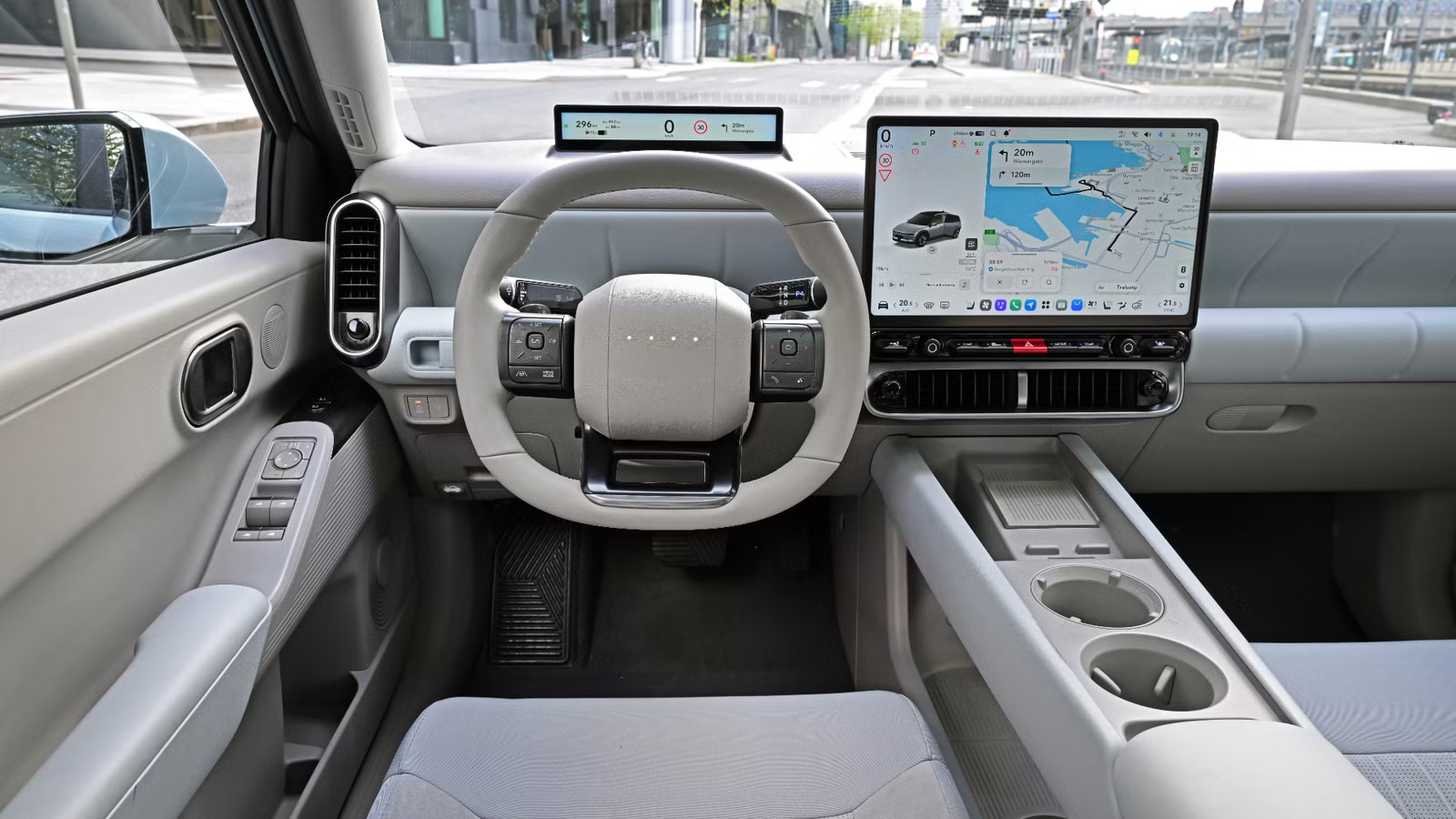
Hyundai’s new Ioniq 3 launches without an instrument cluster on its base trim — meaning the driver’s primary speed and status display simply isn’t there unless you pay to move up. Announced this week alongside details of the Korean-market Elantra (sold as the Avante in South Korea), the decision marks one of the clearest examples yet of a mainstream automaker treating a traditionally standard feature as a paid upgrade.

Both models run Hyundai’s new Pleos Connect infotainment system, which pairs a large central touchscreen — up to 14.6 inches on the Ioniq 3 — with a slim 9.9-inch instrument cluster display mounted directly in the driver’s sightline. On the base Ioniq 3, that second screen is absent entirely; buyers must step up to the next trim level to get it, a jump that reportedly costs around $5,000. On the Avante in Korea, the cluster is at least available as a standalone option for 350,000 won, roughly $255. Neither arrangement feels like the right answer for a feature most drivers have taken for granted since the analog gauge era.
What the Base Ioniq 3 Actually Gives You

Without the 9.9-inch driver display, the base Ioniq 3 relies entirely on the central touchscreen for speed readouts and warning messages. Hyundai’s configurator confirms that essential functions — vehicle speed, alerts, range — are routed through that center screen rather than a dedicated cluster in the driver’s line of sight. It’s an arrangement Tesla popularized with the Model 3, but one that has drawn consistent criticism from drivers who find a center-mounted screen a poor substitute for a glanceable gauge cluster directly ahead of the wheel.
Hyundai does retain physical controls for frequently used functions, which separates the Ioniq 3 from some competitors that have buried everything in menus. But the absence of any driver-facing display on the base trim is a meaningful step back from what buyers typically expect, even at entry-level price points. Press images of both the Ioniq 3 and Avante show the cars with the instrument cluster fitted — the omission only becomes apparent when you dig into the configurator.
Pleos Connect Is Coming to 20 Million Cars, Which Makes This Decision Matter More
Pleos Connect debuted on the Grandeur flagship sedan, where every trim includes the full dual-screen setup. The system is now rolling out to the Ioniq 3, Avante, and next-generation Tucson, with Kia’s next-generation Sportage expected to follow in 2027. Hyundai has stated it plans to deploy Pleos Connect across approximately 20 million vehicles globally by the end of the decade, spanning Hyundai, Kia, and Genesis models.
That scale is what elevates this from an isolated cost-cut to a structural question about base-trim standards. If the instrument cluster is optional on entry-level Pleos Connect vehicles, that policy could follow the platform into every segment it touches. No Hyundai, Kia, or Genesis model currently sold in the United States uses Pleos Connect, so American buyers aren’t facing this choice yet — but the timeline suggests they will be soon.
A Broader Pattern of Feature Stripping at the Entry Level
Hyundai isn’t alone in rethinking what belongs in a base trim. Across the industry, features that once shipped as standard have quietly migrated to option packages or higher configurations. Heated seats — long a cold-climate staple — have appeared as paid subscription features on some BMW models. Several automakers have moved advanced driver-assistance systems like blind-spot monitoring and rear cross-traffic alert out of base trims entirely, bundling them into mid-tier packages that add hundreds or thousands of dollars to the transaction price.
The instrument cluster is a sharper case because it’s so fundamental. A heated seat is a comfort feature; a driver display is the primary interface between the car and the person operating it. Autoblog noted that removing equipment from the base car lets automakers advertise a lower entry price while nudging buyers toward options — a strategy long applied to wheels and upholstery but now applied to the driver’s display, where the trade-off is much harder to ignore. EV pricing pressure is a real factor: entry-level electric vehicles carry higher manufacturing costs than comparable gas cars, and automakers are searching for ways to keep advertised starting prices competitive.
What This Means for Buyers Configuring a New Hyundai
For anyone cross-shopping the Ioniq 3 at launch, the practical takeaway is straightforward: verify what the base trim actually includes before locking in a configuration. The gap between the advertised starting price and a fully equipped car has always existed, but when the missing item is the instrument cluster, the delta becomes harder to rationalize as a luxury trade-off.
Hyundai has not confirmed final trim structures or pricing for the U.S. market, and it’s possible the North American spec will differ from what’s currently available in Korea and the UK. Still, given the platform’s global rollout ambitions, buyers should treat the base-trim cluster omission as a live question rather than a settled one. The $255 option price on the Avante is manageable; a mandatory trim upgrade costing thousands is a different conversation entirely.
The instrument cluster has been a given in new cars for decades. The fact that it’s now a line item on a configurator — even on one model, even in one market — is worth watching closely as Pleos Connect spreads across Hyundai’s global lineup.

Related posts





Latest Post




No Comments