
The Oldsmobile Sedan That Gave Carroll Shelby His V8 Is Vanishing
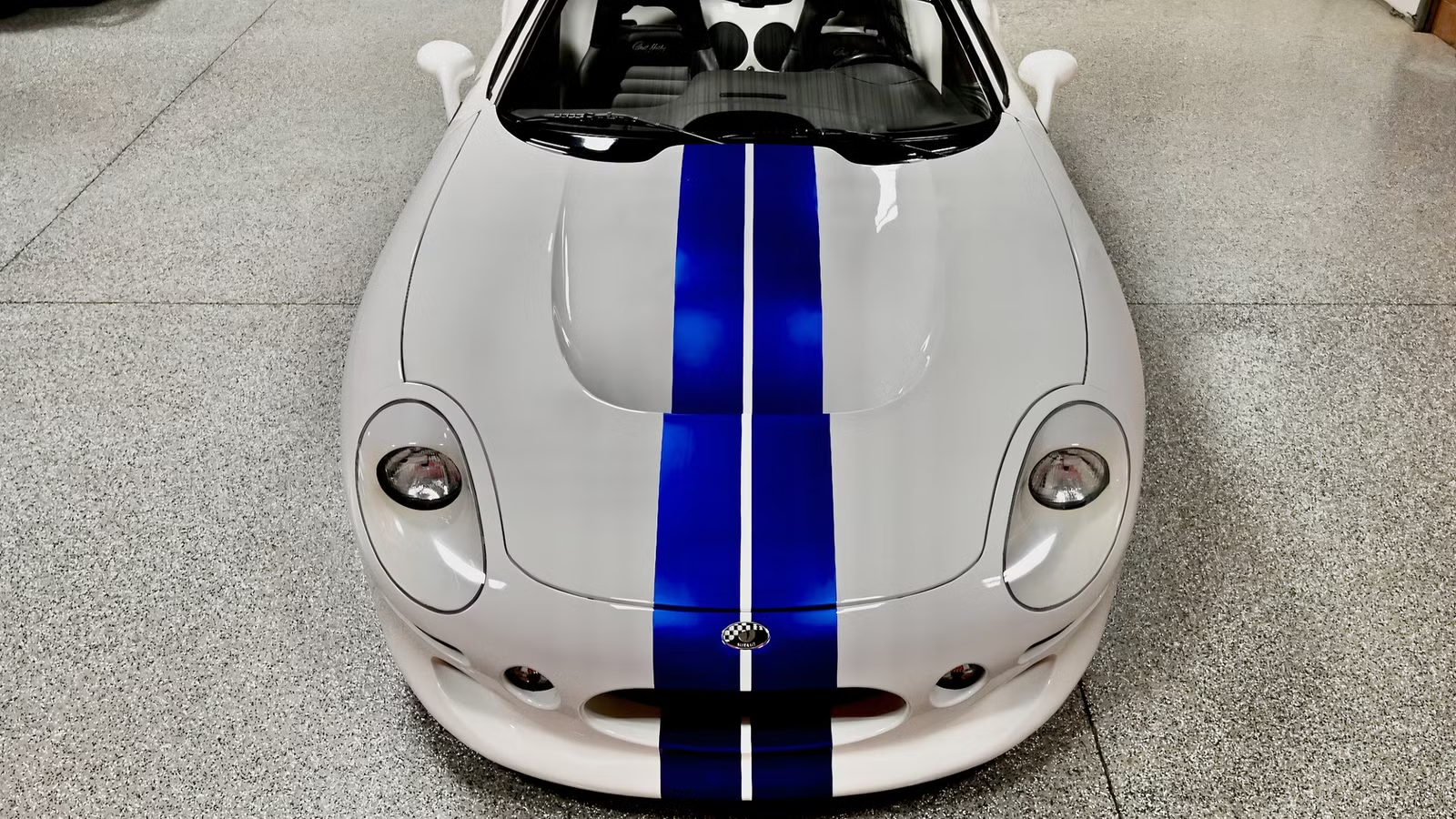
Carroll Shelby built his reputation on Ford-powered Cobras. Then he put a V8 from a front-drive Oldsmobile sedan into his own sports car. The Series 1 wrapped that unlikely engine in an aluminum chassis and a carbon-fiber-and-fiberglass body, but the strangest part wasn’t the donor.

GM withheld access to the engine computer, limiting how far Shelby’s engineers could push it. Shelby could design the car around the V8, yet a much bigger company still controlled a crucial piece of what that engine could do.
Why Shelby Chose A Sedan V8 For His New Sports Car
Shelby American president Don Rager put the choice in practical terms in Motor Trend’s November 1998 report: “Carroll felt it was the highest-technology domestic engine available, and it packages well in our engine bay.” In a purpose-built two-seater, that fit mattered. Every inch in the engine bay counts because engine size affects the rest of the car around it.

There was a racing reason, too. Rager pointed to Oldsmobile’s Indy Racing League involvement and the team’s relationship with former division chief John Rock, while Cadillac’s larger Northstar lacked the tie-in Shelby wanted. That didn’t make the sedan V8 an Indy engine. Shelby still had to adapt a road-going powerplant to a very different job.
The Series 1 wasn’t a reworked production sports car. Its aluminum structure and independent suspension gave Shelby room to shape the handling, while a six-speed manual transaxle sent power to the rear wheels. Newport Car Museum records 249 production examples. That small run put an everyday sedan V8 into a rare, purpose-built Shelby roadster.
Then GM’s Reported Computer Lockout Held Shelby Back

CarBuzz’s account, says GM supplied the engines but didn’t give Shelby the access needed to alter their ECUs, or engine computers. That mattered because the computer controlled how the V8 ran. Without full access, Shelby’s engineers had fewer ways to tune the whole package.
They still found power. New camshafts, intake and exhaust changes, and a computer chip that brought the naturally aspirated development car to about 320 hp. An optional Vortech supercharger package rated at 450 hp.
Cadillac documents a separate 4.0-liter twin-turbo Northstar V8 in its Northstar LMP race car, which debuted in 2000. That racing engine may help explain the confusion, but it doesn’t establish that the Series 1 used twin turbos.
The ECU restriction also wasn’t the project’s only problem. It was also stricken with chassis manufacturing trouble, ill-fitting parts, and delays.
The Oldsmobile Aurora Was Shelby’s Unexpected Donor

The mystery sedan was the Oldsmobile Aurora. Its 4.0-liter L47 V8, derived from Cadillac’s 4.6-liter Northstar, used dual overhead camshafts and four valves per cylinder—32 total—to make 250 hp and 260 lb-ft. The Aurora sent power through a four-speed automatic to its front wheels. Shelby changed the mission, mounting the V8 lengthwise and pairing it with a rear transaxle for his sports car.
The Aurora ran from 1995 to 1999 and from 2001 to 2003, with no 2000 model. A 215-hp 3.5-liter V6 joined for 2001–2002, so the Shelby connection belongs specifically to the V8.
The Sedan Had Its Own Engineering Surprises

Then there’s the structure. Outright Oldsmobile reproduces a 1997 brochure saying the roof structure withstood more than 8,000 pounds of force before the test equipment gave out. That puts a hard number on how serious the Aurora’s body engineering was.
Performance figures also change by generation. The original V8 had an 8.1-second 0–60 time; The second-generation V8 ran it in about 7.5 seconds. A forgotten front-drive Oldsmobile sedan carried the same basic V8 Shelby chose for a much lighter, manually shifted sports car.
Beyond Shelby, The Final 500 Marked An Unusual Farewell

Oldsmobile built the Aurora to shake off the division’s aging image, giving the early cars a distinctive swirled-A emblem instead of familiar Oldsmobile branding. Shelby’s use of the Aurora V8 in the Series 1 gives that reinvention a stranger legacy. The Series 1 was the only other production car to use this 4.0-liter engine variant—a documented claim, not a blanket statement about every Northstar-powered car.
That provenance doesn’t promise rising values, and it says nothing about the condition of any Aurora you find today. It does give the V8 sedan an unusual backstory: its 250-hp engine became the starting point for Carroll Shelby’s own sports car. For an Oldsmobile flagship built to change minds, that is quite a footnote. Aurora production ended in March 2003.
The Final 500 wore Dark Cherry Metallic paint, heritage-style badges, and neutral leather seats embroidered with Final 500 identification. Under that Dark Cherry paint sat the V8 Shelby chose. Bring a Trailer shows the final production example’s $40,530 total retail price and 250-hp V8. The last Aurora went out wearing its finest suit. Learn that history, and you start wishing one of those Dark Cherry V8 sedans was in your garage.
Sources: Cadillac, Shelby American, Oldsmobile, Motor Trend

Related posts
Latest Post


No Comments