The Next Toyota Corolla Could Be Its Biggest Reinvention In Years
10 minutes reading
Sunday, 30 Aug 2026 19:30 0 5 autotech
The Toyota Corolla has survived for 60 years by giving buyers very few reasons to worry, but that same caution has also given them very few reasons to feel excited. Toyota now appears prepared to challenge that formula with a next-generation sedan that could look remarkably close to the radical Corolla Concept. That creates a difficult balancing act. Push the design too far, and Toyota risks compromising the affordability and practicality that built the nameplate. Play it safe, and one of the biggest redesign opportunities in Corolla history could disappear beneath another conservative body.
Toyota has sold more than 57 million Corollas across more than 150 countries and regions since the nameplate arrived in 1966. Numbers like those are not built through radical experimentation. They come from consistently delivering affordable transportation to drivers who value dependability, efficiency, and simplicity more than dramatic styling.
That history makes redesigning the next-generation Corolla sedan more complicated than it might appear. Toyota cannot treat this compact car like a low-volume design exercise. Even a small change in price, passenger space, visibility, or operating cost could affect millions of potential buyers.
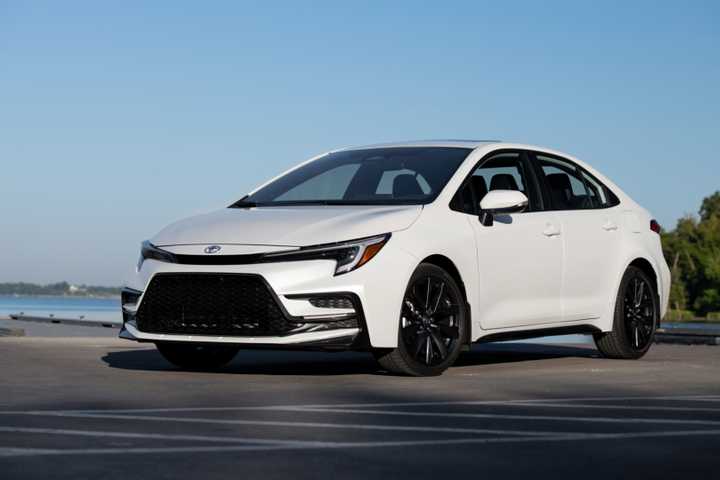
The current Corolla shows why Toyota has been hesitant to disturb the formula. Its gas engine produces 169 horsepower while returning up to an estimated 35 mpg combined. The Corolla Hybrid produces 138 horsepower and can reach an estimated 50 mpg combined in FWD form. It is not an exciting specification sheet, but it is effective.
The Current Car Shows How Conservative The Formula Has Become
2026 Toyota Corolla Hybrid SE AWD Driving ShotToyota
The current Corolla sedan rides on Toyota’s TNGA-C platform and dates back to 2018 for its basic design. Toyota has updated the technology, powertrains, styling, and safety equipment since then, but the underlying vehicle is approaching the end of a long product cycle, although for Toyota, this is not the longest production cycle in recent years.
That age is not necessarily a problem for the traditional Corolla buyer. A mature platform typically means that Toyota has had years to refine the manufacturing process and address early production issues. However, the compact-car segment has changed considerably since this generation arrived.
The Hyundai Elantra has adopted sharp, unconventional styling. The current Honda Civic looks more mature and upscale than its predecessor. Even Toyota proved with the latest Prius that efficiency-focused transportation need not compromise on style. The Corolla remains competitive, but simply making the next sedan slightly newer would feel like a missed opportunity.
A Toyota Documentary May Have Revealed The New Sedan’s Shape
The Blurred Image Closely Follows The Corolla Concept
Toyota Corolla Teaser ImageToyota NHK
The strongest clue about Toyota’s plans appeared in an NHK documentary offering a look inside the company’s development process. During a presentation attended by Toyota employees, a blurred image appeared to show the next-generation Corolla sedan. This was not a conventional teaser or an official production reveal. The image was obscured, and Toyota has not released complete exterior photographs. Even so, the visible proportions were difficult to ignore.
The car shown in the presentation had a low nose, a long roofline, and an unusually steep lower edge along the front side window. Those elements closely resemble the Corolla Concept unveiled at the 2025 Japan Mobility Show. The similarities suggest Toyota could be much more serious about the show car’s shape than its dramatic appearance initially indicated.
Some of the concept’s sharper details will almost certainly be adjusted for production. Larger mirrors, conventional door handles, smaller wheels, and less aggressive bodywork would not be surprising, but the basic look might make it to production.
Toyota’s Concept Barely Looked Like A Traditional Corolla
Toyota Corolla Concept Overhead Front 3/4Toyota
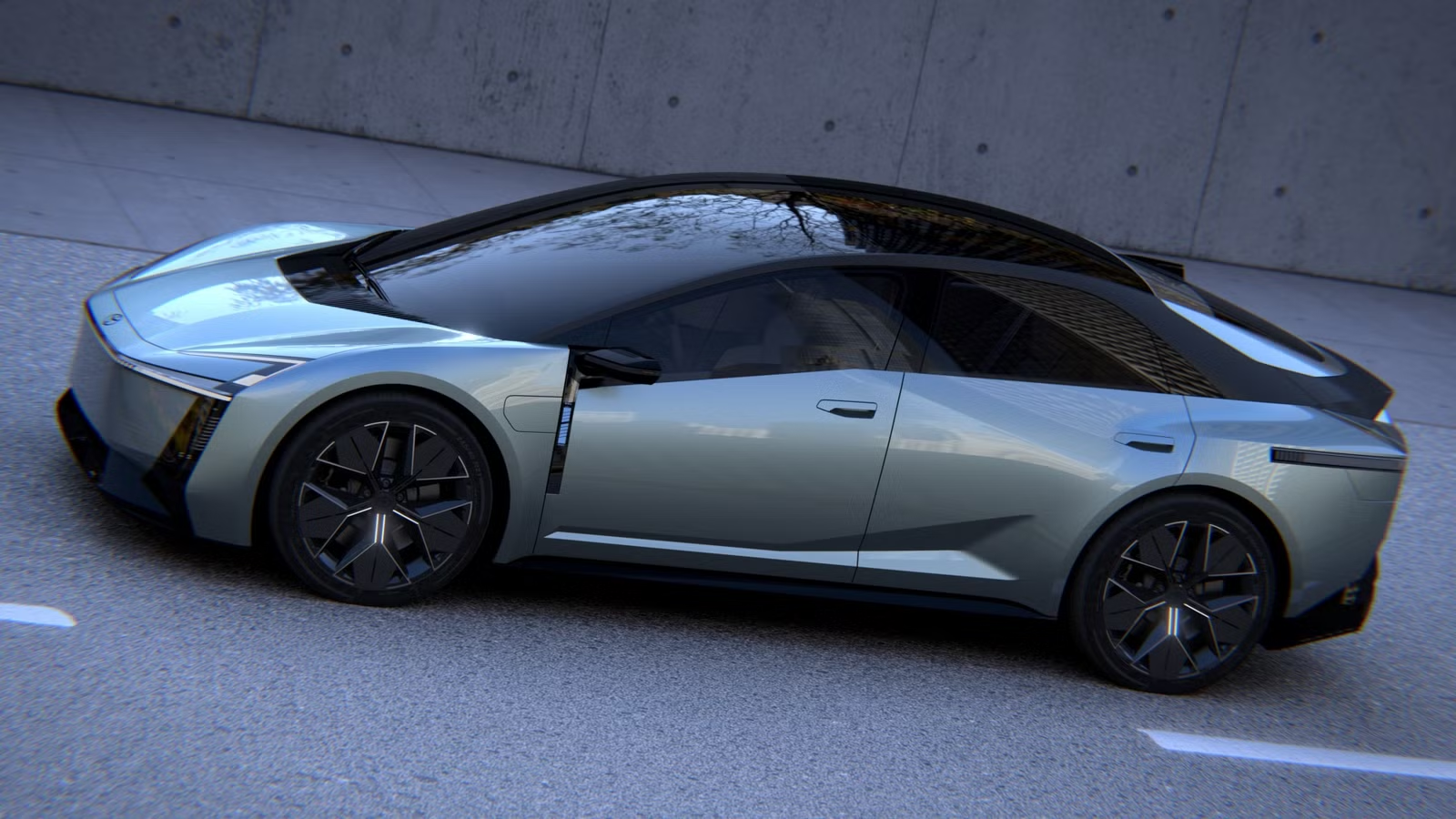
Without the badges, you might never identify the Corolla Concept as a member of Toyota’s practical compact-car family. Its dramatically raked windshield flows into a low roofline, while the slim side glass and fastback-like rear give it proportions closer to those of a premium electric sedan. A full-width lighting element sits above vertically oriented headlights, and the short hood gives the car an almost cab-forward appearance. Sculpted doors and pronounced wheel arches replace the flat, straightforward body sides normally associated with an affordable sedan.
The concept also included charging-related details, such as a visible charge port and an exterior status indicator. That suggested Toyota was displaying an electric configuration, but the company did not present the Corolla Concept as an EV-only replacement for the existing car.
That distinction matters. The concept appears to preview a new design language and vehicle architecture rather than a single powertrain. If the documentary image really depicts the production sedan, Toyota may be preparing to bring much of that visual drama to several different versions of the Corolla. But design is only half the story. The more significant reinvention may not be visible at all — it could be buried in what sits underneath the body.
The Bigger Reinvention Could Be Hidden Underneath
One Corolla Could Support Several Different Powertrains
Toyota Corolla Concept InteriorToyota
Toyota Corolla Concept Interior Image showing steering wheelToyota
Reports surrounding the next-generation project point toward a remarkably broad powertrain strategy. The new Corolla could potentially accommodate a conventional gasoline engine, a traditional hybrid, a plug-in hybrid, and a fully electric drivetrain.
Toyota has not announced a final U.S. lineup, so none of those variants should be treated as guaranteed for American dealerships. Outputs, battery capacities, driving ranges, and drivetrain layouts also remain unknown. The reporting fits Toyota’s established multi-pathway strategy.
Toyota Corolla Concept front driving shotToyota
Instead of assuming that every customer and market is ready for the same technology, Toyota continues to invest in several potential versions of the same car. A Corolla buyer in an area with limited charging infrastructure could still choose a gas or hybrid model. Someone with home charging might prefer a plug-in hybrid, while another buyer could go fully electric.
That would make the Corolla more than one global car with minor regional and personal differences. It could become the foundation for several distinct compact sedans sharing the same familiar name.
Toyota’s Scale Is The Only Reason This Multi-Powertrain Gamble Makes Financial Sense
Toyota Corolla Concept On DisplayRoger Biermann |CarBuzz
Toyota’s broad approach is not purely about giving buyers more choices. Developing a flexible architecture could enable the company to respond more quickly as emissions regulations, incentives, fuel prices, and EV demand vary across markets.
That flexibility has potential disadvantages. A platform designed to accommodate engines, fuel tanks, batteries, and electric motors may not package each powertrain as efficiently as a dedicated EV or dedicated combustion platform. Toyota will need to control weight, passenger space, manufacturing complexity, and cost.
Toyota Corolla concept front shotToyota
The Corolla’s scale could make the effort worthwhile. Few nameplates give Toyota access to such a large and diverse customer base as the Corolla. If the company can spread the new architecture across multiple body styles, countries, and propulsion systems, it could justify the widespread changes and variations. More importantly, this could allow the Corolla to evolve without forcing its traditional buyer to accept a powertrain that does not fit their needs. There’s one more wrinkle: not every version of the next Corolla will be this new car. Toyota has already confirmed a 2027 model — and it has almost nothing to do with what you’ve just read.
The Confirmed 2027 Corolla Hatchback Is Not This New Car
Why Toyota’s Incremental 2027 Hatchback Makes The Sedan’s Reinvention Even More Significant
2027 Toyota Corolla Hatchback Driving ShotToyota
The confirmed 2027 Toyota Corolla Hatchback needs to be kept separate from the apparent next-generation sedan. Toyota has already detailed the 2027 hatchback, and it remains part of the current generation.
Its changes center on technology and equipment. The SE receives a standard seven-inch digital gauge cluster, while the available Premium Package adds a 12.3-inch gauge cluster and a 10.5-inch multimedia display. Those larger displays are standard on the XSE. Toyota also offers new colors and available 18-inch gloss-white accessory wheels.
Under the hood, the hatchback retains its 2.0-liter four-cylinder engine and 169-horsepower output. There is no radical new body, plug-in hybrid system, or battery-electric drivetrain in Toyota’s announcement. It is an updated version of the existing model, not confirmation that the concept-inspired sedan has reached showrooms.
The Sedan And Hatchback May Follow Different Timelines
Toyota Corolla Concept Rear 3/4Toyota
Automakers do not always redesign every version of a nameplate at the same time. Toyota could launch a new sedan while continuing the existing hatchback, especially if the two models serve different markets or production strategies.
At this stage, Toyota has not confirmed whether a future hatchback will use the sedan’s reported architecture. The timing is equally uncertain. The apparent sedan is frequently described as a possible 2028 model, but Toyota has not announced an official model year, reveal date, U.S. arrival schedule, or starting price.
The safest conclusion is also the most interesting one: Toyota is developing something significant, but the company has not yet revealed how much of the global Corolla family will change as a result. Which brings the question back to where it started: can Toyota actually pull this off?
Toyota Must Make The Corolla Exciting Without Making It Unapproachable
Concept-Car Styling Could Create Practical Compromises
Toyota Corolla Concept Side ImageToyota
The Corolla Concept looks dramatically more desirable than the current sedan, but dramatic proportions can create ordinary problems. A lower roof could reduce rear headroom. Slimmer windows could hurt outward visibility, and a steeply raked windshield could complicate entry or cabin packaging.
Price presents an even larger challenge. Flush handles, sophisticated lighting, large displays, and electrified powertrains can quickly push an affordable compact into midsize-sedan territory. A Corolla that looks expensive but remains attainable would be a success. One that simply becomes expensive could lose sight of its purpose and quickly alienate traditional buyers.
Toyota will probably tone down the concept as it prepares the production sedan. That does not have to ruin the design. Preserving the low stance, unusual window line, and clean fastback profile would still create a Corolla unlike any of its mainstream predecessors.
The Real Victory Would Be Making A Sensible Car Desirable
The next Corolla sedan does not need sports-car performance or a luxury badge to represent a major reinvention. It only needs to retain the qualities that make the current model easy to recommend while adding something the Corolla has rarely offered: emotional appeal.
That is the tension behind this entire project. Dependability and efficiency can convince you that a Corolla is a responsible purchase. A bold design could make you genuinely want one.
The documentary image suggests Toyota may be willing to move surprisingly close to its radical concept, while the reported multi-powertrain strategy could broaden the Corolla’s reach far beyond its current gas and hybrid formula. Plenty remains unconfirmed, but the direction is difficult to dismiss. If Toyota can make its most sensible car adventurous without making it impractical, the next Corolla will not merely be another redesign. It could be the model that finally proves familiar does not have to mean forgettable.
The Next Toyota Corolla Could Be Its Biggest Reinvention In Years
10 minutes reading
Sunday, 30 Aug 2026 19:30 0 5 autotech
The Toyota Corolla has survived for 60 years by giving buyers very few reasons to worry, but that same caution has also given them very few reasons to feel excited. Toyota now appears prepared to challenge that formula with a next-generation sedan that could look remarkably close to the radical Corolla Concept. That creates a difficult balancing act. Push the design too far, and Toyota risks compromising the affordability and practicality that built the nameplate. Play it safe, and one of the biggest redesign opportunities in Corolla history could disappear beneath another conservative body.
Toyota has sold more than 57 million Corollas across more than 150 countries and regions since the nameplate arrived in 1966. Numbers like those are not built through radical experimentation. They come from consistently delivering affordable transportation to drivers who value dependability, efficiency, and simplicity more than dramatic styling.
That history makes redesigning the next-generation Corolla sedan more complicated than it might appear. Toyota cannot treat this compact car like a low-volume design exercise. Even a small change in price, passenger space, visibility, or operating cost could affect millions of potential buyers.
The current Corolla shows why Toyota has been hesitant to disturb the formula. Its gas engine produces 169 horsepower while returning up to an estimated 35 mpg combined. The Corolla Hybrid produces 138 horsepower and can reach an estimated 50 mpg combined in FWD form. It is not an exciting specification sheet, but it is effective.
The Current Car Shows How Conservative The Formula Has Become
2026 Toyota Corolla Hybrid SE AWD Driving ShotToyota
The current Corolla sedan rides on Toyota’s TNGA-C platform and dates back to 2018 for its basic design. Toyota has updated the technology, powertrains, styling, and safety equipment since then, but the underlying vehicle is approaching the end of a long product cycle, although for Toyota, this is not the longest production cycle in recent years.
That age is not necessarily a problem for the traditional Corolla buyer. A mature platform typically means that Toyota has had years to refine the manufacturing process and address early production issues. However, the compact-car segment has changed considerably since this generation arrived.
The Hyundai Elantra has adopted sharp, unconventional styling. The current Honda Civic looks more mature and upscale than its predecessor. Even Toyota proved with the latest Prius that efficiency-focused transportation need not compromise on style. The Corolla remains competitive, but simply making the next sedan slightly newer would feel like a missed opportunity.
A Toyota Documentary May Have Revealed The New Sedan’s Shape
The Blurred Image Closely Follows The Corolla Concept
Toyota Corolla Teaser ImageToyota NHK
The strongest clue about Toyota’s plans appeared in an NHK documentary offering a look inside the company’s development process. During a presentation attended by Toyota employees, a blurred image appeared to show the next-generation Corolla sedan. This was not a conventional teaser or an official production reveal. The image was obscured, and Toyota has not released complete exterior photographs. Even so, the visible proportions were difficult to ignore.
The car shown in the presentation had a low nose, a long roofline, and an unusually steep lower edge along the front side window. Those elements closely resemble the Corolla Concept unveiled at the 2025 Japan Mobility Show. The similarities suggest Toyota could be much more serious about the show car’s shape than its dramatic appearance initially indicated.
Some of the concept’s sharper details will almost certainly be adjusted for production. Larger mirrors, conventional door handles, smaller wheels, and less aggressive bodywork would not be surprising, but the basic look might make it to production.
Toyota’s Concept Barely Looked Like A Traditional Corolla
Toyota Corolla Concept Overhead Front 3/4Toyota
Without the badges, you might never identify the Corolla Concept as a member of Toyota’s practical compact-car family. Its dramatically raked windshield flows into a low roofline, while the slim side glass and fastback-like rear give it proportions closer to those of a premium electric sedan. A full-width lighting element sits above vertically oriented headlights, and the short hood gives the car an almost cab-forward appearance. Sculpted doors and pronounced wheel arches replace the flat, straightforward body sides normally associated with an affordable sedan.
The concept also included charging-related details, such as a visible charge port and an exterior status indicator. That suggested Toyota was displaying an electric configuration, but the company did not present the Corolla Concept as an EV-only replacement for the existing car.
That distinction matters. The concept appears to preview a new design language and vehicle architecture rather than a single powertrain. If the documentary image really depicts the production sedan, Toyota may be preparing to bring much of that visual drama to several different versions of the Corolla. But design is only half the story. The more significant reinvention may not be visible at all — it could be buried in what sits underneath the body.
The Bigger Reinvention Could Be Hidden Underneath
One Corolla Could Support Several Different Powertrains
Toyota Corolla Concept InteriorToyota
Toyota Corolla Concept Interior Image showing steering wheelToyota
Reports surrounding the next-generation project point toward a remarkably broad powertrain strategy. The new Corolla could potentially accommodate a conventional gasoline engine, a traditional hybrid, a plug-in hybrid, and a fully electric drivetrain.
Toyota has not announced a final U.S. lineup, so none of those variants should be treated as guaranteed for American dealerships. Outputs, battery capacities, driving ranges, and drivetrain layouts also remain unknown. The reporting fits Toyota’s established multi-pathway strategy.
Toyota Corolla Concept front driving shotToyota
Instead of assuming that every customer and market is ready for the same technology, Toyota continues to invest in several potential versions of the same car. A Corolla buyer in an area with limited charging infrastructure could still choose a gas or hybrid model. Someone with home charging might prefer a plug-in hybrid, while another buyer could go fully electric.
That would make the Corolla more than one global car with minor regional and personal differences. It could become the foundation for several distinct compact sedans sharing the same familiar name.
Toyota’s Scale Is The Only Reason This Multi-Powertrain Gamble Makes Financial Sense
Toyota Corolla Concept On DisplayRoger Biermann |CarBuzz
Toyota’s broad approach is not purely about giving buyers more choices. Developing a flexible architecture could enable the company to respond more quickly as emissions regulations, incentives, fuel prices, and EV demand vary across markets.
That flexibility has potential disadvantages. A platform designed to accommodate engines, fuel tanks, batteries, and electric motors may not package each powertrain as efficiently as a dedicated EV or dedicated combustion platform. Toyota will need to control weight, passenger space, manufacturing complexity, and cost.
Toyota Corolla concept front shotToyota
The Corolla’s scale could make the effort worthwhile. Few nameplates give Toyota access to such a large and diverse customer base as the Corolla. If the company can spread the new architecture across multiple body styles, countries, and propulsion systems, it could justify the widespread changes and variations. More importantly, this could allow the Corolla to evolve without forcing its traditional buyer to accept a powertrain that does not fit their needs. There’s one more wrinkle: not every version of the next Corolla will be this new car. Toyota has already confirmed a 2027 model — and it has almost nothing to do with what you’ve just read.
The Confirmed 2027 Corolla Hatchback Is Not This New Car
Why Toyota’s Incremental 2027 Hatchback Makes The Sedan’s Reinvention Even More Significant
2027 Toyota Corolla Hatchback Driving ShotToyota
The confirmed 2027 Toyota Corolla Hatchback needs to be kept separate from the apparent next-generation sedan. Toyota has already detailed the 2027 hatchback, and it remains part of the current generation.
Its changes center on technology and equipment. The SE receives a standard seven-inch digital gauge cluster, while the available Premium Package adds a 12.3-inch gauge cluster and a 10.5-inch multimedia display. Those larger displays are standard on the XSE. Toyota also offers new colors and available 18-inch gloss-white accessory wheels.
Under the hood, the hatchback retains its 2.0-liter four-cylinder engine and 169-horsepower output. There is no radical new body, plug-in hybrid system, or battery-electric drivetrain in Toyota’s announcement. It is an updated version of the existing model, not confirmation that the concept-inspired sedan has reached showrooms.
The Sedan And Hatchback May Follow Different Timelines
Toyota Corolla Concept Rear 3/4Toyota
Automakers do not always redesign every version of a nameplate at the same time. Toyota could launch a new sedan while continuing the existing hatchback, especially if the two models serve different markets or production strategies.
At this stage, Toyota has not confirmed whether a future hatchback will use the sedan’s reported architecture. The timing is equally uncertain. The apparent sedan is frequently described as a possible 2028 model, but Toyota has not announced an official model year, reveal date, U.S. arrival schedule, or starting price.
The safest conclusion is also the most interesting one: Toyota is developing something significant, but the company has not yet revealed how much of the global Corolla family will change as a result. Which brings the question back to where it started: can Toyota actually pull this off?
Toyota Must Make The Corolla Exciting Without Making It Unapproachable
Concept-Car Styling Could Create Practical Compromises
Toyota Corolla Concept Side ImageToyota
The Corolla Concept looks dramatically more desirable than the current sedan, but dramatic proportions can create ordinary problems. A lower roof could reduce rear headroom. Slimmer windows could hurt outward visibility, and a steeply raked windshield could complicate entry or cabin packaging.
Price presents an even larger challenge. Flush handles, sophisticated lighting, large displays, and electrified powertrains can quickly push an affordable compact into midsize-sedan territory. A Corolla that looks expensive but remains attainable would be a success. One that simply becomes expensive could lose sight of its purpose and quickly alienate traditional buyers.
Toyota will probably tone down the concept as it prepares the production sedan. That does not have to ruin the design. Preserving the low stance, unusual window line, and clean fastback profile would still create a Corolla unlike any of its mainstream predecessors.
The Real Victory Would Be Making A Sensible Car Desirable
The next Corolla sedan does not need sports-car performance or a luxury badge to represent a major reinvention. It only needs to retain the qualities that make the current model easy to recommend while adding something the Corolla has rarely offered: emotional appeal.
That is the tension behind this entire project. Dependability and efficiency can convince you that a Corolla is a responsible purchase. A bold design could make you genuinely want one.
The documentary image suggests Toyota may be willing to move surprisingly close to its radical concept, while the reported multi-powertrain strategy could broaden the Corolla’s reach far beyond its current gas and hybrid formula. Plenty remains unconfirmed, but the direction is difficult to dismiss. If Toyota can make its most sensible car adventurous without making it impractical, the next Corolla will not merely be another redesign. It could be the model that finally proves familiar does not have to mean forgettable.







No Comments