
The Touring Motorcycle That Costs Less To Own Than You’d Expect
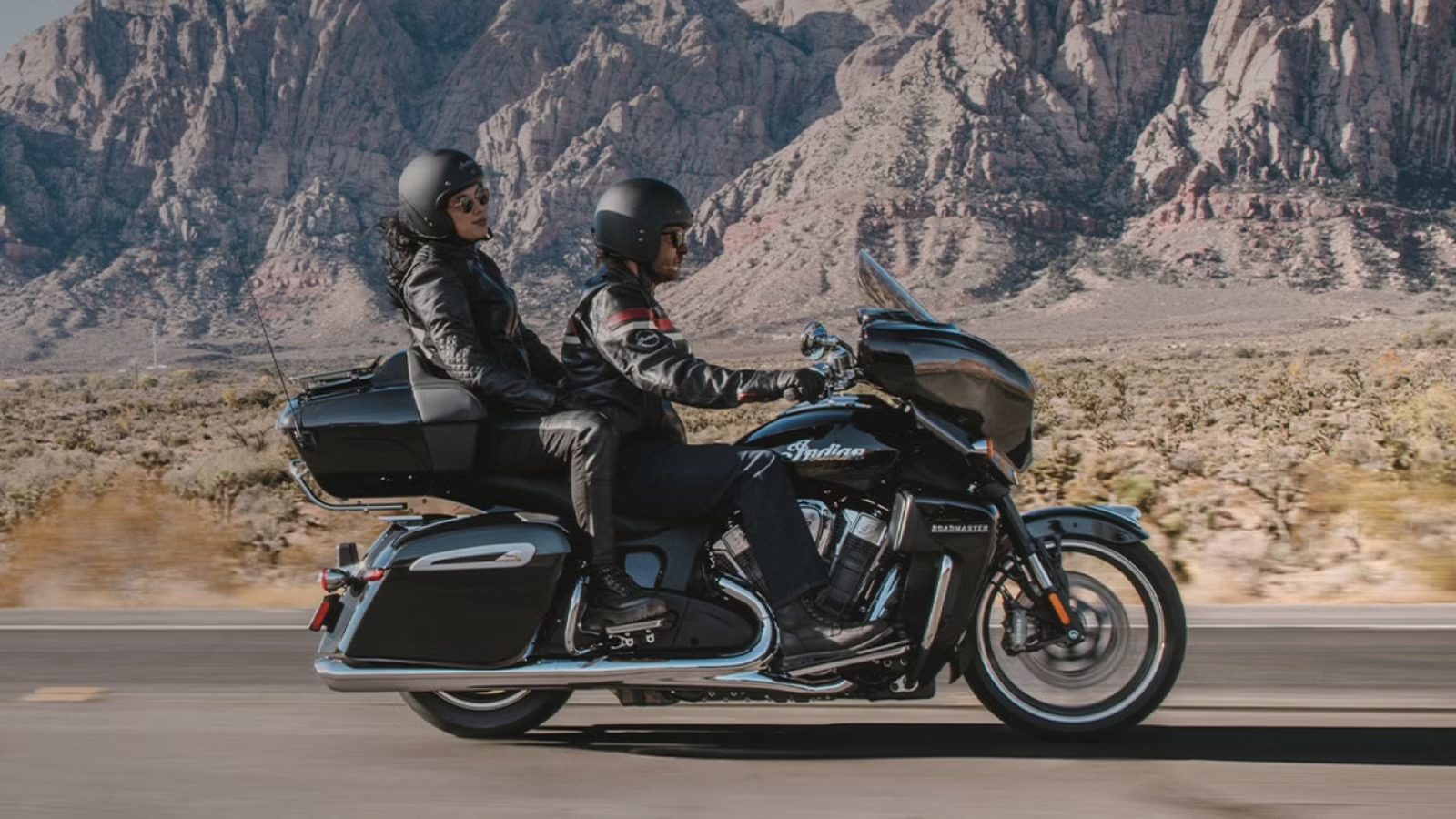
A full-dress touring motorcycle in America usually comes with a predictable set of expectations: a huge price tag, expensive dealer visits, and a V-twin that seems happiest when the fuel gauge moves in the wrong direction. However, the sticker price is only one part of what it costs to own a motorcycle for years.

Routine servicing, consumables, fuel, and how often you actually have to leave the bike at a dealer can matter just as much. Purchase price and total cost of ownership rarely get separated in that math, even though they should be — one’s a single number, the other compounds for years.
Why Touring Motorcycles Have A Reputation For Expensive Ownership
Full-dress tourers live in a strange corner of the motorcycle market. Sticker prices routinely run from $25,000 to well past $50,000, and once a buyer has mentally cleared that hurdle, everything downstream tends to get waved through too. Dealer-only service becomes an assumption rather than a question. Frequent valve adjustments get filed under “cost of admission.” Premium insurance feels inevitable on something this expensive. And the big-displacement V-twins and flat-sixes that power these machines carry a gas-guzzler reputation that, fair or not, rarely gets challenged.
Where The Real Costs Actually Hide


The ownership bill of a touring motorcycle is built over thousands of miles. Oil and filter changes are routine, but bigger-ticket maintenance can make a much larger difference. Valve adjustments, fork-fluid services, brake-fluid replacements, air-filter changes and final-drive maintenance can all add labor hours. Then there are the parts nobody notices when buying a bike. Tires, brake pads, batteries, and belts eventually need replacement, regardless of how impressive the engine looks in a showroom.
That is why a motorcycle with a high MSRP can occasionally make more sense to own than a cheaper bike that demands more frequent or more involved service. The interesting question, then, isn’t simply how much a touring motorcycle costs to buy. It is what the machine asks from your wallet after the first few thousand miles.One bike in the current touring market answers that question in a way that might rewrite some assumptions — and it starts with an engine that competes on race tracks on weekends.
The Indian Roadmaster PowerPlus 108 Has A Surprisingly Low Ownership Cost
A $32,499 Starting Price That Sits Right In The Middle Of The Pack

The bike in question is the Indian Roadmaster, specifically the version equipped with the 108 cubic inch, liquid-cooled PowerPlus V-twin. For 2026, Indian offers it in two trims: the Roadmaster PowerPlus Limited 108, which starts at $32,499 MSRP, and the blacked-out Dark Horse 108, priced $1,500 higher at $33,999. Put those numbers next to the competition and the Roadmaster doesn’t look like an outlier.
Harley-Davidson’s Street Glide Limited and Road Glide Limited both start at $32,999. Honda’s Gold Wing Tour spans a wider range, from around $29,500 for the base manual to roughly $33,800 once you add the DCT automatic and options. Climb into Harley’s CVO tier, and you’re suddenly looking at $50,000-plus. The Roadmaster sits comfortably in the middle of that pack at the checkout counter.
A Racing-Bred V-Twin That Doesn’t Ask For Much
Where The Engine Comes From

The PowerPlus 108 is a 1,768cc liquid-cooled V-twin with a single overhead cam and four valves per cylinder — architecture borrowed more from performance bikes than from the traditional big-inch cruiser playbook. The PowerPlus platform is derived from the same basic engine family Indian has raced in MotoAmerica’s King of the Baggers series — a class built around production-based touring and bagger motorcycles running wheel-to-wheel.
Indian has taken multiple championships in that series on PowerPlus-powered machines, first in 2022 and again in 2024 with the related 112-cubic-inch version, making the brand a three-time champion. In the Roadmaster, the 108 makes 122 horsepower and 128 pound-feet of torque at 3,800 rpm, fed by closed-loop electronic fuel injection through dual 52mm throttle bodies, routed through a six-speed gearbox with overdrive and a belt final drive.
Why It Skips The Maintenance Bill You’d Expect

Here’s where the racing pedigree actually pays off for an owner instead of punishing them. The PowerPlus uses hydraulic valve lash adjusters and hydraulic camshaft chain tensioners, which means there’s no scheduled valve-clearance service, ever — not at 20,000 miles, not at 50,000. Harley’s Milwaukee-Eight shares that same maintenance-free approach through its own hydraulic lifters, so the Roadmaster isn’t alone there. However, the Honda Gold Wing, with its high-revving flat-six, calls for a valve clearance inspection every 32,000 miles, a job that isn’t quick or cheap at a dealership.
The PowerPlus gets the performance benefits of an overhead-cam, four-valve design — the kind of layout that usually comes with exactly that kind of maintenance tax — without actually paying it. Beyond that, the basic service interval sits at 5,000 miles, spark plugs aren’t due for replacement until roughly 30,000 miles, and the coolant only needs changing every five years or 50,000 miles, whichever comes first. Add a belt final drive instead of a chain, and there’s one more recurring chore that simply doesn’t exist on this bike.
Fuel Economy And Insurance: The Numbers That Actually Add Up
Fuel Efficiency And Range On The Open Highway

Big touring V-twins don’t have a reputation for sipping fuel, but the numbers on this platform tend to undercut that reputation. Owners of the outgoing Thunderstroke-generation Roadmaster have reported real-world combined averages hovering near 40 mpg, and forum reports on PowerPlus-powered Indian tourers commonly land somewhere in the mid-30s to mid-40s depending on speed, load, and how much throttle a rider is willing to use. The Roadmaster PowerPlus carries a six-gallon tank paired with its dual-bore electronic fuel injection, which works out to well over 200 miles of range on a tank for most riders — enough to string together a full day of interstate miles without turning fuel stops into a scheduling problem.
Insurance That Doesn’t Pinch Hard On Pockets

Touring motorcycles as a category tend to insure for noticeably less than sport bikes, despite frequently costing far more to replace outright. Insurers weigh risk profile heavily, and full-dress tourers are statistically ridden by a different kind of rider, in a different kind of way, than something built to be thrashed on a canyon road. Heritage touring brands have also historically held their resale value better than mid-tier competitors, which matters just as much to total cost of ownership as any monthly insurance premium does.
Luxury That Comes As Standard And Not As Add-On
Standard Equipment That Would Cost Thousands Extra On A Harley Or Honda

Where this ownership math gets even more favorable is in what’s actually included at that base price. The Roadmaster PowerPlus ships with remote-locking hard saddlebags and a trunk, more than 36 gallons of weatherproof storage, a power-adjustable windscreen, hard lower fairings, and heated grips—all standard, not sitting on an accessories list waiting to inflate the final price. Try to option a rival’s base model bagger to match that same level of standard equipment, and the sticker price climbs fast, often erasing whatever gap existed at the showroom door in the first place.
Ride Command Infotainment Without Subscription Traps

The standard seven-inch touchscreen powered by Ride Command includes built-in GPS navigation and Bluetooth connectivity, no subscription required to keep using either one for as long as the bike is owned. That’s worth flagging plainly because it’s not universal in this class.
Where Indian does ask for a subscription is Ride Command+, an optional tier that unlocks Apple CarPlay, live weather and traffic overlays, and remote vehicle telemetry like bike health and location tracking. It comes with a complimentary first year, after which it runs $99.99 annually. Riders who just want reliable turn-by-turn directions and don’t need CarPlay or remote monitoring never have to pay a cent for it.
Source: Indian Motorcycle

Related posts


Latest Post


No Comments