
BMW X7: What Sets the Flagship SUV Apart from X5 and X6
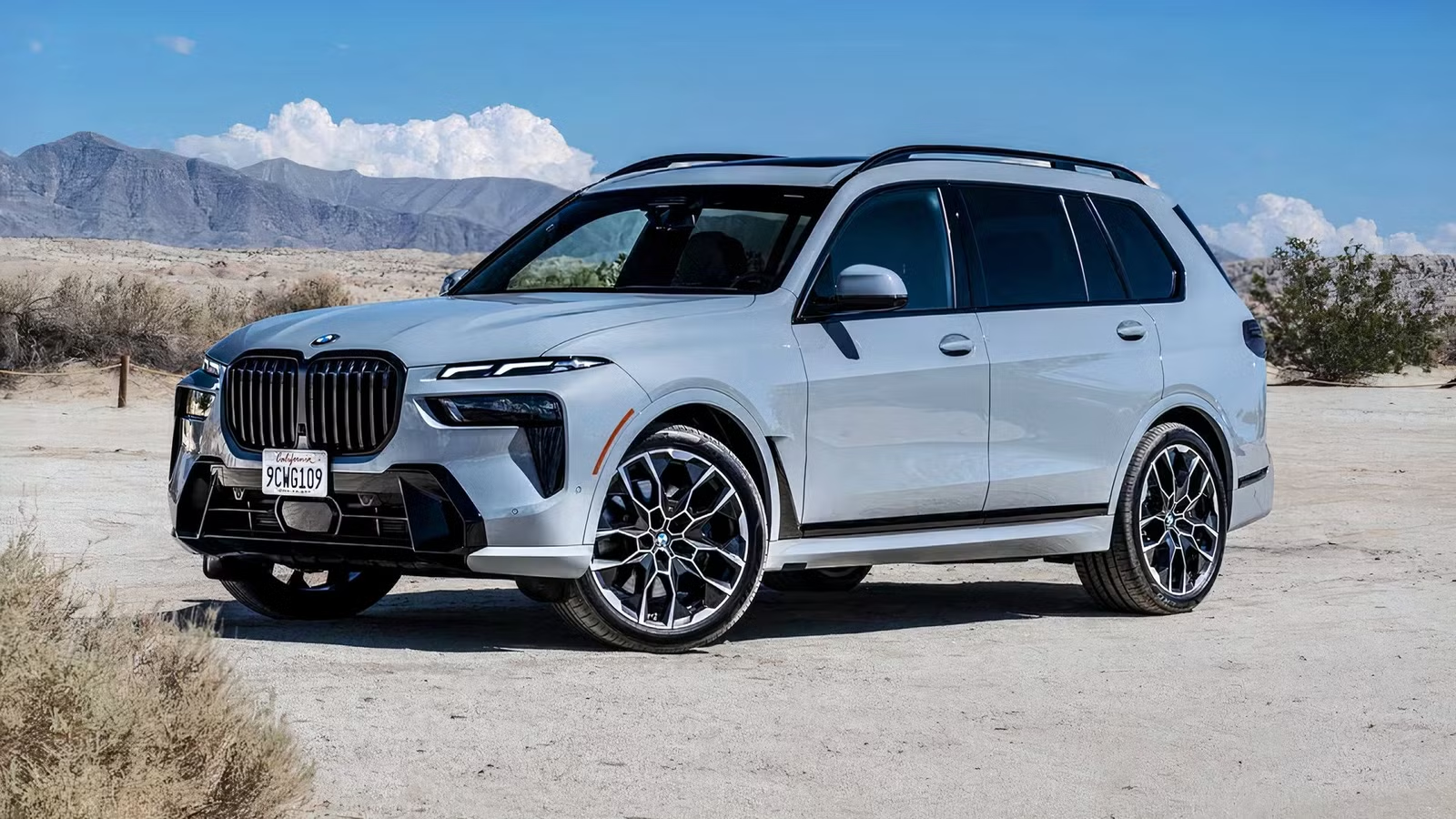
BMW sells three distinct paths into its SUV range that all start from the same bones: the X5, the X6, and the X7. On paper, that looks like badge engineering. In practice, the X7 solves a problem the other two were never built to solve, hauling seven people in genuine comfort, while quietly rewriting the suspension tuning, cabin experience, and price ladder around that mission. Before you pay the premium for BMW’s flagship, here’s exactly what that money buys, and where it doesn’t deliver.
Why the BMW X7 Exists (And What It Costs)

BMW didn’t build the X7 by stretching an X5 and calling it a day, even though that is the popular assumption. The X7 rides on a longer wheelbase specifically engineered to accommodate a real third row, and it was positioned from day one as BMW’s answer to the Mercedes-Benz GLS, Cadillac Escalade, and Range Rover, vehicles built around presence and passenger capacity rather than agility.
The current lineup starts with the X7 xDrive40i, powered by a turbocharged 3.0-liter inline-six making 375 horsepower, running in the high-$80,000s before options. Step up to the X7 M60i and you get a twin-turbo 4.4-liter V8 producing 523 horsepower, pushing the price into the low-$100,000s. At the top of the conventional range sits a plug-in hybrid variant pairing a six-cylinder engine with an electric motor for a combined output that prioritizes efficiency without sacrificing the flagship’s weight-hauling torque.

Then there’s the Alpina XB7, which isn’t really a trim, it’s a separate performance division’s reinterpretation of the same chassis, and it commands a price close to $150,000. That’s a spread of nearly $70,000 from base to Alpina, and understanding what each increment actually buys is the difference between a smart purchase and an expensive mistake. “Flagship” in BMW’s language doesn’t mean fastest or most exclusive. It means the vehicle built to compete on space, presence, and comfort at the top of the lineup, the same role the GLS plays for Mercedes and the Escalade plays for Cadillac, just with BMW’s driving-dynamics reputation attached.

BMW X7 vs X5: The Real Differences

The seating capacity is the headline, but it’s also the most misunderstood part of this comparison. The X5 tops out at five seats, full stop. The X7 offers a third row as standard, and while BMW markets it as seating for seven (or six with second-row captain’s chairs), the honest assessment is that the way-back is best reserved for kids, short trips, or adults under roughly 5-foot-8. Legroom back there is tight enough that two full-size adults on a highway drive will start negotiating for the front seats within an hour.
Where the X7 earns its keep is second-row space and cargo flexibility. With the third row folded, cargo capacity swells well past what the X5 offers, and second-row passengers get noticeably more stretch-out room than in the smaller SUV, since the X7’s extra length goes almost entirely into passenger and cargo space rather than styling flourish.

That length changes daily-driving realities, too. The X7 stretches nearly 17 feet long, more than 8 inches longer than the X5, and it’s noticeably harder to place in tight parking structures or narrow suburban driveways. If you’ve never parked something this size, budget a week to stop flinching at the corners. On powertrains, the overlap is real. Both SUVs share the turbocharged six and the V8, so you’re not choosing between different engines, just different bodies wrapped around them. Because of that shared hardware, a comparably equipped X5 undercuts the X7 by roughly $8,000 to $10,000 at similar trim levels, a gap that widens once you start adding options unique to X7 trims.
So who should buy the X5 instead? Anyone who doesn’t need the third row, full stop. The X5 is lighter, tighter in corners, easier to park, and cheaper to own without giving up much of the interior tech or comfort features that make BMW’s larger SUVs feel special. The third row is the only reason to pay X7 money, and if you don’t need it, you’re paying for square footage you’ll never use.
BMW X6 vs X7: Do You Want a Third Row?

This is the comparison that actually matters more than most buyers realize, because the BMW X6 isn’t a smaller X7, it’s a different vehicle philosophy entirely. The X6 is BMW’s coupe-SUV, built around a sloping roofline and sportier proportions, while the X7 commits fully to a traditional, upright, three-row SUV shape.
That roofline costs the X6 real headroom in the second row, and its cargo area is meaningfully shallower than the X7’s thanks to the raked rear glass eating into vertical space. There’s no third-row option on the X6 at all; it’s strictly a five-seater, positioning it closer to the X5 in practicality despite sharing more visual DNA with the X7.
Where the X6 claws back ground is in the driving experience. BMW tunes the X6 with a sportier suspension character and quicker steering responses, chasing the “coupe” part of its identity, while the X7 leans into comfort-oriented tuning that prioritizes a settled ride over back-road eagerness. If you cross-shop these two and drive them back to back, the X6 will feel noticeably more eager to change direction, at the cost of ride comfort on rough pavement.

Resale tells its own story here. The X7’s broader appeal, families who need three rows, empty-nesters who want the largest BMW SUV available, gives it wider used-market demand. The X6 attracts a narrower buyer, mostly enthusiasts drawn to its styling, which historically means it depreciates from a smaller, more specific pool of interested used-car shoppers. The decision, ultimately, comes down to one question before any spec sheet matters: do you need a third row, ever? If the answer is no, the X6 offers a genuinely different, sportier ownership experience. If there’s any chance you’ll need seven seats, the X7 is the only one of the two worth considering.
What Makes the X7 Drive Differently

Every X7 comes standard with two-axle air suspension, and it’s the single biggest reason the X7 doesn’t drive like a 5,800-pound vehicle should. The air springs constantly adjust ride height and firmness, self-leveling under heavy third-row-plus-cargo loads and softening impact harshness over broken pavement in a way steel springs on lighter SUVs can’t match. Pair that with adaptive dampers, and the X7 manages a rare trick: it isolates occupants from road imperfections almost as well as a full-size luxury sedan, despite standing nearly 6 feet tall.
The powertrains behave differently in real driving than their spec sheets suggest. The inline-six in the xDrive40i feels adequate but unhurried under this much mass, particularly when merging fully loaded. The M60i’s V8 is the one that actually matches the X7’s flagship pretensions; it pulls with the kind of effortless mid-range shove that makes the extra weight disappear, and it’s the powertrain most owners describe as “worth the upgrade” once they’ve driven both back to back.

Size brings real trade-offs in visibility. Rear three-quarter blind spots are substantial, and the X7’s front pillars are thick enough to occasionally hide pedestrians at intersections. This isn’t unique to BMW’s flagship, but it’s more pronounced here than in the X5, and it makes the surround-view camera system feel less like a convenience feature and more like a necessity for tight urban parking. On the highway, though, the size becomes an asset. Steering is light and calm rather than sporty, appropriately so, since nobody buys a three-row flagship SUV to carve canyon roads. Wind and road noise are impressively suppressed at speed, reinforcing that comfort, not cornering, is the X7’s actual design brief.
BMW Alpina XB7: Is It Worth the Premium?

Alpina takes the same 4.4-liter V8 found in the X7 M60i and extracts significantly more from it, along with a retuned chassis, upgraded brakes, and unique 22- or 23-inch wheels. The result is a vehicle that accelerates noticeably harder than the M60i, quick enough to embarrass sports sedans a class below it, while still riding on the same comfort-first air suspension architecture, just recalibrated for the extra performance.
The badge carries weight beyond the numbers, too. Alpina builds a small fraction of the volume BMW moves with the standard X7 lineup, and that exclusivity shows up everywhere from the unique interior trim to the fact that most people on the road won’t recognize what they’re looking at, which is either the point or a dealbreaker, depending on the buyer.

Financially, the jump from M60i to XB7 runs close to $50,000, which is a steep price for extra horsepower and a subtler badge. The XB7 makes sense for buyers who specifically want the performance ceiling and the rarity that comes with it. For nearly everyone else, the M60i’s V8 already delivers enough thrust to make the six-cylinder feel like an afterthought, and the money saved buys a lot of options elsewhere. Resale-wise, Alpina vehicles tend to hold a dedicated collector interest that keeps depreciation curves gentler than you’d expect for a six-figure SUV, though the used-market pool remains small simply because so few were built.
Ownership Realities and Final Verdict

Real-world fuel economy lands in the high teens combined for six-cylinder models and dips into the mid-teens for the V8 variants, numbers that track with a heavy, tall, all-wheel-drive flagship rather than exceeding expectations. The plug-in hybrid variant offers a genuine advantage here for buyers with a short commute and daily charging access. Interior materials hold up well across BMW’s recent generations, though iDrive infotainment systems age faster than the physical cabin, meaning a used X7 bought a few years old may already feel a generation behind on tech responsiveness compared to current BMW software.

Depreciation follows a familiar luxury-SUV pattern: steep in the first three years, then leveling off, with three-row variants generally holding value better than two-row luxury SUVs because family-buyer demand in the used market outpaces demand for two-row coupe-SUVs like the X6.

The bottom line is to choose the X7 specifically for the third row and the extra cargo flexibility it unlocks. Nothing else on this SUV is different enough from the X5 to justify the premium on its own. Within the X7 range, the M60i’s V8 is the sweet spot for most buyers, delivering the performance the flagship’s size demands without Alpina’s steep additional cost. The XB7 is worth it only if performance and exclusivity matter more to you than value, and that’s a perfectly reasonable thing to want, just go in knowing that’s what you’re actually paying for.
Sources: BMW U.S., Kelley Blue Book, iSeeCars & CarBuzz

Related posts



Latest Post


No Comments