
This Is The Rarest Harley-Davidson That Never Reached Production
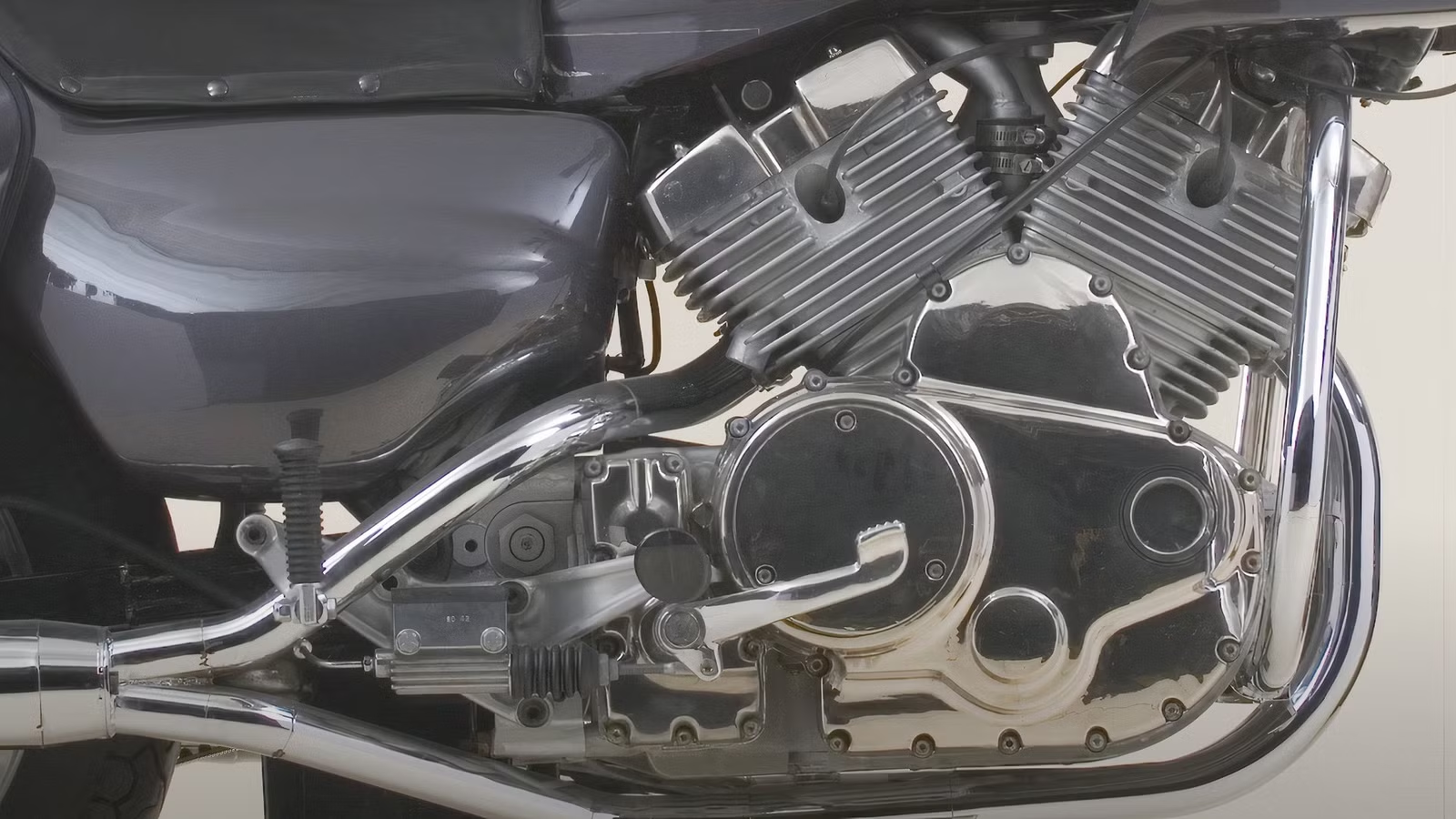
If you ask someone to draw a Harley from memory, they’ll most likely sketch a big V-twin. That iconic design is Milwaukee’s bread and butter and has carried the company for decades. But by the late 1970s, Japanese OEMs were challenging it with faster, more refined engines.

Tightening environmental laws added to Harley’s headache: how could it build cleaner, quieter engines without losing performance against the Japanese competition? Milwaukee decided to try something different. It hired former F1 engineer Mike Hillman to lead a radical liquid-cooled project and teamed up with Porsche to turn the idea into real metal.
Harley-Davidson Was Ready To Break Its Own Rules
Back in the day, Harley was getting squeezed hard from all sides. Besides, Japanese bikes were faster and smoother, while strict new noise and emissions laws were choking big air-cooled motors. Behind closed doors, Jeffrey Bleustein and his executive team quietly split their bets on two futures: rework the old V-twin, or roll the dice on a fresh range of liquid-cooled engines.

Former Brabham F1 engineer Mike Hillman was roped in to lead the latter. AMF, Harley’s parent company then, backed the idea, but two engine families would cost a fortune. After considering AVL and Ricardo, Harley teamed up with Porsche to develop the engines.
A Porsche-Developed V4 Was At The Heart Of The Project

They named it Project Nova, and it was designed as a modular engine family rather than just a one-off bike. The engines shared a 58 mm stroke, with two bore sizes of 66 mm and 74 mm. This allowed Harley to plan V-twins, V4s and V6s ranging from 400 cc to 1,500 cc, with many components shared across the family.
The hero prototype featured an 800 cc, liquid-cooled 60-degree V4 with twin overhead camshafts. Unlike Harley’s usual 45-degree V-twins, this engine was built to rev at a higher ceiling. It could reach 9,500 rpm and was expected to produce around 80 horses. That means it put it right on the heels of Honda’s hot new VF750S V4, which dropped in 1982 with 79 horses, giving the Nova a projected top speed near 120 mph.
To keep the structure tight, Hillman even used the powerplant as a stressed chassis member. The real rarity, however, was in the packaging. Styling chief Willie G. Davidson flatly refused to slap a clunky radiator on the front, so they mounted it horizontally right beneath the seat. That meant the “gas tank” up front was actually a high-flow airbox fed by intake scoops, while the real fuel cell sat tucked under the tail. Porsche engineered the powertrain, while Milwaukee focused on chassis development.
Millions Of Dollars And Years Of Development Went Into It

This was far more than a concept on paper. Hillman managed 15 engineers in Milwaukee paired with a 15-person team at Porsche, producing over 12 functional 800 cc test mules in naked and faired trims for validation in the US and Germany. They ran extensive road trials across the US and Germany, going so far as to build a secret test track in Talladega, Alabama. The secrecy worked well until spy shots of German road trials leaked in German media, spoiling what was slated as a mid-1981 debut for the 800 cc model.
Then came the financial headache. AMF liked the idea at first, but corporate bosses eventually lost their appetite for funding both the new V-twin and a whole liquid-cooled lineup. When Vaughn Beals and the local management team bought Harley back from AMF in ’81, they inherited a crushing pile of debt. Trying to finance both engine paths at the same time was out of the question.
Beals reportedly rode a V4 prototype and praised its power and handling. Still, the Evolution engine was the safer bet. It offered a way to improve Harley’s existing motorcycles without the cost of launching an entirely new product family. Nova had already burned through $10 to $15 million and logged tens of thousands of test miles along the way. Accounts still differ on what happened to the planned four-valve heads, with some saying budget cuts killed them off early and others claiming they were saved for down the road.
The project didn’t end immediately, either. In fact, Milwaukee continued drip-funding the project even after the ownership change. The company explored outside investment and even identified a potential production site in Italy. But finding financial backing wasn’t enough. As sales fell towards the late 1980s, Nova became harder to justify and was eventually abandoned.
The Harley-Davidson That Could Have Changed Everything

The Evolution engine arrived in 1984. It basically saved Harley’s skin, but it totally killed off a weird parallel universe. Betting the farm on the old-school layout worked out, but it came at the cost of a smooth, fast V4 that could’ve changed who Harley was.
Although the V4 was shelved, Nova’s aerodynamic fairing spawned the 1983 FXRT Sport Glide, while its Porsche engineering groundwork later birthed the V-Rod. Hillman ended up rising to VP at Harley and actually spearheaded the Porsche partnership that gave us the 2001 V-Rod. So, in a weird way, the whole Nova experiment laid the hidden groundwork for Harley’s next big jump away from traditional air-cooled bikes two decades later.
Most Nova prototypes were scrapped or put into storage. Harley retained five, including two runners. The museum display bike is a non-runner that reportedly includes some wooden components. Hillman himself believed canceling Nova was the right decision, as the money instead helped improve Harley’s factories and product quality. If we look in hindsight, for a brief moment, Harley-Davidson was ready to challenge Japanese manufacturers with a completely different approach, but in the end, survival came first, and the familiar V-twin won out.

Related posts
Latest Post



No Comments