
The One-Off AMG Super Wagon Built In An Illinois Garage That Humbled A Testarossa
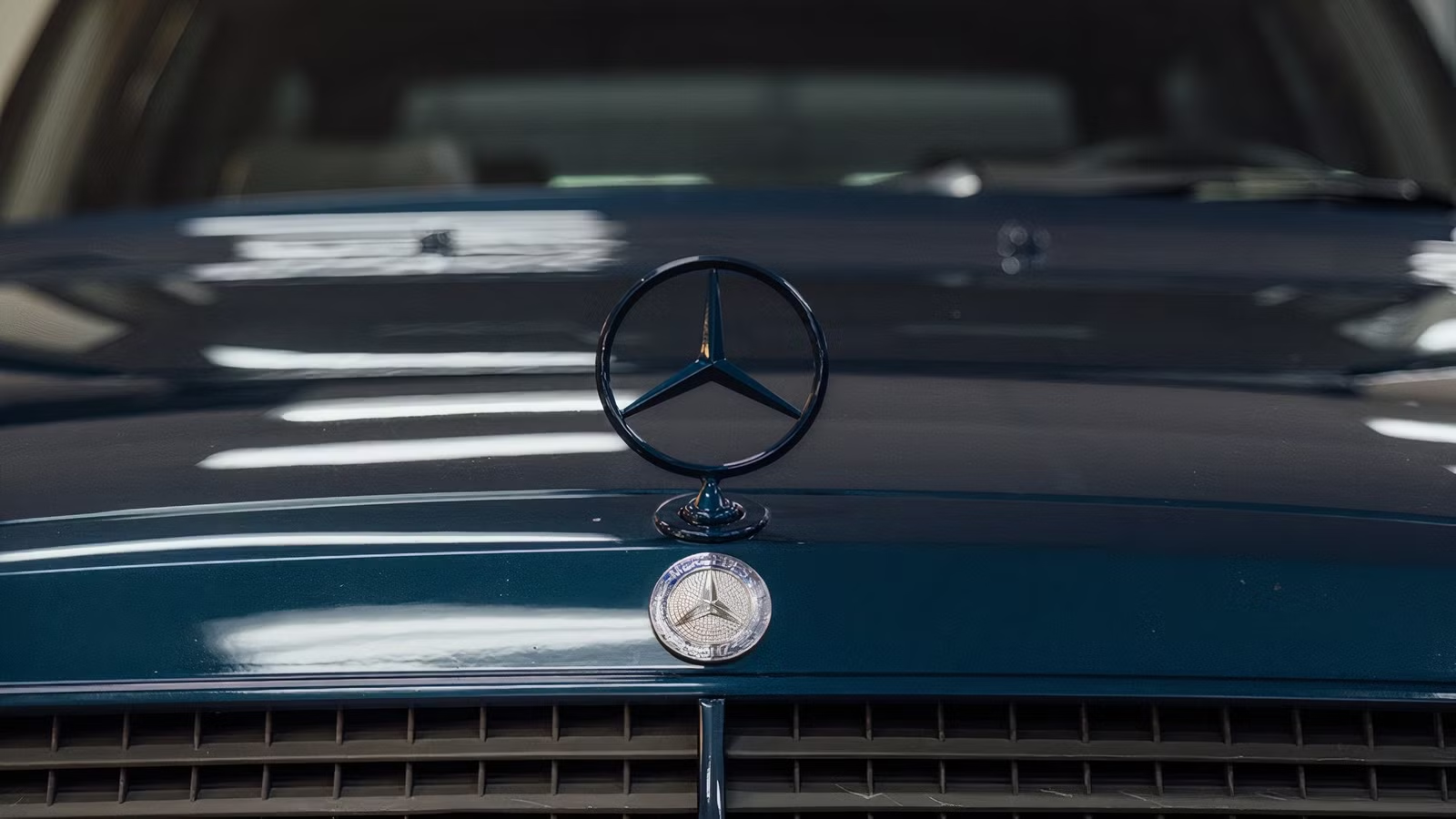
We were all buzzing in the 1980s for a number of reasons – MTV pop-culture hit US screens, John DeLorean’s DMC-12 made history with Back To The Future, and the Sony Walkman became a byword for 80s youth. More important though, Enzo Ferrari signed off the V12 ‘Red Head’. Launched in 1984, the Testarossa became an instant hit for the Maranello firm, with its wedge-shaped design and signature side strakes, it led to a number of one-off concepts which were based on its design. It also became the must-have accessory for all bankers on Wall Street, and became a cultural icon, starring in Miami Vice and the Out Run arcade game. But, out-of-site in an Illinois garage, a diesel Mercedes 300TD was being prepped with Ferrari-rivalling hardware to give the Testarossa a pasting.
The Illinois Garage Which Became An AMG Skunkworks

Located in Westmount, Illinois, Richard Buxbaum’s Classic Motors started life in 1974 which specialized in importing, federalizing and selling high-end European vehicles before partnering with AMG’s founder Hans Werner in the early 80s to handle the official import, modification and distribution of AMG builds entering North America in the 80s, leading to the creation of AMG North America, before the German tuning firm became directly integrated into Mercedes-Benz. As a result, Classic Motors brought pre-merged Mercedes-AMG builds like modified SECs, SLs, and the E-Class Hammers to the US.
The Illinois garage also partnered with other automotive businesses, like Beverly Hills Motoring Accessories, to manage the nationwide sales and marketing of the exclusive, grey-market tuned Mercedes-Benz models. Once, Daimler-Benz signed an official cooperation agreement with AMG in 1990, the partnership between Classic Motors and AMG ended soon after. Once AMG was completely acquired by Mercedes in 2005, all the German tuning firm’s operations were fully integrated into Mercedes’ operations in Germany.
An Agreement Of A Lifetime


In 1987, Canadian collector Paul Fingold commissioned Buxbaum to transplant an AMG V8 into his wife, Malka’s W124 300TD E-Class – the only estate version of the model available in the US at the time, turning the humble long-roof wagon into a fire-breathing weapon which could hunt-down a Testarossa. Fingold’s AMG conversion agreement with Buxbaum marked the first and only ‘Hammer’ (W124) E-Class AMG made as a wagon, with the remaining being sedan and coupe conversions.
Hartmut Feyhl: The Mastermind Behind The 300TD’s Transformation
While the overall conversion of the 300TD was overseen by Buxbaum, Hartmut Feyhl – founder of RENNtech Inc. — was hired to complete the Hammer’s engine and drivetrain. What started as a stock 300TD shipped in from Canada, had its original engine and drivetrain dumped for AMG’s hand-built 32-valve DOHC M117 V8 engine which was bored out to six liters and had four-valves-per-cylinder heads. This was mated to a sports-derived automatic transmission and a limited-slip differential sourced from an S-Class. The stiffer springs and shock absorbers, upgraded vented disk brakes and customized leveling suspension, along with the reinforced rear subframe also distinguished the Hammer Wagon from the standard car it was based on.

During the build, Feyhl found the car needed specialized AMG wiring which had to be flown in directly from Germany, while a custom exhaust using a Porsche catalytic converter was also fitted. In 1992, Feyhl made a number of RENNtech performance and chassis modifications to raise the power delivery to 410 hp from the engine’s 375 hp output. It was said that the conversion required over 400 hours of labor-intensive changes.
The W124 Which Turned Into The Testarossa-Chasing Sleeper

The final result was a 6.0L AMG V8, rear-wheel drive, super wagon which could hit 0-60 in five seconds and hunt down 180 mph. Equipped with a unique in-house AMG body kit, heated orthopedic Recaro seats, and a Nakamichi sound system, this unassuming sleeper had the performance to rival the fastest machines of the period, which were gunning for 200 mph. And its aftermarket K40 radar speed detectors helped it, along with its driver, stay out of trouble with the authorities.
How It Humbled The Testarossa

Although not the Wagon, Car And Driver famously pitted a Hammer AMG sedan against the ‘Red Head’ during the late 80s and secretly declared the German just as fast. It’s dash to 60 mph, and top speed matched the Testarossa on pace, and despite it’s taller, upright family car proportions, testers found it was stable and planted at speeds over 170 mph. For reference, the 410 hp Hammer could slam out a 0-60 time of 5-5.3 secods, while the 390 hp Ferrari dashed from 0-60 in 5-5.2 seconds.

Its sleeper status meant it could humble the Testarossa in every aspect. Being the type of car the Testarossa was, it was expected to achieve the supercar figures it did, because it was purpose-built with performance-bred engineering, but the Merc, built on its family-derived base which – in its chassis form at least – wasn’t intended to rival those Ferrari-figures when it was launched. And yet it did while being able to transport a family of seven – thanks to its seven seats exclusively for the wagon variant – in a safety-first-engineered body. – something the Testarossa never had, which is what makes the German an incredibly respected piece of kit.
How It Became The Template For Later Fast Wagons

But the Hammer Wagon came with one big drawback – the price. Converting the one-of-kind Merc cost over $125,000, plus the price of the donor car it was based on. It was reported, total costs for Fingold’s build hit up to $190,000 – nearly double the price of the Testarossa’s $90,000 plus price point. Don’t forget though, this was a one-off prototype, so it was always going to be expensive. Happily, cost-saving measures helped reduce the price of follow-up models wearing the AMG name.
Built in 1988, soon after, as a follow-up to the Hammer, was the AMG “Mallet”. By deleting expensive, imported cylinder heads from the Hammer’s DOHC engine, the Mallet’s new 6.0L SOHC 16V V8 design aimed to reduce the conversion cost significantly, so it could be sold at a lower cost. Despite its lower 310 hp over the Hammer’s 375 hp (without RENNtech upgrades), it was still able to surpass the performance of Porsche’s 911 and Chevrolet’s ‘Vette of the period.

But the Hammer didn’t just provide the foundations for the Mallet, it, along with the earlier pre-merged 500TE AMG formed the template for future AMG wagons by at least a decade before Mercedes brought the idea into series production with the C43 AMG Wagon in 1997. Today’s C-Class and E-Class AMG wagons sit in a densely, populated market which has to fight off rivals from BMW, Audi and Cadillac.
So Where Is The Hammer Wagon Today?

Jonathan Hodgman, owner of Blue Ridge MB in Lilburn, Georgia, a shop which specializes in the repair and restoration of pre-merged AMG cars, has owned the Hammer Wagon since 2010, which sits alongside other AMGs in his collection. Thanks to Fingold’s commissioned skunkworks project with Classic Motors, AMG’s legendary super wagon heritage traces its roots not just to Germany, but to that all-important Illinois suburb.
Sources: Bring A Trailer, Ferrari, Mercedes-Benz, Car and Driver

Related posts
Latest Post


No Comments