
These 5 Adventure Motorcycles Are The Only Bikes Your Garage Really Needs
The adventure bike market has evolved into a truly diverse space. It is fair to say that there is an ADV out there for pretty much anyone, no matter your shape, size, or riding preference. These dual-purpose motorcycles are more popular than ever these days, largely thanks to how versatile they are.

Within this segment, it is the middleweight bikes that really stand out as the most versatile. Light enough to be effective off-road and comfortable enough to spend the day on the highway if necessary, these bikes offer us a means to own just one motorcycle that can do pretty much everything. Well, almost everything, we don’t exactly recommend taking one of these bikes to a track day!
5
Ducati DesertX V2
MSRP: $16,995
It took Ducati some time before they released a dedicated adventure bike, but the DesertX was well worth the wait. The latest model gets revised styling, and an all-new powertrain. The one thing we certainly didn’t want to see change too much was the styling, which made it one of the most attractive adventure bikes on the market. Mercifully, it is more a case of evolution than revolution in that respect. It still looks fantastic.


Underneath the gorgeous outer shell lies the new desmo-less 890cc V2 engine. It caused a bit of a stir when it made its debut on the Panigale, because it has so much less power than the outgoing model. Here with the DesertX there is no such concern because the power figures are more or less unchanged, with the bike making 110 horsepower and 68 pound feet of torque.
4
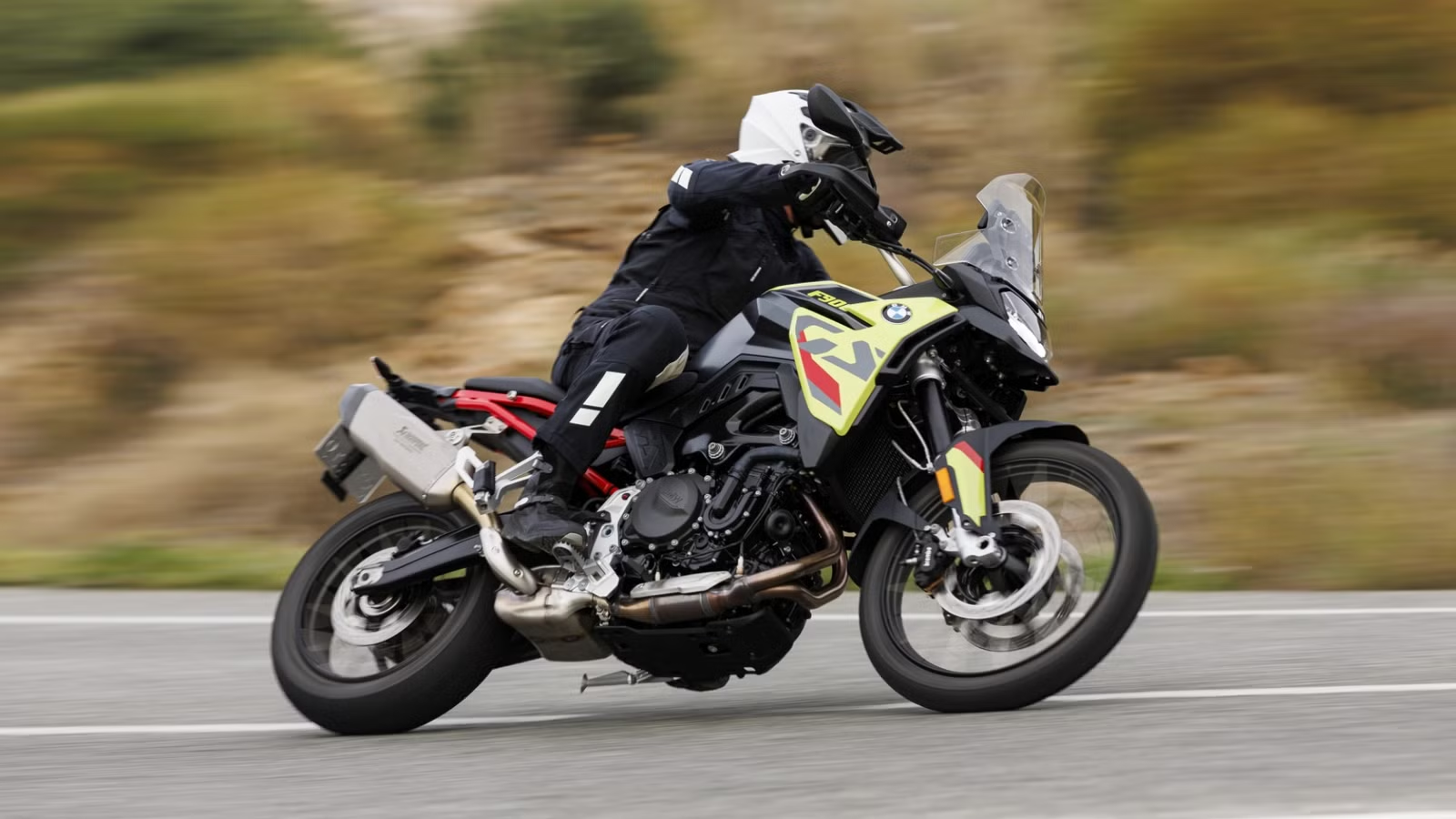
BMW F 900 GS
MSRP: $14,395

BMW did a great job of getting the latest F 900 GS right in line with the competition in terms of performance and weight. One minor frustration, which has absolutely nothing to do with the quality of the motorcycle itself, is how BMW structures the pricing. On paper, this actually looks like a great deal. BMW is a premium brand, after all, and at this price it undercuts several competitors.

Unfortunately, this is nowhere near the actual out-the-door price. Several nice-to-have features are left optional, and if you are not careful, simply checking options boxes will see the price soar past the aforementioned Ducati. Which, incidentally, has pretty much everything already you might want fitted as standard. Even the color you see in these pictures is optional. But, as long as you come into the purchase fully aware of this, and certain of which options you want, and which you can live without, it is still well worth considering.
3
Aprilia Tuareg Rally 660
MSRP: $13,999

The Tuareg Rally 660 neatly splits the difference between the more affordable Japanese bikes, and the two premium European options above. While significantly more expensive than the base model Tuareg, we feel the upgrades are all things enthusiasts would consider turning to the aftermarket for anyway, and the total cost would most likely eventually add up to more than the additional $1,500 you need to fork out for the Rally spec.

The SC Project exhaust alone would likely set you back close to $1,000 if you were to turn to the aftermarket. While it doesn’t increase horsepower, it shaves 12 pounds off of what is already a very light middleweight. That is more weight than most of us would lose, even on the strictest of diets. It also gets a high-mount fender (which tends to split opinion, but we like it), a more robust skid plate, Ergal rims, and a unique Rally livery.
2
Yamaha Tenere 700 World Raid
MSRP: $12,999
Ever since the Tenere 700 first came out, enthusiasts have been going on about what it could be with the addition of this or that. The World Raid version puts all of those theories to bed once and for all. It is absolutely everything you need rolled into one exceptional adventure bike, and the added $2,000 over and above what you would be spending on the base model seems like a pretty good deal from where we are standing.

The base model was always pretty handy off-road, but the fully adjustable KYB suspension (as well as a steering stabilizer) you get here most certainly takes it to the next level. It also gets a sophisticated IMU-enhanced electronics suite, so lean sensitive traction control and cornering ABS are present. A long-range tank and a redesigned skid plate round out what is a comprehensive package. It is most certainly heavier than the base model, but much of that added weight comes in the form of fuel.
1
Honda Transalp E-Clutch
MSRP: $10,199

Don’t let its purposeful off-road design fool you. Although it is a capable off-road ADV, the Transalp’s key strength is actually how comfortable it is. Out of all the bikes on this list, it might actually be the most comfortable tourer, but with a wet weight of just 468 pounds, it is still relatively light. So while touring might be its key point of difference, it will also handle the daily commute with ease.

Its ability to be used as a weekday commuter has also been enhanced with the addition of an E-Clutch for a mere $200 more than last year’s model. What makes Honda’s E-Clutch so innovative is the fact that it offers riders the best of both worlds kind of solution. It acts like a twist-and-go automatic when you want, which adds a layer of convenience in town, or on long, boring stretches of highway, and it works like any manual when you want that, like when you are riding off-road. It even acts like a quickshifter on more spirited rides.
Along with the E-Clutch, Honda also finally caved and gave the bike a skid plate, something the original version didn’t have, which was a bit odd for any form of ADV, even if it is a little more street oriented. They also gave the bike fully adjustable suspension, which was not a glaring omission at all, and most certainly counts as a nice-to-have feature for a bike this affordable.
Sources: Various manufacturer websites

Related posts

Latest Post


No Comments