
Toyota RAV4 Hybrid Is Winning The Hybrid Surge — And The Sales Data Shows Exactly Why
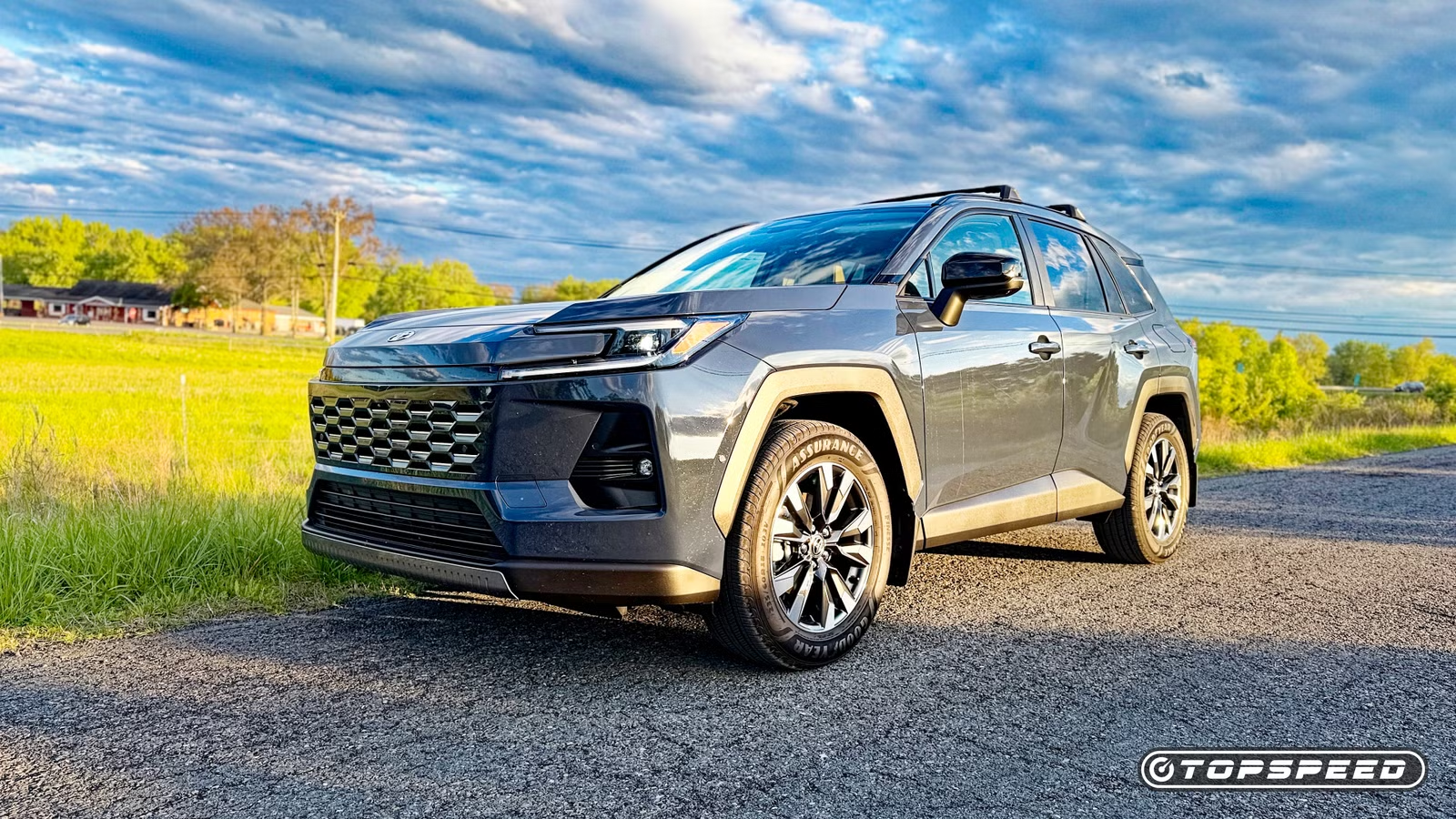
The hybrid market is having a moment, and Toyota’s RAV4 Hybrid is at the center of it. Americans bought 9% more hybrids in the first half of 2026 even as overall new-car sales dipped 2.2%, according to Kelley Blue Book data — and the RAV4 Hybrid is the model most buyers are landing on when they step back from EVs.

The numbers behind that shift are striking. NADA’s June Market Beat report puts first-half hybrid sales at 1.21 million units, up 19.4% year over year, with hybrid market share climbing to 15.4% — a gain of nearly 3 percentage points in a single year. Battery-electric vehicles moved in the opposite direction: BEV sales fell 25.1% over the same span. For buyers caught between an EV and a hybrid, the RAV4 Hybrid keeps coming out on top.
Why Hybrid Sales Are Surging Right Now
A few forces converged to push hybrids into the spotlight. Gas prices ticked higher through the first half of 2026, making fuel efficiency a more urgent priority for mainstream buyers. The federal $7,500 EV tax credit disappeared at the end of 2025, triggering a brief buying rush and then a hangover — EV sales dropped 36% year over year in Q4 2025, then 27.3% in Q1 2026. The recovery has been slow: just 5.8% of new cars sold last quarter were electric.

Meanwhile, Toyota made a structural bet that is paying off. The 2026 RAV4 is now hybrid-only — there is no base gasoline-only version. The same is true of the Camry and the reborn Jeep Cherokee. When a bestselling nameplate goes hybrid-only, it moves the market whether buyers were planning to go hybrid or not. That decision alone is pulling a large slice of the mainstream crossover segment toward electrified powertrains, without asking buyers to plug in.
The RAV4 Hybrid’s Specific Advantages Over Competing EVs

For buyers who looked seriously at a Tesla Model Y or a Kia EV9 before landing on the RAV4 Hybrid, the calculus usually comes down to a few practical factors. Charging anxiety is real: a hybrid requires no home charger, no route planning around fast-charger availability, and no range penalty on long trips. The RAV4 Hybrid simply runs on gas when the battery is depleted, which removes the single biggest friction point in EV ownership for buyers who don’t have a garage or a predictable daily commute.
Price is the other lever. The RAV4 Hybrid comes in well below the Model Y’s current transaction price and significantly below the Kia EV9, without sacrificing the all-wheel-drive capability and cargo space that crossover buyers expect. Toyota’s long reliability record — and the RAV4’s historically strong resale values — rounds out the case. Edmunds data has flagged that former Tesla owners are actively showing up in RAV4 Hybrid transaction data, a signal that some EV buyers are moving back toward hybrids rather than simply staying in the EV ecosystem.
Toyota Is Closing In on GM — But Supply Is Still the Bottleneck

The hybrid surge is doing something larger for Toyota at the brand level. Bloomberg and CBT News both reported in late June that Toyota is narrowing GM’s lead as the top-selling automaker in the U.S., driven almost entirely by hybrid demand. Toyota, Hyundai, Subaru, and Kia all posted sales gains in June tied to hybrid momentum — Kia’s hybrid sales alone surged 187% year over year.
The irony is that Toyota’s biggest RAV4 problem right now isn’t demand — it’s supply. RAV4 sales are down roughly 40% year to date through May compared to 2025, not because buyers aren’t interested, but because three production plants couldn’t retool fast enough for the new hybrid-only model. Dealer lots have fewer than 1,000 unsold RAV4s nationally across more than 1,200 locations. Some buyers are waiting six to nine months for specific trims. Toyota’s Kentucky plant in Georgetown began RAV4 production this spring and is expected to add around 40,000 units before year-end — a number that should ease wait times but won’t fully close the gap in 2026.
For buyers comparing the RAV4 Hybrid against the Honda CR-V Hybrid or the Lexus NX 350h, the wait itself has become part of the story. The CR-V Hybrid is available now at or near sticker. The NX 350h costs significantly more. Neither carries the RAV4’s combination of price, proven reliability, and resale track record — but right now, getting one means joining a waitlist.
The hybrid surge looks durable heading into the second half of 2026, and the RAV4 Hybrid is positioned to be its defining model. Once Kentucky production fully ramps up, the supply constraint lifts — and at that point, the sales data should reflect what the waitlists already suggest: this is the crossover hybrid buyers actually want.

Related posts






Latest Post


No Comments