
5 Shooting Brake Wagons Serious Collectors Refuse To Restore
Survivor status means different things depending on the car. On mass-produced classic cars, it can simply mean untouched paint or an original interior. On a coachbuilt shooting brake, it often means preserving craftsmanship that can never be recreated. This list focuses on factory or coachbuilt shooting brakes with documented collector provenance, exceptionally low production, and a market that increasingly rewards originality over restoration. These are the cars preservation-class collectors would rather conserve than reinvent.
5
Ferrari 250 GT SWB Breadvan
Launch Year: 1962

If one shooting brake demonstrates why preservation matters more than restoration, it’s the Ferrari 250 GT SWB Breadvan. There is only one, and every scratch, repair and panel tells part of its story. Built in 1962 on a 250 GT SWB chassis after Count Giovanni Volpi’s split with Ferrari, the Breadvan used Ferrari’s celebrated 3.0-liter Colombo V12, producing approximately 300 hp through a four-speed manual transmission driving the rear wheels. Giotto Bizzarrini’s engineering and Piero Drogo’s coachwork weren’t intended to create a beautiful grand tourer—they were designed to beat the Ferrari 250 GTO on the racetrack.
It raced at Le Mans, the Tour de France Automobile and numerous GT events, accumulating dents, repairs and period modifications that remain visible today. Those marks document one of motorsport’s most famous engineering rivalries.
Restoring the Breadvan to concours condition would mean replacing hand-formed aluminum, removing period repairs and erasing the evidence of the life it actually lived. Preservation isn’t simply the preferred approach—it is the only one that respects the car’s historical significance.

4
Aston Martin DB5 Shooting Brake By Harold Radford
Launch Year: 1965

Few coachbuilders enjoyed the reputation of Harold Radford, and his DB5 Shooting Brake remains one of the rarest Aston Martin commissions ever offered to customers. Historians generally agree that around 12 factory-sanctioned conversions were completed, each tailored to its original owner.
Beneath the bespoke aluminum bodywork sat Aston Martin’s familiar 4.0-liter DOHC inline-six, officially rated at 282 hp and typically paired with a ZF five-speed manual transmission driving the rear wheels. Radford didn’t reinvent the DB5 mechanically; he transformed its utility without sacrificing its grand-touring performance.
That distinction is why collectors treat surviving examples so carefully. The hand-shaped roof, unique tailgate and individually commissioned interiors represent craftsmanship that cannot be reproduced authentically today. Most preservation work therefore focuses on stabilizing original materials rather than replacing them.
3
Volvo P1800ES
Launch Year: 1971

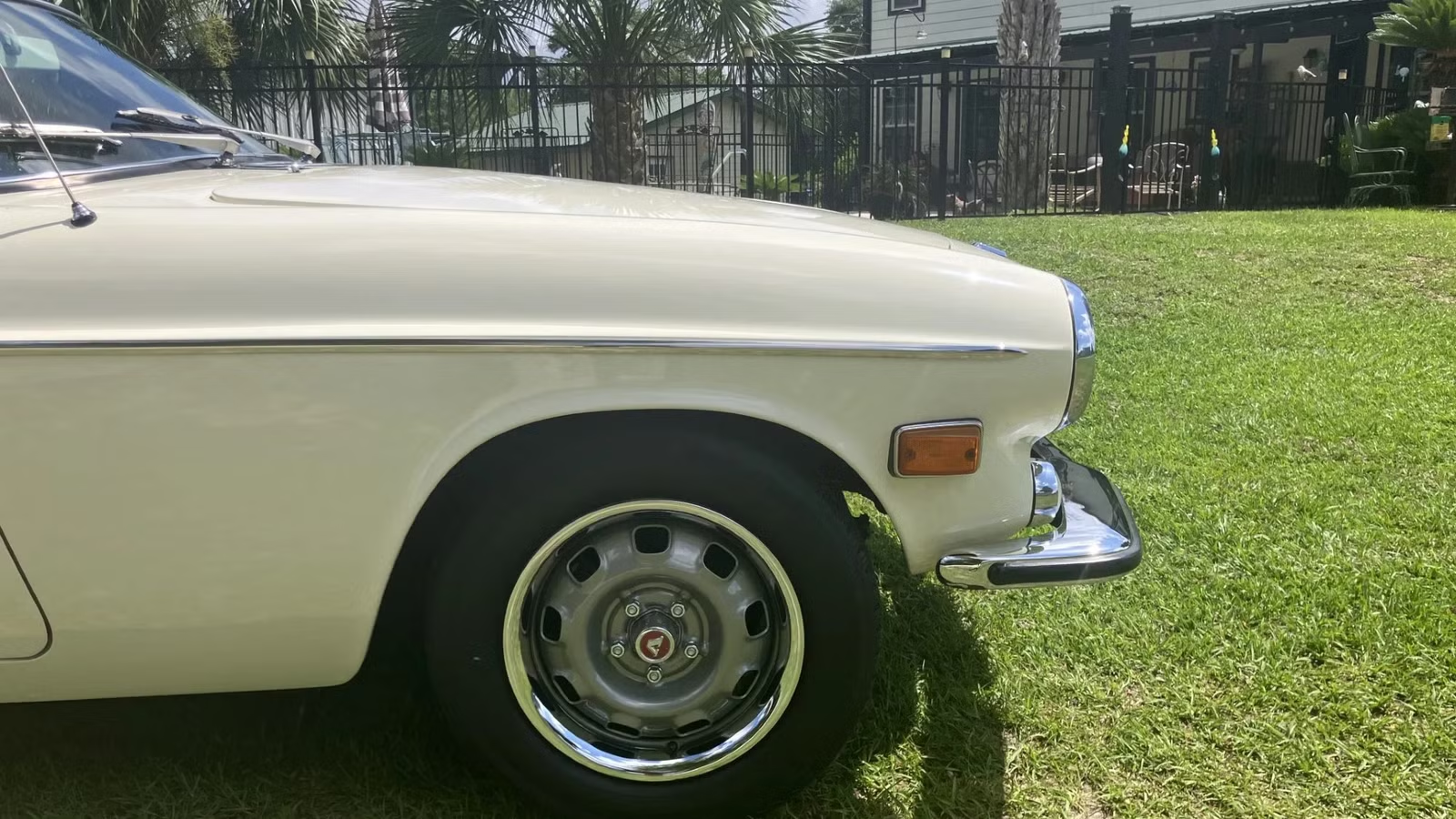
The Volvo P1800ES is the outlier here because it wasn’t hand-built in tiny numbers, yet it has quietly become one of the strongest advocates for preservation. Volvo assembled 8,078 examples between 1972 and 1973 before tightening safety regulations brought production to an end.
Mechanically, the ES remained faithful to the coupe, using Volvo’s fuel-injected 2.0-liter B20F inline-four producing 125 hp and 123 lb-ft of torque. Buyers could choose a four-speed manual with overdrive or a three-speed automatic, with power sent exclusively to the rear wheels. Its drivetrain is straightforward to restore; the challenge lies elsewhere.
That challenge is the ES’s distinctive glass tailgate and model-specific rear bodywork. Replacement panels and trim are increasingly scarce, so well-preserved survivors carrying factory paint, original glass and documented ownership histories often generate more enthusiasm than heavily restored examples assembled from replacement components.
2
Lynx Eventer
Launch Year: 1982

The Lynx Eventer answered a question Jaguar never did: what if the XJ-S became a proper grand-touring shooting brake? Built by Lynx Engineering, only around 67 examples left the coachbuilder’s workshops, each requiring hundreds of hours of hand fabrication.
Most Eventers retained Jaguar’s 5.3-liter HE V12, producing approximately 295 hp and 318 lb-ft of torque, paired with either a five-speed manual or the familiar three-speed automatic, depending on the donor car. Lynx deliberately preserved the XJ-S’s grand-touring character while transforming its practicality.
Because every conversion involved hand-built roof panels, bespoke rear quarters and a redesigned cargo area, originality has become inseparable from value. Replacing handcrafted coachwork or modernizing the cabin may improve usability, but it also removes the individual details that distinguish one Eventer from another.
1
Ferrari 456 GT Venice
Launch Year: Mid-1990s

Ferrari never cataloged a production shooting brake, but Pininfarina effectively created one when it built the 456 GT Venice for the Sultan of Brunei. The strongest documented evidence points to six completed examples, placing it among Ferrari’s rarest road-going derivatives.
The Venice retained Ferrari’s 5.5-liter naturally aspirated Tipo F116 V12, producing 436 hp and 406 lb-ft of torque. Customers could specify either the marque’s six-speed gated manual or a four-speed automatic, with every example remaining rear-wheel drive despite the dramatic coachwork transformation.
Pininfarina completely re-engineered the rear structure while preserving Ferrari’s mechanical package. Because each Venice was effectively built to order, collectors place enormous value on original paint, bespoke interior trim and documented Pininfarina craftsmanship. Once those elements disappear, they cannot truly be recreated.
Sources: Volvo Heritage Archives, Aston Martin Heritage Trust, Ferrari Classiche, and Pininfarina historical archives

Related posts
Latest Post


No Comments