
This long-wheelbase cruiser with a massive V-twin hides its modern engineering well
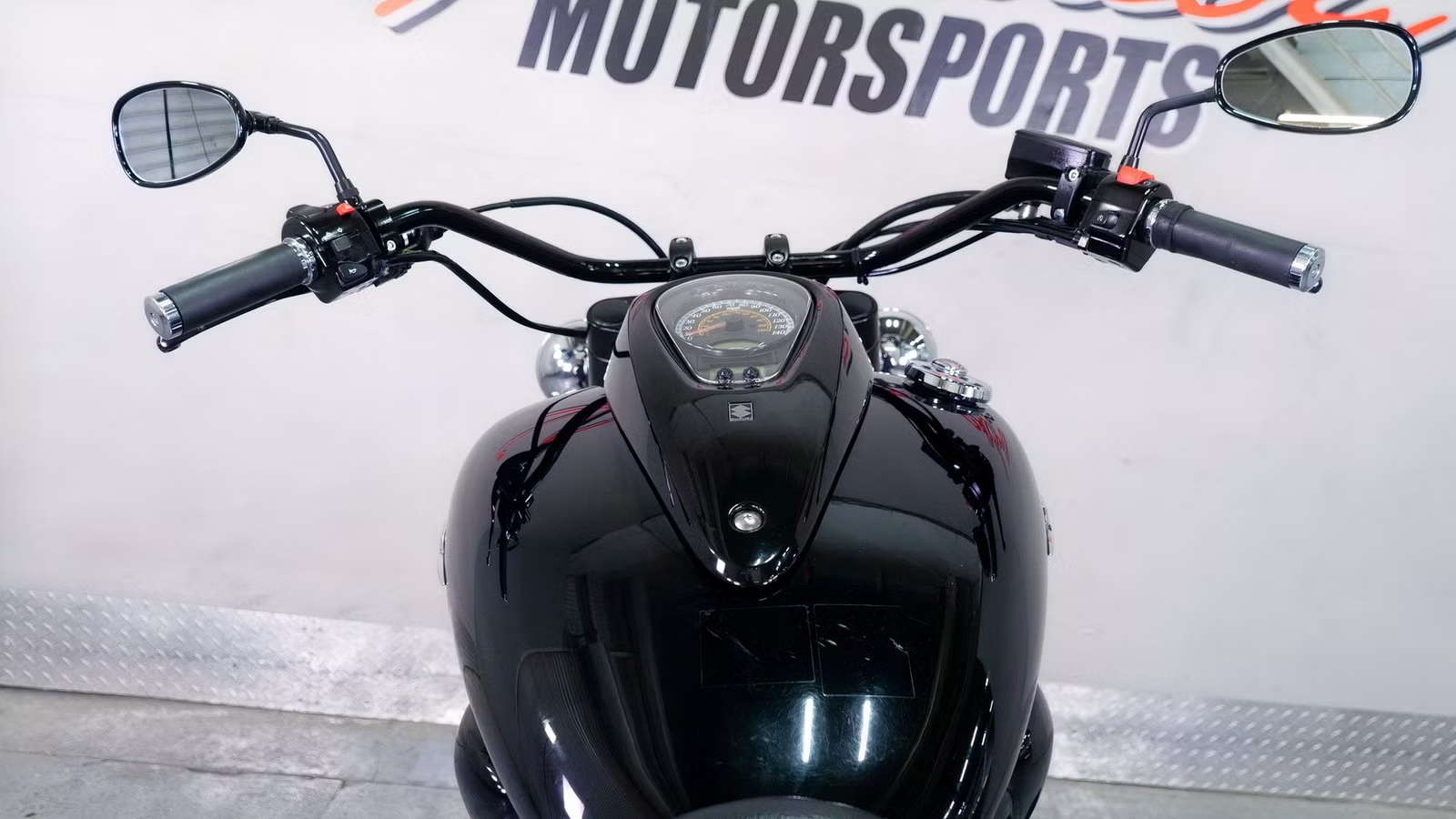
Take a look at the best heavyweight cruisers. They ain’t about speed or heady horsepower. Their appeal comes from a huge V-twin motor, low-slung stance, and road presence that makes smaller motorcycles seem to disappear when parked alongside. However, one Japanese cruiser challenged this familiar formula. It combined the visual heft of an American heavyweight cruiser with engineering associated with high-revving sports bikes. The result was a motorcycle that looked old-school but had modern fuel injection technology. It wasn’t a motorcycle trying to perform like a superbike; its large V-twin simply had a connection to Suzuki’s high-performance motorcycles.
Why Suzuki Built A Cruiser To Rival Harley-Davidson’s Softail

By the late 90s, Harley-Davidson dominated the heavyweight cruiser market. While Japanese bikemakers were figuring out their own interpretations of the cruiser formula, Harley’s low-slung V-twin was already a motorcycling icon. Like others, Suzuki too was invested in cruisers. Their approach was to build a motorcycle that looked substantial, sounded traditional, and delivered effortless power at low engine speeds.
Suzuki’s new heavyweight cruiser had a distinctive 45-degree long-stroke V-twin with a 96mm bore and 101mm stroke. That geometry helped with low-speed grunt and made the motorcycle feel relaxed on the highway while retaining the muscular characteristics of a large cruiser.
The bikemaker’s strategy went beyond plonking a large V-twin in a low-slung frame. Cruiser buyers wanted a low seat, tons of chrome, sweeping fenders, and a riding position comfortable enough to cover thousands of miles. Suzuki added all those elements alongside practical engineering bits like shaft drive and hydraulic valve-lash adjustment, which together reduced maintenance costs.

Suzuki’s cruiser entered a competitive segment filled with heavyweight offerings from Honda, Kawasaki, and Yamaha. The challenge before it was to deliver American styling and road presence while differentiating itself through Japanese engineering. The latter came through when Suzuki replaced the original fueling system with technology derived from its sportbike lineup.
The Suzuki Boulevard C90 And Its GSX-R Connection

This special motorcycle was the Suzuki Boulevard C90, originally launched in 1998 as the VL1500 Intruder. In 2005, Suzuki renamed it the Boulevard C90 in North America (Intruder C1500 in Europe), while also replacing the earlier model’s carburetor setup with electronic fuel injection.
The earlier motorcycle used a 1,462cc, air-and oil-cooled, 45-degree V-twin with a single overhead camshaft and three valves per cylinder configuration. That model made around 67 horsepower and 84 pound-feet of torque delivered through a five-speed transmission and a shaft drive.
The fuel-injected C90 had an interesting connection to Suzuki’s GSX-R sports bikes. Its multi-port fuel injection system used Suzuki’s Dual Throttle Valve technology with an electronically controlled secondary throttle. Besides offering a marginal increase in power output (66 horsepower and 85 lb-ft), the system was designed to improve throttle response and rideability while retaining the large V-twin’s low-speed grunt. This was a sportsbike-derived technology adapted to a motorcycle that focused on torque, smooth power delivery, and long-distance comfort.
Suzuki later revised the C90 in 2013, introducing a new liquid-cooled 54-degree V-twin with four valves per cylinder. That generation delivered more torque and was mechanically superior to the previous air-and-oil-cooled model.
Harley Softail Presence Meets Japanese Touring Practicality

The Boulevard C90’s appeal lies in its proportions. Its long wheelbase, low seat, large fenders, and huge V-twin give it the road presence associated with traditional American cruisers. The resemblance to Harley-Davidson’s Softail comes from the classic silhouette, with Suzuki using its own frame and hidden rear suspension. The riding position places the rider low, with feet forward and arms reaching towards a wide handlebar. This arrangement encourages a relaxed posture on open roads, while the large displacement twin provides accessible torque without needing to be revved hard.
The C90T takes the touring theme further. Depending on the model year, the equipment includes a windscreen, passenger backrest, and integrated luggage. These additions make it suitable for extended rides with a passenger and baggage. All this size adds heft. The previous generation C990s weighed around 661 pounds while the later touring models weighed over 794 pounds. The weight makes it feel planted at highway speeds, but it can be felt pushing it around a garage. The C9 offers traditional cruiser presence with practical drivetrain engineering that sets it apart from its American rivals.
Suzuki Boulevard C90 Vs. Harley-Davidson Softail: Resale Value And Ownership Costs

The Suzuki Boulevard C90’s biggest advantage over a comparable Harley-Davidson Softail is value for money. Used C90 examples retail around $3,500 to $7,500. Older Softails can also be affordable, but they are priced more on the badge value than condition. Harley Softails have fantastic resale as they benefit from a stronger brand recognition, a large community, and an extensive aftermarket ecosystem. In comparison, the Boulevard C90 is less iconic and attracts a smaller audience, making finding one a lot harder. However, a well-maintained C90 brought at the right price represents better overall value.
The C90’s shaft drive avoids chain-and-sprocket replacement and adjustment, and its Japanese engineering makes routine maintenance straightforward. That said, it’s a large displacement motorcycle, so parts can border on the expensive side. The Suzuki Boulevard C90’s strongest case is its combination of substantial V-twin torque, traditional cruiser styling and presence, and a potentially used purchase price.

Related posts


Latest Post


No Comments