
The Sub-$5k Motorcycle That Gets Better With Age
Most motorcycles peak the day they leave the showroom. A few years later, yesterday’s hero is just another used listing you scroll past. That’s especially true at the affordable end of the market, where most bikes are bought to learn on and sold the moment their owners outgrow them. A rare few, though, go the other way. They hang on to the look you fell for and quietly get better underneath. This number drops further if you look at the budget side of things. After all, these bikes are built to be outgrown. However, one of them has been reworked time and again, and it isn’t the fastest bike in its class or the most high-tech. It might just be the most honest one.
Why Most Affordable Motorcycles Get Outgrown Fast

Most budget bikes are built to be left behind. They’re the motorcycle equivalent of training wheels. Light, forgiving, and cheap, and that’s great for about a season. Then something shifts. You stop thinking about the clutch and start thinking about the open road, and suddenly the little engine feels breathless. The no-frills cockpit starts looking dated. Before you know it, you’re spending your lunch breaks on dealer websites. The bike doesn’t really get worse. Everything around it just gets better.
A Few Grow With Their Riders Instead

Every so often, though, a manufacturer refuses to play that game. Instead of letting a budget bike gather dust, it keeps the shape people love and quietly reworks everything underneath, update after update. You’ve seen it before – Kawasaki’s KLR650 has stuck to the same no-nonsense formula for decades, getting better with each generation, while Suzuki’s SV650 has spent more than 20 years as the bike everyone recommends. However, neither of them costs under $5,000. Find one that grows with you like that and still costs less than five grand, and you’ve found something genuinely rare. One machine has been doing exactly that for well over a decade, with roots that go back to the 1950s.
The Royal Enfield Classic 350 Grows Better With Every Generation


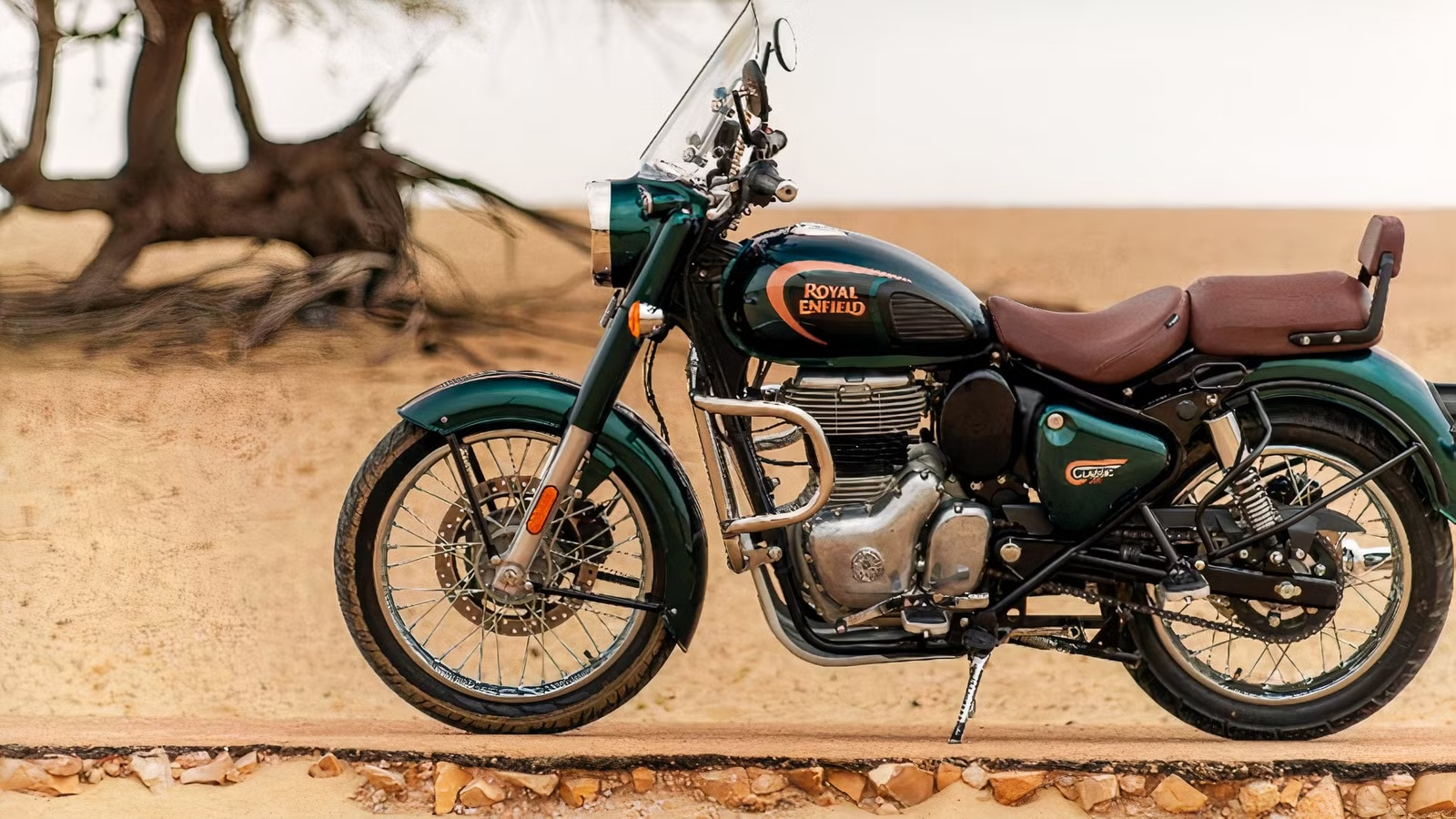
That machine is the Royal Enfield Classic 350, a bike inspired by the brand’s post-war G2. Plenty of retro motorcycles borrow an old look, but few have been reworked as thoroughly as this one while keeping the shape intact. The Classic didn’t get replaced when it started showing its age. It got rebuilt, then refined, then rebuilt some more. That’s exactly why it earns its spot in this story.
The latest Classic 350 starts at $4,999 MSRP. That’s starter-bike money for a motorcycle that’s easy enough to learn on, yet has enough character that you won’t be itching to trade up after one season. The updates are what make it so tempting. They run deep enough that owners of the older Classic don’t need to look elsewhere for something better. They only need to look at the new Classic. The engine, the chassis, and the brakes have all moved on, while that familiar silhouette hasn’t changed one bit.
From Old-School Thumper To Modern J-Platform

The old Classic was the kind of bike you forgave. It shook at a standstill, it wasn’t fond of quick changes in direction, and its brakes worked best when you’d planned your stop a block in advance. None of that stopped people from loving it. It just meant every ride came with a few compromises baked in. The current Classic fixed most of that, even if it doesn’t look like it.
Underneath sits an all-new steel twin-downtube frame with a beefy backbone that holds the whole bike together more firmly than before. The suspension is old-school on paper, with a conventional 41mm fork up front and twin shocks at the rear, but it’s tuned around the bike’s weight to deliver a plush, forgiving ride. The brakes got serious attention too: a 300mm front disc with a two-piston caliper, a 270mm rear disc, and dual-channel ABS as standard.
The Engine Grew Up Too, And Got Far More Refined

The old Classic’s engine had plenty of character, but it was rough around the edges. It vibrated through the bars and pegs, and its carburetor could be fussy on cold mornings. The new 349cc air/oil-cooled single keeps the long-legged thump that defines the Classic, but swaps the carburetor for fuel injection and adds a balancer shaft to keep the vibrations in check. The numbers haven’t changed much, and that’s the point. It makes 20.2 horsepower and 19.9 pound-feet of torque, sent through a five-speed gearbox. What has changed is how usable that power is. It pulls cleanly from low speeds, settles into a relaxed highway cruise without buzzing itself to pieces, and shifts far more smoothly than the old bike ever did.
It Got Modern Tech, But Still Remains Simple

For years, the Classic’s cockpit was about as basic as it gets: a big analog speedometer, a few warning lights, and not much else. That changed with the latest update. The halogen headlight made way for an LED unit, the same circular lamp used on the Super Meteor, Shotgun, and Himalayan, joined by pilot lamps. The small LCD under the speedometer now shows a gear position indicator, the levers are adjustable, and there’s a USB-C port to keep your phone charged.

Underneath, almost everything has changed. On the outside, Royal Enfield barely touched a thing, and that’s no accident. The teardrop fuel tank, the casquette headlamp housing, the deep fenders, and the upright stance are all still there, and the Classic still looks like a classic. It still rides on a 19-inch front and 18-inch rear wheel, with chrome wire spokes on most versions and 10-spoke alloys on the Dark models.
Nothing Else Under $5k Ages Quite Like It
Plenty of motorcycles under $5,000 have a past, and a few have a future. Very few have both. Over the years, the Classic 350 has picked up a new frame, bigger brakes with dual-channel ABS, a smoother fuel-injected engine, and modern touches like LED lighting and USB-C, all without losing the look or the thump that won people over in the first place. And it still costs $4,999.
For anyone after a genuine modern classic on a tight budget, it’s hard to look past. Royal Enfield makes bigger, faster bikes, but none of them sum up the brand quite like this one. The Classic isn’t about chasing numbers. It’s about easing away from a light, feeling that slow, steady thump underneath, and having nowhere in particular to be. That’s the charm of the Classic 350, and it’s a big part of why this bike has only grown more likable with age.
Source: Royal Enfield USA

Related posts



Latest Post


No Comments