The Toyota Hybrid That Makes Expensive Repairs Surprisingly Rare
8 minutes reading
Friday, 24 Jul 2026 16:00 0 88 autotech
There is an old and very commonly quoted saying in the automotive community: there is fast, reliable, and affordable, but you can only pick two. The quote itself dates back to the 1950s, when gas prices hovered between $0.20 and $0.30 a gallon, greenhouses were where vegetables grew rather than warming the planet we live on, and the “give a hoot, don’t pollute” slogan wouldn’t come about for another two decades.
While the original iron triangle of good, fast, and cheap didn’t include fuel efficiency, it is certainly something on the minds of people today. Which is why so many people have turned to hybrid vehicles.
The Exhausting Complexity Of Today’s “Sensible” Commuter Cars
2025 Kia Sorento Hybrid Front Three-Quarter DrivingKia
In a desperate scramble to hit aggressive federal fuel economy targets and meet emissions mandates, manufacturers have abandoned the old, reliable methods of building basic family transportation. The simple, under-stressed four-cylinder engine is almost entirely dead, replaced by loads of fragile plumbing and tight tolerances.
Turbos, CVTs, And The Cost Of Chasing MPGs
Close-up shot of 2026 Kia Niro Hybrid engine bayKia
Open the hood of almost any modern non-hybrid commuter car today, and you will see a tiny 1.5-liter engine buried under a mountain of plastic covers, vacuum lines, and a scorching-hot turbocharger. These engines are forced to run under immense pressure just to pull a heavy midsize chassis up a highway ramp. The result is a mechanical pressure cooker. Technicians routinely see these small, highly-strung engines suffering from premature head gasket failures, carbon-clogged intake valves, and stretched timing chains before they even hit the 100,000-mile mark.
Worse yet is what connects these overstressed engines to the front wheels. To wring every last mile out of a gallon of regular unleaded, carmakers have flooded the market with cheap, belt-driven continuously variable transmissions (CVTs). These gearboxes rely on a high-tension steel belt sliding up and down two smooth metal pulleys to constantly adjust ratios. Under real-world stress, the friction wears down the pulleys, the belt slips, and the entire transmission shreds itself internally. When that happens, you don’t rebuild it. You pay a dealer upwards of $6,000 to drop in a brand-new unit.
The True King Of The Service Bay: The Toyota Prius
2012 Toyota Prius in redToyota
For decades, car enthusiasts and self-proclaimed gearheads treated the Toyota Prius as a rolling punchline. And not without some good reason. It’s slow, feels a bit plasticky inside, and is generally unattractive. However, one thing has remained consistent throughout the Prius timeline: the car is very reliable.
Two Decades Of Over-Engineering
2015 Toyota Prius cargo spaceToyota
When Toyota first launched the Prius, it wasn’t trying to build a cheap, throwaway commuter car. They were launching a brand-defining technology showcase. They knew that if their radical new hybrid system gained a reputation for being unreliable, it would set the company’s electrification plans back by decades. So, it over-engineered the system. It built the core components to withstand the worst abuse imaginable, using the highest quality standards in its manufacturing arsenal.
The payoff of that conservative engineering approach is reflected in long-term reliability metrics. J.D. Power regularly places Toyota at thetop tier of its Vehicle Dependability Studies, and Edmunds testing consistently notes that the Prius remains one of the most cost-effective vehicles to own over a five-year period. It is a car built with an almost stubborn refusal to break down, operating with a level of mechanical indifference that drives independent repair shop owners crazy.
The Mechanical Cheat Code: Deleting The Weakest Links
A detailed close-up shot of a 2018 Toyota Prius engineToyota
To understand why the Prius rarely sees a mechanic for anything beyond basic fluid changes, you have to look at the parts that aren’t there. Toyota realized that the best way to prevent expensive repairs is to simply eliminate the highly stressed components that fail on standard cars.
Why A Transmission With “CVT” In The Name Is Actually Indestructible
A Toyota Dynamic Force Hybrid Engine and Transmission eCVTToyota
Toyota labels the transmission in the Prius as an “e-CVT.” To the average buyer, that sounds like the same fragile, belt-driven gearbox found in other commuter cars. But mechanically, they share absolutely nothing other than those three letters.
The Prius e-CVT does not use belts. It does not use pulleys, hydraulic clutches, steel bands, or a torque converter. Instead, the entire unit is a remarkably simple, heavy-duty planetary gear set that functions as a power-split device. The physical layout permanently links the gas engine, a primary electric motor-generator (MG1), and a secondary electric drive motor (MG2) directly to the drive wheels through solid, heavy-metal gears.
2024 Toyota Prius side shotToyota
Because these gear teeth are constantly meshed and never shift, slide, or un-couple, there is no mechanical shock. The vehicle’s computer changes speed simply by adjusting how fast the electric motors spin relative to the gasoline engine. There are no clutches to slip, no solenoids to clog, and no belts to snap. It is a solid block of gears that is practically bulletproof, running cool and unstressed for hundreds of thousands of miles on basic gear oil.
The Zero-Maintenance Stopping System
2025 Toyota Prius Plug-In Hybrid XSE — Wheel close-upCraig Cole | TopSpeed
The mechanical benefits extend directly to the corners of the car. On a standard vehicle, stopping a 3,000-pound machine means pressing abrasive brake pads against spinning metal rotors, creating massive friction, heat, and wear.
The Prius bypasses this destructive process through regenerative braking. When you press the brake pedal, the physical brakes don’t actually engage. Instead, the car uses the drive wheels to spin the large electric motor backward, turning it into a massive generator that feeds electricity back into the hybrid battery pack.
Driving shot of a red 2025 Toyota Prius on a city street in front 3/4 viewToyota
The resistance of generating that electricity slows the car down smoothly and quietly. The traditional friction brakes only pinch during hard emergency stops or in the final few feet before a complete halt. Because of this, Prius owners routinely report rolling into service bays with 150,000 to 180,000 miles on the odometer with their original factory brake pads and rotors still showing plenty of usable life.
Simplicity By Subtracting Standard Parts
Front 3/4 shot of 2026 Toyota PriusToyota
By relying on its robust high-voltage electrical network, Toyota was able to eliminate several longstanding engine bay failure points that plague conventional cars as they age.
The Failure Points That Simply Don’t Exist
2025 Toyota Prius Nightshade engineNicole Wakelin/TopSpeed
There’s no traditional starter motor; the Prius does not have a small, gear-driven starter motor with brushes that wear out and solenoids that click and die. Instead, the massive high-voltage hybrid motor spins the engine to life instantly and seamlessly. There is no alternator or belt-driven charging system to fail on a dark highway. The hybrid system steps down high-voltage power from the main battery to keep the vehicle’s accessories running and the 12-volt system charged.
Additionally, the naturally aspirated 1.8-liter (and newer 2.0-liter) engines inside the Prius run on the Atkinson combustion cycle. By holding the intake valves open slightly longer, this cycle reduces the physical work the pistons have to perform during compression. This lowers internal combustion temperatures and cylinder pressures, taking the strain off head gaskets and rod bearings. The instant torque of the electric motors handles the hard work of launching the car from a dead stop, sparing the gas engine from high-load strain.
The Few Areas That Actually Need Your Attention
Blue 2023 Toyota Prius Rear 3/4 ViewToyota
No machine is completely flawless, and pretending the Prius is entirely maintenance-free is a disservice. If you want to keep a Prius running indefinitely without ever seeing a major repair bill, there are really only a few things you need to watch out for.
The battery intake filter: located under the rear seat cushion, this small mesh screen protects the hybrid battery’s cooling fan. If you have shedding pets or let dust clog this vent, the battery will run hot and degrade prematurely. Cleaning it once a year takes two minutes and costs nothing.
2025 Toyota Prius Nightshade cargoNicole Wakelin/TopSpeed
The 12-Volt accessory battery: unlike the massive hybrid battery, the standard 12-volt battery in the rear hatch only lasts about four to five years. When it starts to die, it starves the car’s computers of clean voltage, triggering a terrifying “hybrid system failure” warning on the dash. Nine times out of ten, replacing this simple 12V battery solves the entire issue.
Three Out Of Four Ain’t Too Bad
2023 Toyota Prius front shotToyota
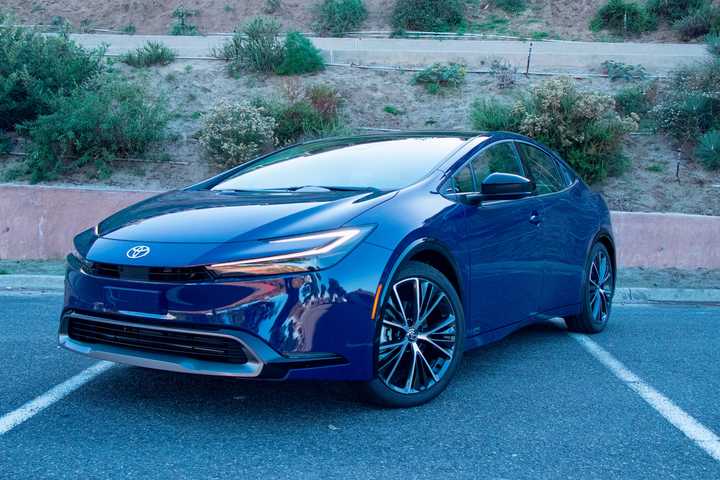
While a Prius might never satisfy your need for speed, it remains the most reliable hybrid for a great price, and the newest generation may finally be moving into, dare I say, good-looking car territory. Toyota has spent twenty years perfecting the Prius. It may have started as a slow, plasticky wedge designed strictly for the eco-conscious, but it proved that you can build a cost-effective, highly efficient machine that refuses to break.
















No Comments