
The Suzuki Motorcycle With Low Running Costs In 2026
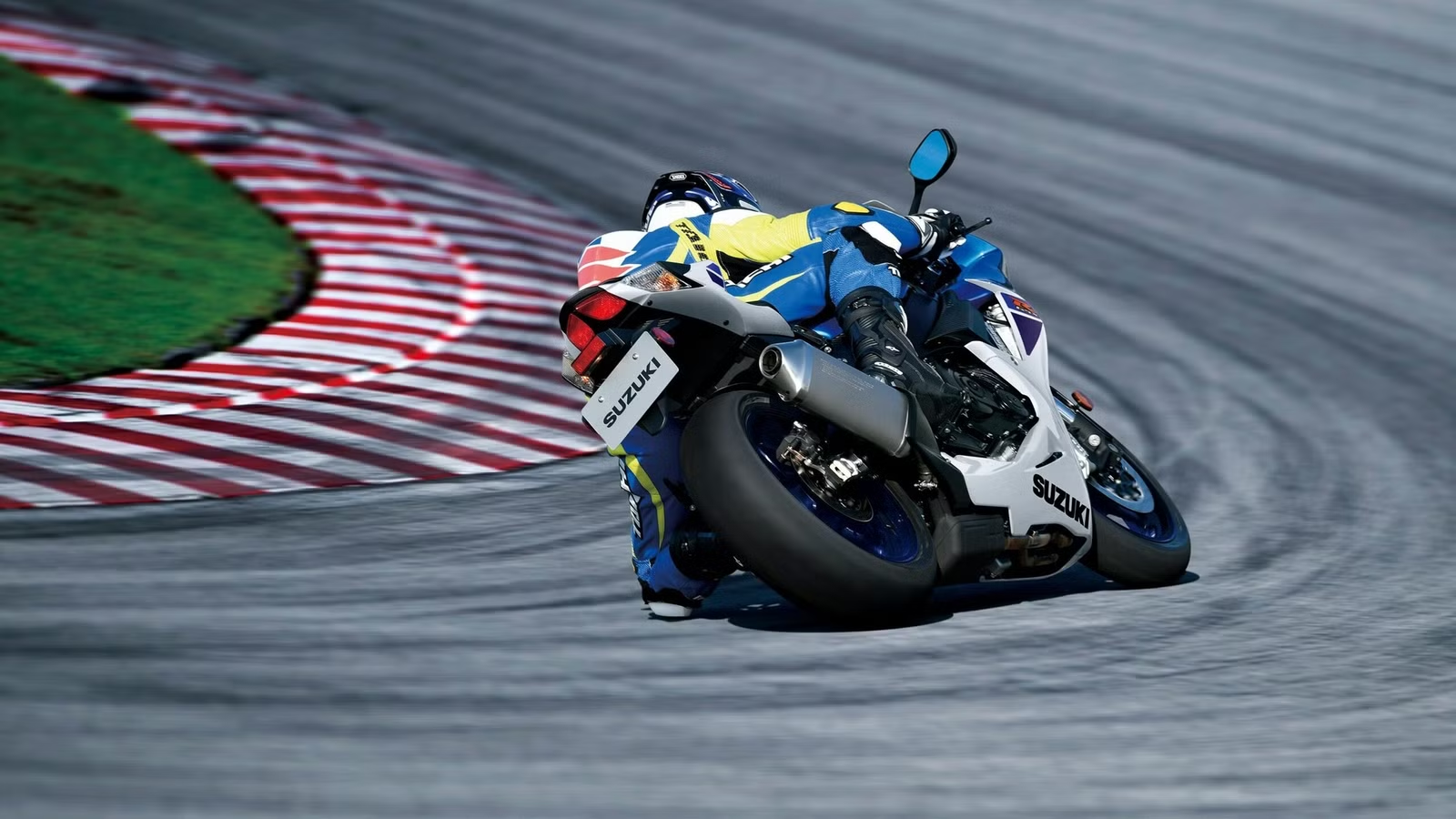
Like the other three Japanese manufacturers, Suzuki also makes a few motorcycles that are known for their low running costs. Terrific examples include the DR-650S, V-Strom 650, or SV650. But what if we told you that the company has also been making one of the finest sports bikes on the market, with low running costs? Here’s all you need to know about this Suzuki sports bike with low running costs in 2026.
Suzuki Has A Reputation For Over-Engineering Its Engine Platforms

Suzuki, over the years, has built a reputation for over-engineering its motorcycle engines, turning street bikes into bulletproof platforms that can handle plenty of abuse and modifications without grenading. Instead of chasing high-tech complexity like some of its rivals, Suzuki typically overbuilds the physical internal components of its engines, turning them into reliable platforms that can last for many years with minimal maintenance. This translates into low running costs over time.

Suzuki has always set the benchmark in low running costs, too. Like the original GS1000 and GSX-R1100, launched in the late ‘70s and ‘80s, helped Suzuki establish this reputation. Then came the legendary 1999 Hayabusa, with a big-bore inline-four engine that could handle serious performance modifications without exploding. We can’t forget the 2005 GSX-R1000 K5, powered by an inline-four engine so reliable that retuned versions are still in use on modern Suzuki motorcycles.

Of course, there are the unkillable commuters and dual sports, including the SV650, DR-Z400, or DR650S, which are known as some of the most reliable and easy-to-own motorcycles in the world. But these commuters and dual sports don’t surprise you with low running costs quite like one Suzuki sports bike, which brings serious supersport performance without any of the headaches you’d expect from this segment. The bike in question is the Suzuki GSX-R750.

The Suzuki GSX-R750 Has Surprisingly Low Running Costs

The Suzuki GSX-R750 is the last of the 750-class inline-four supersport bikes, bringing championship-winning heritage courtesy of its strong inline-four engine housed in a lightweight, nimble chassis. The bike offers an excellent combination of outstanding engine performance, sharp handling, and compact size. Sitting between the GSX-R600 and the GSX-R1000, the bike is powered by a 750cc inline-four engine pumping out 148 horsepower and 64 pound-feet of torque.

This engine performance is paired with a lightweight 600cc supersport chassis, giving it a low wet weight of just 419 pounds, resulting in an exceptional power-to-weight ratio without pushing into absurd territory. Rounding out this package is a riding position that is sporty without being unbearable. Essentially, this bike combines big-bike performance with the nimbleness of a 600cc supersport, eliminating the weight penalties that come with liter-class sports bikes. The best of both worlds that should make it a hoot to ride on a racetrack or up a mountain road.
The Suzuki GSX-R750 Starts At $13,249

The Suzuki GSX-R750 starts at $13,249, and the standard model is available in two color options: Candy Daring Red/Metallic Matte Black No. 2 with red wheels, and Pearl Vigor Blue/Metallic Matte Sword Silver with blue wheels. Suzuki also offers the GSX-R750Z 40th Anniversary Edition with the more familiar Suzuki blue/white color combination. But what makes the GSX-R750 so special is not just its performance and relatively affordable sticker price, but its reliability and low running costs.
Stands Out Among Other Suzuki Sports Bikes

Most of what we appreciate about the GSX-R750’s maintenance also applies to other Suzuki GSX models, but the GSX-R750 stands out for the balance it offers. For instance, the GSX-R600 feels peaky and needs to be revved to the moon to have fun on public roads; it’s a sharp motorcycle but has virtually no torque in the lower half of the rev range. Meanwhile, the GSX-8R is not sporty enough to be part of the conversation. It’s a more everyday sports bike for those looking for something versatile.
Then came the GSX-R1000, which is a full-fledged liter-class bike with serious performance. However, it’s also technically complex, using variable valve timing and premium parts, and it will eat through rubber and brakes a whole lot faster. Also, modern electronics mean more failure points that can be expensive to repair. And the Hayabusa is heavy on consumables, thanks to its immense weight and torque. These two bikes also require expensive parts and bring high insurance rates and fuel consumption.
One Of The Most Reliable Sports Bikes On The Market

The GSX-R750 has been around since 1984, and it practically invented the supersport segment back in the day. Over the years, it has evolved into the current generation, which has been around since 2009. While it may look dated compared to its rivals, Suzuki has had the time to refine the bike and iron out the niggles. This has made the GSX-R750 one of the most reliable sports bikes on the market.
The engine here is bulletproof and typically requires sticking to routine maintenance. Owners claim that, as long as you’re diligent with the service, the bike can easily rack up 30k to 50k miles. And the engine is durable enough to hold up extremely well under aggressive track use, so it doesn’t ask you to pamper it, either. Since the core platform relies on proven mechanics and skips complex modern electronics, there are few things to fail, which only adds to the bike’s reliability.
Affordable Running Costs Are A Big Plus

Bulletproof reliability translates to low running costs, too, at least as far as serious supersport bikes are concerned. Ownership forums suggest an annual maintenance cost of around $300 to $400 for standard service, with major service, including a valve clearance check or sprocket replacement, ranging from $350 to $600. The bike also returns a decent fuel economy of 37 to 42 miles per gallon, which should keep fuel costs in check. Of course, aggressive riding will reduce fuel economy.
Similarly, this is a serious sports bike, so while it’s reliable and cheap to service, it will still chew through consumables like tires and brake pads quickly. Additionally, expect the insurance rates to be high due to high crash rates in this category. The bike’s easy performance has also made it a squid favorite, so expect a relatively lower resale value when you sell it. It’s best to factor in these costs before picking up a Suzuki GSX-R750.
The Last Of The 750cc Screamer Supersports

Diving deeper into the 750, this is powered by a fuel-injected 750cc inline-four engine known for its compact dimensions and race-proven over-square layout, which delivers remarkably high-RPM power with a 14,500 RPM redline. The engine produces 148 horsepower at 13,200 RPM and 64 pound-feet of torque at 11,200 RPM. Unlike a 600cc supersport, though, the extra displacement here gives the bike a meatier mid-range that’s akin to a larger liter-bike, giving the bike a best-of-both-worlds advantage.

The engine hangs in a twin-spar aluminum frame that balances light weight and strength, giving the bike a low wet weight of just 419 pounds. The suspension setup includes a Showa Big Piston Front Fork (BPF) and a remote-reservoir rear shock, both adjustable, so you can fine-tune the suspension to your riding style. Braking duties come from dual fully floating 310mm discs with radial-mount four-piston Brembo Monobloc calipers at the front and a single caliper on a disc at the back.
A Truly Analog Supersport Experience

While dated, the GSX-R750’s design is aging well today. As for ergonomics, owners claim the bike is more comfortable than it looks, thanks to the three-way-adjustable footpegs and a low seat height of 31.9 inches. This Gixxer is also thoroughly analog, lacking any rider aids or modern electronics. It features only Suzuki Drive Mode Selector (S-DMS), a built-in timer/stopwatch, and a programmable shift light.

All of this combines to make this Gixxer a special sports bike that balances big-bike performance, supersport nimbleness, and relatively low running costs. Yes, it’s a dinosaur today compared to its more modern rivals, but there’s a reason Suzuki hasn’t pulled the plug on it just yet. This is one of the few remaining analog sports bikes you can buy today, offering unfiltered performance without demanding high maintenance.
Source: Suzuki Cycles

Related posts




Latest Post


No Comments