
Subaru’s 2026 Reliability Comeback Is Built On Data From Older, Simpler Cars
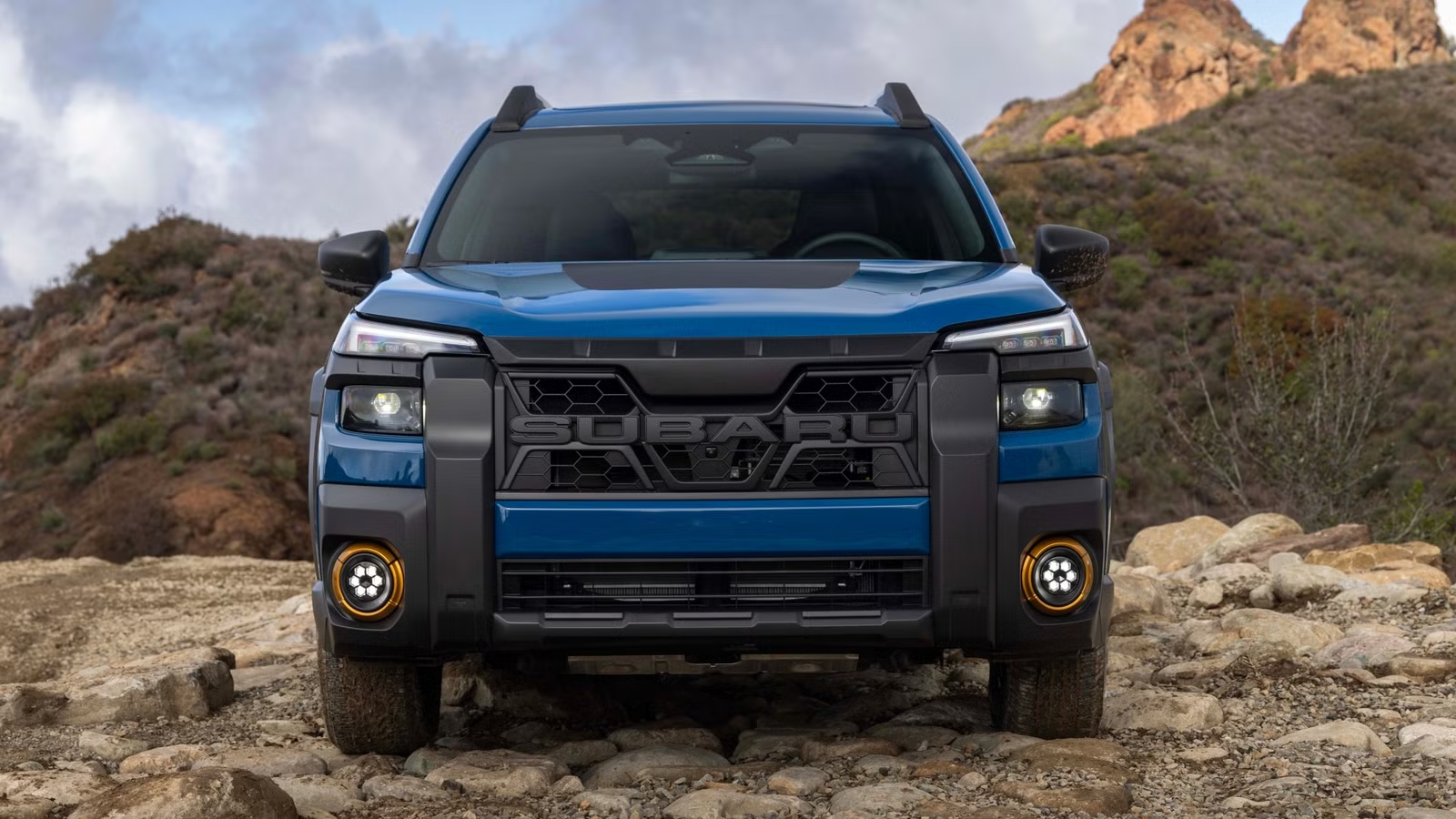
Subaru is telling a redemption story with the 2026 Outback Wilderness, and on paper, it’s a good one. It features a fortified CVT, a reinforced final drive, new dampers, and a reliability crown from iSeeCars to top it off. The problem is that the crown was earned by someone else. Subaru’s reputation for building bulletproof, unglamorous transportation was forged over decades by simpler cars with fewer failure points, not by the turbocharged, electronically managed Wilderness now carrying that reputation forward. Before anyone hands Subaru its redemption arc, it’s worth asking what’s actually changed under the sheet metal, and what hasn’t.
Subaru’s Reliability Reputation Was Built Before The 2026 Outback Arrived

Subaru’s image as a dependable brand didn’t happen by accident, but it also didn’t happen recently. The Outback’s halo effect traces back to generations of naturally aspirated flat-fours and mechanically straightforward all-wheel-drive systems that, whatever their quirks, were comparatively easy to diagnose and repair. That’s the version of Subaru that built decades of owner loyalty in places like Colorado, Vermont, and the Pacific Northwest.

iSeeCars’ recent ranking of the Outback as one of the most reliable compact SUVs on sale plays directly into that legacy, and it’s the kind of headline Subaru’s marketing team is happy to let ride. But reliability rankings like this are backward-looking by nature. They’re built from years of accumulated ownership data, warranty claims, and repair records, which means the 2026 model is riding on the accumulated track record of Outbacks that came before it, including model years with different engines, different transmissions, and different failure profiles entirely. The current Wilderness, with its turbocharged 2.4-liter boxer and revised CVT hardware, hasn’t existed long enough to generate that kind of data. It’s inheriting a report card it hasn’t taken the test for.
That’s not necessarily dishonest on Subaru’s part, and it’s a common quirk of how reliability data works across the industry. But it does mean the loudest reliability credential attached to the 2026 Outback right now says almost nothing about the 2026 Outback itself.

The $1.2 Billion CVT Settlement Still Hangs Over Subaru’s Newest Drivetrains

Any conversation about Subaru’s CVT-equipped models eventually runs into 2013-2018 Outbacks and Foresters, and the TR580 Lineartronic transmission that turned into one of the more expensive reliability black eyes in the brand’s history. Owners reported shuddering, hesitation, and outright failures, often well before the transmission had any business quitting. Subaru’s response, after years of complaints and litigation, was a $1.2 billion class-action settlement that extended CVT warranty coverage to 100,000 miles for affected owners.
That settlement matters here because it is the most recent, most expensive, and most specific reliability failure tied directly to the same core transmission family—Lineartronic—that still powers the 2026 Outback lineup, Wilderness included. Subaru didn’t walk away from CVTs after the TR580 debacle; it kept refining them. Which means every hardware change made to the current Lineartronic unit is implicitly being graded against that history, whether Subaru frames it that way or not.

Older EJ25-generation Outbacks carry their own asterisk, too. Head gasket failures on that engine family, largely concentrated in 1999-2011 models, became such a well-known issue that they’re still referenced in enthusiast forums and pre-purchase inspection checklists today. The EJ25 is long gone from the Outback’s engine bay, but the pattern it established, a beloved nameplate quietly carrying a costly, systemic flaw for over a decade before the industry fully reckoned with it, is exactly the pattern skeptics are watching for with the current CVT.
A Revised Final Drive And Bigger Cooler Target Subaru’s Weakest Link

To its credit, Subaru isn’t pretending the Wilderness’s transmission is untouched. The 2026 Outback Wilderness ships with a revised 4.444:1 final drive ratio and a high-torque CVT cooler, changes aimed squarely at the two things that tend to kill a CVT under load, heat and torque multiplication at low speeds. The payoff is a towing capacity bumped to roughly 4,600 lbs, along with improved low-speed crawling for the Wilderness’s off-road-oriented buyers.
On paper, this reads like a direct, targeted answer to the CVT’s historical weak point. Thermal management was a core contributor to the TR580’s failures, and a dedicated high-torque cooler is a logical countermeasure. A steeper final drive ratio, meanwhile, helps the transmission handle low-speed, high-load situations, think towing a trailer up a grade, or crawling over rocks, without leaning as hard on the belt and pulley system that historically struggled under sustained strain.

But here’s where the story gets messier. Not every outlet is describing these changes the same way. CarSauce reported the revised final drive and larger cooler as meaningful upgrades. MotorWeek, reviewing the same 2026 Wilderness, characterized the engine and CVT as largely unchanged from the previous model year. Both characterizations can be technically true at once, a transmission can receive a new final drive ratio and a bigger cooler while still using the same fundamental CVT architecture, belt design, and control software as before. Whether that counts as “unchanged” or “revised” depends entirely on where you set the bar, and that ambiguity works quietly in Subaru’s favor. A press release can call a cooler and a gear ratio a fix. A skeptic can just as fairly call them a tune-up on the same basic mechanism that failed before.
What’s missing from either camp is hard data. No manufacturer or independent source has published warranty-claim figures showing these specific changes have reduced overheating incidents or premature CVT wear. The engineering logic behind the cooler and final drive change is sound. Whether it actually solves the problem in the field is, as of now, unverified.
The 260-HP Wilderness Adds Hardware Without Starting From A Clean Sheet

The 2.4-liter turbocharged boxer four making 260 hp and 277 pound-feet in the Wilderness is not a new engine architecture. It’s the same turbocharged flat-four Subaru has used across recent Outback, Ascent, and Legacy applications, carried into the 2026 model year rather than reengineered for it. The changes buyers are actually getting for 2026 sit around the drivetrain and chassis, not inside the engine itself. The CVT’s final drive and cooler updates discussed above, plus new electronically controlled dampers and refreshed X-Mode software, are aimed at sharpening both on-road composure and off-road capability.

Those suspension and control upgrades are real and, by most accounts from outlets covering the launch, effective. Multiple reviewers independently noted improved ride quality and better body control both on pavement and on rougher trails. That’s a legitimate improvement to the ownership experience. But it’s worth being precise about what’s new and what isn’t. This is a carryover 2.4T powertrain wearing updated damper tuning and a transmission that’s been recalibrated, not redesigned, at its core. Calling it a from-scratch reliability overhaul overstates what Subaru has actually done. Calling it a thoughtful, incremental refinement of an existing platform is more accurate, and still a reasonable thing for a manufacturer to do a few years into a model’s life cycle.
Reliability Scores Look Strong, But 100,000 Miles Will Deliver The Verdict

None of this means the 2026 Outback Wilderness is destined to repeat the TR580’s history. The final drive revision and CVT cooler are sensible, targeted responses to a well-documented failure mode, and Subaru has clearly been paying attention to where its drivetrains have historically struggled. NHTSA complaint data underscores just how much reliability can swing by model year across Subaru’s lineup: the Forester has seven flagged years worth avoiding and the Crosstrek four, which is itself an argument for judging each model year on its own record rather than by brand reputation alone.

That’s precisely the standard the 2026 Outback Wilderness hasn’t had the chance to meet yet. Iconic reliability, the kind that gets a nameplate onto “most dependable” lists years after the fact, isn’t awarded at launch. It’s accumulated one oil change, one long highway tow, one Vermont winter at a time, typically over the better part of 100,000 miles. Subaru has engineered a plausible fix for its most expensive recent failure and wrapped it in a genuinely appealing package. Whether that engineering holds up is a question the next few years of ownership data will answer, not the press release, and not a ranking built on the cars that came before it.
Sources: iSeeCars, CarSauce

Related posts

Latest Post


No Comments