
9 Sedans That Can Eat Sports Cars For Breakfast
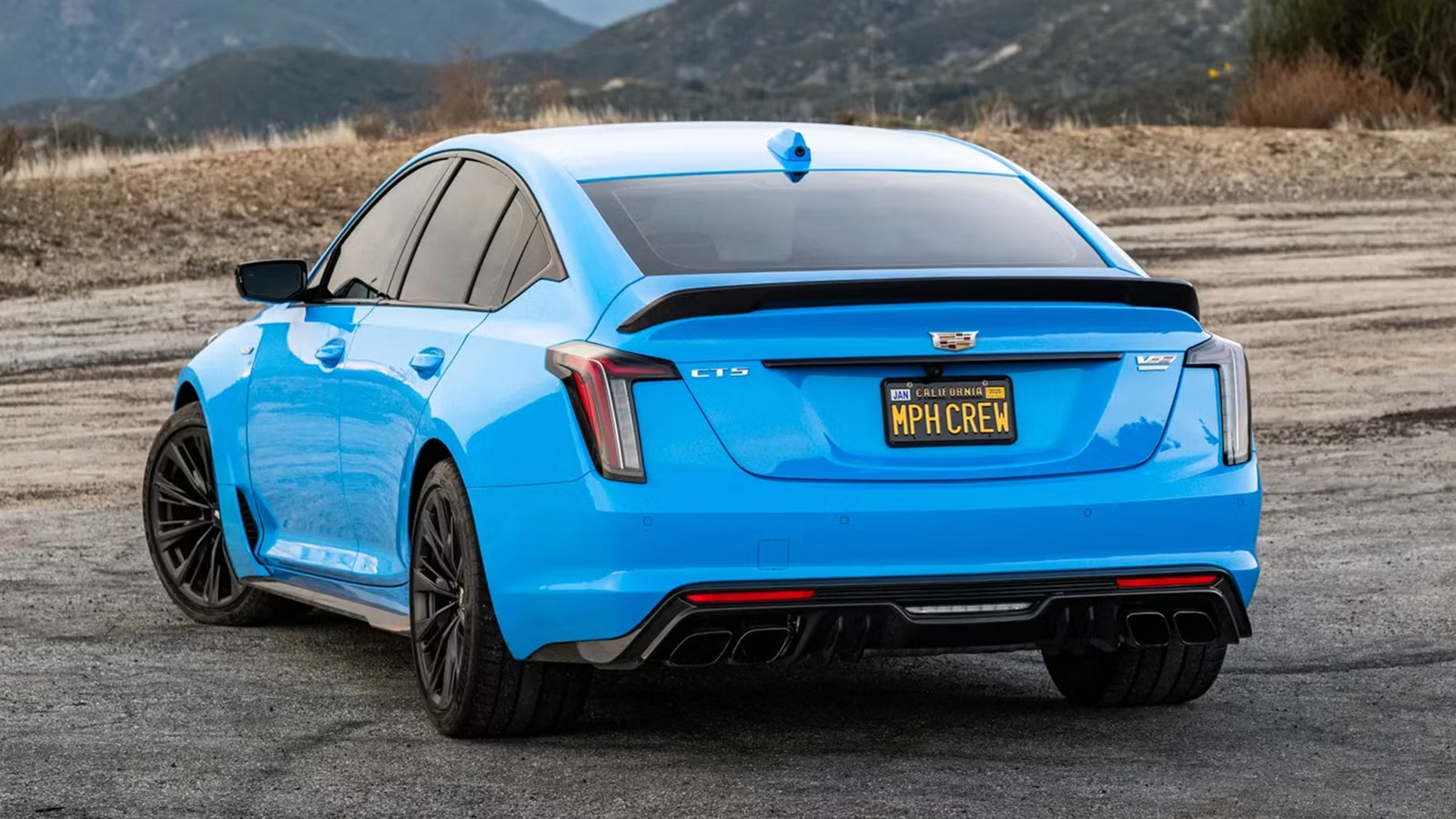
A loud two-door no longer owns every stoplight, as some of today’s quickest cars have four doors, roomy back seats, and enough trunk space for a grocery run. Take, for example, the current 2026 Ford Mustang GT with its 5.0-liter naturally aspirated V8 and a 10-speed automatic transmission. That package is good for a 0-60 mph sprint in about 3.7 seconds, but every sedan on this list beats that result.
9
Alfa Romeo Giulia Quadrifoglio
0-60 mph: 3.6 seconds

The Alfa Romeo Giulia Quadrifoglio clears the Mustang benchmark by only one-tenth of a second, but it does so without all-wheel drive or electric assistance. Its 2.9-liter twin-turbo V6 sends 505 horsepower to the rear wheels through an eight-speed automatic. Car and Driver launched a 2017 model to 60 mph in 3.6 seconds and through the quarter-mile in 11.9 seconds at 121 mph. Those numbers remain impressive because the Alfa relies on balance, sticky tires, and careful throttle control rather than four driven wheels.

Acceleration only explains part of the Giulia’s appeal. Its quick steering, light front end, and adjustable rear-drive chassis make it feel closer to a sports car than a luxury sedan. Even the badge has a better story than most pieces of performance branding – Alfa Romeo first placed the Quadrifoglio, or four-leaf clover, on Ugo Sivocci’s RL race car for the 1923 Targa Florio. Sivocci won, and the symbol became tied to Alfa’s fastest road and racing machines.
8
Cadillac CT5-V Blackwing
0-60 mph: 3.5 seconds

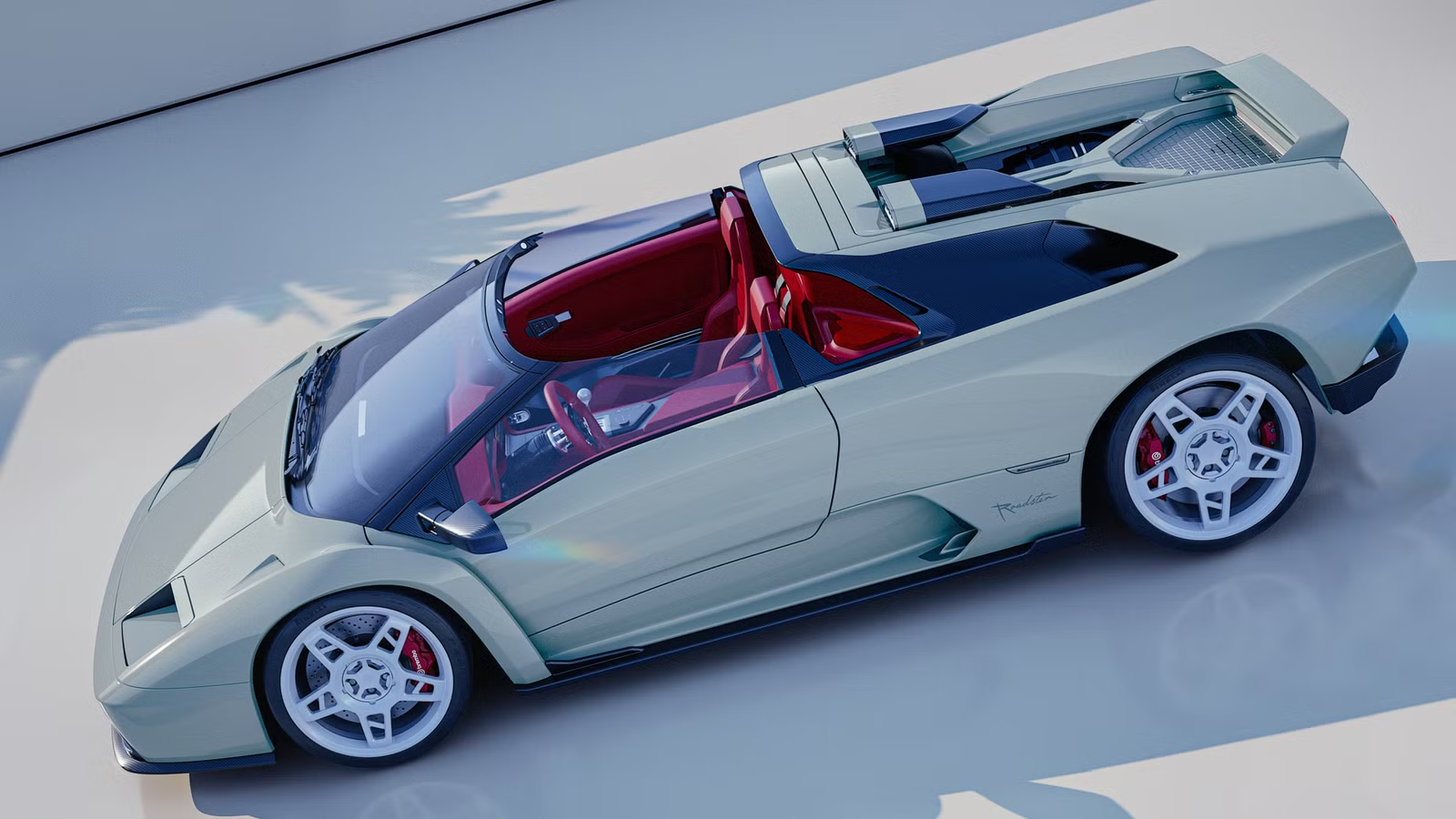
The Cadillac CT5-V Blackwing uses a wonderfully direct recipe. Its supercharged 6.2-liter V8 makes 668 horsepower and 659 pound-feet of torque, and all of it goes to the rear wheels. With the optional 10-speed automatic, the Cadillac reacheс 60 mph in 3.5 seconds. The standard six-speed manual needс 3.6 seconds, which still beats the automatic Mustang. That choice gives buyers two flavors of ridiculous – тhe automatic delivers the better number, while the manual offers a clutch pedal, a large metal shifter, and the rare chance to miss a gear in a six-figure luxury sedan.

The Blackwing name creates a little confusion because this CT5 does not use Cadillac’s original Blackwing V8. Instead, it carries the LT4, the supercharged small-block that also served in machines such as the C7 Corvette Z06 and Chevrolet Camaro ZL1. Cadillac has each CT5-V Blackwing engine assembled by one builder, who signs a plaque under the hood. That personal touch fits a car that feels increasingly unusual in an age of downsized engines and electric motors.
7
Audi RS3 Sedan
0-60 mph: 3.2 seconds

The Audi RS3 proves that a super sedan does not need 700 horsepower or the dimensions of a downtown apartment. Its turbocharged 2.5-liter five-cylinder produces about 400 horsepower, yet the compact Audi reaches 60 mph in 3.2 seconds and covers the quarter-mile in 11.7 seconds at 118 mph. A seven-speed dual-clutch transmission snaps through the gears, while Quattro all-wheel drive keeps the launch clean and repeatable. The engine also gives the RS3 its personality – five cylinders create an uneven, hard-edged exhaust note that sounds more like an old rally car than a polished commuter. It is the rare modern engine that an enthusiast can identify before the car comes into view.

Audi’s five-cylinder story reaches back through rallying and road racing, but the RS3 does more than trade on nostalgia. Its RS Torque Splitter controls power across the rear axle and can direct the available rear-drive force toward the outside wheel in a corner. That helps the car rotate instead of washing wide like many front-heavy all-wheel-drive machines. Audi even gave it a dedicated rear-biased mode for controlled slides on a closed course. The RS3 remains small enough to thread through traffic and easy enough to drive every day, yet its launch can humble cars with twice the cylinder count.
6
BMW M5
0-60 mph: 3.0 seconds

The latest BMW M5 attacks 60 mph with 717 horsepower, 738 pound-feet of torque, all-wheel drive, and enough mass to make the laws of motion request legal advice. BMW lists its curb weight at 5,390 pounds. Despite that figure, the plug-in-hybrid sedan reaches 60 mph in 3.0 seconds and runs the quarter-mile in 10.9 seconds at 130 mph. A twin-turbo 4.4-liter V8 works with an electric motor built into the eight-speed automatic transmission. The motor supplies instant torque while the V8 gathers boost, so the M5 launches without the pause that once came with big turbocharged engines.

All that hardware creates an odd result: This M5 has more power than the previous model, but it does not accelerate to 60 mph as quickly. The older M5 Competition managed 2.8 seconds because it carried far less weight. The new car starts fighting back at higher speeds, where its 130-mph quarter-mile trap reveals serious power. It can also travel roughly 25 miles on electricity, allowing short trips without waking the V8, giving it a wider range of personalities than any earlier M5.
5
BMW M3 Competition xDrive
0-60 mph: 2.8 seconds

The BMW M3 Competition xDrive ties the Tesla Model 3 Performance at 2.8 seconds, so quarter-mile speed decides their order. The BMW runs an 11.0-second quarter-mile at 124 mph, one mph slower than the Tesla. Still, 2.8 seconds to 60 mph makes this four-door 3 Series quicker than many dedicated sports cars. The M3 uses a 503-horsepower version of BMW’s twin-turbo 3.0-liter inline-six, an eight-speed automatic, and launch control. Newer versions make as much as 523 horsepower in U.S. trim, but the earlier cars already had more than enough.

The M3’s all-wheel-drive system deserves much of the credit. Adding it increased weight, yet the extra traction cut seven-tenths from the rear-drive M3 Competition’s run to 60 mph. BMW also kept the system rear-biased, which preserves some of the balance and adjustability expected from an M car. Drivers can choose two all-wheel-drive settings or shut off stability control and select a pure rear-drive mode. That last option disconnects the front axle and turns the sedan into a very expensive tire recycling machine.
4
Tesla Model 3 Performance
0-60 mph: 2.8 seconds

The Tesla Model 3 Performance shares the BMW’s 2.8-second time to 60 mph, but it crosses the quarter-mile at 125 mph rather than 124 mph. That tiny advantage gives it the higher position in this list. Two electric motors drive all four wheels and produce more than 500 horsepower in the U.S. version. During testing, the Model 3 needs only 11.0 seconds to cover the quarter-mile. The launch requires no clutch work, perfectly timed shift, or complicated mechanical sympathy. The driver presses the accelerator, and every passenger suddenly develops excellent posture. The speed feels especially strange because the car looks much like any other Model 3.

Tesla also gave the Performance more than stronger motors. It receives adaptive dampers, upgraded brakes, staggered wheels and tires, sport seats, and a Track Mode that adjusts the power split, stability control, regenerative braking, cooling, and suspension. Those features make it far more capable through corners than a standard Model 3. Limits still appear during sustained track use, though – at Virginia International Raceway, the car could deliver about one maximum-effort lap before heat forces the powertrain to protect itself by reducing output. That weakness matters on a long track session, but it means little on a road, where hard acceleration lasts a few seconds at a time.
3
Tesla Model S Plaid
0-60 mph: 2.1 seconds

The Tesla Model S Plaid moved family-car acceleration into the territory once reserved for multimillion-dollar hypercars. Its three electric motors produce roughly 1,000 horsepower and drive the car to 60 mph in 2.1 seconds. It reaches 100 mph in 4.3 seconds and covers the quarter-mile in 9.4 seconds at 151 mph. That quarter-mile result matched the time Car and Driver recorded for the Bugatti Chiron Sport, although the Bugatti crossed the line faster. That comparison still sounds ridiculous in 2026.

The Plaid’s most shocking trait comes after the initial hit. Many quick EVs launch hard but lose some force as speed rises. The Model S keeps pulling deep into triple-digit speeds, which makes passing power feel almost excessive. Tesla later returned a conventional steering wheel as standard after introducing the controversial yoke, although buyers could still choose the yoke on the 2026 car. That normal wheel gives the driver a more familiar tool for controlling a very abnormal amount of speed. The Model S lacks the steering feedback, cabin finish, and polished ride of the best German luxury sedans, but none of those flaws slow it down.
2
Porsche Taycan Turbo GT
0-60 mph: 1.9 seconds

The Porsche Taycan Turbo GT became the first production car to record a sub-two-second 0-60 mph time in Car and Driver testing. Importantly, the car that achieved the original 1.9-second result kept its rear seats. The optional Weissach Package removes them to save weight, but the standard Turbo GT remains a four-passenger, four-door sedan. Its two motors produce up to 1,019 horsepower during launch control, and its all-wheel-drive system turns that output into immediate motion. The Porsche also runs the quarter-mile in 9.3 seconds at 150 mph. The numbers make the Mustang GT look less like a rival and more like a vehicle that happened to use the same stretch of pavement.

Porsche separates the Taycan from simpler electric drag-strip weapons with hardware designed for repeated hard use. The front motor uses a single gear, while the rear axle gets a two-speed transmission. The lower ratio helps the car launch, and the taller ratio supports acceleration and efficiency at higher speeds. The Turbo GT also includes Attack Mode, a Formula E-inspired function that provides up to 120 additional kilowatts for 10 seconds. A steering-wheel button or paddle activates it, complete with a countdown display.
1
Lucid Air Sapphire
0-60 mph: 1.9 seconds

The Lucid Air Sapphire ties the Taycan at 1.9 seconds to 60 mph, but it wins the tiebreaker with stronger acceleration after that point. It reaches 100 mph in 3.9 seconds, three-tenths ahead of the Porsche, and finishes the quarter-mile in 9.1 seconds at 155 mph. Three motors generate 1,234 horsepower: one drives the front axle, while two power the rear wheels independently. That layout gives the Sapphire both huge traction and active torque vectoring.

Lucid’s official figure goes one step further at 1.89 seconds, along with a claimed 205-mph top speed and an EPA-estimated 427 miles of range with the proper wheel setup. Those figures give the Sapphire a combination that few cars at any price can match. It offers five real seats, a spacious rear cabin, front and rear luggage areas, and enough range for serious highway travel. Then it accelerates hard enough to challenge the quickest production cars on Earth. The Porsche may feel sharper on a track, but the Lucid pulls away as speeds climb and asks passengers to make fewer sacrifices. It works as a luxury car, a long-distance EV, and a silent drag-strip monster.
Source: Ford, Porsche, Lucid, Tesla, BMW, Audi, Cadillac, Car and Driver

Related posts

Latest Post


No Comments