
10 Performance Cars That Are Now Blue-Chip Investments

Cars usually have a predictable price curve. You buy a brand-new car, and it immediately starts to lose some value. After a few years, that value may have dropped to 50% or less, depending on mileage and condition. But some cars don’t always follow this traditional curve. Because of the enthusiasm behind some of these cars, their depreciation curve is a lot slower, and they finally settle at a price that almost allows you to enjoy them for a few years without losing money on them, but some of them do something entirely different.

Some of these performance cars tend to appreciate in value for a few reasons. They were rare to begin with, and the automaker probably doesn’t make a car like that anymore, or never made a follow-up to begin with. We’ve seen an astronomical rise in the prices of what we used to consider enthusiast cars, now becoming high-grade collector vehicles. This recent rise has also been influenced by the latest breed of complex hybrid and electric sports cars that nobody really wants. This technical shift, combined with high production numbers, suddenly meant people wanted old-school, analog cars that made them feel alive and connected to the art of driving. Old Ferraris and Porsches have long seen serious appreciation value, but suddenly, even modern analog cars are fetching prices that are honestly unbelievable.
10
Nissan GT-R (R35 Early Models)
Average Price: $70,000
|
Engine |
 72 autotech 3.8-liter twin turbo V6 (VR38DETT) |
|---|---|
|
Horsepower |
480 hp |
|
Torque |
430 lb-ft |
|
Transmission |
Six-speed DCT |
|
Drivetrain |
AWD |
|
0-60 mph |
3.5 seconds |
|
1/4 mile |
11.6 seconds |
|
Top Speed |
193 mph |
|
MSRP |
$69,850 |
The R35 GT-R was first launched in 2007 but was available for the rest of the world in 2009, and it did not disappoint. No supercar was safe from the clutches of this Japanese powerhouse; it humiliated Porsche, Ferraris, and Lamborghinis for a fraction of the price. But Nissan kept the R35 in production for over 15 years, so early models had depreciated to the point that people saw them as a means of cheap speed. Many were heavily modified or abused, and that has caused a shift in the market.
Unmodified, low-mileage examples from the initial 2009–2011 production run (CBA-R35) have bottomed out and started appreciating. The MSRP of these cars started in 2009 at around $69,000. Today, the average price of one of these is around $70,000, and these are the base models, the track or Nismo editions that cost way more. As the first global generation of Godzilla, clean, stock examples are easily separated from the heavily modified cars and entering true collector territory.
9
Mercedes-Benz C63 AMG Black Series (C204)
Average Price: $127,000

|
Engine |
6.2-liter NA V8 |
|---|---|
|
Horsepower |
510 hp |
|
Torque |
457 lb-ft |
|
Transmission |
Seven-speed AMG MCT Automatic |
|
Drivetrain |
RWD |
|
0-60 mph |
3.7 seconds |
|
1/4 mile |
12.1 seconds |
|
Top Speed |
186 mph |
|
MSRP |
$105,000 |
The 2012 C63 AMG Black Series is the type of car that AMG will never make again: a massive, naturally aspirated 6.2-liter V8 stuffed into a small coupe. As Affalterbach transitions to turbocharged four-cylinders and hybrid setups, the C204 Black Series stands as a monument to the golden age of AMG muscle. Using engine internals borrowed from the SLS AMG supercar, including forged pistons, connecting rods, and a lightweight crankshaft, the Black Series pushes out 510 horsepower and was a riot to drive.
The car had presence with the widebody fenders, functional hood vents, and an optional aerodynamic package featuring a carbon fiber wing and front dive planes. Mercedes built just 800 examples globally, making it a very rare specimen. Pristine, low-mileage versions are highly sought after by collectors, who recognize it as the rawest, loudest, and most unhinged V8 coupe the brand ever created for the road.
8
BMW M3 (E46 CSL)
Average Price: $138,000

|
Engine |
3.2-liter NA Inline-six (S54) |
|---|---|
|
Horsepower |
355 hp |
|
Torque |
273 lb-ft |
|
Transmission |
Six-speed SMG II |
|
Drivetrain |
RWD |
|
0-60 mph |
4.7 seconds |
|
1/4 mile |
14.0 seconds |
|
Top Speed |
155 mph (limited) |
|
MSRP |
£58,455 (approx. $108,000 USD) |
When BMW released the E46 M3 CSL (Coupe Sport Lightweight) in 2003, critics pointed directly at its single-clutch SMG II automated manual transmission. It was a polarizing choice at the time, since most enthusiasts wanted it to have just a simple manual. However, history has completely forgiven this gearbox because everything else about the E46 CSL represents the absolute zenith of the BMW M division.
The CSL lost 240 pounds from the standard M3 by using carbon fiber on the roof, thinner rear glass, and removing some sound deadening. Under the carbon fiber hood sat a modified version of the legendary S54 inline-six engine, breathing through a massive carbon fiber intake piece that produced one of the greatest induction notes ever recorded. A regular E46 M3 has an average price of $25,000, the CSL about six times more, and you almost can’t tell the difference in person. With only 1,383 units built and none originally sold in the North American market, the CSL has transcended standard modern-classic status. It is now universally recognized as the ultimate expression of the naturally aspirated inline-six era.

10 Exclusive Mercedes Cars That Are Worth A Fortune Today
Old Mercedes performance cars are some of the biggest depreciated bargains on the used market today. These ten have a different story to tell.
7
Mercedes-Benz 190E 2.5-16 Evolution II
Average Price: $363,000

|
Engine |
2.5-liter NA Inline-four |
|---|---|
|
Horsepower |
235 hp |
|
Torque |
181 lb-ft |
|
Transmission |
Five-speed manual |
|
Drivetrain |
RWD |
|
0-60 mph |
6.8 seconds |
|
1/4 mile |
16.9 seconds |
|
Top Speed |
155 mph |
|
MSRP |
$77,000 – $100,000 |
The late 1980s and early 1990s DTM racing era gave the world some of the most aggressive road-going homologation specials in history. At the time, the Mercedes 190E was just a baby Benz, but racing changed its DNA. The Mercedes-Benz 190E 2.5-16 Evolution II was built strictly to satisfy racing regulations with exactly 502 units built in 1990.
Every single car was finished in Blauschwarz metallic paint (Blue-Black) and featured a radical, wind-tunnel-tested aerodynamic kit with a massive adjustable rear wing. Under the hood was a 2.5-liter, 16-valve inline-four engine developed in partnership with Cosworth, producing 235 horsepower. For a long time, the Evo II sat in the shadow of its direct rival, the BMW E30 M3 Sport Evolution. Today, the script has flipped. The extreme rarity and uncompromising motorsport heritage of the Evo II have pushed its average value well past the quarter-million-dollar mark.
6
Dodge Viper ACR (VX I)
Average Price: $377,000

|
Engine |
8.4-liter NA V10 |
|---|---|
|
Horsepower |
645 hp |
|
Torque |
600 lb-ft |
|
Transmission |
Six-speed Tremec Manual |
|
Drivetrain |
RWD |
|
0-60 mph |
3.5 seconds |
|
1/4 mile |
11.5 seconds |
|
Top Speed |
177 mph due to increased downforce |
|
MSRP |
$121,395 |
The fifth and final generation of the American supercar went out with an absolute roar in the form of the 2016–2017 Dodge Viper ACR (American Club Racer). This was not a sports car with a track package; it was a street-legal race car built around a massive, naturally aspirated 8.4-liter V10 engine sending 645 horsepower to the rear wheels via a six-speed manual transmission.
Equipped with the Extreme Aero Package, the Viper ACR produced a staggering 1,700 pounds of downforce at top speed. It also broke production car lap records at tracks across North America. Because production was limited, and the Viper was permanently discontinued in 2017, the ACR represents the end of an era of analog, high-displacement American performance. Values have skyrocketed over the last few years, with rare allocations and special editions trading for nearly triple their original MSRP.
5
Honda NSX-R NA-1
Average Price: $387,000

|
Engine |
3.0-liter NA V6 |
|---|---|
|
Horsepower |
270 hp |
|
Torque |
210 lb-ft |
|
Transmission |
Five-speed manual |
|
Drivetrain |
RWD |
|
0-60 mph |
4.9 seconds |
|
1/4 mile |
14.3 seconds |
|
Top Speed |
168 mph |
|
MSRP |
$100,000 (est) |
While a standard first-generation NSX is already a certified classic but still attainable, the Japan-only NSX-R is in an entirely different price bracket. Originally introduced in 1992 (NA1) and followed by the legendary facelifted NA2 version in 2002, the Type R treatment turned this reasonable everyday supercar into a track weapon. Honda removed the sound deadening, sound systems, air conditioning, and traction control, dropping over 260 pounds from the standard car. They also added Recaro seats and lots of exterior aero parts.
The V6 engines were completely hand-built by the best engineers in the facility to ensure the very best performance. Because production numbers were incredibly low (only 483 NA1 variants were built), these cars rarely trade hands outside of high-profile auctions, with exceptional examples fetching close to the half-million-dollar mark. The NA2s are even rarer, with 140 cars made and now costing over $1 million, but they almost never come up for sale. Prices like these make the average NSX seem like a bargain.

The Best Japanese Sports Cars Of All Time, Ranked
Known for their unique design, reliability, and unmatched driving experience, here are the best Japanese sports cars of all time.
4
Ford GT (2005)
Average Price: $525,000

|
Engine |
5.4-liter Supercharged V8 |
|---|---|
|
Horsepower |
550 hp |
|
Torque |
500 lb-ft |
|
Transmission |
Six-speed manual |
|
Drivetrain |
RWD |
|
0-60 mph |
3.5 seconds |
|
1/4 mile |
11.8 seconds |
|
Top Speed |
205 mph |
|
MSRP |
$140,000 |
Built to celebrate Ford’s centennial and honor the legendary GT40 that conquered Le Mans in the 1960s, the 2005–2006 Ford GT is one of the most iconic supercars in modern history. It has no electronic stability control, no clever dual-clutch transmission, and no active aerodynamics. It is simply a mid-engined, supercharged V8 supercar with a six-speed manual sending power to the rear wheels, though most owners say it is not scary to drive.
But these cars were greatly undervalued for the longest time and, with 550 horsepower on tap and a timeless design penned by Camilo Pardo, the first-generation GT has moved past typical used exotic pricing. Clean cars now sell for $400,000+ with heritage and special editions selling for way more. This is a very reliable car with exotic styling and performance. It is now a staple in the high-end collector’s market alongside historic European cars and represents an analog sweet spot for enthusiasts.
3
Ferrari 458 Speciale
Average Price: $698,000

|
Engine |
4.5-liter NA V8 |
|---|---|
|
Horsepower |
597 hp |
|
Torque |
398 lb-ft |
|
Transmission |
Seven-speed DCT |
|
Drivetrain |
RWD |
|
0-60 mph |
3.0 seconds |
|
1/4 mile |
10.8 seconds |
|
Top Speed |
202 mph |
|
MSRP |
$292,000 |
Every car collector understands the historical value of a “final edition” Ferrari. The 2014–2015 Ferrari 458 Speciale is exactly that: the final mid-engine, naturally aspirated V8 supercar to ever roll out of the gates of Maranello. Its successor, the 488 GTB, shifted to turbocharging, forever altering the classic Ferrari recipe. The Speciale’s 4.5-liter V8 made 597 horsepower, screaming all the way to a 9,000 RPM redline while emitting one of the best V8 exhaust notes on earth.
It also featured lightweight Ferrari components, integrated active aero parts, and an interior lined with carbon fiber and Alcántara. The Speciale offers an engaging driving experience that its turbocharged successors simply cannot replicate. It represents the definitive end of an era for the world’s most famous sports car brand. Second-hand prices shot up instantly and have remained above MSRP since launch, with Aperta models costing double.
2
Lexus LFA
Average Price: $980,000

|
Engine |
4.8-liter V10 |
|---|---|
|
Horsepower |
552 hp |
|
Torque |
354 lb-ft |
|
Transmission |
Six-speed automated manual |
|
Drivetrain |
RWD |
|
0-60 mph |
3.7 seconds |
|
1/4 mile |
11.8 seconds |
|
Top Speed |
202 mph |
|
MSRP |
$375,000 |
Toyota spent a decade developing the Lexus LFA, and they lost money on every single one of the 500 units produced despite the expensive initial price. It was an exercise in pure Japanese engineering pride. The centerpiece is the 1LR-GUE 4.8-liter V10 engine, developed in conjunction with Yamaha, that revs to 9,000 RPM. Lexus had to install a digital tachometer because an analog needle couldn’t keep up with the fast revs of this engine.
The chassis is constructed from a bespoke, in-house woven carbon fiber polymer, and every detail was obsessed over to optimize weight and sound resonance. Initially, the LFA struggled to find buyers due to its high original asking price, but that is no longer the case. Today, collectors recognize it as a mechanical masterpiece. The Nürburgring Package fetches well over seven figures, and the standard models are rapidly closing in on that price.
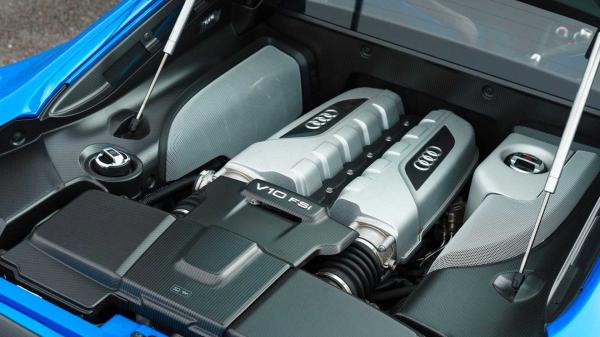
10 Cheapest V10 Cars On The Used Market In 2025
The new V10 market is in a sad state of affairs, but thanks to depreciation, some gems of yesteryear sell for seriously cheap.
1
Porsche Carrera GT
Average Price: $3,000,000

|
Engine |
5.7-liter NA V10 |
|---|---|
|
Horsepower |
605 hp |
|
Torque |
435 lb-ft |
|
Transmission |
Six-speed manual |
|
Drivetrain |
RWD |
|
0-60 mph |
3.6 seconds |
|
1/4 mile |
11.6 seconds |
|
Top Speed |
205 mph |
|
MSRP |
$440,000 |
The Porsche Carrera GT is widely regarded as the pinnacle of the analog supercar era. Born from the remnants of an aborted Le Mans prototype program, it is powered by a naturally aspirated 5.7-liter V10 engine that produces a high-pitched F1 shriek that is completely unique in the automotive world. It is mated to a six-speed manual gearbox with a lightweight ceramic clutch sending power to the rear wheels with no stability control.
The Carrera GT demanded immense respect from its driver as it was famously a handful to drive, with a few high-profile deaths recorded. Only 1,270 units were produced between 2004 and 2006, and over the last few years, values have kept creeping up to the million-dollar mark. In the last year, average prices have easily doubled and this is driven by collectors who want the absolute peak of analog engineering before supercars entered the digital, hybrid age.
Sources: OEM Manufacturers, Classic.com, Hagerty.

Related posts

Latest Post


No Comments