
Lexus Is Going Electric, And The Sports Sedan War Just Got Interesting
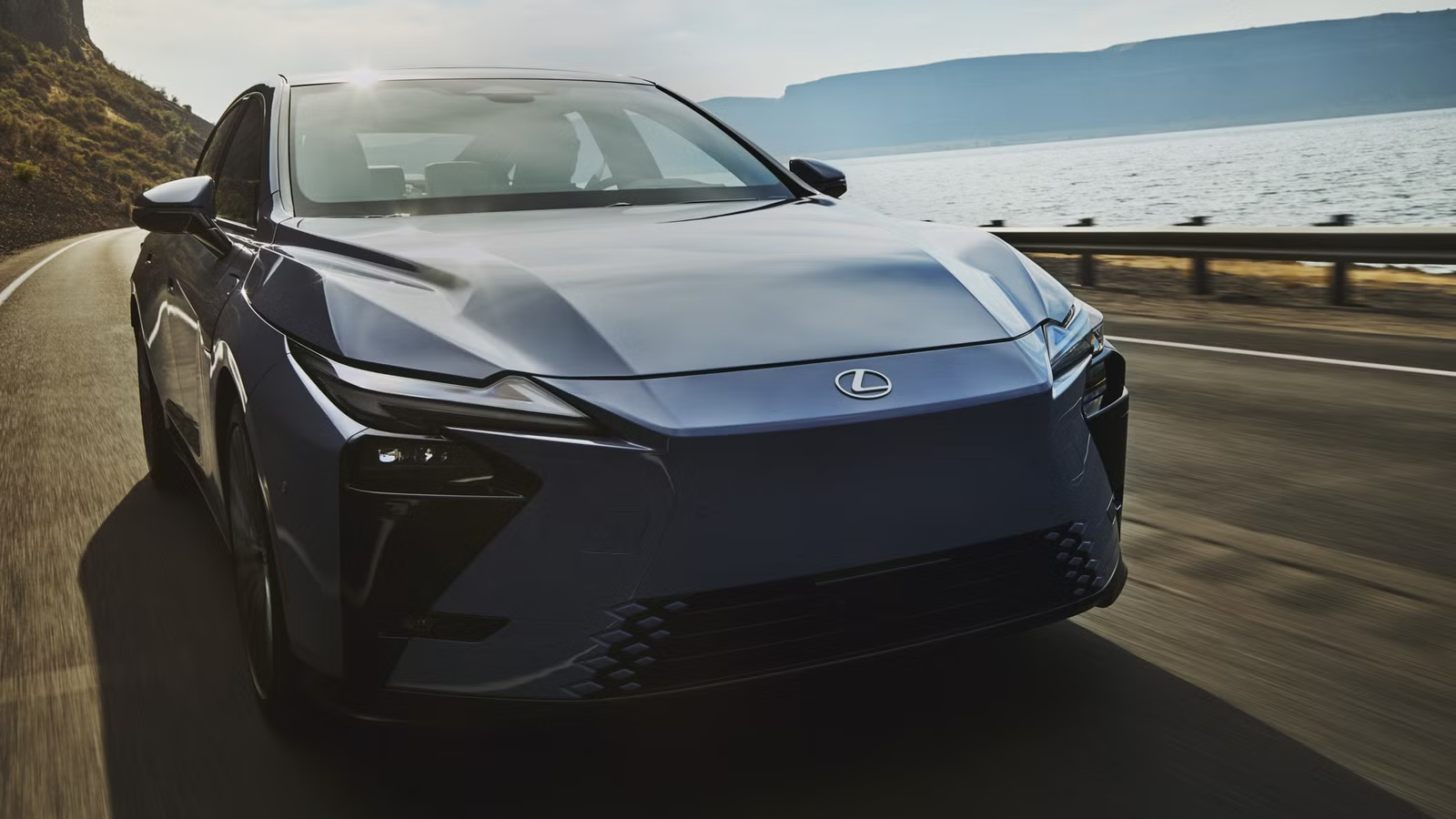
Two luxury sedans. One price point. Completely opposite bets on where performance is headed. The all-new Lexus ES just landed with a full EV powertrain lineup and a radical redesign, while the BMW 3 Series soldiers on with its turbocharged, hybridized combustion engines and no full-electric option in sight. At roughly $47,500 to start for the ES 350e versus $48,000 for the entry-level 330i, the gap in price is almost nonexistent. The gap in philosophy couldn’t be wider.

This isn’t just a spec sheet argument. It’s a live debate about what luxury-sports-sedan buyers actually want right now — and both Lexus and BMW have placed their chips on opposite sides of the table.
Lexus Commits Fully to Electric Power With Two Distinct ES Variants
The new ES arrives with two all-electric configurations, and Lexus isn’t hedging. The ES 350e is a single-motor, front-wheel-drive setup producing 221 horsepower with an EPA-estimated range of 307 miles from a 74.7-kWh lithium-ion battery. Step up to the dual-motor ES 500e and you get 338 horsepower, all-wheel drive, and a 0–60 mph time of 5.1 seconds — with range dropping to 276 miles on the same battery pack. The base 350e covers that sprint in 7.4 seconds, which is unhurried but delivers the characteristic immediacy of electric torque delivery.
A hybrid ES 350h remains in the lineup at 244 horsepower, but early test drives make clear that the electric variants are the ones worth cross-shopping. Reviewers note that the EV powertrains make the ES feel more premium and effortless than the hybrid, with smoother power delivery and a quieter cabin. The 350h, by comparison, feels strained when pushed. Lexus has essentially used the hybrid as a hedge while pointing buyers firmly toward the plug.
BMW’s 3 Series Holds Its Ground With Combustion and Driver Focus

BMW isn’t standing still — it’s just standing somewhere different. The current 3 Series is available with two hybridized engines, both paired to an eight-speed automatic and a choice of rear- or all-wheel drive. The 330i uses a 2.0-liter mild-hybrid four-cylinder making 255 horsepower and 295 lb-ft of torque, returning a respectable 31 mpg combined. At the top of the range, the M340i’s 3.0-liter mild-hybrid inline-six produces 386 horsepower and 398 lb-ft, hitting 0–60 mph in 4.1 seconds — a full second quicker than the ES 500e AWD.
What BMW is selling isn’t just power numbers. It’s a driving experience built around rear-wheel-drive dynamics, precise and well-weighted steering, and a chassis tuned to stay flat through technical corners without punishing daily drivers. The optional Adaptive M Suspension sharpens things further. A next-generation 3 Series is in development and will almost certainly bring electrification with it, but for now, BMW is betting that the driver’s car formula still wins the argument.
The Real Split Is About What Luxury Performance Means in 2026

Here’s where the comparison gets genuinely interesting. The Lexus ES has never pretended to be a sports Sedan — its suspension is tuned for comfort, its non-AWD variants are front-wheel-drive, and its designers prioritized a magic-carpet ride over corner-carving precision. What the new generation does is reframe the ES’s strengths: a longer, wider, taller body than the 3 Series, a more spacious rear cabin, a sharp new 14.0-inch infotainment display, and a powertrain that delivers smooth, silent acceleration without a drop of fuel. One reviewer framed it well: the ES is a compelling alternative to a Tesla for buyers who find stark minimalism boring and want a genuinely premium sedan.
The BMW 3 Series counters with something the ES simply doesn’t offer — the sensation of driving. Revised rear dampers, direct steering, and a chassis that communicates with the driver through every input. It’s not uncomfortable as a daily car; Comfort Mode lightens the steering for city use. But it’s a car that rewards engagement in a way the Lexus doesn’t try to match.
Both approaches are coherent. Lexus is betting that the luxury-sedan buyer of 2026 values quietness, space, range, and effortless performance over driving dynamics. BMW is betting that segment buyers still want to feel something when they turn the wheel. The next-generation Neue Klasse 3 Series will eventually bring BMW into the EV conversation, but until then, this particular showdown captures a genuine philosophical fork in the road — and both brands have made their position clear.
For sports-sedan shoppers, the choice has never been this stark. If you want a luxury EV that wraps you in space, tech, and silent torque, the new ES makes a strong case at a price that undercuts what many expected. If you want rear-wheel drive, a straight-six, and a car that still makes driving feel like the point, the 3 Series hasn’t lost a step. The market will decide who read the room correctly — and that verdict is worth watching.

Related posts


Latest Post


No Comments