
2027 Honda Africa Twin First Look: The Most Significant Overhaul In Ten Years
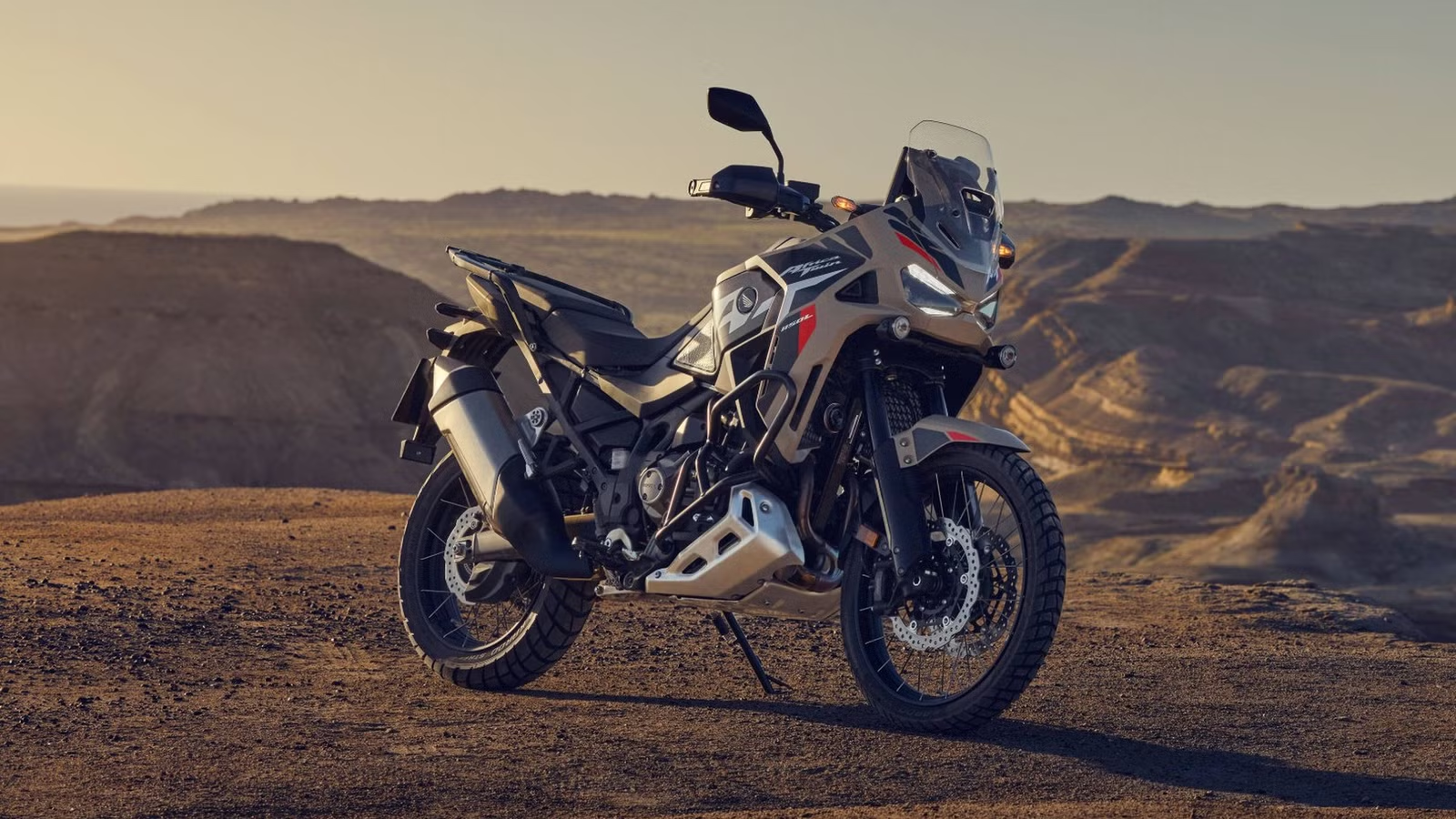
The Honda Africa Twin is well-regarded for real-world performance, long-distance comfort, and off-road capability, and it only gets better for 2027. Announced at EICMA 2026, Honda unveiled the new Gen 5 Africa Twin with a new engine, a heavily revised chassis and hardware, a sharper design with updated ergonomics, and other updates. Big Red claims its overhauled flagship adventure bike offers a better balance of power, weight, and versatility, making it even more capable in all riding conditions. American Honda has not confirmed whether or not the updated African Twin platform will arrive in the United States, and we will update the story accordingly if and when they do.
The Africa Twin Gets Its Biggest Update In Ten Years

The Africa Twin namesake debuted nearly 40 years ago as the XRV650, but the Honda flagship ADV we know today arrived in 2016 as the third-generation CRF1000L. Over the decade, Honda has continually refined the formula, updating the Africa Twin with a larger displacement parallel-twin engine, among other updates, to the CRF1100L in 2020. Six years later, the Africa Twin enters its fifth generation as the new CRF1150L, joined by the highly advanced Africa Twin Adventure Sports and the new Africa Twin Enduro Sports. However, the focus of this story is the standard Africa Twin. Here are all the changes Honda has made to its ADV for 2027.
Extensively Revised Parallel-Twin Engine

The new Africa Twin is powered by a heavily modified parallel-twin engine that now displaces 1,131 cc, with a 2mm wider bore of 94mm, though the stroke remains at 81.5mm. This results in a 16 percent increase in power to 117.33 horsepower at 7,500 rpm and a 6 percent increase in torque to 88 lb-ft at 5,750 rpm. The bike features a claimed 46 mpg, resulting in an estimated 230-mile range with its 4.96-gallon fuel tank.
Contributing to the higher output are several engine revisions, including a more efficient intake with larger 52mm throttle bodies, a higher 12.1:1 compression ratio, and an updated port and combustion chamber design. The manufacturer has also altered the cam timing and exhaust port profile, while the intake valve is 1mm wider, at 37.5mm. A wider cam chain and an optimized cam chain tensioner guide and plate are said to improve reliability.


The new piston features altered crown profiles, skirts, and pins with redesigned piston rings. Lightweight aluminum cylinder sleeves reduce overall mass, and rebalanced con-rods and crankshaft increase combustion pressure. At the same time, the internal oil passages have been revised to improve lubrication flow throughout the engine. Updated biaxial balance shafts are said to manage primary inertial and coupling forces, resulting in smoother operation across the rev range.
The Japanese firm claims the revisions improve the engine’s versatility across long highway rides, technical off-road sessions, and everyday riding. The engine is also said to offer stronger acceleration, better top-end power, and a more relaxed feel at highway cruising. Meanwhile, the 270-degree phased crankshaft and uneven firing order retain the older generation’s character and traction characteristics.
Both Manual And DCT Are On Offer

The new Africa Twin retains the six-speed gearbox as standard, but the upgraded gearing is said to deliver better acceleration and lower engine speeds on the highway. The manual gearbox also features a reworked clutch that can handle the higher output, while the shift forks get a better surface treatment for improved shift quality and durability.
The DCT is also available with three modes: MT for manual shifting, D for efficient city and highway riding, and Sport for a sportier ride. The DCT is tuned to handle off-roading, too, with Offroad ride modes improving feel for traction control and feedback by reducing clutch slip during gear changes. The automatic box also features incline detection, adapting the gearshift pattern to the slope. It’s worth stating again that we don’t know which Africa Twin variants will arrive in the United States.
Revised Chassis, Suspension, And Other Hardware

The Africa Twin’s chassis has also undergone a significant update for better handling. The steel frame’s upgraded engine head hanger helps optimize the frame’s cross-section and wall thickness, shaving off 1.76 pounds. Similarly, the aluminum swingarm is reworked to shave 1.32 pounds, bringing the chassis setup to 3 pounds lighter.
A new fuel sub-tank keeps part of the fuel tank under the rider’s seat, lowering the bike’s center of gravity dramatically compared to its predecessor. Engineers leaned into that strategy by repositioning the ECU, airbox, battery, and other heavy components. The frame still retains the 62-inch wheelbase, 27.5-degree rake, and 4.6-inch trail. The entire setup contributes to curb weights of 522.49 pounds for the manual and 544.54 pounds for the DCT model.

The Showa Electronically Equipped Rider Adjustment (EERA) semi-active suspension is now standard; it was previously available as an option in Europe and not available in the US. The suspension now uses Honda Skyhook technology that adapts damping forces within 1 millisecond in response to the bike’s vertical and pitch movements. The front is a wider 49mm USD fork, and the rear is a link-type monoshock, both offering 0.39 inches less wheel travel at 8.66 inches front and 8.26 inches rear.
Honda says the upgraded electronic suspension improves comfort and stability while preserving precise handling and cornering performance. The setup also includes a new Minimum setting that lowers the seat height by 10mm and remains selected even after the ignition is switched off. Spring preload remains fully adjustable in five modes: Solo, Solo with Luggage, Pillion, Pillion with Full Luggage, and 24-step User mode.
Braking is handled by compact dual radial-mount four-piston Nissin front calipers with sintered pads working on 310mm floating wave discs and a single-piston Nissin rear caliper working on a 265mm wave disc. The bike continues to run a 21/18-inch tubeless wire-spoke wheel setup shod with Metzeler Karoo Street tires, with Michelin Anakee Wild tires available as an option for better off-road capability.
Refined Ergonomics And Sharper Design

Honda has also updated the ergonomics for better comfort, starting with a reshaped seat featuring 5mm thicker foam and additional rear padding for improved support. The seat height is adjustable between 33.46 inches and 34.25 inches. Meanwhile, the handlebar is 10mm narrower and higher, sitting further forward, while the footpegs are 20mm narrower and 10mm rearward.
The bike also gets a complete design overhaul, and the company says the optimized underpinnings have helped shift the bike’s visual mass forward. This gives the bike a dynamic, mass-forward stance that looks more aggressive, with a sleeker rear end, while still keeping the fascia reminiscent of past models. The new Africa Twin looks slim and upright, befitting its adventure enduro character.
The design revision also brings eco-conscious materials. For example, the seat base and rear mudguard stays use Post-Industrial Recycled Polypropylene (PIR PP) and Polyamide (PIR PA). At the same time, the colored resin bodywork components are made with Post-Consumer Recycled Polypropylene (PCR PP). The screen is made of Durabio material derived from inedible corn pellets.
Overhauled Electronics Suite

The new dual LED headlights are more compact and feature cornering lights and DRLs. Out back, the LED taillight features a sharper S-Glitter-cut lens. In addition, all four LED indicators receive emergency stop signal functionality that activates the hazards during sudden braking, plus a switchable auto-canceling function. The new windscreen is electronically adjustable for 5.11 inches height and 10 degrees of rake.
The new 5.7-inch vehicle information display is complemented by a 7-inch full-color TFT touchscreen that boots up in 5 seconds. The display features a dedicated off-road display, compass function, and wireless Apple CarPlay and Android Auto. The Africa Twin also features keyless ignition, cruise control, and heated grips as standard, along with knuckle guards and an aluminum rear carrier.

The updated suite of riding modes includes Sport, Touring, Urban, and Rain, along with the new Offroad and Offroad+ modes, each with in-mode customization and two levels of Dynamic and Comfort throttle response. Rider aids include lean-sensitive ABS (rear switchable) and switchable 7-level traction control, wheelie control, and adjustable engine power and engine braking.
Honda also offers a range of accessories via packs. For example, the Comfort Pack adds a tank bag, heated seats, and fog lights, while the Rally Pack adds protection bits, a quickshifter, knuckle guard extension, and more. The Travel Pack (aluminum or plastic) includes panniers with inner bags and stays, and the Urban Pack (aluminum or plastic) includes a top box with an inner bag and bracket, plus a main stand.
2027 Honda Africa Twin Price And Availability


Honda has unveiled the new 2027 Africa Twin lineup for the UK market, with two available color options: Pearl Glare White and Mat Sandstorm Beige. The company hasn’t yet unveiled details on when the bike will arrive in the United States. Similarly, there’s no word on the bike’s MSRP in any market.
Stay tuned to TopSpeed for more details on the new Africa Twin.
2027 Honda CRF1150L Africa Twin First Look Image Gallery:
2027 Honda CRF1150L Africa Twin First Look Specifications:
Engine
|
Type |
Parallel-twin, 270-degree crankshaft |
|
Displacement |
1,131cc |
|
Bore x stroke |
94 x 81.5 mm |
|
Maximum horsepower |
117.33 hp @ 7,500 rpm |
|
Maximum torque |
88 lb-ft @ 5,750 rpm |
|
Compression ratio |
12.1:1 |
|
Valvetrain |
Unicam SOHC |
|
Fueling |
Electronic fuel injection |
|
Cooling |
Liquid-cooling |
|
Transmission |
6-speed manual or Dual Clutch Transmission (DCT) |
|
Clutch |
Wet multiplate with assist and slip function on manual, dual wet multiplate on DCT |
|
Final drive |
Chain |
Chassis
|
Frame |
Semi-double cradle, steel |
|
Front suspension; travel |
Showa EERA electronic semi-active 49mm fork; 8.66 inches |
|
Rear suspension; travel |
Showa EERA electronic semi-active, link-type monoshock, with Minimum preload; 8.26 inches |
|
Wheels |
Tubeless spoked wheels |
|
Front wheel |
21 x 2.15 inches |
|
Rear wheel |
18 x 4 inches |
|
Tires |
Metzeler Kerro Street, optional Michelin Ankee Wild |
|
Front tire |
90/90-21M 54H |
|
Rear tire |
150/70/R18 M/C 70H |
|
Front brake |
Dual 310mm discs, Nissin 4-piston radial-mount caliper |
|
Rear brake |
Singel 256mm disc, Nissin 1-piston axial-mount caliper |
|
ABS |
Standard, switchable at the rear |
|
Electronic rider aids |
Traction control, 6 ride modes, wheelie control, engine brake management, cruise control |
Dimensions & Capacities
|
Wheelbase |
62 inches |
|
Rake |
27.5 degrees |
|
Trail |
4.6 inches |
|
Seat height |
33.46 to 34.25 inches |
|
Ground clearance |
9.44 inches |
|
Fuel capacity |
4.96 gallons |
|
Estimated fuel consumption |
46 mpg |
|
Curb weight |
522 pounds manual, 544 pounds DCT |
Price & Availability
|
Website |
Honda Powersports |
|
Price |
TBA |
|
Warranty |
TBA |
|
Service interval |
TBA |
|
Color |
Pearl Glare White, Mat Sandstorm Beige |
Source: Honda

Related posts




Latest Post


No Comments