
The Japanese Cruiser That Brings Harley Character Without Harley Ownership
Cruiser motorcycles emerged in the 1900s with the sole purpose of delivering a comfortable riding experience. The formula was perfected by the American brands — such as Indian and Harley-Davidson, among others — and they have built up an unbreakable reputation. However, that doesn’t mean the niche was restricted to the United States. While American cruisers dominated the market, Japanese brands entered the race, bringing their engineering expertise to the American motorcycle formula. Although experience cannot be replicated, this globalization ultimately benefited the cruiser segment, helping it diversify and deliver some great competitors.
The Japanese Quotient That Gives Cruisers The Edge Over Others

The original definition of a ‘cruiser’ revolved largely around heritage. American cruisers established their presence in the military and Hollywood, and the touring comfort offered eventually made them a staple road-trip vehicle. With time, cruisers became synonymous with lifestyle and culture rather than a simple mode of transportation. As long as a motorcycle had a large V-twin, long wheelbase, lots of torque, an imposing presence, and a comfortable riding position, it could carry the cruiser badge. That is, until Japan entered.
Japanese brands were already well established before setting foot in the cruiser segment. Performance was their forte, and motorcycles like the Honda CB750 Four and the Kawasaki Z1 are a few of the many names that still generate buzz for the benchmark they set. Recognition aside, what the Japanese manufacturers truly brought to the new segment was their engineering marvel.

There was, and still is, little to no competition when it comes to adaptation. Japanese manufacturers always headed engineering first, ensuring their creations were reliable, refined, and efficient. As technology began to boom, they wasted no time embracing it and quickly incorporated modern features. They even focused on shedding weight to make the machines more accessible compared to their counterparts. While the improvements are commendable, what truly made the difference was the value they offered.

When a motorcycle introduces various advantages over its established counterparts, without charging a premium for the brand heritage, you know the competition is going to be fierce. While the Americans introduced cruiser motorcycles to the world, the Japanese took the formula and engineered it efficiently.
The Yamaha Bolt R-Spec Is A Japanese Cruiser That Matches Harley’s Character

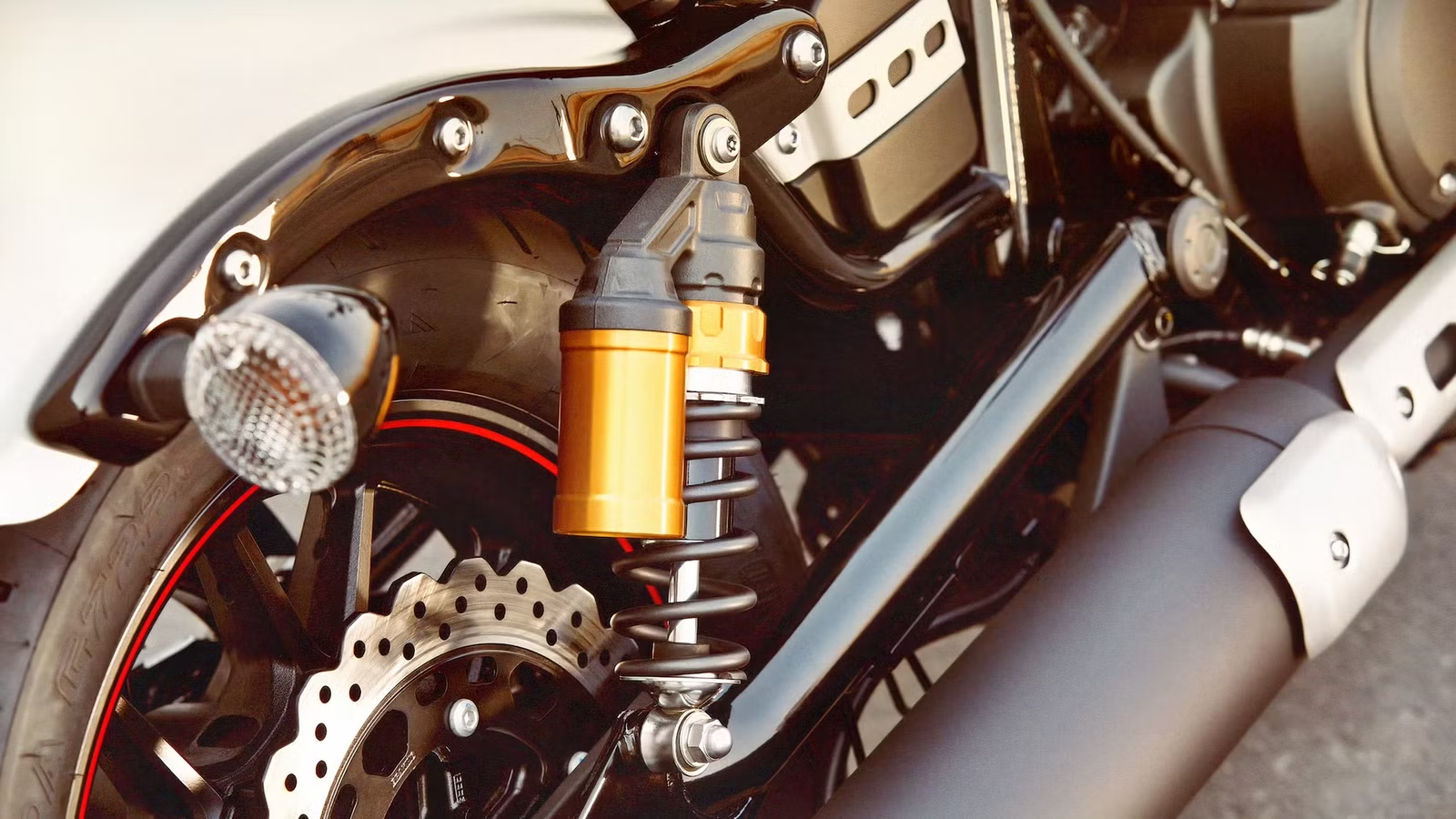
The Yamaha Bolt R-Spec was introduced in 2013 as a direct Japanese challenger to the Harley-Davidson Iron 883. It is a stripped-down V-twin bobber with similar dimensions and proportions to its counterpart, while packing a bigger engine and weighing less overall. The ‘R-Spec’ badge is not a simple cosmetic addition. Although subtle, it introduces remote-reservoir rear shock absorbers and a buckskin-styled seat cover material, giving it a more premium touch.
The Iron 883 featured a shorter rear suspension, which contributed to its low-slung appearance, but this apparently also became a hurdle for the motorcycle on rough patches. The Yamaha Bolt R-Spec, despite maintaining a similar low stance, addresses the issue with remote-reservoir rear shocks, courtesy of the R-Spec package.

The Harley-Davidson Iron 883, part of the Sportster lineup, has established what a stripped-down American cruiser should look like — a torquey V-twin combined with a low stance that brings in the character it is well known for. Yamaha brought in their own interpretation with the Bolt R-Spec. It shares the American formula with the big V-twin, belt-drive, low-slung proportions, and the stripped black styling to blend in with its competitor. But it distinguishes itself by implementing Japanese engineering into the mix — the lighter chassis and sophisticated rear suspension.
A V-Twin That Delivers The Quintessential Cruiser Feel

The definition of a cruiser was never about flat-out speed or a powerful engine. The keyword has always been comfort. And to deliver that, all a cruiser requires is low-end torque and relaxed revs that allow the rider to enjoy the ride without redlining the motorcycle. And that is exactly what the Yamaha Bolt R-Spec’s V-twin delivers.
The Bolt R-Spec delivers only 65 horsepower; however, this number does not detract from what the motorcycle is designed to deliver. The engine delivers 59 pound-feet of torque at just 3,000 rpm, providing the Bolt R-Spec with the low-end punch expected from a mid-range cruiser. Compared to the Harley-Davidson Sportster, the Bolt R-Spec has almost similar dimensions and seat height, while running the exact wheel size of 100/90-19 front and 150/80-16 rear. Yet the Yamaha churns out 59 cc and 14 horsepower more, all while weighing less and producing its peak torque at a lower engine speed.

Yes, the Bolt R-Spec is not the biggest V-twin Yamaha has ever produced. Compared to the likes of the XV1900A Star Roadliner, it gets completely overshadowed in size, power, and comfort. However, that is exactly what the motorcycle was built for. The Bolt R-Spec sheds a lot of weight and compromises a bit on highway comfort. In return, it delivers a nimble, easy-to-maneuver, stripped-down urban cruiser, which makes it accessible to a wide range of riders looking to buy their first ride.
Why The Bolt R-Spec Is Easier To Live With Than A Harley

When it comes to owning a motorcycle, the initial cost is just the tip of the iceberg. Maintenance is what often ends up being the make-or-break factor in the long run. Given the stature Japanese brands have built over the years, it is safe to say reliability has never been their weak spot. The reputation Yamaha brings with its bikes is not something that was built overnight either. Years of engineering and development have helped the brand establish a reputation for affordability and durability. The trick is not to overcomplicate things.
Coming to the Bolt R-Spec, it uses an air-cooled V-twin, with a pretty straightforward engine architecture. Its SOHC valvetrain keeps the design simple and reduces the number of moving parts, making the engine physically narrower. It uses a belt drive to transfer power to the rear wheel, which is durable and requires less attention than a traditional chain. But coupled with Yamaha’s reputation, that’s one less thing for owners to worry about.

Furthermore, the motorcycle largely does away with modern, complicated electronic parts. It does not have any ride modes, skips out on traction control systems, and uses a conventional throttle instead of ride-by-wire. While this may feel Stone Age to some, it is what provides a direct and mechanical connection between the rider and the machine. Moreover, fewer mechanical components and electronics mean less chance of things going wrong, and if they do, they are something you can fix yourself.
Why The Yamaha Bolt R-Spec Is Worth Considering As A Harley Alternative

The Yamaha Bolt R-Spec is indeed worth considering as an alternative to a Harley. But there are a few things to keep in mind. If you are looking to experience a cruiser, putting aside the brand name, then the Bolt R-Spec is a compelling choice. It brings a low-slung stance, V-twin character, and a comfortable riding experience expected from a cruiser, while adding Yamaha’s reliability and durable mechanical components into the equation. On the other hand, if you specifically want the Harley experience, there’s no alternative to that.
Sources: Yamaha Motorsports and Harley-Davidson

Related posts
Latest Post


No Comments