
2027 Harley-Davidson Sprint 440 First Look: Single, Ready to Mingle
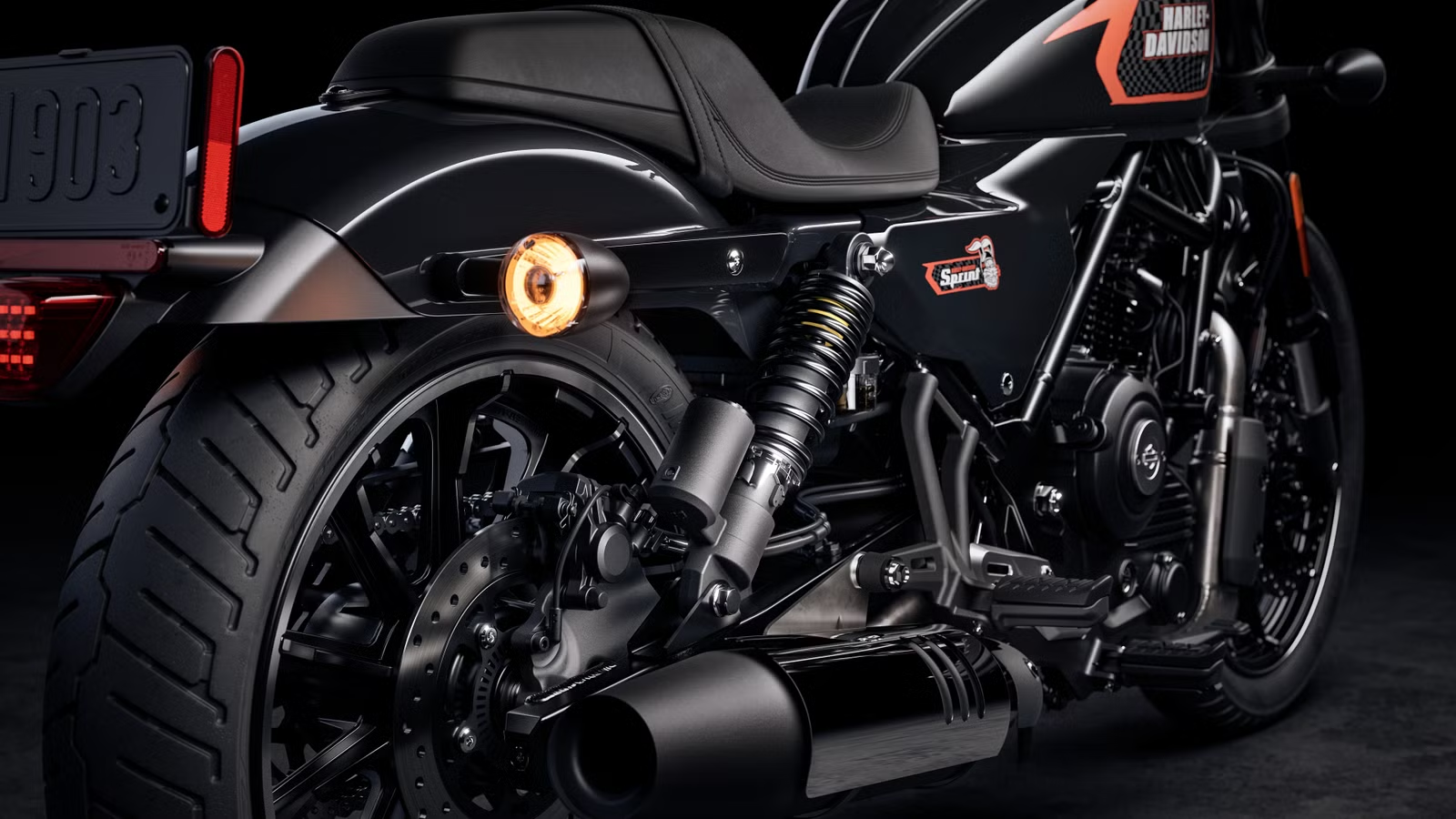
Harley-Davidson has its eye on the entry-level market and is betting that the 2027 Harley-Davidson Sprint 440 will bring new riders into the fold. It’s the most direct pathway into the Milwaukee-based brand’s embrace in a long time. Here’s the rub: a 412-pound entry-level cruiser powered by an air/oil-cooled single-cylinder engine, with a low 26.9-inch seat height, standard ABS, full LED lighting, and a TFT instrument panel, all developed alongside India’s Hero MotoCorp.

The thumper-powered cruiser made its public debut at EICMA in Milan and, according to Harley-Davidson representatives, will reach global markets before the United States due to production schedules. On that note, all H-D Sprint 440s destined for the U.S. market will receive final assembly at the brand’s York, Pennsylvania, facility for a spring 2027 arrival. Harley has shared almost every detail about its upcoming Sprint 440 except for one critical aspect: the price. What Harley-Davidson representatives have said regarding MSRP is that the Sprint 440 will be priced below $6,000, keeping its pricing in contention with other motorcycles in the entry-level segment. We’ll update the story when an official MSRP is announced.
A Name From the Varese Years

The Sprint namesake has been on a Harley before. In 1960, the Motor Company purchased a 50% controlling stake in the motorcycle business of Italian aircraft builder Aermacchi, providing a ready-made lightweight motorcycle to sell as Japanese brands rapidly gained ground. The result arrived in 1961: a 250cc bike known as the Sprint, featuring a single-cylinder engine with pushrod valves (fitting for H-D), with its cylinder head mounted in a horizontal fashion.

The engine did well in racing, including a run of about 177 mph at Bonneville in a 1965 streamliner, and the street bike grew to 344cc for 1969 before production ended in 1974. AMF, Harley’s parent company at the time, sold the Varese factory in 1978 to the Castiglioni family, who used it to launch Cagiva.
So, the new bike inherits a name, a single cylinder, and a similar job description: bring new people in. This time, the partner is in India rather than Italy, and the engine trades pushrods for an overhead cam.
Engine: A Thumpin’ Heart

The Sprint 440 is powered by an air/oil-cooled 440cc single with a single overhead cam and two valves. Bore and stroke measure 79.6mm x 88.4mm, a decidedly undersquare design that favors low-rpm torque over high-rpm punch. H-D’s claimed figures back that intention, with an approachable 27 horsepower peaking at 6,000 rpm, while all 28 lb-ft of torque arrives at an easily accessible 4,000 rpm. Both peaks arrive well below those of 400-class competitors from Triumph or KTM.
The displacement, layout, and output figures closely track the Harley-Davidson X440 that Hero has built for the Indian market since 2023. While the two companies share a partnership, Harley hasn’t described the Sprint as a version of that bike, and, again, U.S. units are assembled in York.

Compression sits at a modest 9.65:1, and a gear-driven counterbalancer is there to tame the vibes you’d otherwise feel from a big single. Exhaust routes through a single muffler with the catalyst resting in the header. As for fuel economy, Harley’s specs cite an estimated 75.8 mpg for combined city/highway riding. With a 2.4-gallon capacity, that works out to roughly 180 miles before the tank runs dry. As always, your mileage may vary.
A six-speed gearbox sends power to the rear wheel, with both fifth and sixth described as overdrive ratios. The clutch is an assist-and-slip unit. Speaking to new riders directly: The assist side reduces spring pressure for a lighter lever pull, which pays off in stop-and-go traffic. The slip side helps keep the rear tire settled during aggressive downshifts.
Chassis and Suspension: American Steel

The steel-trellis frame is paired with a rectangular-tubing mild-steel swingarm. In the front, a non-adjustable 43mm USD fork boasts cartridge internals and 5.1 inches of travel. Meanwhile, dual piggyback coil-over shocks offer seven-step preload adjustment and 3 inches of travel, a figure that’s quite common in the cruiser world, though considered short by any other measure (ahem!). Whether that limited travel will reveal road imperfections is something we’ll have to find out for ourselves during a review.
Geometry is relaxed: 27.6 degrees of rake, 4.3 inches of trail, and a 57.1-inch wheelbase. The 19/17-inch, 10-spoke cast-aluminum combo leans into the cruiser aesthetic while wearing MRF rubber in 100/90-19 and 150/60ZR17 sizes. Harley lists 31 degrees of lean angle to each side. Riders coming off a sportier small-displacement bike should expect to find the limits of cornering clearance sooner, but keep the operative word in mind: cruise.

Claimed weight is 412 pounds in running order and 400 pounds as shipped. That’s light by Harley standards, if not the lightest bike in its class. The gross vehicle weight rating of 795 pounds leaves 383 pounds for rider, passenger, and cargo combined, so two-up riding with luggage will get close to that ceiling quickly. Braking is handled by a single 320mm front disc with a two-piston caliper and a 240mm rear disc with a single-piston caliper. ABS is standard. It’s a conventional straight-line system rather than a cornering-sensitive one.
Ergonomics and Fit: Rebel Competition

The 26.9-inch unladen seat height is the headline for shorter riders, and Harley pairs it with a narrow midsection and a tapered seat to cut the distance from saddle to pavement. Two accessory seats adjust fit in either direction. The Reach seat moves the rider about an inch closer to the bars and controls and uses a stepped shape to keep them in place under acceleration. The Tallboy seat lifts the rider about 2 inches and moves them back about 2.5 inches. Based on the overall dimensions, it seems the Sprint is sizing up Honda’s beginner-friendly cruiser, the Rebel 300 E-Clutch, which has similar proportions.
Technology and Style: Classic Looks, Modern Ammentities

A simple, yet feature-rich 3.5-inch round full-color TFT instrument panel keeps the classic single-gauge look alive, while still keeping up with modern competition. All the necessities are there: mph, rpm, gear position, fuel level, range, trip and odometer readings, a clock, and warning lights. Lighting is LED throughout, and a USB-C port above the headlamp supplies up to 2 amps at 5 volts for a phone.
Missing from the feature list are traction control, selectable ride modes, cruise control, and Bluetooth connectivity. For a bike producing newbie-centric performance figures, those rider aids aren’t entirely necessary. However, a growing number of manufacturers are including them in this category, and cross-shoppers could possibly take note.

Design cues come straight from the H-D family tree: an old-school round headlight, a particularly H-D tank shape, a bobbed rear fender, and a fastback saddle, with machined accents on the engine and a tapered muffler rounding things out. Color options are as follows: Dark Billiard Gray as the base color, plus Vivid Black and Teal Thunder. Every color gets an orange slash across the tank with a distorted checkered center, and the side covers feature this scribe’s favorite part of the bike, a new Sprint-themed mascot dubbed the Harley Hare.
Price and Availability

We’re told that select global markets will see the Sprint 440 first due to production schedules. Here in the home market, U.S. riders will wait until spring 2027, and once again, every domestic Sprint 440 is slated for final assembly at Harley’s York, Pennsylvania, facility. Harley has not yet released U.S. pricing, though brand reps have stated it will be sub $6K. The usual 24-month, unlimited-mileage warranty also extends to Sprint 440 models.
On paper, the Sprint 440 is a sensible, deliberately simple motorcycle: low seat, modest power, and a bevy of H-D styling cues wrapped up in what the brand says is an affordable price. Whether it attracts riders from the established players in the 400cc class, such as Honda, Triumph, Royal Enfield, and KTM is unknown at this time, but it’s a move that Harley-Davidson is wise to make. Above all, the Sprint 440 represents the most significant step toward new motorcyclists in decades, both at home and in global markets, which is a decidedly different approach from H-D in recent years.
2027 Harley-Davidson Sprint 440 First Look Photo Gallery:
2027 Harley-Davidson Sprint 440 Specifications:
Engine:
|
Type |
Single cylinder |
|
Displacement |
26.9 ci (440cc) |
|
Bore x stroke |
79.6mm x 88.4mm |
|
Maximum horsepower |
27 horsepower at 6,000 rpm, claimed |
|
Maximum torque |
28 lb-ft at 4,000 rpm, claimed |
|
Compression ratio |
9.7:1 (published by Harley-Davidson as 9.65:1) |
|
Valvetrain |
SOHC; 2 valves per cylinder (1 intake, 1 exhaust) |
|
Fueling |
Electronic Sequential Port Fuel Injection (ESPFI); 91 octane recommended |
|
Exhaust |
1-into-1; catalyst in header |
|
Cooling |
Air and oil, w/ oil cooler |
|
Transmission |
6-speed Cruise Drive; 5th and 6th gears overdrive. Ratios: 2.833, 1.875, 1.400, 1.136, 0.958, 0.818; primary drive ratio 2.308 |
|
Clutch |
Wet; Assist-and-slip function; cable-actuated |
|
Final drive |
Chain |
Chassis:
|
Frame |
Steel trellis |
|
Front suspension; travel |
Non-adjustable 43mm inverted dual-cartridge fork; 5.1 inches. |
|
Rear suspension; travel |
Spring-preload-adjustable (7-step) monotube piggyback-reservoir coil-over twin shocks; 3.0 inches. |
|
Wheels |
Cast aluminum, 10-spoke, black |
|
Front wheel |
19 x 2.5 |
|
Rear wheel |
17 x 4 |
|
Tires |
MRF Zapper-FH (front), MRF Steel Brace SC-01 (rear). |
|
Front tire |
100/90-19 |
|
Rear tire |
150/60ZR17 |
|
Front brake |
320mm single fixed, hub-mounted disc w/ 2-piston caliper. |
|
Rear brake |
240mm single fixed, hub-mounted disc w/ 1-piston caliper. |
|
ABS |
Standard; no cornering function (cornering-enhanced ABS listed as not equipped) |
|
Electronic rider aids |
Standard ABS |
Dimensions & Capacities:
|
Wheelbase |
57.1 inches |
|
Rake |
27.6 degrees |
|
Trail |
4.3 inches (108.3mm) |
|
Seat height |
26.4 inches (laden); 26.9 inches (unladen) |
|
Ground clearance |
5.7 inches (static) |
|
Lean angle |
31 degrees (left and right; SAE J1168) |
|
Fuel capacity |
2.4 gallons; low-fuel warning at 1.0 gallon remaining |
|
Estimated fuel consumption |
75.8 mpg (estimated city/highway) |
|
Curb weight |
412 pounds (in running order); 400 pounds as shipped. GVWR 795 pounds |
Price & Availability:
|
Website |
harley-davidson.com |
|
Price |
U.S. pricing to be announced |
|
Warranty |
24 months, unlimited mileage |
|
Service interval |
First service at 500 miles (750 km), then every 5,000 miles (8,000 km). Oil and valve service intervals not specified separately |
|
Color |
Dark Billiard Gray, Vivid Black, Teal Thunder |
Source: Harley-Davidson

Related posts


Latest Post


No Comments