
The American Motorcycle Brand That Just Happened To Be Built In Japan
History has a way of repeating itself. Today, there is a new-found enthusiasm for all kinds of off-road-oriented motorcycles. The well-documented rise of the adventure motorcycle has led to an uptake in interest in other, smaller off-road bikes. All of a sudden, we are seeing lightweight dual-sports and trail bikes getting launched for the first time in what feels like decades. Something similar was happening way back in the 60s.
The First Trail Bikes Were All About Two-Wheeled Fun

In the late 50s and early 60s, motorcycles had something of a “bad boy” image, and the leading manufacturers of the time didn’t exactly have much of an issue with this. Buying a motorcycle was a way to buy into the counter-culture, something popularized by films like Rebel Without a Cause. In short, they were anything but family-friendly fun. At least, this was the case, until Honda showed up with the little Super Cub. It offered the world a simple, affordable means to get around, and helped mobilize millions of people.
Most off-road bikes of the time were either street bikes that were lightly modified for off-road use (scramblers, like the one Elvis is riding through the mud in the picture above), or little moped-based trail bikes with pressed steel frames like the Super Cub. There was a clear gap in the market for a more dedicated machine, but none of the major manufacturers had really seen it up until this point in history. A small company based in Oregon beat them all to the punch, and would be the first to develop a family-friendly trail bike, which introduced thousands of young (and old) riders to the joys of riding off-road.
The Rise Of Hodaka
An Ace Up Their Sleeve


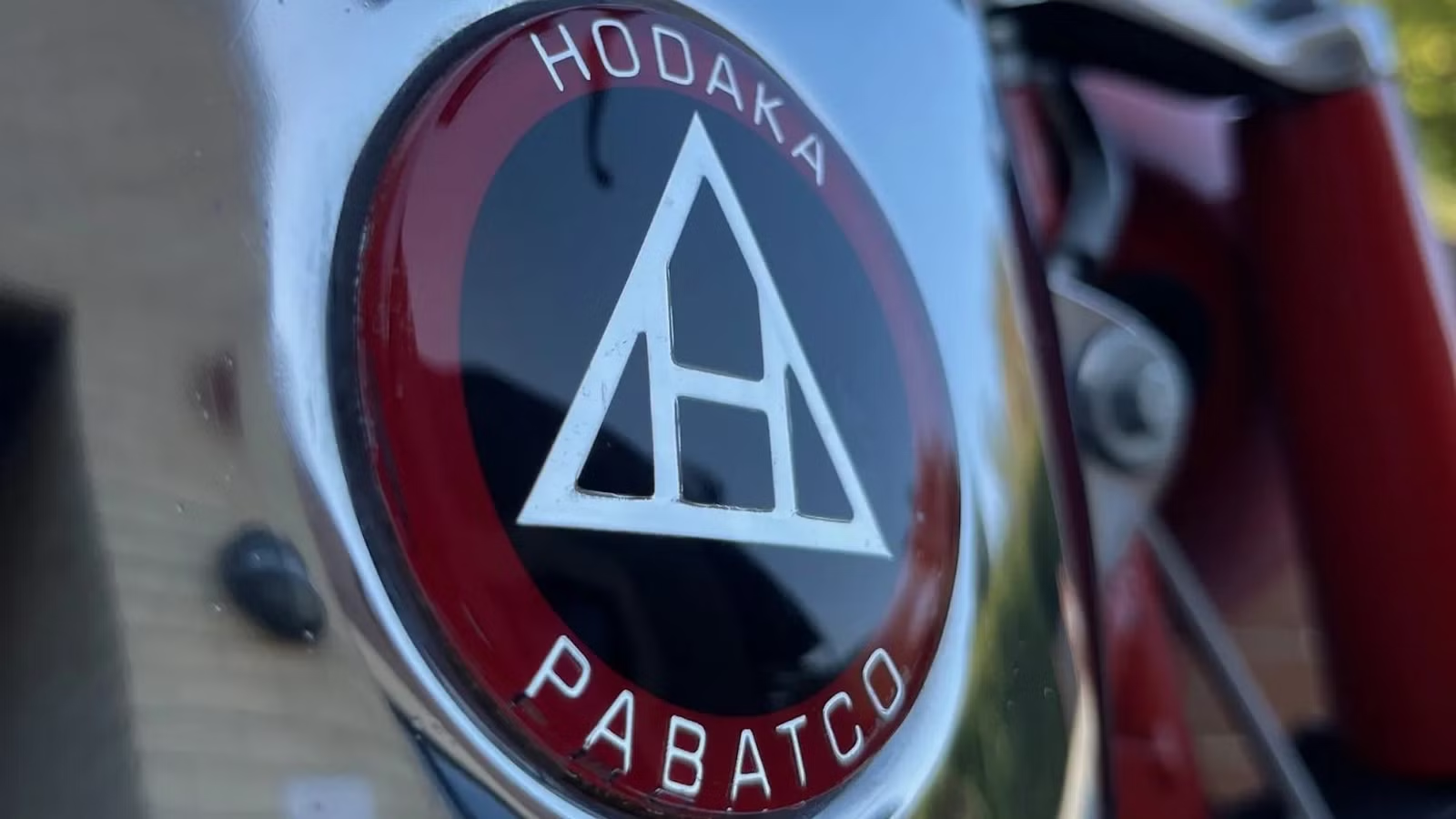
Initially, Pabatco (Pacific Basin Trading Company) had no vested interest in motorcycles. Their primary business was actually in the agriculture sector, and would end up entering a trade agreement with the Yamaguchi company in Japan. They acted as the US distributor for several thousand Yamaguchi motorcycles until the company went under in 1963. It was only then that the decision was made to develop their own bike under the Hodaka banner (who were the engine supplier for Yamaguchi).
Without much in the way of corporate red tape to deal with, a group of enthusiasts were left to determine what would be the best way to make use of the several hundred engines Hodaka had already produced. It was determined that a little trail bike was the best way forward, and just a year later, the little Ace 90 arrived in the US. It was met with critical acclaim, and after staring financial ruin squarely in the face, Hodaka, and by extension Pabatco, had a winner in their hands.
The Ace 90 entered the market with an aggressive price tag of just $379, making it an affordable, accessible little motorcycle that wasn’t, in any way, shape, or form, intimidating. It was very much the off-road version of the Super Cub that came out in the US the year prior.
Taking The Fight To The Establishment
High Quality Bikes With Whimsical Names

By 1966 they had sold 10,000 of these bikes, an incredible number for such a small manufacturer. Over the next decade or so, these bikes all proved their mettle in the real world, and continued to outsell the competition. Hodaka can also be credited for some of the most creative names the motorcycle industry has ever seen, including the likes of the Combat Wombat, Dirt Squirt, Road Toad, and the Thunderdog. But, out of all the bikes they produced, it is the Super Rat (pictured above) that has lived longest in memory because it was essentially a competition-spec machine that undercut almost all of its direct rivals. With a price tag of under $500, it quickly became one of their most popular models.
While their bikes dominated the 100cc class, winning pretty much any race they were allowed to enter (including road racing events), larger capacity bikes were getting more popular. Hodaka tried to gain a foothold in the 250cc class, but by the early 70s, the bigger Japanese manufacturers were pouring more development resources into their dirt bikes and the little Japanese/American brand simply couldn’t compete.
An Untimely End To The Enthusiast Brand
No Happy Ending

In 1965, Shell actually acquired Pabatco’s parent company, apparently unaware of the fact that they had just bought a small motorcycle manufacturer. The fact that Hodaka were doing well at the time meant that they were allowed to operate semi-independently for the subsequent decade, but as you might imagine, that all changed once sales slowed.
By the mid 70s, the competition from the big four Japanese brands was fierce. Although they had previously been well ahead of the competition, this was clearly no longer the case. The quality was still there, but that was not enough. All the big brands were able to undercut Hodaka, and by this point the writing was very much on the wall. It is important to remember that the US was going through a recession by the late 70s, and most families didn’t have money to spend on leisure vehicles (even Harley almost didn’t make it through the decade).
Hodaka was further limited by the fact that they only made off-road bikes, and didn’t have the luxury of leaning on a street bike division for sales like all the bigger brands. Shell made an attempt to buy the Japanese manufacturer outright in an effort to gain control of development, but, for whatever reason, they were unwilling to sell the company to Shell. Once that deal was off the table, the brand was shuttered for good.
Although long gone, the brand is not forgotten. They can be credited with starting the whole trail bike revolution, giving us a wide selection of fun, affordable motorcycles in the process. It was a brand built by enthusiasts, for enthusiasts, and the fact that so many bikes have survived is a testament to their commitment to their commitment to quality.
Sources: Cycle World Magazine (February 2001) and Bring a Trailer

Related posts


Latest Post


No Comments