
2026 Porsche Mission S Interior And Exterior Piture Gallery
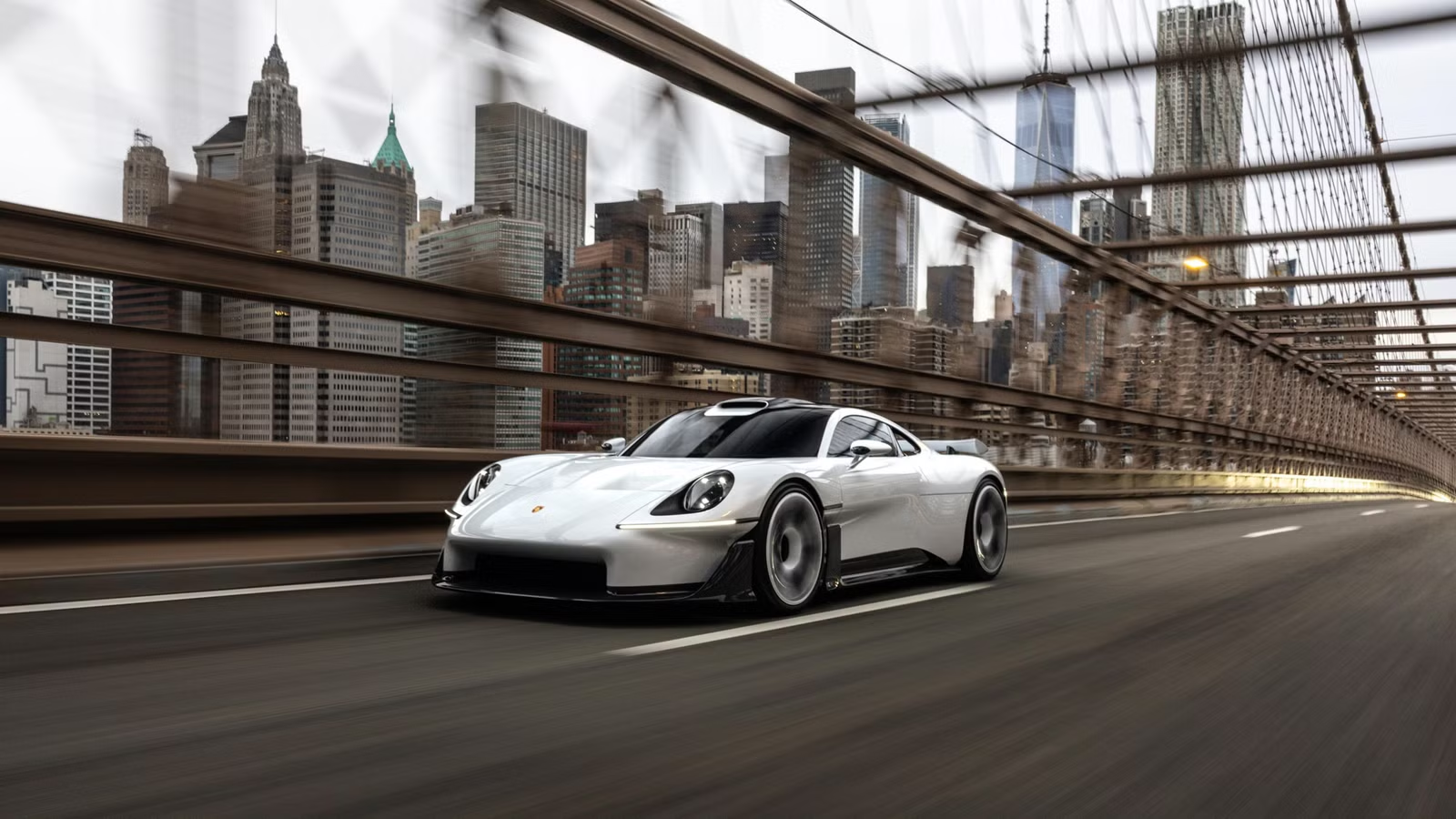
Porsche has unveiled the Mission S, a mid-engined super sports car concept that previews both the brand’s next design language and a new permanent model line slotted above the 911. Revealed on a pier in Queens, New York, where the 550 Spyder was famously photographed in 1953, the Mission S draws on Porsche icons from the 959 and Carrera GT1 to the 917 and 928. Inside, it takes an unusual stance: no fixed center screen at all, just analog-led controls and a retractable mount for the driver’s own smartphone. CEO Michael Leiters says it isn’t a one-off hypercar. Instead, it’s the foundation of a super sports car platform Porsche intends to offer on an ongoing basis, the first time it has committed to one.

Porsche
- Founded
-
1948
- Founder
-
Ferdinand Porsche
- Headquarters
-
Stuttgart, Germany
- Owned By
-
Volkswagen
- Current CEO
-
Dr. Michael Leiters

22

The interior returns to the fundamentals of sports car design. Porsche based the cabin architecture on the 550 Spyder and 356, and the goal is a direct connection between driver and machine rather than a showcase of screens.
21

Two defining lines run across the dashboard and into the door panels. They create the sensation of sitting low and deep inside the car, and they visually tie the cabin to the exterior’s wraparound main line.
20

Ahead of the driver sit five round instruments, a clear nod to classic Porsche cockpits. The central rev counter combines a physical analog needle with a display behind it, and it moves closer to the driver in sportier drive modes to sharpen focus.
19

The instrument layout itself changes with the drive mode. Depending on the setting, the tubes sit side by side or stack one behind another, so the display adapts to what the driver needs in that moment.
18

The biggest departure is what’s missing: there’s no permanent center display and no passenger screen. Instead, a retractable MagSafe-compatible mount holds the owner’s smartphone when needed, and a pared-back My Porsche app handles the functions. The app also lets drivers pick historically inspired designs for the digital gauges.
17

Physical controls carry much of the workload. New push-pull switches in the dashboard give direct access to comfort and driving functions, the reworked Sport Chrono element mixes analog character with digital precision, and the key holder stays left of the steering wheel, as Porsche tradition demands.
16

The details extend to the seats and colors. The seatbelt buckle is integrated into the center panel and the electric seat controls have been relocated, adding a motorsport feel. The palette draws on Porsche’s racing heritage, with Firn White Metallic, Light Red Metallic, Black Chrome, and Special Black for the cabin.
15

The Mission S translates Porsche’s signature design cues into a new form. Torpedo-shaped fenders, the iconic roofline, and an aggressive width-to-height ratio make up the core of its sports car architecture.
14

Porsche calls the result “floating volumes.” The flowing surfaces seem to hover over one another, giving the car a sculpted, technical look that hints at its performance.
13

A single main line wraps around the entire body and links the front and rear light signatures. It ties the design together and gives the car a clean, cohesive profile.

Related posts

Latest Post


No Comments