
McLaren Brings Back The Manual Gearbox, And It Feels Like 1995 Again
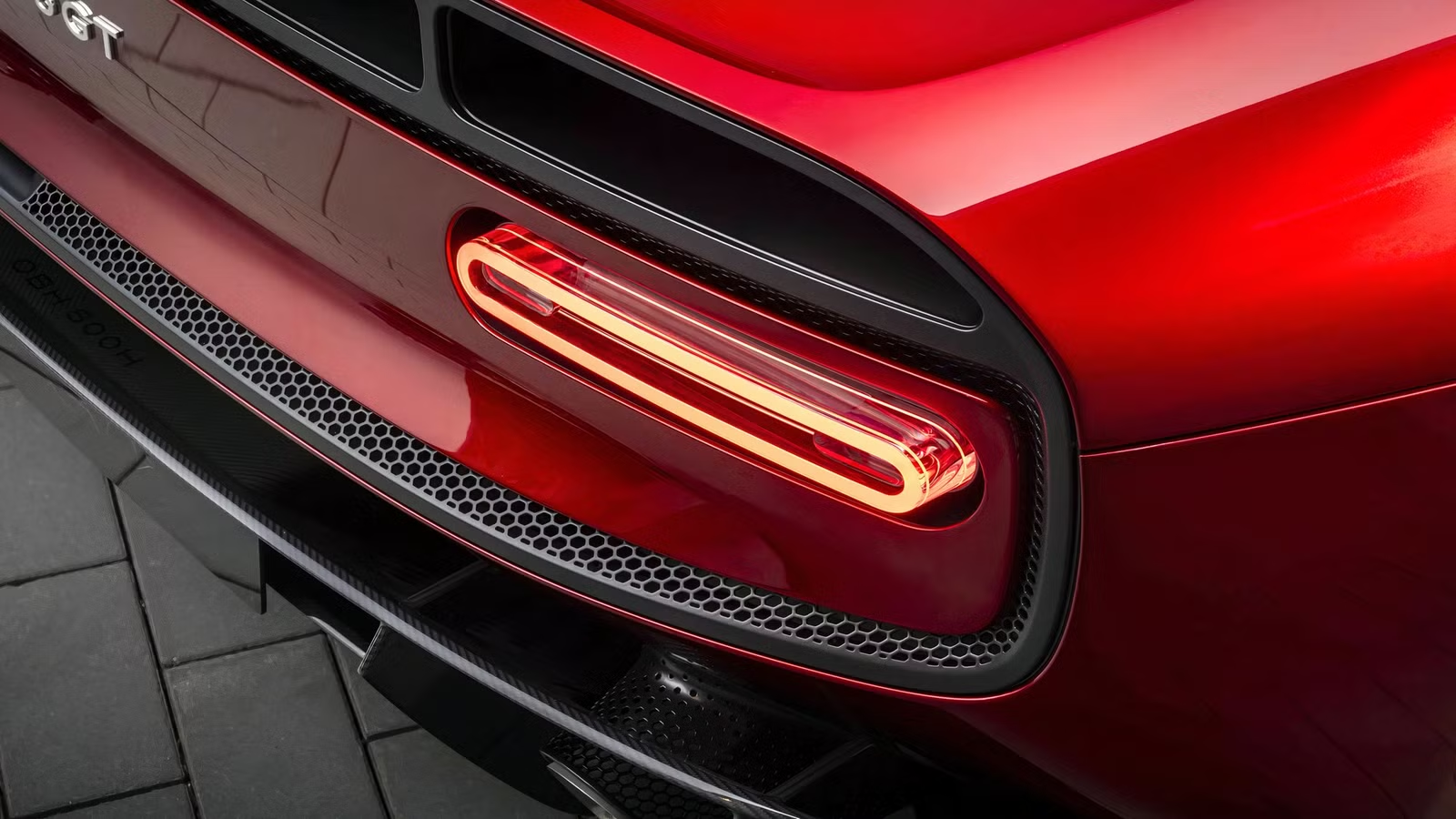
As British supercars go, there isn’t much that takes on McLaren. Over the years, we saw the P1 wow everyone with hybrid tech and become an exceptionally collectible beast, the 650S bringing insane V8 power, the Senna chasing some of the most downforce in the supercar market, and the F1 become the benchmark for analog supercars.

McLaren is one of the supercar tech leaders and is always looking for the next new thing, so it might surprise you to hear that it is building a manual supercar again. The stick shift is nearly dead in the modern market, but this could well be the modern supercar that enthusiasts have been waiting for.
Why McLaren’s Most Exciting New Car Has Three Pedals Instead Of More Processors
There is something slightly crazy about McLaren, of all brands, deciding that the future of the supercar might involve going back to basics. This is a company that has built its reputation on pushing technology as far as possible, from the P1 to the Senna. Now, its new manual supercar appears to be asking a very different kind of question: what happens when you take some of that tech out of the build?

That doesn’t mean that this new McLaren supercar will be some stripped-down, old-school sports car. McLaren is still McLaren, but there is clearly an emphasis on making the driver feel more involved again, rather than simply making the car faster and more capable for the sake of it.
A More Analog Driving Experience In A Software-Heavy Era

Modern supercars have become almost perfect at doing nearly everything for you. Computers manage power delivery, gear changes, traction, stability, and a growing list of other functions, allowing you to drive exceptionally fast with far less effort. Yes, it is impressive, and it makes novice drivers look like they know what they’re doing, but it can also make the experience feel a little removed from what is actually happening.
The new McLaren manual supercar looks to push back against that. By aiming to put more of the driving responsibilities back in our hands, McLaren could be bringing back some of the hands-on feel that makes older supercars so good. We’ll still get the same engineering and performance prowess of a modern McLaren, but with a little more work required behind the wheel. We can’t imagine many purists will be moaning.
The McL 6GT Brings Back What Supercars Have Lost

It is going to be called the McLaren McL 6GT. When the first models are released in 2028 (expected), they will be the first McLaren models with a manual transmission since the iconic McLaren F1—in other words, the first manual McLaren since the F1 ceased production in the late ’90s.
Technically, the new McL 6GT is being produced by McLaren Automotive, which was founded in 2010, not the McLaren Cars that built the F1, so this is the first manual car McLaren Automotive has ever made. This is big news.
A V8, Rear-Wheel Drive, And A Genuine Manual Transmission

While there are no official horsepower figures or specs available from McLaren yet, the McL 6GT will get a V8, power sent to the rear wheels, and a proper manual transmission. There is no clever wording around what they have put out, and no pretending a paddle-shift counts. You get three pedals and a stick shift, just as nature intended.
McLaren has also confirmed a carbon-fiber monocoque and carbon-fiber bodywork, keeping it firmly placed in their typically lightweight thinking. They have also thought about the elements that make a manual worthwhile. The gearshift will be developed around the feel and interaction of the mechanism, while hydraulic steering is going to be included.

For the most part, the supercar market has moved on to electrically-assisted steering, and while it is very precise today, it does remove some of the feedback a lot of us crave in the corners. Clearly, McLaren is looking for something beyond outright performance.
There is still a lot we don’t know about it. McLaren hasn’t revealed the engine’s displacement, horsepower output, torque, curb weight, top speed, or braking setup. What we do know, though, is that if they pull it off well, this will be the modern supercar that purists and stick enthusiasts have been waiting for. A V8, RWD, and a manual transmission; it isn’t much to ask.
Why McLaren Thinks Less Technology Can Mean More Performance

There’s a temptation with a car like this to presume that less tech automatically means less performance, especially when everyone else is piling it in. McLaren seems to have a different view, though. They aren’t stripping away engineering for the sake of nostalgia; they are likely being very selective about the things they add that actually matter. That should result in a car where the mechanical components play a bigger role in how the car responds, rather than simply being hidden under layers of tech.
We don’t think that the new McL 6GT will be a car that is just looking backward into McLaren’s more purist-pleasing days, but rather that McLaren will be taking lessons from those days and putting them into a supercar that will feel like no other in 2028. If anyone knows how to strike that balance, it is the marque that has brought us some of the finest supercars ever.
The M6GT Dream Finally Lives On

The new McL 6GT is more than a clever name with some history attached to it. It is McLaren revisiting one of the shelved projects from the past: the M6GT, Bruce McLaren’s attempt to turn his racing philosophy into a road car. That original project never reached production, so the arrival of a modern 6GT feels like McLaren finally picking up a thread that was left hanging more than 50 years ago.
Bruce McLaren’s Unfinished Vision Gets A Modern Purpose

The original M6GT was born from McLaren’s success with the M6A Can-Am racer. Mr. McLaren wanted to turn that racing knowledge into a road-going car and had even planned to take it racing at Le Mans under Group 4 rules. The project was ambitious, lightweight, and very much in keeping with Bruce’s habit of refusing to accept that a racing car and a road car had to be completely different things. Unfortunately, his death in 1970 brought the project to an end, and only two M6GTs were ever built .
The modern McL 6GT obviously isn’t a literal continuation of that original car, but the same philosophy is hard to miss. McLaren describes the original M6GT as the foundation for its road-car catalog, with its DNA and legacy living on through every McLaren ever since. The upcoming 2028 McLaren manual supercar isn’t just borrowing a famous badge because it looks cool; it is taking an unfinished idea from its founder and giving it another chance.
The F1 Connection Makes This Manual McLaren Even Better

McLaren also says that the original M6GT helped establish the thinking that eventually gave us the F1. What makes it more interesting is that the F1 reversed the original M6GT idea: instead of starting with a race car and trying to make it into a road car, the F1 was a road car first, and then turned into a racer when owner demand called for it. That approach worked and ultimately produced the F1 GTR’s Le Mans victory in 1995. And, of course, making one of the most legendary supercars ever at the same time.
The McL 6GT will arrive with a great deal of baggage. It carries the name of the car that helped start McLaren’s road-car ambitions, while its philosophy echoes the company that went on to build the F1. Even better, though, is that it isn’t just another modern McLaren using the F1 as a marketing reference; the manual transmission will give it some real substance, the rear-wheel-drive layout will test the people driving it, and the presumably very powerful V8 McLaren will use will feel like a proper engine for a proper car. In other words, much like how the analog F1 feels today.
Why The McL 6GT Could Be The Last Manual McLaren You’d Actually Want To Drive


If you think manual transmissions belong in the past with older McLaren supercars, you can always buy a McLaren F1 at auction. Classic.com says it will cost you $30 million on average, and only two have been sold recently, but you do get the original 627-horsepower/479-pound-foot naturally aspirated 6.1-liter BMW S70 60-degree V12, six-speed manual, 3.2-second 0–60 mph times, and a top speed of 240 mph. It is still viewed by many-a purist as the ultimate on-road supercar, but it is almost too pricey to want to drive it today.
Starting prices for the 2028 McLaren McL 6GT haven’t been released yet, but we can presume it will clear $1 million very easily. As the McLaren badge and expertise dictate, the new McL 6GT is going to be a toy for those with deep pockets, and will, especially if it’s done well, become a collector’s item. If McLaren delivers on that old-school recipe, though, this could be the kind of modern supercar that makes people want to rack up the miles, row through the gears, and worry about its future value later.
Sources: McLaren and Classic.com.

Related posts





Latest Post


No Comments