
2005 Pontiac Grand Prix GXP: 303-HP V8 Under $3,000
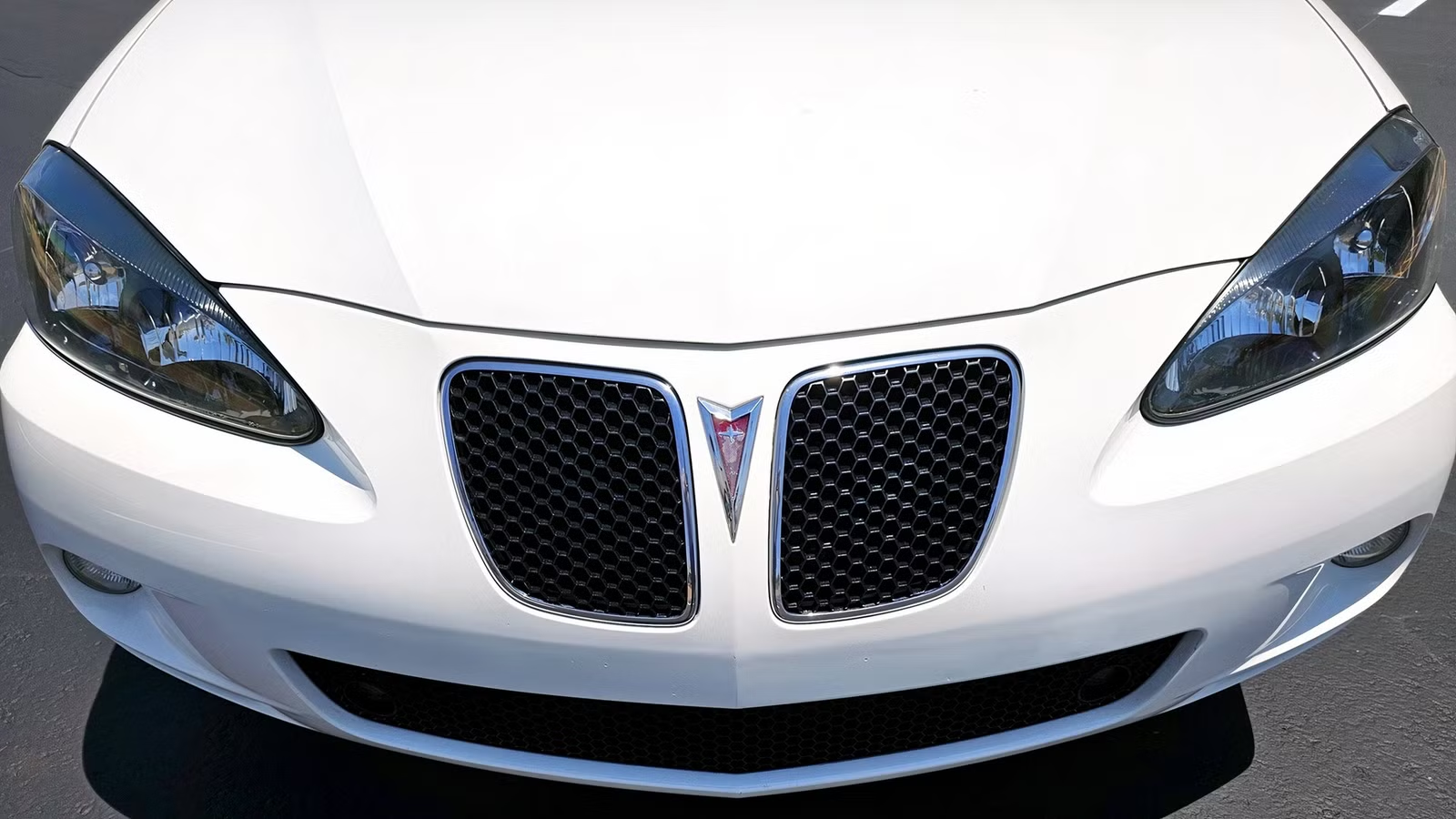
The 1964 Pontiac GTO helped establish the muscle car as an American performance icon. The car that delivered a headline-grabbing acceleration run had a bigger V8 than customers could buy. Four decades later, Pontiac put 303 horsepower in a family sedan with front-wheel drive, and this time the engine’s output was no press-car trick. Yet the car barely registers in muscle-car conversations today. That forgotten sedan now costs less than $3,000 according to Kelley Blue Book’s valuation, making its lack of fame an intriguing bargain for used-car shoppers.
The GTO’s Famous Test Car Wasn’t Quite Stock

Pontiac needed attention for its new GTO, and advertiser Jim Wangers helped arrange a memorable comparison for Car and Driver in 1964. The magazine’s test car delivered astonishing performance, including a reported 4.6-second sprint to 60 mph. There was a significant detail behind that result, though: the car used a 421-cubic-inch V8 rather than the production GTO’s 389.
The distinction matters. Pontiac’s 1964 GTO could be ordered with a Tri-Power 389 rated at 348 horsepower, which was plenty for the era. The 421 H.O. was a larger engine from Pontiac’s full-size lineup, and the test car also received performance preparation that went beyond a regular showroom example. The resulting acceleration figure helped create an enduring reputation, but it wasn’t a fair measure of what every GTO buyer could expect.
The 4.6-Second Run Wasn’t A Normal GTO Result

The ringer story doesn’t erase the GTO’s significance. Pontiac sold 32,450 examples in its first model year, proving there was a real appetite for an intermediate car with serious V8 power. But it does complicate the mythology surrounding its performance. That makes a later Pontiac an interesting comparison. It had a production V8 with a published output of 303 hp, yet its four-door body and front-wheel-drive layout never gave it the same cultural standing. The car in question was the 2005 Grand Prix GXP.

The 2005 Pontiac Grand Prix GXP Put 303 HP Through Its Front Wheels

The 2005 Grand Prix GXP packed a 5.3-liter LS4 V8 producing 303 hp and 323 lb-ft of torque. Unlike the GTO’s famous test car, this was the engine Pontiac actually sold in the production model. It sat transversely under the hood and sent power to the front wheels through a four-speed automatic transmission.
The result was a surprisingly quick family sedan. Car and Driver recorded a 0-60 mph time of 5.7 seconds, while Autoweek measured 6.08 seconds. Different tests can produce different results, so neither number should be treated as the only possible outcome. Both, however, put the Grand Prix GXP firmly in performance-car territory for its time.
A Family Sedan With Genuine V8 Performance

The GXP originally started at $29,995, making it a serious purchase rather than a bargain-bin trim level. Its four doors, roomy cabin, and relatively restrained styling also made it easy to mistake it for an ordinary commuter car.
That was part of the appeal. The GXP offered genuine Pontiac V8 torque without requiring buyers to choose a coupe or a rear-wheel-drive platform. It wasn’t a modern version of the GTO in every respect, but it delivered something the old ringer story couldn’t: its advertised 303 hp belonged to the car customers could take home.
Pontiac Had To Get Clever To Make Front-Drive V8 Power Work
Putting a V8 in a front-wheel-drive sedan created some awkward engineering problems. With the engine and transmission up front, the Grand Prix GXP carried a reported 64/36 front-to-rear weight distribution. Its front tires had to steer the car, carry much of its weight, and put the engine’s torque onto the road.
Pontiac’s unusual answer was a reverse-staggered tire setup. The GXP wore wider 255-section tires at the front and narrower 225-section tires at the rear. That arrangement was intended to improve the car’s balance and reduce understeer, rather than simply fitting the same tire size at all four corners.
The Bonneville GXP Took A Different Route

The LS4 also needed changes to fit the transverse engine bay, including a shortened crankshaft and a starter mounted on the transmission. The drivetrain’s compromises remained, though. Car and Driver considered torque steer manageable, while Autoweek found it highly annoying. Neither account should be mistaken for a universal driving experience.
Pontiac also offered the larger Bonneville GXP for 2004 and 2005. Its 4.6-liter Cadillac Northstar V8 produced 275 hp and 300 lb-ft, and *MotorWeek* recorded 7.8 seconds to 60 mph. Only 6,613 Bonneville GXPs reportedly sold over those two years. The Grand Prix was the quicker and more powerful of the two, but both show how briefly Pontiac experimented with V8-powered front-drive sedans.
A Sub-$3,000 V8 Sedan Comes With A Big Asterisk
Kelley Blue Book lists a Fair Purchase Price of about $2,925for a 2005 Grand Prix GXP, a dramatic drop from its original $29,995 price. That’s a valuation guide, not a promise that every example will sell for that amount. At this price, condition matters more than the horsepower figure in the advertisement. The four-speed 4T65-E automatic has to cope with the LS4’s 323 lb-ft of torque, making the transmission a key point to investigate before buying.
Cheap To Buy Doesn’t Mean Cheap To Neglect

A pre-purchase inspection by a mechanic familiar with the drivetrain is money well spent. Not every transmission is destined to fail, but assuming an old performance sedan needs nothing beyond fuel would be a mistake.
The Grand Prix GXP won’t replace the 1964 GTO in the muscle-car hall of fame. Still, there’s an appealing irony here: the GTO’s most famous test relied on an engine customers couldn’t order, while the overlooked GXP delivered its 303 hp in an ordinary production sedan. It may have missed out on the legend, but for a careful buyer, that lack of attention could be the bargain.
Sources: Kelley Blue Book

Related posts


Latest Post


No Comments