
10 Sports Cars That Nail The Spot Between Japanese Reliability And German Performance
Finding a sports car that delivers genuine thrills without punishing you at the dealership service counter has always been the holy grail for enthusiasts. Japanese cars have long earned their reputation for bulletproof reliability and sensible running costs, but in the sports car world, those virtues only matter if the performance is there to back them up. Too often, Japanese sports cars get overshadowed by German and American rivals with flashier spec sheets and more theatrical ownership experiences.

The sweet spot, it turns out, does exist. These sports cars are rare, and many of them are notoriously overlooked. Others hold their value ridiculously well but are still attainable on the used market if you know where to look. To find the most reliable sports cars that combine German performance and Japanese reliability, we looked at modern cars produced after the year 2000 with proven reliability track records, robust powerplants, and affordable annual maintenance costs. Here are our top ten choices.
Honda S2000
Power: 240 HP
In the late ’90s, Honda set out to build a convertible that would go toe to toe with the Mazda Miata and Porsche Boxster — and leave them in the rearview. The S2000 that arrived at the turn of the century was a quiet revolution, pairing what has proven to be a ridiculously reliable F-series inline-4 with a genuinely fun rear-wheel-drive platform and a perfectly calibrated six-speed manual transmission. It may be the least powerful car on our list, but it’s no slouch.

The first-generation (AP1) models revved to 9,000 rpm and made 240 hp and 153 lb-ft of torque. The second-generation (AP2) models received more displacement via longer strokes, gaining low-end torque (162 lb-ft) in exchange for a slightly lower redline. Don’t listen to the naysayers — both are great, both will reach 60 in under 7 seconds, and both will put a smile on your face in the process. That’s probably why S2000s have skyrocketed in value. An AP2 S2000 now trades hands for well above $30,000 on average, and more special models like the CR can fetch six figures. Yes, really — a 2008 S2000 CR recently sold for $132,000 on Mecum — a car that carried a $37,300 MSRP when new.
Lotus Evora (2009-2015)
Power: 280 HP

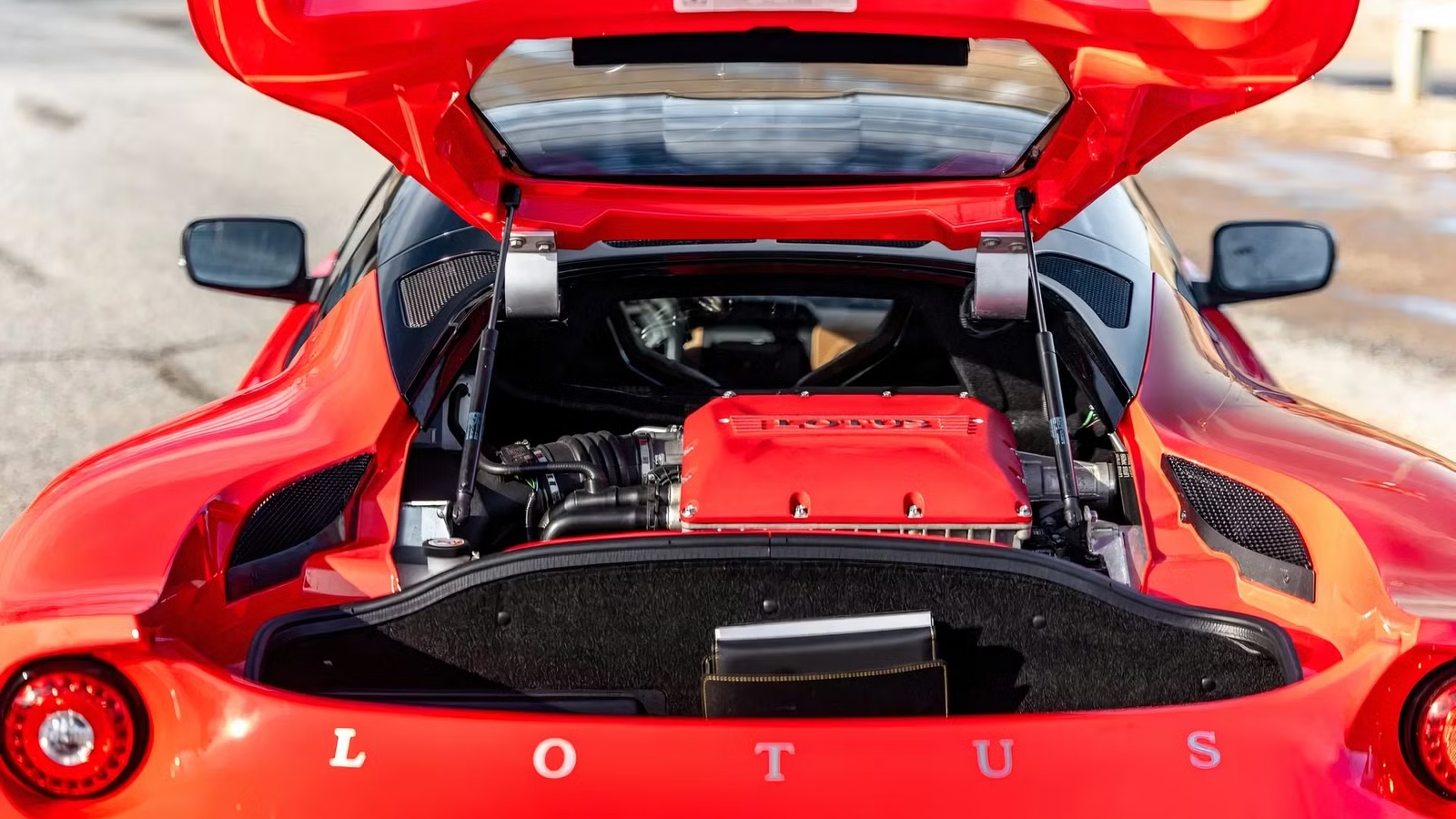
The Lotus Evora V6 is the giant killer of the sports car world — one that relies on clever engineering rather than sheer power. Rather than chasing horsepower with expensive components, Lotus shed weight and chose an engine just as at home in a Camry as it is mid-mounted in the Evora. That Toyota 2GR-FE heart is the secret weapon. It’s genuinely robust, with owners typically reporting $2,000–$2,500 per year in maintenance and few serious issues — routine servicing is far more common than horror stories.
In base trim, the Evora makes about 280 hp and sounds underwhelming on paper, but in reality it’s a seriously thrilling mid-engined sports car. Opt for the supercharged Evora S, and you get 350 hp and a top speed of 178 mph — enough to rival Corvettes and Porsche 718s in a straight line and on the track.
Toyota GR Supra 3.0 (2019-Present)
Power: 340-382 HP

Despite mixed reviews at its 2019 launch, the GR Supra has proven to be a highly reliable and capable sports car. It may be a Toyota-fied BMW Z4 coupe at heart, but it’s also the most compelling combination of German performance and Japanese reliability currently available on the new-car market. Both cars are built in Austria at the same Magna Steyr facility. The early 2019–2020 Supras were rated at 340 hp while the Z4 pushed 382 hp from the same B58 engine; it wasn’t until 2021 that Supra owners received the full output, thanks to a revised six-port exhaust manifold. All Supras are electronically limited to 155 mph, but ZF8 automatic versions will shave about half a second off the 0–60 time compared to the six-speed manual, rocketing to 60 mph in 3.9 seconds. The manual-transmission version, meanwhile, has proven to hold its value better on the used market.
Purists can scoff at Toyota’s decision to base the Supra on a BMW platform all they want, but there’s no denying the formula works. According to some reports, if Toyota had developed its own turbocharged inline-six for the car, the new Supra would cost nearly six figures. Instead, it has kept its starting price under $60k and its maintenance costs at economy-car levels — just $561 per year according to RepairPal.
Audi R8 4.2 V8
Power: 420 HP

When Tony Stark rolled onto the screen behind the wheel of an Audi R8 in Iron Man (2008), the world immediately fell in love with it. Today, the first-generation car is a true unicorn: a mid-engined, naturally aspirated supercar-lite that doesn’t cost an arm and a leg to maintain and won’t leave you stranded. Audi also built a V10 version shortly after the car debuted, but it’s the 4.2-liter V8 models that have earned the reputation as more affordable, owner-friendly supercars. The V8 makes a solid 420 horsepower — exactly 100 hp per liter — and takes 4.4 seconds to reach 60 mph with the six-speed manual. The R-tronic automated manual shaved 0.2 seconds off that time, but manual cars command far stronger demand on the used market today for obvious reasons.
That 4.2-liter FSI V8 shares its basic architecture with the engine used in the early Lamborghini Gallardo, developed under the Audi umbrella. So when you row through the gears of a manual V8 R8, you’re effectively piloting a junior Lamborghini — but with Audi build quality and everyday usability. Audi never even marketed the R8 as a supercar, and owners drove them daily for hundreds of thousands of miles. As a result, they’re plentiful on the used market and carry a well-earned reputation for reliability.
Lexus LC 500
Power: 471 HP

The LC 500 is more of a grand tourer than an all-out sports car — one meant to go against cars like the Aston Martin Vantage, BMW M850i, and Mercedes-Benz SL. However, instead of a massive V12 or a turbocharged V8, under this Japanese grand tourer’s hood sits a near-bulletproof 5.0-liter naturally aspirated V8 that sings all the way to 7,300 rpm and sends 471 hp to the rear wheels. That’s a lot of power, but the coupe’s substantial 4,340-lb curb weight (4,540 lb for the convertible) stretches the 0–60 mph run to 4.7 seconds.
Despite that, the LC 500’s combination of great looks, reliability, and performance has kept it in demand even after years on the market with almost no major changes. J.D. Power gave the 2024 LC 500 a remarkable 92/100 reliability rating, while a 10-year maintenance cost estimate of just $7,334 further supports the reliability argument. That makes the LC 500 over $5,000 cheaper to run than an average luxury coupe over the first decade of ownership — and nearly as affordable to maintain as the Subaru BRZ ($6,838 over 10 years), despite costing almost four times as much to buy.
Lexus RC-F
Power: 472 HP

The Lexus RC F may look like a luxury coupe with an oversized grille, but it’s in fact the fastest and most track-focused Lexus you could buy new — production ended in December 2025, so remaining new inventory is your last chance. It’s quicker and more track-focused than the LC 500, weighs a substantial 559 lbs less, and hits 60 mph in 4.2 seconds. Opt for the limited-production RC F Track Edition — which adds carbon-ceramic brakes, aerodynamic bodywork, and further weight savings — and that 0–60 time drops to an even 4.0 seconds.
It’s a compelling naturally aspirated alternative to something like the Ford Mustang Dark Horse or a BMW M4. Reliability is a non-issue, as it uses the same bulletproof 2UR-GSE V8 fitted in the LC 500, and owners will pay just $7,101 for maintenance over 10 years — a full $5,315 less than for an average luxury coupe — which works out to roughly $710 per year.
7th Gen Ford Mustang GT/Dark Horse
Power: 480/500 HP

The Coyote V8 has proven itself as one of the most durable and versatile modern performance engines. It’s one of the last ways to get serious, naturally aspirated V8 power in a new performance car, backed by a strong reliability track record and virtually no major issues. Under the hood of the seventh-gen Mustang GT it makes 480 hp, and it’s tuned to exactly 500 hp in the Dark Horse. We’ve included both in this entry because buyers can’t go wrong with either one.
Choose the Mustang GT for the best bang for your buck, or the Dark Horse if you can’t live without the power bump, higher redline, Brembo brakes, and improved cooling for track use. The GT will reach 60 mph in the low 4-second range depending on your transmission of choice, while the Dark Horse will do it in 3.7 seconds with the automatic and 4.1 seconds with the manual — and cover the quarter mile in 12.5 seconds with the stick. Both modern muscle cars boast stellar reliability ratings and can keep pace with German performance cars like the BMW M340i and M440i without any forced induction.
Nissan GT-R R35 (Standard Variants)
Power: 480-565 HP

Arguably the greatest tuner car of the 21st century, Godzilla needs no introduction. The fascinating footnote is that when the R35 GT-R first hit the streets, rumors spread that it was untunable — an uncrackable ECU left curious tuners frustrated, even as it was obvious the factory powertrain was built for far more. Once the formula was cracked, there was no going back. Today, used GT-Rs remain a hot commodity among casual collectors and tuners alike, whether you’re talking about the early 480-hp cars or the later models that received incremental factory power increases all the way up to 565 hp for the 2017 model year.
With power sent to all four wheels via Nissan’s ATTESA E-TS AWD system — the same technology that helped the brand earn the Godzilla nickname in the ’90s — later GT-Rs take just 2.9 seconds to reach 60 mph in base form and 2.5 seconds in the race-bred 600-hp NISMO version. Even a stock R35 will outrun almost everything from a base Corvette to a Hellcat, both in a straight line and on the track. Tuned, these things can handle four-digit power figures on stock engine blocks.
Chevy Corvette C8 Stingray
Power: 490-495 HP

America’s favorite sports car has always been an icon, but the C8 Chevrolet Corvette completely flipped the script. You probably already know it’s fast and carries its engine behind the driver like a Ferrari — but these are also remarkably reliable sports cars. Each C8 model year since the generation debuted for 2020 has posted segment-leading J.D. Power reliability scores in the high 80s or low 90s. Average yearly maintenance is cheaper than most full-size sedans at $773, and owners and reviewers, including HotCars’ own Michael Van Runkle, can’t stop raving about how easy they are to live with.
The Stingray is powered by a 6.2-liter LT2 V8 good for 490 hp — or 495 hp when equipped with the Performance Exhaust as part of the Z51 Performance Package — and launches to 60 mph in just 2.9 seconds. It will outrun any BMW or Porsche 911 this side of the Turbo S for a fraction of the price. No wonder the C8 Corvette is barely losing value on the used market.
Acura NSX (2017-2022)
Power: 573 HP

Enthusiasts love to knock the second-generation NSX for its hybrid powertrain and polarizing styling. We understand the criticism, but what most people overlook is that the NSX is the most reliable proper supercar money can buy — a tradition that stretches back to its legendary predecessor. Each Acura NSX was hand-assembled at Honda’s Performance Manufacturing Center in Ohio. For power, it relies on an in-house-developed, mid-mounted 3.5-liter twin-turbo V6 producing 500 hp on its own, working in concert with three electric motors to deliver a combined 573 hp to all four wheels. Acura claimed a 0–60 time of under 3 seconds and an official top speed of 191 mph for the standard NSX.
Used examples can now be found in the range of $100,000, making them a compelling proposition for anyone looking to beat a German sports car in both performance and reliability. To top things off, RepairPal estimates average maintenance costs for an NSX at just $354 per year. If that figure holds true, this 573-hp supercar is cheaper to keep on the road than a Camry.
Sources: J.D. Power, CarEdge, RepairPal, Classic.com.

Related posts




Latest Post


No Comments