
1969 Ford Mustang Boss 429: Ford’s Most Extreme Muscle Car

Sometimes a build wasn’t about street performance during the muscle car shootout era. What truly mattered was dominating the track, even if it meant throwing caution and safety to the wind. For example, Ford became obsessed with becoming the king of NASCAR and ended up building a muscle car that was simply too extreme for daily driving.

This car was produced in minuscule numbers to fulfill homologation requirements for legal racing. As a result, a few models were set loose on the streets to cause chaos. It was never intended for public production and, as a result, doesn’t have the best low-speed manners. However, building this racecar was 100% worth it.
The racecar was born at just the right time to propel Ford’s racing career to its peak performance during the classic muscle car era. It terrorized rivals before increasing emission regulations choked out power and rising insurance premiums killed muscle car sales. Although Chrysler probably wishes it never existed.
Ford Needed To Beat Chrysler’s 426 HEMI

Chrysler introduced its infamous 426 Hemi V8 engine in 1964, and it became an instant success as it captured the top spot at the Daytona 500. The engine was so dominant that it was banned for the 1965 season. When it returned in 1966 while meeting NASCAR regulations, it continued its brutal winning streak.
The legendary Elephant Engine is a 426 cubic-inch OHV V8 that delivers 425 hp and 490 lb-ft of torque. It helped muscle cars like the Dodge Charger R/T and Plymouth GTX accelerate from 0 to 60 mph in about 4.9 seconds with a 13.5-second quarter mile. Plus, it has a top speed of 156 mph.
It got its Elephant nickname because of its massive size. Plus, it has distinct hemispherical combustion chambers, dual four-barrel carburetors, a cast-aluminum intake manifold, a reinforced cast-iron block, forged-steel connecting rods, domed forged-aluminum pistons, and a dual-rocker shaft valve train. Meanwhile, Ford was taking notice while getting sick of losing.
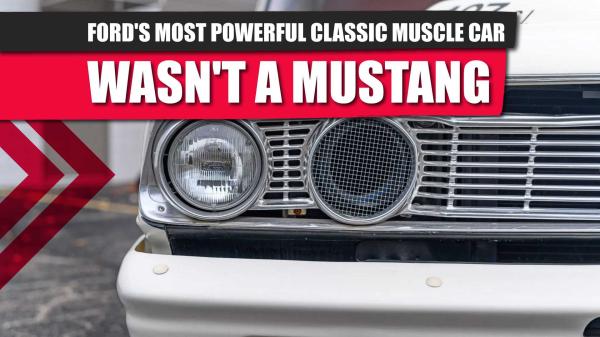
Ford’s Most Powerful Classic Muscle Car Wasn’t A Mustang
The most powerful Mustang in the 60s was the Boss 429, but this limited production model was substantially more powerful.
The 1969 Ford Mustang Boss 429 Came Ready To Fight

To dethrone the 426 Hemi V8, the 1969 Ford Mustang Boss 429 hit the track, ready to race. It features a gigantic 429 cubic-inch V8 Semi Hemi engine that delivers 375 hp and 450 lb-ft of torque. However, it’s believed to be underrated for better insurance premiums. Enthusiasts believe it easily pushes 500 hp.
The Boss 429 Mustang accelerates from 0 to 60 mph in roughly 5.2 seconds and completes a quarter mile in about 13.7 seconds. It features a top speed of 188 miles per hour. This engine has aluminum semi-Hemi cylinder heads for massive airflow, a high-rise aluminum intake manifold, a Holley four-barrel carburetor, cast-aluminum rocker covers, and a high-capacity engine cooler.
|
Engine |
HP |
Torque |
0 to 60 MPH |
|
429 ci (7.0-liter) Semi Hemi V8 |
375 |
450 LB-FT |
5.2 seconds |
|
426 ci (6.9-liter) elephant V8 |
425 |
490 LB-FT |
4.9 seconds |
Best of all, it gave skilled drivers exactly what they needed to challenge the 426 Hemi’s supremacy. The 1969 Ford Mustang Boss 429 was a homologation special that allowed the 429 engine to compete in NASCAR. In more aerodynamic vehicles like the Torino, this engine helped Ford secure 26 victories out of 56 races that season, with 11 consecutive wins. It secured the 1969 NASCAR driver’s championship and a one-two finish in the Atlanta 500.
But The 429 Engine Is Too Big

The 429 engine is pretty hefty as it tips the scales at 680 pounds. It’s 34 inches long, 30 inches wide, and 30 inches tall. As a result, it was too large to physically fit in the 1969 Mustang engine bay. Ford outsourced the project of modifying the front end of the Mustang to make it fit to a specialty builder named Kar Kraft in Brighton, Michigan.
To make the engine fit, Kraft modified the inner fenders and moved the front shock towers outward to provide more space. He then shortened the upper control arms and lowered them by an inch to alter the suspension setup to compensate for a wider stance. Then the frame needed more bracing. It got a heavier-duty suspension and a reinforced anti-roll bar to withstand the extra weight of the block and visceral torque.
Power is routed through a close-ratio four-speed manual Toploader transmission. It features an 11.5-inch heavy-duty clutch and a Hurst T-handle shifter. The setup is paired with front and rear sway bars, quicker power steering, power front disc brakes, and a trunk-mounted battery to improve weight distribution. It wears a gigantic functional hood scoop, a modest chin spoiler, and Boss 429 fender decals.
Only A Handful Of Boss 429 Mustangs Were Made

In 1969, 859 Ford Mustang Boss 429 models were made. Another 499 to 500 units were produced in 1970, bringing the total to 1,358 or 1,359 overall. The car wasn’t intended for public sale. It was only built to meet NASCAR homologation rules requiring at least 500 street legal models to be built.
However, this car didn’t have great street performance manners. For example, it’s known for having an extremely heavy front end that impacts its handling. The Boss 429 Mustang has a tendency to push through corners, and it’s more of a straight-line racer than an agile muscle car. It’s also ultra-wide, and faces heavy front-steering issues with tons of body roll.
The car is known for having a weak low-speed throttle response, with a tendency to be jerky in stop-and-go situations. Sitting in traffic may cause the cooling system to over-pressurize and dump coolant. It’s also known for poor fuel economy, frequently stalling in traffic, and carburetor vapor lock.

But the interior is actually quite luxurious, with high-back vinyl bucket seats, simulated wood-grain appliqués, molded door panels, and a full-gauge package that includes an 8,000-RPM tachometer and clock. Unfortunately, air conditioning wasn’t available due to the massive size of the engine.
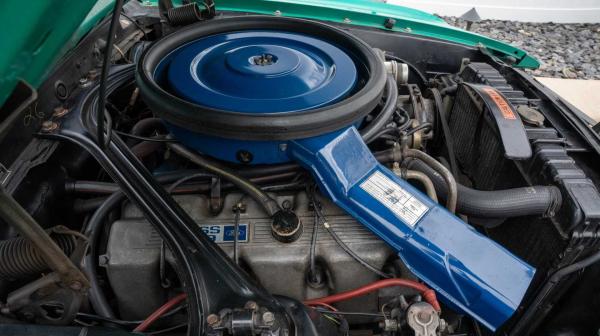
This Ford Engine Powered Everything From Trucks To Race Cars
This versatile powerplant dominated NASCAR, powered muscle cars, and became the backbone of Ford’s heavy-duty truck lineup for decades.
Now The Mustang Boss 429 Is A Holy Grail Find

Due to its limited production numbers and racing pedigree, collectors are willing to pay enormous sums for the Ford Mustang Boss 429. It’s the supreme option that can’t be ignored due to specifically being built for NASCAR racing and to tackle the 426 Hemi V8 when Chrysler was considered to be unbeatable.
Boss 429 Mustang models can be found for between $300,000 and over $900,000 at the auction block. Pristine, top-tier models do cross the million-dollar mark. There’s no official central registry with an exact count, but between 700 and 800 models may still survive today.
Because this car carried an extremely high price of $5,000—double the cost of a standard Mustang at the time—and featured hand-made racing modifications, many models have been carefully preserved. This car typically goes to auction a few dozen times per year, globally. As a result, the fastest street-legal muscle car of the era is difficult to find.
Source: Ford, Chrysler, How Stuff Works

Related posts
Latest Post


No Comments