
Yamaha’s Carbureted Turbo Needed A Free Power Kit To Chase Honda’s Fuel-Injected One
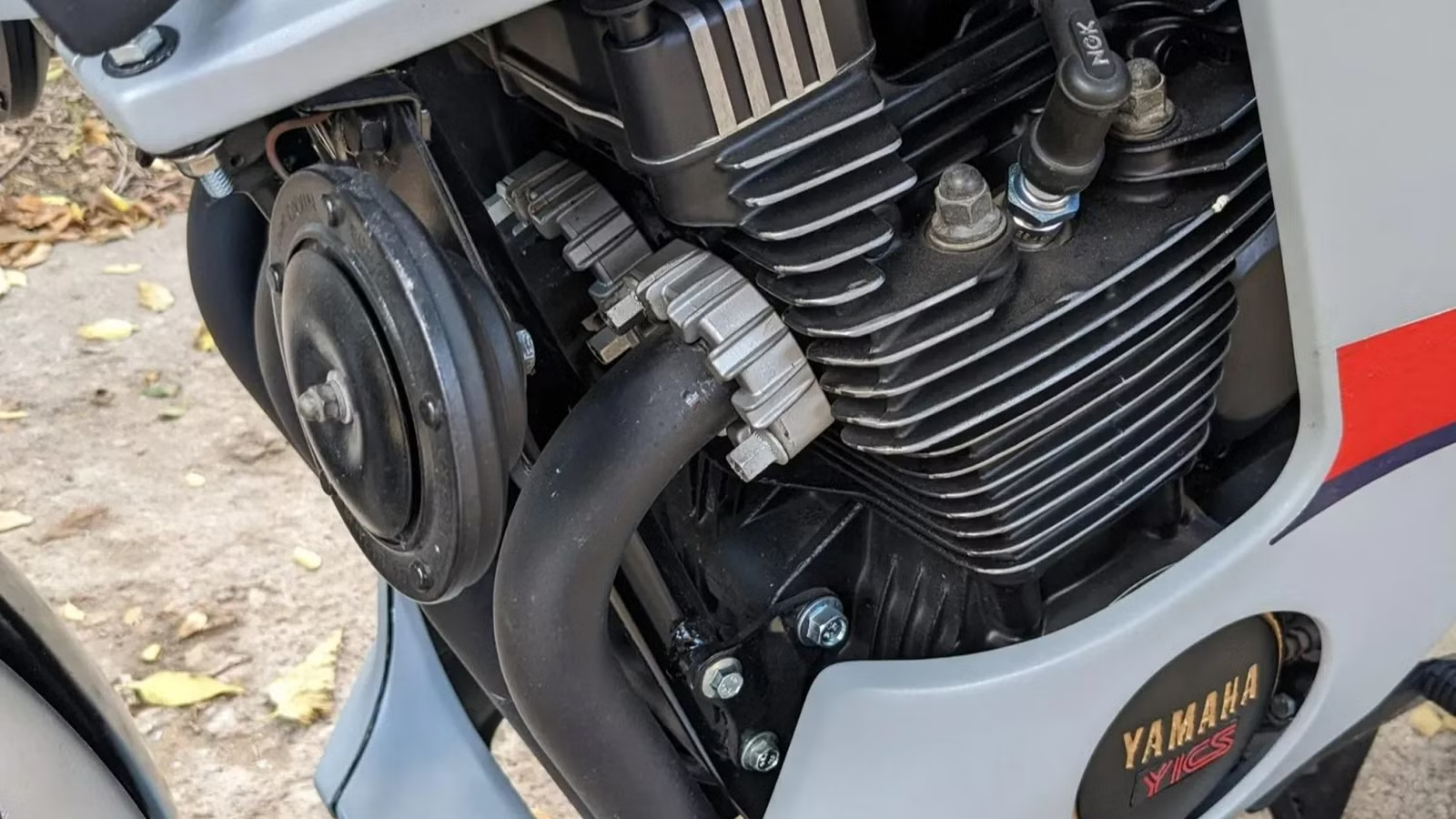
Turbocharging was one of the most ambitious and exciting ideas to come out of the motorcycle industry in the 1980s. As manufacturers wanted to extract more power from the same engines, this way of forcing induction seemed like the perfect answer. Honda, Yamaha, Suzuki, and Kawasaki all explored the technology, with some interesting outcomes. But turning the theory into reality was considerably more difficult, as Yamaha found out.
The 1980s Turbo Craze Was About To Change Motorcycling Forever

The 1980s marked a shift in motorcycle development, as Japanese manufacturers looked beyond pure displacement to improve performance. As it had been in cars, turbocharging looked like the best solution. By forcing more air into an engine, a smaller engine could make power rivalling that of a far larger machine. Manufacturers became fascinated by the potential, leading to what became known as the Turbo Wars as each tried to one-up the other to extract more power. But while it sounds easy in theory, the practice was anything but.
Turbocharging Was Promising, But Motorcycle Technology Wasn’t Quite Ready

While fitting a turbocharger was relatively easy in a car, it presented problems for motorcycles. Bikes are smaller for a start, with less room for things like turbos, intercoolers and all the other plumbing needed. Heat was another, as this lack of space meant they could damage other components (or the rider, depending on how they sat on the bike). Turbo lag — when the throttle response initially feels sluggish while the turbo spools up, before suddenly kicking in with a substantial hit of power — was a particularly deadly issue.

Fuel delivery presented another challenge. Turbocharged engines needed more fuel under boost, and manufacturers had to find ways of keeping the mixture consistent as pressure increased. Honda and Kawasaki experimented with electronic fuel injection to give engineers greater control, while Yamaha took a different approach with pressurized carburetors. Unfortunately, Yamaha’s solution would become one of the defining compromises of its first production turbo motorcycle: the XJ650 Turbo.
The 1982 Yamaha XJ650 Turbo Had Plenty Of Power But One Big Problem

When Yamaha introduced the XJ650 Turbo in 1982, it was hoping the bike would demonstrate what was possible from a relatively modest engine. Based around the non-turbo 1980 XJ650, both bikes had a 653 cc air-cooled inline-four with a five-speed ‘box. That’s pretty much where the similarities ended though, as the Turbo version had a few changes — the first, obviously, being that it had a turbocharger.
The turbo — a 39mm Mitsubishi model made exclusively for the Yamaha — gave the newer bike roughly an extra 18 HP, taking it from ~72 HP to around 90 HP. Top speed was also increased, bumping from around 120 MPH to over 125 MPH, while acceleration was impressive, too, with quarter-mile times that showed potential for forced induction. On paper, it looked like Yamaha had found a way to get more performance out of the same engine. The reality was slightly different.
With so much development focus on improving performance, much of that original XJ650 had been carried over. Chassis, suspension, and other key hardware that was perfectly fine for the non-turbo version were retained for a bike that had far more power, and they looked rather out of place. The rear drum brake was another interesting choice, given the turbo bike would have needed extra stopping power, while the shaft drive was another heavy component on an already heavy bike. But the worst offender was the engine’s fuel delivery system.

Where Honda and Kawasaki had turned to electrics to help with their fueling, Yamaha opted for pressurized carburetors placed downstream of the turbocharger, rather than upstream. This made an already complicated fuel system even more complicated, added more points of failure, and made the bike notoriously difficult to set up and maintain. Yamaha had put extensive engineering into trying to make it work, and did make an incredibly complex, remarkably clever system that used a fuel pump, pressure regulator, reed valves, and other trickery to help reduce turbo lag and improve throttle response. The result was a bike that could feel great when everything worked, but which soon felt unpredictable if it didn’t.
Yamaha did try to improve on these issues by introducing a free Power-Up kit a year later that raised boost to 12 psi, but the issues with the Turbo were far more fundamental. The XJ650 Turbo undoubtedly had a lot going for it, from its speed to its power to its technology, but these factors didn’t work together cohesively enough to create a compelling proposition for buyers. And while Yamaha was struggling to make it work, its competitors had already established a solution.
Honda And Kawasaki Showed How Yamaha’s Turbo Experiment Could Have Been Different

Where Yamaha went for a complex solution, Honda and Kawasaki took a different approach. Both had turbo bikes, Honda with the CX650 Turbo and Kawasaki with the GPz750 Turbo, and both used electronic fuel injection. But not only did they use it, they demonstrated just how well it could work. Kawasaki’s GPz750 Turbo was a particularly strong example, as it combined serious performance (112 HP and 73.1 lb-ft of torque) with a chassis designed to handle it. That’s not to say that the Honda and Kawasaki were perfect, but they showed that Yamaha’s approach just wasn’t the way forward. The problems with the XJ650 Turbo weren’t simply technological itself, but due to Yamaha’s entire approach to the bike itself.
The Yamaha XJ650 Turbo’s Legacy Is A Reminder Of The Turbo Wars

Despite the XJ650 Turbo’s shortcomings, it remains an interesting part of Japanese motorcycle history. A relatively short production run (1982-1983) means it’s a rare sight today, with restoration projects suggesting that it still has its fans. While the XJ650 never became the success that Yamaha wanted, nor that the non-turbo variants were, it showed the difficulties and risks of motorcycle engineering. But it remains an ambitious, if ill-fated, experiment from a time when manufacturers were happy to take chances and fail in the pursuit of performance.
Sources: Motorcycle Specs

Related posts


Latest Post


No Comments